

What Can Dogs Eat? Safe Foods Every Dog Owner Should Know
Dogs enjoy eating a wide variety of foods, but not everything that is safe for humans is safe for them. Knowing what dogs can eat helps you provide healthy treats while avoiding foods that could cause digestive problems or serious health issues. A balanced commercial dog food should always be your dog’s primary diet, but many fruits, vegetables, meats, and other foods can be safely offered in moderation.
Whether you have a puppy or an adult dog, understanding safe human foods can help you make better feeding choices. This guide explains which foods are safe, which foods should be avoided, and how to serve them correctly.
What Can Dogs Eat?
Dogs can safely eat many healthy foods, including lean meats, certain fruits, vegetables, eggs, fish, plain rice, and some dairy products. These foods provide protein, vitamins, minerals, healthy fats, and fiber that can support overall health.
However, every new food should be introduced gradually. Even safe foods can cause digestive upset if served in large amounts or if your dog has a food sensitivity.
How Much Human Food Can Dogs Eat?
Human food should only make up a small portion of your dog’s daily calorie intake. Most of your dog’s nutrition should come from complete and balanced dog food that meets their nutritional needs.
Treats and healthy human foods should generally be limited to about 10% of your dog’s daily diet. Feeding too much human food may lead to obesity or nutritional imbalances.
| Dog Size | Human Food Amount | Frequency |
|---|---|---|
| Small Dogs | Small bite-sized portions | Occasional treats |
| Medium Dogs | Small handful | Occasional treats |
| Large Dogs | Moderate portion | Occasional treats |
| Puppies | Very small amount | Introduce carefully |
Can Dogs Eat Meat?
Yes, dogs can eat many types of cooked lean meat, including chicken, turkey, beef, lamb, and pork when prepared properly. Meat provides high-quality protein, amino acids, vitamins, and minerals that help maintain muscles and energy.
Always remove bones, excess fat, skin, and seasonings before serving. Avoid processed meats such as bacon, sausage, and heavily salted products.
Can Dogs Eat Fish?
Yes, dogs can eat properly cooked fish. Fish such as salmon, cod, sardines, and whitefish provide omega-3 fatty acids, protein, and essential nutrients that support healthy skin, joints, and brain function.
Always remove bones and avoid raw fish or fish prepared with seasonings, butter, or sauces. Plain cooked fish is the safest choice.
Can Dogs Eat Eggs?
Yes, cooked eggs are a healthy food for dogs. Eggs contain protein, healthy fats, vitamins, and minerals that support muscle growth and overall health.
Cook eggs without butter, salt, or seasonings. Scrambled, boiled, or poached eggs prepared plainly are generally safe for most dogs.
Can Dogs Eat Fruits?
Many fruits are safe for dogs, including apples, bananas, blueberries, strawberries, watermelon, mango, cranberries, and papaya. These fruits provide vitamins, antioxidants, and fiber.
Always remove seeds, pits, and cores when necessary. Fruits should be served in moderation because they naturally contain sugar.
Can Dogs Eat Vegetables?
Yes, many vegetables are healthy for dogs. Carrots, green beans, cucumbers, pumpkin, peas, broccoli, zucchini, lettuce, and cooked sweet potatoes can all provide valuable nutrients.
Serve vegetables plain without salt, butter, garlic, onions, or spices. Wash vegetables thoroughly before feeding them to your dog.
Can Dogs Eat Rice?
Yes, plain cooked white rice and brown rice are generally safe for dogs. Rice is easy to digest and is often recommended for dogs recovering from mild stomach upset.
Avoid seasoned rice dishes that contain garlic, onions, butter, or spicy ingredients. Plain cooked rice is the safest option.
Can Dogs Eat Dairy Products?
Some dogs can eat small amounts of plain yogurt and certain cheeses. Plain yogurt may provide probiotics that support digestive health.
However, many dogs are lactose intolerant, so dairy products should be introduced slowly. Avoid flavored yogurt, sweetened products, and foods containing xylitol.
Can Dogs Eat Peanut Butter?
Yes, dogs can eat plain peanut butter in moderation. Peanut butter contains protein and healthy fats, making it a favorite treat for many dogs. It can also be useful for hiding medication or filling enrichment toys.
Always check the ingredient label before feeding peanut butter. Never give peanut butter containing xylitol because this artificial sweetener is highly toxic to dogs and requires immediate veterinary attention.
Can Dogs Eat Bread?
Yes, dogs can eat plain bread occasionally. Small amounts of plain white or whole wheat bread are generally safe for healthy dogs and usually do not cause problems.
However, bread offers little nutritional value for dogs. Avoid bread containing raisins, garlic, onions, chocolate, nuts, or artificial sweeteners because these ingredients can be dangerous.
Can Dogs Eat Pasta?
Yes, dogs can eat plain cooked pasta in moderation. Plain pasta is not toxic, but it is high in carbohydrates and should only be served as an occasional treat.
Avoid pasta served with sauces containing garlic, onions, spices, cheese, or excessive salt. Simple cooked pasta without seasoning is the safest choice.
Can Dogs Eat Oatmeal?
Yes, plain cooked oatmeal can be a healthy food for dogs. Oatmeal contains fiber, vitamins, and minerals that may support digestion and provide energy.
Cook oatmeal with water instead of milk and avoid adding sugar, honey, chocolate, raisins, or artificial sweeteners. Serve small portions only.
What Foods Can Dogs Not Eat?
Several common foods are dangerous for dogs and should never be offered. Chocolate, grapes, raisins, onions, garlic, xylitol, alcohol, caffeine, macadamia nuts, and cooked bones can all cause serious health problems.
If your dog accidentally eats a toxic food, contact your veterinarian immediately. Quick treatment can greatly improve the outcome in many poisoning cases.
Is Human Food Good for Dogs?
Some human foods can be healthy for dogs when served correctly. Lean meats, fish, eggs, vegetables, and certain fruits can provide valuable nutrients as occasional treats.
However, dogs should not rely on human food as their main diet. A complete commercial dog food provides the balanced nutrition dogs need every day.
How to Safely Share Human Food With Your Dog

Always wash fresh produce, remove seeds, pits, bones, and skins when necessary, and cook meat thoroughly before feeding it to your dog. Serve foods plain without salt, butter, garlic, onions, spices, or sauces.
See Also: Can Dogs Eat Coconut? Benefits, Risks & Safe Feeding Guide
Introduce one new food at a time and watch for vomiting, diarrhea, itching, or other signs of food intolerance. Small portions are the safest way to introduce new treats.
Does Human Food Have Benefits For Dogs?
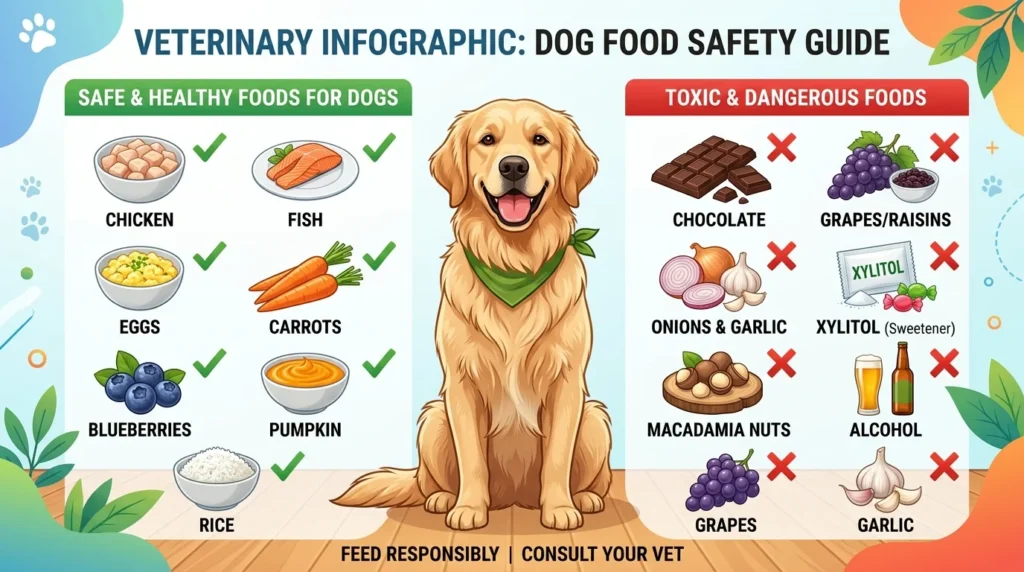
Yes, some human foods provide important nutrients that can support your dog’s health. Lean proteins help maintain muscles, fruits and vegetables provide vitamins and antioxidants, and fish offers beneficial omega-3 fatty acids.
See Also: Can Dogs Eat Broccoli? Raw, Cooked, Stems & Every Form Covered
Healthy human foods can also provide variety and enrichment when used responsibly alongside a balanced dog diet.
Does Human Food Have Any Risks For Dogs?
Yes, feeding the wrong human foods can create serious risks. Toxic ingredients, excessive fat, sugar, salt, and unbalanced nutrition may lead to digestive problems, obesity, or poisoning.
Dogs also have different nutritional needs than humans. Even healthy foods should only be offered in moderation to avoid unnecessary health issues.
Frequently Asked Questions
What human foods are safest for dogs?
Cooked lean meat, fish, eggs, carrots, pumpkin, green beans, blueberries, apples without seeds, bananas, and plain rice are among the safest foods.
Can dogs eat human food every day?
Dogs should mainly eat balanced dog food. Healthy human foods should only be occasional treats.
What foods are poisonous to dogs?
Chocolate, grapes, raisins, onions, garlic, xylitol, alcohol, caffeine, macadamia nuts, and cooked bones are among the most dangerous foods.
Can puppies eat human food?
Puppies can eat some safe human foods in very small amounts, but their primary nutrition should come from complete puppy food.
How do I introduce new foods to my dog?
Offer one new food at a time in a small amount and monitor your dog for digestive upset or allergic reactions before feeding it again.
Conclusion
Dogs can safely eat many healthy human foods, including lean meats, fish, eggs, fruits, vegetables, rice, oatmeal, and plain peanut butter when prepared correctly. These foods can provide valuable nutrients and make excellent occasional treats.
However, toxic foods such as chocolate, grapes, onions, garlic, xylitol, and macadamia nuts should always be avoided. Feeding safe foods in moderation while maintaining a balanced dog diet is the best way to support your dog’s long-term health and happiness.
See Also: Can Dogs Eat Lettuce? Benefits, Risks & Safe Feeding Guide