

Can Dogs Eat Raw Beef? Risks, Benefits & Safe Feeding Tips
Dogs can eat beef, but feeding raw beef requires extra caution. Raw beef can contain harmful bacteria and parasites that may make dogs sick and can also expose people in the household to foodborne pathogens. While some dogs may tolerate raw meat without immediately showing symptoms, that does not mean raw beef is risk-free.
If you are considering raw beef as part of your dog’s diet, food safety, nutritional balance, and your dog’s individual health all matter. Plain, properly handled beef is different from seasoned meat, processed beef, or raw beef products containing bones. For most dogs, thoroughly cooked, plain beef is a simpler and lower-risk option.
Can Dogs Eat Raw Beef?
Dogs can physically eat raw beef, but raw beef is not considered completely safe because uncooked meat can carry bacteria such as Salmonella, E. coli, and Listeria. These organisms can cause illness in dogs and may also contaminate household surfaces.
If your dog accidentally eats a small amount of fresh raw beef, it does not necessarily mean they will become sick. However, monitor them for digestive or other unusual symptoms and contact your veterinarian if symptoms are severe, persistent, or concerning.
Is Raw Beef Safe for Dogs?
Raw beef carries food-safety risks that are reduced when meat is cooked thoroughly. Even high-quality beef intended for human consumption can contain bacteria that are not visible, detectable by smell, or removed simply by rinsing the meat.
Dogs may have stronger stomach defenses than humans, but they are not immune to foodborne infections. Puppies, older dogs, and dogs with certain health problems may be more vulnerable to complications from contaminated food.
Can Dogs Eat Raw Ground Beef?
Raw ground beef deserves particular caution because grinding increases the amount of meat surface exposed to bacteria. Contamination that was originally limited to the exterior can become distributed throughout the ground meat.
For this reason, cooked ground beef is a safer choice. If you give your dog beef, cook it thoroughly without onion, garlic, excessive salt, spicy seasonings, or rich sauces, and allow it to cool before serving.
Can Dogs Eat Raw Beef Steak?
Dogs may eat raw steak, but raw steak still carries bacterial and parasite risks. A steak can look fresh and clean while still containing microorganisms capable of causing illness.
If you want to give your dog steak, thoroughly cooked plain beef is generally the safer option. Remove bones and trim excessive fat, and avoid marinades, sauces, garlic, onion, and heavily seasoned preparations.
Can Dogs Eat Raw Beef Liver?
Raw beef liver can contain bacteria and parasites, so it should be handled with the same food-safety concerns as other raw meats. Liver is also extremely nutrient-dense and should not make up a large portion of a dog’s diet.
If liver is included in a dog’s diet, appropriate preparation and portioning are important. A veterinarian or veterinary nutrition professional can help determine whether organ meat is appropriate and how much should be included in a balanced diet.
Can Dogs Eat Raw Beef Heart?
Raw beef heart is muscle tissue that can provide protein, but it can also carry the bacterial risks associated with uncooked meat. Handling and storage are especially important when raw meat is being considered.
Cooked plain beef heart can be a safer alternative. Regardless of preparation, it should be offered as part of an appropriately balanced diet rather than replacing complete dog food without professional nutritional guidance.
Can Dogs Eat Raw Beef Bones?
Raw beef bones are not risk-free. Bones can cause choking, broken teeth, mouth injuries, intestinal obstruction, or digestive tract injuries. Some bones can also splinter or break into pieces.
Large weight-bearing bones can be particularly hard and may damage teeth. Avoid assuming that a raw bone is automatically safer than a cooked bone. Cooked bones are especially dangerous because they can become brittle and splinter, but raw bones also require significant caution.
Can Puppies Eat Raw Beef?
Puppies should not be given raw beef casually. Their developing immune systems and nutritional requirements make food safety and dietary balance especially important.
If you want to introduce beef to a puppy, plain thoroughly cooked beef is a safer option. It should be given in a small amount alongside a complete and balanced puppy diet rather than replacing nutritionally complete food.
Can Dogs Eat Raw Beef Every Day?
Feeding raw beef every day is not automatically appropriate simply because a dog enjoys it. A diet based heavily on raw meat can become nutritionally unbalanced if it does not contain the correct proportions of protein, fat, vitamins, minerals, and other essential nutrients.
If you are considering a raw-food diet, discuss it with a veterinarian or veterinary nutrition professional. They can help evaluate your dog’s age, health, activity level, and nutritional requirements.
Can Dogs Eat Raw Beef Fat?
Small amounts of beef fat may not be toxic, but large amounts of fatty meat can cause digestive upset. High-fat foods can also increase the risk of pancreatitis in susceptible dogs.
When preparing beef for your dog, trim away excessive visible fat. Plain lean cooked beef is generally a better choice than fatty scraps from a meal.
Can Dogs Eat Raw Beef With Seasoning?
No. Raw beef should not be given with seasonings or marinades made for human food. Ingredients such as onion and garlic can be harmful to dogs, while excessive salt and rich sauces can cause other problems.
If you choose to give your dog beef, keep it plain. Avoid steak marinades, barbecue sauces, spicy rubs, garlic butter, onion-based seasoning, and other prepared meat products.
How Much Beef Can Dogs Eat?
The appropriate amount of beef depends on your dog’s size, calorie needs, health, activity level, and overall diet. Beef should not automatically replace a complete and balanced dog food.
If offering cooked plain beef as a treat, start with a small amount and monitor your dog. Treats and extras should remain limited so they do not displace nutritionally complete food or contribute excessive calories.
| Dog Size | Suggested Starting Portion |
|---|---|
| Small Dogs | 1–2 small pieces |
| Medium Dogs | 2–4 small pieces |
| Large Dogs | A small handful of lean beef |
| Puppies | A tiny amount when appropriate |
What Are the Risks of Raw Beef for Dogs?
The main risks include bacterial contamination, parasites, digestive upset, and nutritional imbalance when raw meat is used as a major part of the diet without proper formulation. Dogs may develop vomiting, diarrhea, abdominal discomfort, lethargy, or loss of appetite after consuming contaminated food. For the full breakdown across all meats, see our guide to raw meat risks.
There is also a household hygiene concern. Dogs can shed certain foodborne bacteria after consuming contaminated raw meat, potentially spreading organisms through saliva, feces, bowls, floors, or other surfaces.
Can Raw Beef Give Dogs Salmonella?
Yes. Raw beef can be contaminated with Salmonella, and dogs that consume contaminated meat can become infected or carry and shed the bacteria. Some dogs may show obvious illness, while others may show few or no symptoms.
Possible signs include diarrhea, vomiting, fever, weakness, and loss of appetite. If your dog develops significant symptoms after eating raw beef, contact your veterinarian for advice.
Can Raw Beef Cause E. coli in Dogs?
Raw beef can carry strains of E. coli. Although not every strain causes disease, contaminated raw meat is one reason food-safety experts recommend careful handling and thorough cooking.
Wash hands and clean surfaces after handling raw meat, and do not allow your dog to lick plates, countertops, utensils, or hands immediately after you handle raw beef.
What Should You Do If Your Dog Eats Raw Beef?
If your dog accidentally eats a small amount of raw beef, monitor them closely for vomiting, diarrhea, abdominal discomfort, weakness, loss of appetite, or other unusual symptoms. Make sure fresh water is available.
If your dog ate a large amount, consumed spoiled meat, ate raw beef containing bones or harmful seasonings, or develops severe or persistent symptoms, contact your veterinarian promptly. Puppies, senior dogs, and dogs with existing health concerns may need extra caution.
How to Safely Give Beef to Your Dog
If you want to share beef with your dog, thoroughly cooked, plain, lean beef is generally a safer choice than raw beef. Remove excessive fat and all bones, and allow the meat to cool before giving it to your dog.
Avoid onion, garlic, excessive salt, spicy seasonings, marinades, sauces, and heavily processed beef products. Introduce new foods gradually and keep portions small so beef remains an occasional addition rather than replacing a complete and balanced diet.
See Also: Can Dogs Eat Tilapia? Benefits, Risks & Safe Portions
Is Cooked Beef Better for Dogs Than Raw Beef?
Thoroughly cooked beef reduces the risk of harmful bacteria and parasites that may be present in raw meat. This makes cooked beef a simpler food-safety choice for most households.
Cook the beef thoroughly without adding ingredients that are unsafe for dogs. Plain lean beef can be offered as a treat or mixed into a dog’s regular food in an appropriate amount.
Does Raw Beef Have Benefits for Dogs?
Raw beef contains protein, fat, amino acids, vitamins, and minerals, but these nutrients are not unique to raw meat. Dogs can obtain the nutrients they need from properly formulated complete and balanced foods and safely prepared meats.
Claims that raw beef is automatically healthier because it is uncooked are not supported by the absence of food-safety risks. Any potential nutritional benefit must be weighed against bacterial contamination, parasite exposure, and the possibility of an unbalanced diet.
Can Dogs Eat Raw Beef Mince?
Raw beef mince, or ground beef, should be handled with particular caution. Grinding distributes bacteria throughout the meat and creates more exposed surface area, increasing food-safety concerns.
If you want to give your dog minced beef, thoroughly cook it and serve it plain. Drain excessive fat and avoid seasonings such as onion and garlic.
Can Dogs Eat Raw Beef Burgers?

Raw beef burgers are not recommended for dogs. Ground beef can carry bacteria, and burgers prepared for people may also contain salt, onion, garlic, spices, or other ingredients that are unsuitable for dogs.
A plain, thoroughly cooked beef patty without seasoning is a safer alternative. Cut it into small pieces and offer only an appropriate amount.
Can Dogs Eat Raw Beef Sausage?
Raw beef sausage is not a good choice for dogs. Sausages are often heavily seasoned and can contain high levels of fat and salt. Raw sausage also carries the food-safety concerns associated with uncooked meat.
Even cooked sausage is generally best avoided as a regular dog treat because of its high fat and sodium content. Plain lean cooked beef is a better option.
Can Dogs Eat Raw Beef From the Grocery Store?
Beef sold for human consumption can still contain harmful bacteria, so being labeled for human use does not make raw beef risk-free for dogs. Proper refrigeration and hygienic handling are important, but cooking provides an additional safety measure.
If your dog eats raw beef accidentally, monitor them and contact your veterinarian if they develop concerning symptoms. For intentional feeding, thoroughly cooked plain beef is generally the lower-risk choice.
Can Dogs Eat Raw Beef That Has Been Frozen?
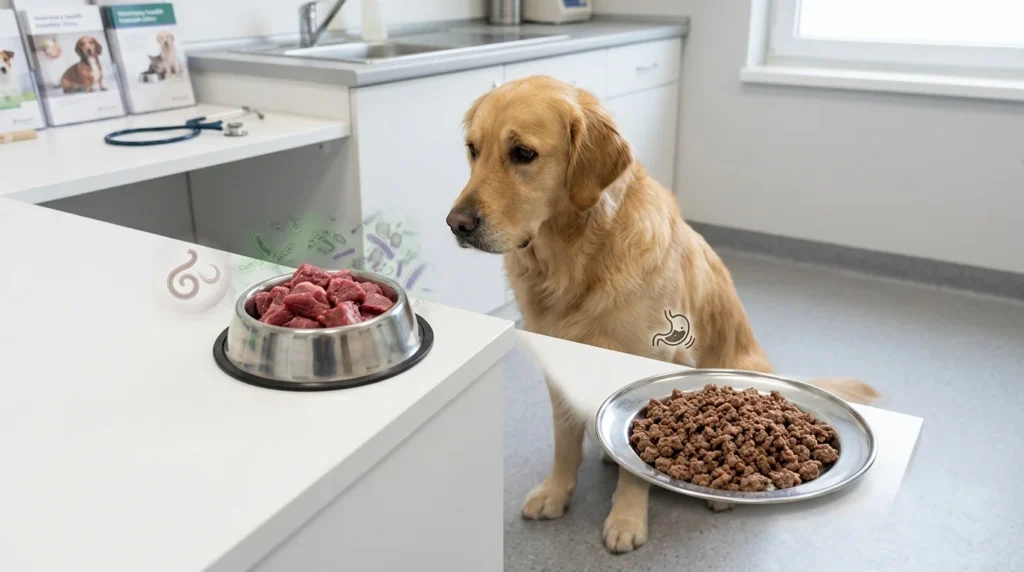
Freezing raw beef does not reliably eliminate all foodborne bacteria. While freezing can affect some parasites, it should not be treated as a substitute for proper cooking and food hygiene.
If you want to reduce the food-safety risks associated with beef, thoroughly cook it rather than relying on freezing. Store and handle raw meat carefully to prevent contamination.
Can Dogs Eat Raw Beef From a Steak?
A dog may physically eat raw steak, but raw steak still carries potential bacterial and parasite risks. The fact that a steak is fresh or high quality does not guarantee that it is free from microorganisms.
Thoroughly cooked, plain steak is a safer alternative. Remove bones and excessive fat, and do not share steak that has been cooked with garlic, onion, butter, heavy seasoning, or rich sauces.
Can Raw Beef Cause Diarrhea in Dogs?
Yes. Raw beef can cause diarrhea if it is contaminated with bacteria, too fatty, spoiled, or simply does not agree with your dog’s digestive system. Some dogs may also experience vomiting, gas, or abdominal discomfort.
If diarrhea is mild and short-lived, monitor your dog closely and make sure fresh water is available. Severe, bloody, persistent, or accompanied-by-vomiting diarrhea warrants prompt veterinary attention.
Signs of Food Poisoning After Raw Beef
Possible signs include vomiting, diarrhea, reduced appetite, abdominal pain, lethargy, weakness, fever, and dehydration. Some infections may cause few obvious symptoms while the dog still carries and sheds bacteria.
Contact your veterinarian if symptoms are severe, continue, or occur in a puppy, senior dog, or dog with other health concerns. Seek urgent care for collapse, difficulty breathing, severe weakness, repeated vomiting, or other serious signs.
See Also: Can Dogs Eat Mangoes? Benefits, Risks & Safe Portions
Can Raw Beef Spread Bacteria to Humans?
Yes. Raw meat can introduce foodborne bacteria into the household through hands, bowls, countertops, floors, utensils, and other surfaces. Dogs that consume contaminated meat can also potentially shed certain bacteria in their saliva or feces.
Wash your hands thoroughly after handling raw beef, clean food-preparation surfaces, wash your dog’s food bowl regularly, and prevent your dog from licking faces immediately after eating raw meat.
Should Dogs Eat a Raw Beef Diet?
A diet based on raw beef should not be started casually. Simply feeding muscle meat does not provide all the nutrients a dog needs, and an improperly formulated raw diet can become deficient or excessive in important nutrients.
If you are considering a raw-food diet, discuss the plan with your veterinarian or a board-certified veterinary nutritionist. They can help determine whether the diet is appropriate and how it should be formulated for your dog’s individual needs.
Frequently Asked Questions
Can dogs eat raw beef?
Dogs can eat raw beef physically, but it carries bacterial and parasite risks. Thoroughly cooked, plain beef is generally a safer choice.
Can dogs eat raw ground beef?
Raw ground beef carries particular food-safety concerns because grinding can distribute bacteria throughout the meat. Cooked plain ground beef is a safer alternative.
Can puppies eat raw beef?
Puppies should not be given raw beef casually. Their developing bodies and nutritional needs make food safety and dietary balance especially important.
What should I do if my dog eats raw beef?
Monitor your dog for vomiting, diarrhea, loss of appetite, lethargy, or other unusual symptoms. Contact your veterinarian if the symptoms are severe or persistent or if your dog ate a large amount or spoiled meat.
Is cooked beef safer for dogs than raw beef?
Yes. Thoroughly cooking beef reduces the risk from many harmful bacteria and parasites. Plain lean cooked beef is generally a lower-risk option than raw beef.
Conclusion
Raw beef is not completely safe for dogs because uncooked meat can contain harmful bacteria and parasites. It can also create household food-safety concerns and may contribute to nutritional problems if used as the main part of an improperly balanced diet.
If you want to give your dog beef, thoroughly cooked, plain, lean beef is generally the safer option. Remove excessive fat and bones and avoid onion, garlic, salt, spices, and sauces. If your dog becomes sick after eating raw beef or consumes spoiled meat, contact your veterinarian for guidance.
See Also: Fruits Dogs Can Eat: Safe Fruits, Benefits & Risks


