

Can Dogs Eat Garlic? Vet Safety Guide For Owners Should Know
Last updated: 9 November 2026
No, dogs should not eat garlic. Garlic is toxic to dogs in every form, and there is no amount that counts as safe to feed. If your dog just ate garlic, skip to the steps below and call your vet. The rest of this guide explains why garlic harms dogs, how the danger changes with each form, and what to watch for over the next five days.
If your dog just ate garlic, do this now
Do not wait for symptoms. The most dangerous damage from garlic builds slowly, so a dog that looks fine an hour after eating it can still become seriously ill days later. The American Kennel Club puts it plainly: if your dog may have eaten garlic, do not wait for symptoms to appear.
- Take the garlic or garlic food away and keep your dog from eating any more. Pick up dropped cloves, skins, and seasoning packets from the floor.
- Work out what was eaten, how much, and when. Save the packaging or the recipe so you can read the exact ingredients to your vet. A photo of the label helps.
- Call your veterinarian, an emergency vet clinic, or a pet poison helpline right away. In the United States, the Pet Poison Helpline number is 855-764-7661 and the ASPCA Animal Poison Control Center number is 888-426-4435. VCA Hospitals also lists the Pet Poison Helpline at 1-800-213-6680. A fee may apply.
- Tell the vet your dog’s weight, age, breed, any health problems, and whether your dog has eaten garlic before. Those details decide whether your dog needs to come in or simply be watched at home.
- Do not make your dog vomit, and do not give milk, oil, charcoal, or any home remedy unless your vet tells you to. Vomiting brought on the wrong way can cause choking or draw vomit into the lungs.
If the amount was large, if your dog ate garlic powder or a supplement, or if your dog is small, a puppy, or already unwell, treat it as an emergency and go to the clinic. If the amount was tiny and your dog seems well, still make the call. A vet can judge the risk in a minute.
Why garlic is toxic to dogs
Garlic belongs to the Allium family, along with onions, leeks, and chives, and its sulfur compounds damage a dog’s red blood cells. The damage builds over days and can lead to hemolytic anemia, where the blood can no longer carry enough oxygen. Cooking does not remove the risk, and no preparation makes garlic safe to feed.
When garlic is chewed, crushed, or digested, it releases sulfur compounds that attack the blood. The Merck Veterinary Manual describes these sulfur-containing oxidants as the cause of the red blood cell damage, and the ASPCA names one of them, N-propyl disulfide, as the toxic principle in garlic. Dogs cannot break these compounds down the way people can, so the oxidants damage the hemoglobin inside red blood cells. The damaged hemoglobin clumps into structures called Heinz bodies, and the red cells break apart faster than the bone marrow can replace them.
Garlic is the strongest of the common kitchen alliums. The Merck Veterinary Manual states that garlic is 3 to 5 times more toxic than onion by weight, and PetMD puts it at about five times more toxic than onions and leeks. That ratio matters because a much smaller amount of garlic can do the same damage as a larger amount of onion. The American Kennel Club makes the same point, where a vet explains that garlic is never safe to offer intentionally, regardless of the dog’s size.
Garlic also irritates the stomach directly, so vomiting and diarrhea can appear long before the blood damage shows, and VCA Hospitals warns that the red blood cell destruction can also lead to kidney damage. Garlic sits in the same family as onions, so read our guide to onions for dogs, and our guide to cooked onions for the cooking question in detail.
Every form of garlic is unsafe for dogs
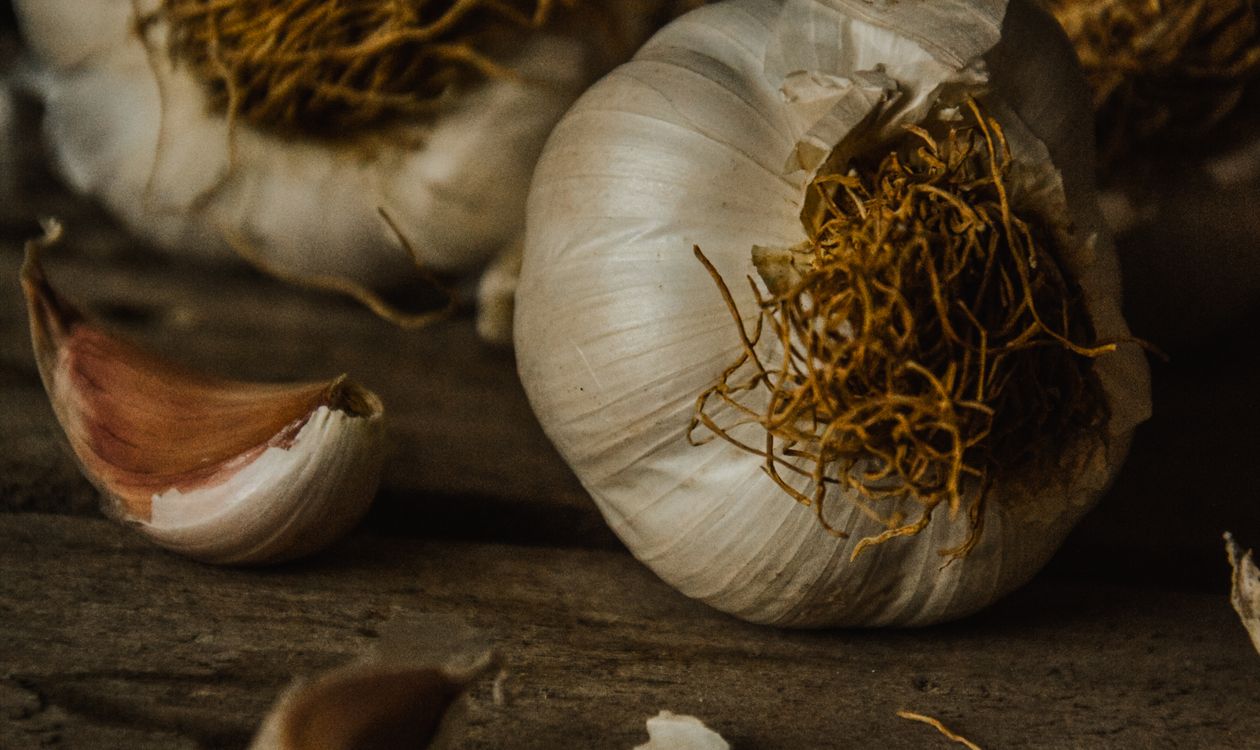
There is no form of garlic that gets a pass. Raw, cooked, dried, powdered, and liquid preparations are all poisonous to dogs, according to VCA Hospitals, and the Merck Veterinary Manual records cases in dogs after raw, cooked, dehydrated, and granulated garlic.
| Form of garlic | How dogs usually eat it | Risk level | What to know |
|---|---|---|---|
| Raw cloves | Stolen from the counter, dropped while cooking, eaten from the garden | High | A clove weighs about 5 grams, and several add up fast in a small dog. |
| Cooked or roasted garlic | Garlic bread, roast dinners, pasta, sauces, seasoned meat | High | Cooking does not make garlic safe. The toxic compounds survive roasting, frying, and boiling. |
| Garlic powder | Seasoning blends, chips, soups, rubs, sauces, gravy granules | Very high | The most dangerous common form: one teaspoon equals about eight cloves of fresh garlic, according to VCA Hospitals. |
| Garlic granules and flakes | Spice jars, dried seasoning mixes, soup mixes | Very high | Concentrated like powder. The American Kennel Club lists powders, flakes, and soup mixes as the most potent forms. |
| Garlic salt | Fries, popcorn, meat seasoning, leftovers | Very high | Garlic plus too much sodium. The salt adds its own risk of thirst, vomiting, and diarrhea. |
| Garlic oil and garlic butter | Bread, steak, pasta, roasted vegetables, dipping oil | High | The garlic is the main danger and the fat adds stomach upset. PetMD warns garlic bread can also lead to pancreatitis from the butter fat. |
| Garlic supplements and extracts | Capsules, oils, and powders sold for fleas or immunity | High | VCA Hospitals warns that human nutritional supplements can be a source of Allium poisoning. A measured capsule is still a dose of garlic. |
| Black garlic | Specialty cooking, fermented garlic products | High | Still garlic. Fermentation does not make it safe, and there is no evidence its toxic compounds are gone. Treat it like any other garlic and call your vet. |
How much garlic is dangerous? The dose question, answered honestly
There is no published garlic threshold you can safely calculate from at home. The published numbers disagree with each other, and the figure most often quoted as a garlic dose is not a garlic number at all. The safe rule is simple: no amount is safe to feed, and any ingestion warrants a vet call.
Start with the figure you will see everywhere: 15 to 30 grams per kilogram of body weight. That range comes from the Merck Veterinary Manual, but it refers to raw onion exposure in dogs, not garlic. In dogs, ingestion of 15 to 30 grams per kilogram of raw onion has resulted in clinical signs. Many popular pages repeat that range as though it were a garlic threshold. That is a misattribution, and it gives owners a false sense of safety, because garlic is several times more potent than onion by weight.
So what numbers do the vet sources actually give for garlic? PetMD states that as little as 2 grams of garlic per pound of a dog’s weight can cause stomach upset and vomiting, about 4.4 grams per kilogram. The same guide notes that a clove weighs about 5 grams, and that a 25 pound dog would need treatment after eating about 50 grams, roughly 10 cloves. That is a stomach upset figure and a treatment guide, not a safety threshold.
You will also see a lower figure quoted, around 5 grams of garlic per kilogram of body weight, from studies that measured red blood cell changes. Put the figures side by side and the disagreement is obvious: about 4.4 grams per kilogram for stomach upset, around 5 grams per kilogram where studies picked up red blood cell changes, and a 15 to 30 grams per kilogram range that belongs to raw onion, not garlic. No vet source I opened publishes a single garlic dose that separates safe from dangerous, and the American Kennel Club explains why: the threshold varies, and even relatively small amounts have caused poisoning in dogs of all sizes.
Two more facts make a home calculation unreliable. First, the effect is cumulative. PetMD notes that garlic toxicity can build up, so small amounts eaten repeatedly can cause toxic effects over time. Second, the dose depends on the form. A teaspoon of powder is not the same as a teaspoon of chopped fresh garlic, and a sauce does not list its garlic content on the jar. Any number you calculate from a recipe or a label is an estimate built on guesses, and only your vet can turn it into a plan.
Garlic poisoning symptoms, day by day
Garlic poisoning is slow, and that delay is what makes it dangerous. Stomach signs can appear within hours, but the blood damage takes days to show. The Merck Veterinary Manual explains that oxidative damage to red blood cells begins within 24 hours and peaks at about 72 hours, while the breakdown of red blood cells typically happens 3 to 5 days after exposure. The American Kennel Club puts the serious signs at two to five days, and PetMD warns that symptoms can take up to a week to appear.
| When | What you may see | What is happening inside |
|---|---|---|
| First few hours | Drooling, mouth irritation, nausea, vomiting, diarrhea, stomach pain, loss of appetite | Garlic irritates the stomach and gut. These are the earliest signs. |
| 12 to 24 hours | Continued stomach upset, tiredness, weakness starting, less interest in food or walks | Oxidative damage to red blood cells is underway, even though the dog may still look mostly normal. |
| Day 2 to 3 | Pale gums, fast breathing, fast heart rate, weakness, wobbliness, dark or red coloured urine | Damaged red blood cells are breaking down. The blood carries less oxygen, and the kidneys clear the breakdown products. |
| Day 3 to 5 | Yellow gums or eyes, severe weakness, exercise intolerance, collapse in serious cases | Hemolysis typically peaks in this window. This is the most dangerous period. |
| Up to day 7 | Slow recovery, or a late return of tiredness and pale gums | PetMD notes signs can take up to a week to appear. Keep any vet follow up appointments even if your dog seems better. |
The trap in this timeline is the quiet middle. A dog can vomit once on the first evening, seem fine the next morning, and then go pale and weak on day three or four. The Merck Veterinary Manual notes that clinical signs are generally not seen until substantial red blood cell destruction has already happened, usually a few days after exposure. If you notice pale gums, dark urine, yellow eyes, wobbliness, or collapse at any point, treat it as an emergency and go to the clinic at once.
Which dogs are most at risk?
Every dog is at risk from garlic, but some face a higher risk from the same amount. Small dogs take in more garlic per pound of body weight, so a single clove matters more to a Chihuahua than to a Labrador. Puppies, older dogs, and dogs that are already unwell are more vulnerable too. The American Kennel Club notes that dogs with liver disease or anemia may be at higher risk, because their blood and liver are already under strain.
Breed plays a part too. The American Kennel Club reports that Akitas and Shiba Inus may be genetically more sensitive to oxidative damage in red blood cells, which raises their risk of garlic induced anemia. If your dog is one of these breeds, mention it when you call the vet.
Can garlic keep fleas away? The myth, debunked
No, and this is one myth that can genuinely hurt a dog. Garlic is sold in tablets, powders, and oils as a natural flea repellent, on the idea that it changes the smell and taste of the dog so fleas stay away. PetMD states plainly that there is no scientific evidence garlic helps ward off fleas, and the American Kennel Club notes there is little research supporting these products at all.
The deeper problem is the dose. The American Kennel Club quotes a vet explaining that the amount of garlic required to potentially repel fleas is not well standardised and often approaches or exceeds the toxic threshold for dogs. To reach a dose that might bother a flea, you would have to feed enough garlic to risk poisoning the dog. Another vet in the same guide agrees, saying she does not recommend garlic for flea prevention because there is no solid evidence it works.
Natural does not mean safe, and garlic is the clearest example of that mistake in the dog world. If your dog needs flea protection, ask your vet for a proven preventative. There are safe prescription options that work without asking your dog’s red blood cells to pay the price.
Garlic bread, sauces, and seasoned food: what counts as exposure
Most garlic accidents do not involve a raw clove. They involve ordinary human food: a slice of garlic bread dropped on the floor, a bowl of pasta sauce licked clean, a piece of seasoned meat shared from the plate. All of it counts as exposure, and the question is always how much garlic was in the food.
Garlic bread is the classic case. The American Kennel Club quotes a vet saying dogs should not eat garlic in any form, including when it is used as an ingredient in other foods like pizza crust, because garlic keeps its harmful compounds even when baked into bread. PetMD adds a second problem, the fat in the butter, which can lead to vomiting, diarrhea, or pancreatitis. A single slice is unlikely to poison a large healthy dog, but several slices, or a small dog, change the picture completely.
Sauces and seasoned dishes are harder to judge because the garlic is mixed in and the amount is unknown. Pasta sauce, gravy, soup, curry, marinades, sausage, pizza toppings, and stir fry sauces often contain garlic and onion together, plus salt and fat. If your dog eats a spoonful, note the dish and estimate the amount, then call your vet. If your dog eats a whole bowl, treat it as a significant exposure and call the vet at once.
Hidden garlic is the part most owners miss. Garlic powder turns up in seasoning blends, chips, dips, soups, and meat rubs, and a label that says spices may be hiding garlic or onion powder. Read the ingredient list before sharing any human food, and set aside a plain portion for your dog before you season the family meal. Mushrooms show why it matters: plain cooked shop mushrooms are safe for dogs, as our guide to mushrooms for dogs explains, but the same mushrooms cooked in garlic butter are not.
What your vet will do
Treatment depends on how much garlic your dog ate, how long ago it happened, and how sick your dog is. The American Kennel Club explains that if the garlic was eaten recently, a vet may induce vomiting or give activated charcoal to reduce absorption. PetMD gives the same picture: vomiting is usually induced if the garlic was eaten within the past two hours, followed by activated charcoal. The Merck Veterinary Manual notes it is unknown whether charcoal adsorbs these sulfur compounds.
After that, the vet will run blood and urine tests to check red blood cell counts and kidney function. VCA Hospitals describes treatment built around decontamination, monitoring, and supportive care. Dogs already showing anemia may need hospitalisation, IV fluids, oxygen therapy, and in severe cases a blood transfusion. The Merck Veterinary Manual lists the same core treatments: early gut decontamination, oxygen or transfusion where needed, and IV fluids to protect the kidneys.
The outlook depends heavily on speed. PetMD notes that a dog seen quickly will likely make a full recovery from mild toxicity, while dogs that have developed severe side effects have a more guarded outlook and need more involved care. A phone call on day one is cheap. A transfusion on day four is not, and by then the damage is already done.
How to keep garlic away from your dog
Prevention is mostly kitchen habit. Garlic is in almost every kitchen, so the goal is not to ban it from your home. It is to put a gap between the garlic and the dog, and to make that gap a routine.
- Store garlic bulbs, cloves, powder, and supplements in closed containers on a high shelf or inside a cupboard, never in a low drawer or an open basket.
- Set aside a plain portion for your dog before you add garlic, onion, salt, or sauce to the family meal. Cooked plain, that portion is a treat. Seasoned, it is a risk.
- Read labels on seasoning blends, sauces, soups, and ready meals. If garlic or onion powder is listed, do not share the food. Sugar-free products deserve the same check: they can hide xylitol, another emergency toxin, as our guide to xylitol for dogs explains.
- Clean up as you cook. Sweep peels, skins, and dropped cloves off the floor at once, and put food scraps straight into a bin with a lid.
- Keep garlic out of garden beds your dog can reach. VCA Hospitals advises fencing off beds that contain onions, garlic, chives, or leeks.
- Tell everyone in the house the rule, including children, guests, and dog sitters. Most garlic accidents happen when someone who does not know the rule shares a bite.
Safe flavour alternatives for your dog
Dogs do not need garlic to enjoy their food, and the safest flavour is no seasoning at all. Plain cooked meat, plain cooked vegetables such as carrots or sweet potato, and ordinary dog treats give a dog plenty to enjoy without any risk. Share the plain part, cooked separately, before the seasoning goes on.
If you like the idea of adding a little flavour, check each ingredient first rather than assuming a kitchen spice is dog safe. Our guide to black pepper for dogs covers the one common spice owners ask about most. For a wider view of what belongs in the bowl and what does not, start with our complete guide to what dogs can eat and our guide to foods dogs should never eat.
Frequently asked questions
Can one bite of garlic hurt my dog?
A single small bite rarely causes serious poisoning in a large healthy dog, but it is still not safe, and the risk rises sharply with garlic powder, garlic salt, or a whole clove. Small dogs and puppies face a higher risk from the same bite. Call your vet and describe what was eaten.
Can dogs eat cooked garlic?
No. Roasted, fried, boiled, and baked garlic all keep the compounds that damage red blood cells, and the Merck Veterinary Manual records cases in dogs after cooked garlic. Garlic bread, garlic sauce, and food cooked with garlic all count as exposure.
Can garlic kill a dog?
Yes, in severe cases garlic poisoning can be life threatening, especially if a dog eats a large amount or does not receive treatment. The Merck Veterinary Manual lists collapse and death among the possible outcomes of Allium poisoning. Early vet care makes a full recovery likely in mild cases.
How long after eating garlic will a dog get sick?
Stomach signs such as vomiting and diarrhea can appear within hours, but the serious anemia signs usually develop two to five days later, and PetMD warns they can take up to a week. Watch your dog for a full week, and call your vet if anything seems unusual.
Is garlic powder worse than fresh garlic for dogs?
Yes. Garlic powder is concentrated, easy to underestimate, and hidden in many foods. VCA Hospitals notes that one teaspoon of garlic powder equals about eight cloves of fresh garlic, and the Merck Veterinary Manual records that most Allium poisoning in dogs is linked to concentrated forms such as powders and flakes.
Is black garlic safe for dogs?
No. Black garlic is still garlic, and fermentation does not make it safe. There is no evidence its toxic compounds are gone, so treat any amount the same way as other garlic and call your vet.
Can I give my dog garlic for fleas?
No. There is no solid scientific evidence that garlic repels or kills fleas, and both the American Kennel Club and PetMD advise against using it. The dose that might bother a flea often approaches or exceeds the toxic dose for a dog.
The bottom line
Garlic is toxic to dogs in every form, from a raw clove to a spoonful of powder to a slice of garlic bread. It is several times more potent than onion by weight, its damage builds slowly over days, and there is no safe amount to feed on purpose. If your dog eats garlic, call your vet now, watch for a full week, and never wait for symptoms to decide.
Sources
- Can Dogs Eat Garlic? on the American Kennel Club site
- Can Dogs Eat Garlic? on PetMD
- Onion, Garlic, Chive, and Leek Toxicity in Dogs on VCA Hospitals
- Garlic and Onion Toxicosis in Animals in the Merck Veterinary Manual
- Garlic on the ASPCA site
This guide is for information only and is not a substitute for veterinary advice. If your dog eats garlic or shows signs of poisoning, contact your vet or an emergency clinic right away.


4 Comments