

What Vegetables Can Dogs Eat? Safe & Toxic Vegetables Guide
Vegetables can be a healthy addition to a dog’s diet when chosen and prepared correctly. Many vegetables contain essential vitamins, minerals, fiber, and antioxidants that support your dog’s overall health. While dogs primarily thrive on balanced dog food, certain vegetables can be offered as nutritious treats or meal toppers.
However, not every vegetable is safe for dogs. Some vegetables are perfectly healthy, while others can be toxic or cause digestive problems. Knowing which vegetables are safe, how much to feed, and the proper preparation methods can help keep your dog healthy and happy.
Can Dogs Eat Vegetables?
Yes, dogs can eat many vegetables safely. Vegetables provide important nutrients such as vitamins A, C, and K, fiber, potassium, and antioxidants. These nutrients may help support digestion, immune health, healthy skin, and overall wellness.
Vegetables should only be given in moderation as part of a balanced diet. They should never replace complete dog food, which contains all the nutrients dogs need for daily health.
How Many Vegetables Can Dogs Eat?
The amount of vegetables your dog can eat depends on their size, age, activity level, and overall diet. Vegetables should generally be used as healthy treats rather than the main part of a meal.
When introducing any new vegetable, start with a small amount and monitor your dog for digestive upset or allergic reactions before increasing the serving size.
| Dog Size | Recommended Amount | Frequency |
|---|---|---|
| Small Dogs | 1–2 small pieces | Several times per week |
| Medium Dogs | A few bite-sized pieces | Several times per week |
| Large Dogs | Small handful | Several times per week |
| Puppies | Very small amount | Introduce slowly |
Can Dogs Eat Carrots?
Yes, carrots are one of the healthiest vegetables for dogs. They are low in calories and rich in beta-carotene, fiber, and vitamin A, which support eye health, immune function, and healthy skin.
Raw carrots also make an excellent crunchy treat that may help reduce plaque buildup on teeth. Cut carrots into small pieces for smaller dogs to reduce the risk of choking.
Can Dogs Eat Green Beans?
Yes, green beans are safe and nutritious for dogs. They contain fiber, vitamins, and minerals while being naturally low in calories, making them a popular treat for dogs that need weight management.
Serve plain fresh, frozen, or cooked green beans without butter, salt, garlic, onions, or seasonings. Avoid canned green beans that contain added sodium.
Can Dogs Eat Broccoli?
Yes, dogs can eat broccoli in small amounts. Broccoli contains fiber, vitamin C, vitamin K, and antioxidants that may support overall health.
However, too much broccoli may cause gas or stomach discomfort because it contains compounds that can irritate the digestive system. Small portions are usually the safest choice.
Can Dogs Eat Spinach?
Dogs can eat spinach occasionally in small amounts. Spinach contains vitamins A, C, K, iron, and antioxidants that support general health.
Because spinach contains oxalates, large amounts may interfere with calcium absorption and may not be suitable for dogs with kidney problems. It is best served only as an occasional treat.
Can Dogs Eat Sweet Potatoes?
Yes, cooked sweet potatoes are an excellent vegetable for dogs. They provide fiber, vitamin A, vitamin C, and potassium that support digestion and immune health.
Always cook sweet potatoes before serving because raw sweet potatoes are harder to digest. Avoid butter, sugar, marshmallows, or other toppings commonly used in human recipes.
Can Dogs Eat Pumpkin?
Yes, plain cooked pumpkin is highly beneficial for dogs. Pumpkin is rich in fiber, which may help support healthy digestion and normal bowel movements.
Choose plain canned pumpkin or freshly cooked pumpkin without sugar or spices. Avoid pumpkin pie filling because it contains ingredients that are unsuitable for dogs.
Can Dogs Eat Cucumber?
Yes, cucumbers are safe for dogs and make a refreshing low-calorie treat. They contain a high amount of water and provide small amounts of vitamins and minerals. Cucumbers are often a good option for dogs that need healthy snacks without extra calories.
Serve cucumbers in small slices or bite-sized pieces to reduce choking risks. Avoid pickled cucumbers because they contain salt, spices, and other ingredients that are not suitable for dogs.
Can Dogs Eat Lettuce?
Yes, dogs can eat lettuce in moderation. Lettuce contains water, fiber, and small amounts of vitamins while being very low in calories. Many dogs enjoy its crunchy texture.
Wash lettuce thoroughly before serving and cut it into manageable pieces. Although lettuce is safe, it does not provide as many nutrients as some other vegetables such as carrots or green beans.
Can Dogs Eat Peas?
Yes, dogs can eat peas. Green peas, snow peas, and sugar snap peas are generally safe and contain protein, fiber, vitamins, and minerals that support overall health.
Avoid canned peas with added salt or seasonings. Serve fresh or frozen peas in moderation as part of a balanced diet.
Can Dogs Eat Celery?
Yes, celery is safe for dogs and provides fiber, vitamins, and hydration because of its high water content. It is also a low-calorie snack option for many dogs.
Cut celery into small pieces before serving because long stringy pieces may be difficult for some dogs to chew and swallow safely.
Can Dogs Eat Cabbage?
Yes, dogs can eat cabbage in small amounts. Cabbage contains vitamins C and K, fiber, and antioxidants that may support immune function and digestion.
Too much cabbage may cause gas and digestive discomfort. Plain cooked cabbage is often easier for dogs to digest than large amounts of raw cabbage.
Can Dogs Eat Zucchini?
Yes, zucchini is a healthy vegetable for dogs. It is low in calories and contains vitamins, minerals, and antioxidants that may support overall wellness.
Dogs can eat zucchini raw or cooked as long as it is plain and free from seasonings. Small pieces are easiest for dogs to eat and digest.
See Also: Can Dogs Eat Peas? Benefits, Risks & Safe Feeding Tips
What Vegetables Can Dogs Not Eat?
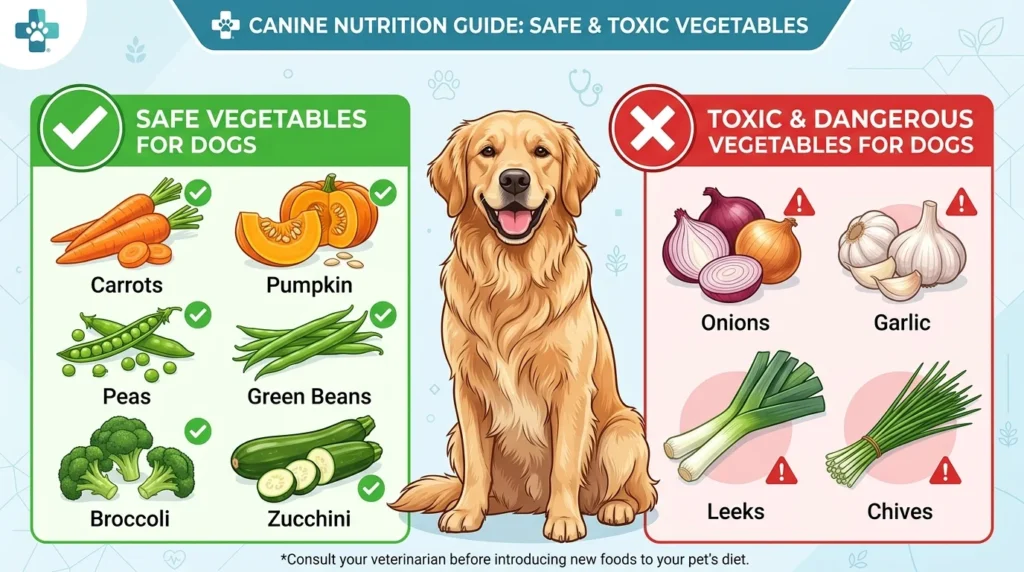
While many vegetables are safe, some should be avoided because they can be toxic or harmful. Onions, garlic, leeks, and chives belong to the allium family and can damage a dog’s red blood cells.
Large amounts of raw potatoes, certain wild mushrooms, and heavily seasoned vegetable dishes can also create health risks. Always research a vegetable before feeding it to your dog.
Is Vegetables Good for Dogs to Eat?
Yes, many vegetables can be good for dogs when served correctly. They provide fiber, vitamins, minerals, antioxidants, and hydration while often being low in calories.
Vegetables can be especially useful as healthy treats for dogs that need weight management. However, vegetables should supplement a balanced diet rather than replace regular dog food.
How to Safely Share Vegetables With Your Dog

Wash vegetables thoroughly before feeding them to your dog. Remove any harmful parts, cut them into bite-sized pieces, and serve them plain without salt, butter, garlic, onions, or seasonings.
Introduce one vegetable at a time and monitor your dog for digestive issues. This makes it easier to identify any food sensitivities or reactions.
Does Vegetables Have Benefits For Dogs?
Yes, vegetables offer several health benefits. They contain fiber that supports digestion, antioxidants that help protect cells, and vitamins that support immune function and overall wellness.
Many vegetables are also low in calories, making them excellent alternatives to high-calorie treats for dogs that need to maintain a healthy weight.
Does Vegetables Have Any Risks For Dogs?
Although vegetables can be healthy, some dogs may experience digestive upset if they eat too much at once. Gas, diarrhea, or stomach discomfort can occur when large amounts are fed.
See Also: What Can Dogs Not Eat? Dangerous Foods to Avoid Guide
Certain vegetables are toxic and should never be offered. Proper preparation and moderation are important for keeping vegetable treats safe and beneficial.
Frequently Asked Questions
What vegetables are safest for dogs?
Carrots, green beans, cucumbers, pumpkin, peas, sweet potatoes, and zucchini are among the safest vegetables for most dogs.
Can dogs eat vegetables every day?
Dogs can eat small amounts of safe vegetables regularly, but vegetables should not replace a balanced dog food diet.
Are raw vegetables safe for dogs?
Many raw vegetables are safe, but some are easier to digest when cooked. Always cut vegetables into appropriate sizes.
What vegetables are toxic to dogs?
Onions, garlic, chives, and leeks are toxic to dogs and should always be avoided.
Can puppies eat vegetables?
Yes, puppies can eat some vegetables in small amounts, but their primary nutrition should come from complete puppy food.
Conclusion
Many vegetables are safe and healthy for dogs when served properly. Options such as carrots, green beans, pumpkin, cucumbers, peas, and sweet potatoes can provide vitamins, fiber, and antioxidants that support overall health.
However, not all vegetables are safe. Toxic vegetables such as onions and garlic should always be avoided. By choosing dog-friendly vegetables and serving them in moderation, you can provide your dog with nutritious and enjoyable treats.
See Also: Can Dogs Eat Yogurt? Benefits, Risks & Safe Feeding Guide


