

Can Dogs Eat Mushrooms? Safe Types, Wild Dangers & Full Guide
The answer has two parts. Store-bought culinary mushrooms — plain, cooked without seasonings — are generally safe for dogs in small amounts. Wild mushrooms found outdoors are a completely different story and should always be treated as a potential emergency.
The American Kennel Club (AKC) confirms that plain, store-bought mushrooms like portobello, button, and shiitake are safe for dogs when cooked plain. However, the AKC also emphasizes extreme caution around any mushroom found in the wild — the ASPCA reports that 99% of wild mushroom species are harmless, but the remaining 1% can cause fatal toxicity, and identifying the 1% requires expert mycological knowledge that most dog owners do not have.
The bottom line: store-bought culinary mushrooms cooked plain — safe. Wild mushrooms found outdoors — treat as a medical emergency.
Your dog noses around near a fallen log in the park and sniffs something interesting — a wild mushroom. Or you are cooking mushrooms for dinner and your dog appears, curious about the earthy smell. Can dogs eat mushrooms? Are they safe? What about portobello mushrooms, button mushrooms, shiitake, or wild mushrooms found in the yard?
Mushrooms are one of the most genuinely nuanced food topics in dog safety. The answer is not a simple yes or no — it depends entirely on the type of mushroom, how it was prepared, and whether it was store-bought or wild. Some mushrooms are safe and even beneficial for dogs. Others are among the most lethal poisons in the natural world. Understanding the distinction could save your dog’s life.
Can Dogs Eat Mushrooms?
Are Mushrooms Good for Dogs?
Store-bought culinary mushrooms offer genuine nutritional value for dogs. Mushrooms are nutritionally remarkable — they contain protein, B vitamins (riboflavin, niacin, pantothenic acid), minerals (selenium, copper, potassium, phosphorus), dietary fiber, and various bioactive compounds including beta-glucans that have documented immune-modulating effects.
Mushrooms are also one of the few non-animal food sources of Vitamin D — and one of the only foods where Vitamin D content increases dramatically when the mushroom is exposed to sunlight (UV light converts ergosterol in mushrooms to Vitamin D2). This makes certain mushrooms a unique nutritional contributor.
The beta-glucan content of mushrooms is particularly interesting for canine health — these complex polysaccharides support immune function, have anti-tumor properties in research, and may help regulate blood sugar. Some specialty mushrooms like turkey tail and lion’s mane are used as medicinal supplements for dogs specifically for these properties.
Are Mushrooms Bad for Dogs?
Store-bought culinary mushrooms cooked plain are not bad for dogs. Wild mushrooms absolutely can be — some are lethally toxic. And any mushroom prepared with human recipe ingredients (butter, garlic, onion, salt, oil) becomes inappropriate for dogs due to those additives.
The core distinction: mushroom type and preparation determine everything. The same mushroom that is nutritious and safe when cooked plain becomes problematic when cooked in garlic butter. And a safe grocery store button mushroom is a completely different risk level from an unknown wild mushroom found in the yard.
For dogs with sensitive stomachs, even safe mushrooms can cause digestive upset in large amounts due to their high fiber and complex polysaccharide content. Introduce slowly and keep portions appropriate.
What Are the Health Benefits of Mushrooms for Dogs?
Let’s break down the specific health benefits that safe culinary mushrooms provide to dogs.
Beta-Glucans — Immune System Support Beta-glucans are complex polysaccharides found in the cell walls of mushrooms. They are among the most studied natural immune-modulating compounds available. Beta-glucans help activate immune cells including macrophages and natural killer cells, supporting the body’s ability to detect and respond to pathogens and abnormal cells. For dogs with compromised immune function, recovering from illness, or simply aging, beta-glucan-rich mushrooms provide meaningful immune support.
B Vitamins — Energy Metabolism Mushrooms are an excellent source of several B vitamins including riboflavin (B2), niacin (B3), and pantothenic acid (B5). These vitamins work together to convert food into usable energy, support healthy skin and coat, maintain proper nervous system function, and support red blood cell production. For dogs with B vitamin deficiency, mushrooms provide these nutrients in a natural, bioavailable form.
Selenium — Antioxidant and Thyroid Support Mushrooms are one of the better plant-derived sources of selenium — a trace mineral with powerful antioxidant properties that works synergistically with Vitamin E to protect cells from oxidative damage. Selenium also plays a critical role in thyroid hormone metabolism and immune function.
Copper — Enzyme and Coat Health Mushrooms provide meaningful amounts of copper — a trace mineral essential for iron absorption, red blood cell formation, enzyme function, and healthy coat pigmentation. Dogs deficient in copper can develop dull, discolored coats and anemia.
Ergothioneine — Unique Antioxidant Mushrooms are the richest food source of ergothioneine — a unique sulfur-containing antioxidant amino acid that accumulates in tissues under high oxidative stress. Research suggests ergothioneine provides targeted cellular protection, particularly in the liver, kidneys, and brain.
Vitamin D (in UV-Exposed Mushrooms) Mushrooms exposed to sunlight or UV light convert ergosterol to Vitamin D2 — one of the only plant-based sources of Vitamin D available. For dogs, Vitamin D supports bone health, immune function, and various metabolic processes.
Can Dogs Eat Mushrooms Cooked?
Yes — plain cooked mushrooms are actually the preferred form for dogs over raw. Cooking mushrooms breaks down their tough chitin cell walls, making the nutrients inside more bioavailable and easier to digest. The cooking process also makes mushrooms softer and easier for dogs to chew and digest properly.
The critical preparation rule: cook plain, with no added butter, oil, garlic, onion, salt, herbs, sauces, or seasonings. Mushrooms in human cuisine are almost never cooked plain — they are typically sautéed in butter with garlic, cooked in wine-based sauces, or mixed with cream. All of these additions make the mushrooms problematic for dogs.
To prepare mushrooms safely for your dog: use plain water, steam, or a dry pan with no oil. Cook until soft. Allow to cool completely. Serve in small pieces appropriate for your dog’s size. That is the safe version of cooked mushrooms for dogs.
Can Dogs Eat Portobello Mushrooms?
Yes — plain cooked portobello mushrooms are safe for dogs. Portobello mushrooms are large, mature cremini mushrooms with a meaty texture and rich flavor. They are one of the most popular culinary mushrooms and nutritionally excellent — rich in B vitamins, selenium, potassium, and beta-glucans.
The large size of portobello mushrooms makes them easy to cook and cut into appropriate pieces for dogs of various sizes. Cook plain (steam or dry pan with no oil), cool completely, and cut into small cubes or strips.
Never give dogs portobello mushrooms prepared as they typically appear in human food — grilled with balsamic, stuffed with cheese and garlic, or cooked in butter and herbs. Only plain, simply cooked portobello is appropriate.
Can Dogs Eat Shiitake Mushrooms?
Yes — plain cooked shiitake mushrooms are safe for dogs and are actually one of the more medicinally valuable mushroom choices. Shiitake (Lentinula edodes) contains lentinan — a beta-glucan that has been extensively studied for its immune-modulating and anti-tumor properties. Shiitake also provides eritadenine, which supports cardiovascular health, and ergothioneine.
Raw shiitake can cause a rare hypersensitivity reaction called “shiitake dermatitis” in some humans — a flagellate skin rash that appears 24 to 48 hours after consuming large amounts of raw shiitake. The same risk theoretically exists for dogs. Cooking shiitake thoroughly eliminates this risk, making plain cooked shiitake safe.
Cook shiitake plain, allow to cool, remove tough stems (the caps are the most palatable and nutritious part), and cut into small pieces before serving.
Can Dogs Eat White Mushrooms?
Yes — plain cooked white mushrooms (the common white button mushroom in its immature form) are safe for dogs. White mushrooms are the same species as cremini and portobello (Agaricus bisporus) at different stages of maturity. They are the most widely available mushroom in grocery stores and are nutritionally solid — providing B vitamins, selenium, potassium, and fiber.
White mushrooms are mild in flavor and easy to cook, making them a practical and accessible option for dog owners who want to share mushrooms. Cook plain, cool completely, and serve in small pieces. Their mild flavor is generally well-accepted by most dogs.
Can Dogs Eat Raw Mushrooms?
Not recommended. While store-bought raw mushrooms are not acutely toxic to dogs, they are harder to digest than cooked mushrooms. The chitin cell walls of raw mushrooms resist digestion — this means both that the nutrients inside are less bioavailable and that raw mushrooms can cause more digestive irritation than their cooked equivalents.
Raw shiitake specifically poses the additional risk of hypersensitivity reaction. And raw mushrooms in general are more likely to cause gas, bloating, and digestive upset in dogs than properly cooked ones.
Beyond digestibility, raw mushrooms from grocery stores may carry surface bacteria or residues. Cooking eliminates these concerns while making the nutritional content more accessible. Always cook mushrooms before giving them to your dog.
Can Dogs Eat Baby Bella Mushrooms?
Yes — baby bella mushrooms (cremini mushrooms — the adolescent form of portobello, also sold as “crimini”) are safe for dogs when cooked plain. Baby bella mushrooms have a slightly more developed flavor than white button mushrooms and are slightly firmer and denser. Their nutritional profile is similar to portobello but in a smaller, more manageable size.
Plain cooked baby bella is a good middle ground between the very mild white mushroom and the rich, meaty portobello — most dogs find the flavor appealing. Cook without any oil, butter, salt, or seasonings, allow to cool, and cut into small pieces for your dog.
See Also: Can Dogs Eat Peaches? Benefits, Pit Danger & Feeding Guide 2026
Can Dogs Eat Canned Mushrooms?
Not recommended for dogs. Most commercially canned mushrooms contain added sodium as a preservative — often 200 to 400mg per serving — significantly more sodium than is appropriate for dogs as a treat. Regular feeding of high-sodium canned foods causes excessive thirst, increased urination, and over time, cardiovascular stress.
Some canned mushroom products are also packed in oil or seasoned broths that are not appropriate for dogs. The canning process also affects mushroom texture unfavorably — canned mushrooms are softer and less nutritionally valuable than fresh cooked mushrooms.
If fresh mushrooms are unavailable, choose “no salt added” canned mushrooms in water only, drain and rinse thoroughly before serving a small amount. But fresh mushrooms cooked plain are always the better choice.
Can Dogs Eat Button Mushrooms?
Yes — plain cooked button mushrooms are safe for dogs. Button mushrooms are the smallest and youngest form of Agaricus bisporus — the same species as cremini and portobello. They are mild, widely available, affordable, and nutritionally useful.
Button mushrooms are a good starting point for introducing mushrooms to dogs — their mild flavor is non-threatening, and their small size makes them easy to portion. Cook without any seasonings, allow to cool completely, and either serve whole for large dogs or halved and quartered for smaller breeds.
Can Dogs Eat Fried Mushrooms?
No — fried mushrooms are not appropriate for dogs. Frying dramatically increases the fat content of any food, and mushrooms absorb oil particularly efficiently during frying. The resulting fried mushroom has very high fat content that creates significant pancreatitis risk.
Fried mushrooms served to humans are also almost universally battered or breaded (adding refined carbohydrates, salt, and sometimes garlic powder or other seasonings) and deep-fried in oil. Restaurant or commercially prepared fried mushrooms are essentially off-limits for dogs on every dimension — high fat, high salt, possible garlic/onion seasonings.
The only appropriate cooking methods for mushrooms for dogs are plain steaming, dry pan cooking with no oil, or simmering in plain water.
Can Dogs Eat Oyster Mushrooms?
Yes — plain cooked oyster mushrooms (Pleurotus ostreatus) are safe for dogs. Oyster mushrooms are fan-shaped culinary mushrooms with a delicate flavor and silky texture. They are nutritionally excellent — providing protein, B vitamins, iron, potassium, and various beta-glucans.
Oyster mushrooms have been specifically studied for immune-modulating properties and contain compounds that may support cardiovascular health. They are also lower in certain compounds that can cause digestive upset compared to some other mushroom varieties.
Plain cooked oyster mushroom (steamed or dry-cooked) is a good choice for dogs — the delicate flavor is generally well-accepted and the nutritional profile is strong. Cut into small pieces after cooking and serving in appropriate amounts.
Can Dogs Eat Morel Mushrooms?
With significant caution. Morel mushrooms (Morchella species) are highly prized culinary mushrooms, but they require careful handling even for human consumption. Raw morels contain a compound called monomethylhydrazine precursor that can cause gastrointestinal distress and in large amounts has been associated with more serious toxicity in humans and animals.
Cooking morels thoroughly significantly reduces this compound, which is why morels are universally eaten cooked rather than raw. Thoroughly cooked morel mushrooms are generally considered safe for human consumption.
For dogs, the conservative recommendation is to avoid morels or give only thoroughly cooked morel flesh in very small amounts as an occasional treat. False morels (Gyromitra species) look similar to true morels and are genuinely toxic — another reason to be cautious about this mushroom category. If in doubt, skip morels and choose a better-established safe variety.
Can Dogs Eat Lion’s Mane Mushrooms?
Yes — plain cooked lion’s mane mushrooms (Hericium erinaceus) are safe for dogs and are one of the most medicinally interesting mushroom varieties for canine health. Lion’s mane contains compounds called hericenones and erinacines that have been studied for their effects on nerve growth factor (NGF) synthesis — supporting brain and nervous system health.
Lion’s mane is increasingly used as a veterinary supplement specifically for dogs with cognitive dysfunction, neurological conditions, or as a general brain health support for aging dogs. It is available in both whole mushroom and extract form for dogs.
When giving lion’s mane as a food rather than a supplement, cook thoroughly plain and give in appropriate amounts. For therapeutic use, veterinary mushroom supplements with standardized dosing are more appropriate than food amounts.
Can Dogs Eat Enoki Mushrooms?
Yes — plain cooked enoki mushrooms (Flammulina velutipes) are safe for dogs. Enoki mushrooms are long, thin, delicate mushrooms with small caps, typically used in Asian cuisine. They have a mild, slightly sweet flavor and tender texture.
Enoki mushrooms should always be cooked before serving to dogs. Raw enoki has been associated with Listeria outbreaks in humans due to contamination concerns, and cooking eliminates this risk. Always cook thoroughly before serving.
Plain cooked enoki is nutritionally modest but safe. The thin, delicate structure means they become very soft when cooked — easy for dogs of all sizes to eat. Rinse thoroughly, cook in plain water or steam, allow to cool, and give in small amounts.
Can Dogs Eat Turkey Tail Mushrooms?
Yes — turkey tail mushrooms (Trametes versicolor) are safe for dogs and are perhaps the most research-supported medicinal mushroom for dogs specifically. Turkey tail has been studied in canine cancer research — a clinical trial at the University of Pennsylvania showed that turkey tail mushroom extract extended survival times in dogs with hemangiosarcoma.
Turkey tail’s immune-modulating beta-glucans — particularly PSK (polysaccharide K) and PSP (polysaccharide peptide) — have documented anti-tumor, immune-supporting, and gut microbiome-supporting effects in research.
Turkey tail as a food is tough and woody when fresh — most dogs cannot eat the whole mushroom effectively. Turkey tail for dogs is most commonly used as a powdered supplement or extract standardized for PSK/PSP content. Consult your veterinarian for appropriate dosing if considering turkey tail as a therapeutic supplement.
See Also: Can Dogs Eat Cherries? Pits, Toxicity & Complete Safety Guide
Can Dogs Eat Bella Mushrooms?
“Bella” mushrooms refer to cremini/baby bella mushrooms — the same as baby bella covered above. Yes, plain cooked bella (cremini) mushrooms are safe for dogs. They are the same species as button and portobello mushrooms at a middle stage of maturity, with more flavor than white button and smaller size than full portobello.
Can Dogs Eat Wild Mushrooms?
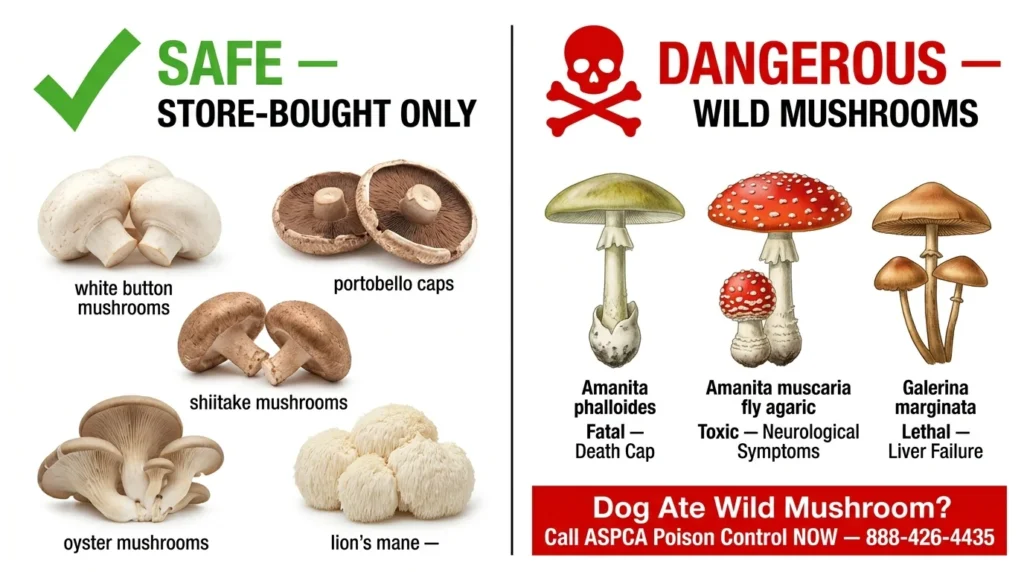
This is the most critical mushroom safety topic for dog owners. Wild mushrooms found outdoors should always be treated as potentially dangerous, and if your dog eats a wild mushroom, it should be treated as a potential veterinary emergency.
Why wild mushrooms are so dangerous: Approximately 1% of wild mushroom species are toxic to dogs (and humans). Some toxic species look remarkably similar to edible species. The most lethal mushroom in the world — Amanita phalloides (death cap) — resembles edible species enough to fool even experienced foragers. The toxins in the most dangerous wild mushrooms (amatoxins, phalloidins, ibotenic acid, muscimol) cause irreversible liver and kidney failure, seizures, and death — even in small amounts.
The most dangerous toxic wild mushrooms for dogs include:
- Amanita phalloides (death cap)
- Amanita ocreata (Western North American destroying angel)
- Galerina marginata (deadly Galerina)
- Inocybe and Clitocybe species (contain muscarine)
- Amanita muscaria (fly agaric — contains ibotenic acid and muscimol)
The rule: If your dog eats any unidentified wild mushroom, contact your veterinarian or ASPCA Animal Poison Control (888-426-4435) immediately. Do not wait for symptoms. If possible, collect a sample of the mushroom (using gloves, in a paper bag) to help with identification.
Can Dogs Eat Sautéed Mushrooms?
No — sautéed mushrooms as typically prepared are not appropriate for dogs. Sautéing mushrooms in human cuisine involves cooking in butter or olive oil, often with garlic, onion, salt, herbs, and wine. All of these additions make sautéed mushrooms problematic.
Garlic and onion are toxic to dogs and cause hemolytic anemia with regular exposure. Butter and oil add significant fat — pancreatitis risk. Salt adds excess sodium. Wine and cooking alcohol add compounds not appropriate for dogs.
If you want to give your dog some of the mushrooms you are cooking for dinner, set aside a portion before adding any oil, seasonings, or other ingredients. Cook those portions separately in a dry pan or by steaming. Plain sautéed with literally nothing — no oil, no garlic, no anything — is the only acceptable version.
Can Dogs Eat Mushroom Sauce?
No — mushroom sauce is not appropriate for dogs. Mushroom sauce — whether cream of mushroom sauce, wine-based mushroom reduction, or commercial mushroom gravy — contains ingredients that make it completely unsuitable for dogs.
Cream of mushroom sauce contains cream, butter, salt, and often garlic. Wine-based sauces contain alcohol and salt. Commercial mushroom gravy products contain very high sodium, artificial flavoring, and various preservatives. Even “simple” mushroom sauces contain cooking fat and salt at levels not appropriate for dogs.
The mushrooms in mushroom sauce may be safe in isolation, but the sauce itself is the problem. Never give mushroom sauce to your dog regardless of the mushroom variety used.
Can Dogs Eat Mushroom Stock?
Not recommended. Commercial mushroom stock or mushroom broth products contain high sodium — often 400 to 800mg per cup — far exceeding what is appropriate for dogs as a regular treat or food addition. They also contain onion and garlic in many recipes, as these are standard aromatics in stock preparation.
Homemade mushroom stock prepared specifically for dogs — plain mushrooms simmered in water with no added salt, garlic, or onion — could be used in small amounts as a food topper or to cook plain rice or chicken for dogs. But commercial mushroom stock is too high in sodium for regular use.
Can Dogs Eat Mushroom Skin?
The “skin” of mushrooms (the outer surface of the cap) is safe for dogs and does not need to be removed before serving. Mushroom caps have a thin outer surface that is part of the edible mushroom body — it is not a separate layer that needs peeling the way some fruits require skin removal.
For portobello mushrooms, some people remove the dark gills on the underside of the cap — these gills are safe for dogs but can cause dark staining in food and have a slightly more intense flavor. Removing them is optional but can make the mushroom more palatable.
Can Dogs Eat Mushrooms Safely?
Yes — store-bought culinary mushrooms can be fed to dogs safely with the right preparation.
Safe mushroom feeding checklist:
- Use only store-bought culinary mushrooms — never wild mushrooms
- Cook thoroughly — plain steaming, dry pan, or simmering in water with no additions
- No butter, no oil, no garlic, no onion, no salt, no herbs, no sauce
- Allow to cool completely before serving
- Cut into small, appropriately sized pieces for your dog’s size
- Start with a very small amount the first time — one small piece, 24-hour wait
- Keep portions within appropriate limits (see table below)
- Raw mushrooms: not recommended — cook before serving
- Canned mushrooms: avoid unless no-salt-added, drained and rinsed
- Dogs with sensitive stomachs: introduce very slowly and watch carefully
- If your dog eats a wild mushroom: contact vet immediately, do not wait for symptoms
What Are the Symptoms of Mushroom Poisoning in Dogs?
Recognizing mushroom poisoning symptoms quickly can save your dog’s life. The timeline and symptoms vary by mushroom type.
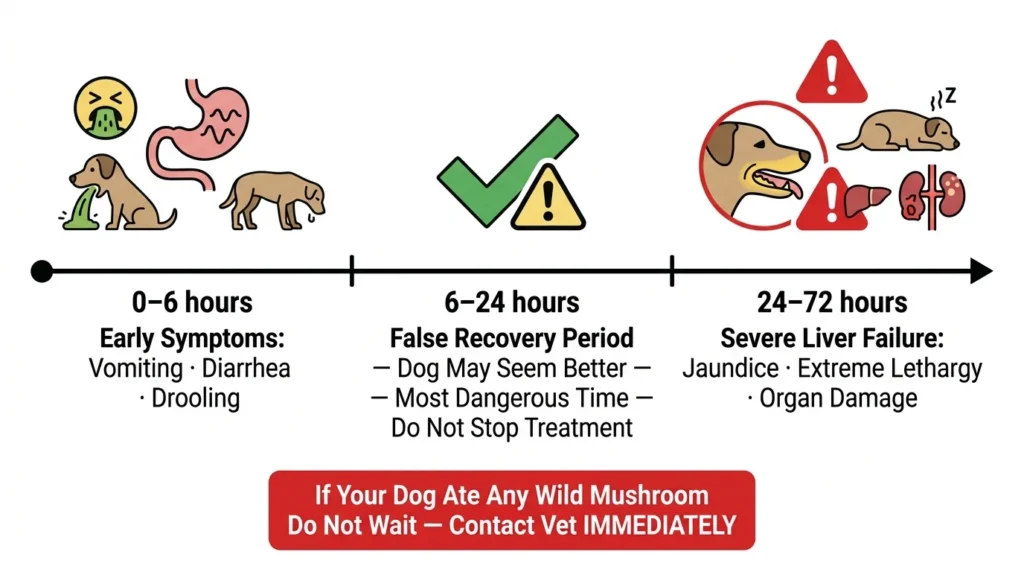
Gastrointestinal symptoms (appear within 30 minutes to 6 hours): Most mushroom poisoning types cause early GI distress — vomiting, diarrhea, abdominal pain, excessive drooling, loss of appetite. These symptoms alone suggest significant mushroom toxin exposure.
Liver and kidney failure symptoms (appear 6 to 24 hours or delayed 24 to 72 hours): The most dangerous mushrooms (amatoxins from Amanita, Galerina, and Lepiota species) cause a misleading pattern — initial GI symptoms may improve after 6 to 12 hours, creating a false sense that the dog is recovering. Then, 24 to 72 hours after ingestion, severe liver failure develops. Signs include jaundice (yellow tinge to gums and eyes), extreme lethargy, abdominal pain, and ultimately organ failure.
Neurological symptoms (appear within 30 minutes to 6 hours): Some mushrooms (Amanita muscaria, Amanita pantherina, Inocybe and Clitocybe species) affect the nervous system. Signs include excessive salivation, tearing, urination, diarrhea (SLUDGE syndrome from muscarine toxins), disorientation, seizures, tremors, and in severe cases, coma.
The most important message: If you know or suspect your dog ate a wild mushroom, contact your veterinarian or ASPCA Animal Poison Control (888-426-4435) immediately — even if your dog currently seems fine. The delayed liver failure pattern of amatoxin poisoning means a dog can appear fine for 24 to 72 hours while irreversible organ damage develops internally. Waiting for symptoms is the most dangerous mistake in wild mushroom exposure.
See Also: Can Dogs Eat Corn? Cobs, Chips, Candy Corn & Every Form Covered
How to Feed Mushrooms to Your Dog
Feeding mushrooms safely to your dog requires choosing the right type, cooking correctly, and giving appropriate amounts.
Step 1 — Choose store-bought culinary mushrooms only: Button, cremini/baby bella, portobello, shiitake, oyster, lion’s mane, enoki — all store-bought, from trusted grocery sources.
Step 2 — Clean the mushrooms: Wipe with a damp cloth or rinse briefly under cold water. Do not soak — mushrooms absorb water.
Step 3 — Cook plain: Steam, dry pan with no oil, or simmer in plain water until fully cooked and soft. No butter, oil, garlic, salt, herbs, or any additions.
Step 4 — Allow to cool completely: Hot mushrooms can burn a dog’s mouth.
Step 5 — Cut into appropriate pieces: Small cubes or thin slices for your dog’s size. Small dogs need very small pieces.
Step 6 — First introduction: Give just one small piece and wait 24 hours before giving more.
Step 7 — Serve and store: Serve immediately, or refrigerate in an airtight container for up to three days.
How Many Mushrooms Can a Dog Eat?
Even safe store-bought mushrooms should be given in moderation. The 10% treat guideline applies, and mushrooms’ complex compounds mean gradual introduction is important even when safe.
How Many Mushrooms Can a Dog Eat? — Portion Guide by Dog Size
| Dog Size | Weight Range | Plain Cooked Mushrooms Per Serving | Daily Maximum | Frequency |
|---|---|---|---|---|
| Extra Small | Under 10 lbs | 1–2 small pieces (half-inch cubes) | 1–2 tablespoons | 2–3 times per week |
| Small | 10–20 lbs | 2–4 small pieces | 2–3 tablespoons | 2–3 times per week |
| Medium | 20–50 lbs | 4–6 pieces or 1–2 tablespoons chopped | 3–4 tablespoons | A few times per week |
| Large | 50–90 lbs | 6–10 pieces or 2–3 tablespoons chopped | ¼ cup | A few times per week |
| Extra Large | 90 lbs + | Up to ¼–⅓ cup chopped | ⅓ cup | A few times per week |
Important notes on this table:
- This table applies ONLY to plain, cooked, store-bought culinary mushrooms — not wild mushrooms in any amount.
- Wild mushrooms: zero — no safe amount for any dog size.
- Mushrooms cooked with butter, oil, garlic, onion, or salt: zero.
- Introduce slowly — start with even less than the minimum shown and increase gradually over 1 to 2 weeks.
- Dogs with sensitive stomachs may need even smaller amounts — mushrooms’ complex polysaccharides can cause digestive upset.
- Dogs with existing health conditions, immunocompromised dogs, or dogs on medications — consult your vet before adding mushrooms to the diet.
- Medicinal mushroom supplements (turkey tail, lion’s mane extracts) are dosed differently — follow product guidelines or vet recommendations, not this food table.
Can Puppies Eat Mushrooms?
Not recommended for young puppies. Puppies have developing digestive systems that are more sensitive to complex plant compounds including mushrooms’ chitin, beta-glucans, and various bioactive compounds. The immune-modulating effects of mushrooms, while beneficial for adult dogs, may be less appropriate for puppies whose immune systems are still developing and calibrating.
For older puppies (over 6 months) in good health, very small amounts of plain cooked store-bought mushrooms can be introduced slowly. Start with literally one small piece of cooked button or portobello mushroom and wait 48 hours.
The wild mushroom risk is particularly acute for puppies, who explore the world with their mouths and may sniff up and eat something from the ground before you can prevent it. If you have a puppy and a yard where wild mushrooms might grow, check regularly and remove any wild mushrooms immediately.
Can Dogs Be Allergic to Mushrooms?
Yes — mushroom allergies in dogs are possible. Mushrooms are a biologically distinct kingdom from plants and animals, and their proteins can act as allergens in sensitive individuals.
Signs of mushroom allergy in dogs include: itchy skin, hives or raised bumps, facial swelling (around the mouth or eyes), vomiting, diarrhea, excessive scratching or licking, and in severe cases, anaphylactic reactions with difficulty breathing.
Mushroom sensitivity can also manifest as digestive intolerance rather than true allergy — some dogs simply cannot tolerate mushrooms’ complex compounds without digestive upset regardless of the amount given.
Always introduce mushrooms slowly (one small piece the first time, wait 24 hours) to screen for any allergic or sensitivity reaction. If any reaction occurs, stop immediately and consult your veterinarian before giving mushrooms again.
Also Read: Can Dogs Eat Coconut Oil? Benefits, Risks & Safe Guide
Frequently Asked Questions
Can dogs eat mushrooms?
Store-bought culinary mushrooms (button, portobello, shiitake, oyster, cremini) cooked plain with no seasonings are safe for dogs in small amounts. Wild mushrooms found outdoors are potentially extremely toxic and should be treated as a veterinary emergency if consumed.
Are mushrooms good for dogs?
Plain cooked store-bought mushrooms provide B vitamins, selenium, beta-glucans, copper, and ergothioneine — real nutritional benefits. Some medicinal varieties like turkey tail and lion’s mane have research-supported immune and neurological benefits for dogs.
Are mushrooms bad for dogs?
Store-bought mushrooms cooked plain are not bad. Wild mushrooms can be fatally toxic. Mushrooms cooked with garlic, onion, butter, salt, or sauces are not appropriate. Canned mushrooms with high sodium are not recommended.
Can dogs eat raw mushrooms?
Not recommended. Raw mushrooms are harder to digest than cooked, and raw shiitake can cause hypersensitivity reactions. Always cook mushrooms before giving to your dog.
Can dogs eat portobello mushrooms?
Yes — plain cooked portobello is safe for dogs. Never give portobello prepared with garlic, butter, balsamic, or any seasoning.
Can dogs eat shiitake mushrooms?
Yes — plain cooked shiitake is safe and nutritionally excellent for dogs. Never give raw shiitake (hypersensitivity risk). Cook thoroughly and give plain.
Can dogs eat button mushrooms?
Yes — plain cooked button mushrooms are safe for dogs. Mild flavor and wide availability make them a practical choice.
Can dogs eat wild mushrooms?
No — wild mushrooms should never be intentionally given to dogs and should be treated as a potential emergency if consumed outdoors. Contact your vet or ASPCA Poison Control immediately if your dog eats a wild mushroom.
What are the symptoms of mushroom poisoning in dogs?
Vomiting, diarrhea, abdominal pain, excessive drooling (early — 30 min to 6 hours). Neurological signs: disorientation, seizures, tremors (if muscarine-type toxins). Delayed liver failure: jaundice, extreme lethargy, organ failure (24 to 72 hours — the most dangerous pattern). Contact vet immediately for any wild mushroom ingestion.
Can dogs eat mushroom sauce or stock?
No. Mushroom sauce contains cream, butter, garlic, salt, and/or alcohol. Commercial mushroom stock contains very high sodium and often garlic and onion. Both are inappropriate for dogs.
Can dogs eat enoki mushrooms?
Yes — plain cooked enoki mushrooms are safe. Always cook before serving (raw enoki has been associated with Listeria contamination in humans). Cook in plain water, cool, and serve small amounts.
Can dogs eat lion’s mane mushrooms?
Yes — plain cooked lion’s mane is safe and has specific neurological benefits from hericenones and erinacines. Often used as a veterinary supplement for cognitive support in aging dogs.
Can dogs eat turkey tail mushrooms?
Yes — turkey tail is safe and has research-supported immune benefits in dogs. As food, it is very tough — usually given as a powdered supplement rather than whole mushroom. Consult your vet for appropriate supplemental dosing.
Can dogs be allergic to mushrooms?
Yes. Signs include itching, hives, facial swelling, vomiting, or diarrhea. Introduce slowly (one piece, 24-hour wait) and stop if any reaction occurs.
Can puppies eat mushrooms?
Not recommended for young puppies. Older puppies (over 6 months) can try very small amounts of plain cooked store-bought mushroom. Never give wild mushrooms to puppies. Supervise puppies outdoors in areas where wild mushrooms may grow.
How much mushroom can a dog eat?
See the portion table above. Small dogs: 1–4 small pieces. Medium dogs: 4–6 pieces. Large dogs: 6–10 pieces. Extra large: up to ¼ cup. All plain cooked store-bought varieties only. Wild mushrooms: zero.
Conclusion
Mushrooms occupy a uniquely complex position in dog food safety — potentially among the most beneficial foods you can share, and potentially among the most dangerous in the world. The entire difference comes down to one question: is this mushroom from a grocery store, or did it come from the ground outside?
Also Read: Can Dogs Eat Watermelon Rind or Seeds? Full Safety Guide


