

Can Dogs Eat Watermelon Rind or Seeds? Full Safety Guide
Summer is here, you’re cutting up a fresh watermelon, and your dog is right there — nose up, tail wagging, eyes locked on every single slice. You want to share, but you’re not sure if it’s actually safe. Can dogs eat watermelon? What about the seeds? The rind? The green skin?
You’re asking the right questions. This complete guide covers every single angle of the topic. Every related question dog owners ask about watermelon is answered here — clearly, honestly, and in simple language. No fluff, no guesswork. Just everything you need to know to safely share one of summer’s best fruits with your dog.
Can Dogs Eat Watermelon?
Yes — dogs can eat watermelon, and it is completely safe for most healthy dogs. The American Kennel Club (AKC) confirms that watermelon is a dog-friendly fruit. It is non-toxic, low in calories, and packed with nutrients that genuinely benefit your dog’s health.
The important rules: remove the seeds, remove the rind, and serve only the fresh pink flesh in appropriate portion sizes. Do that and watermelon is one of the best summer treats you can give your dog — hydrating, nutritious, and absolutely loved by most dogs.
Is Watermelon Good for Dogs?
Yes — watermelon is genuinely good for dogs. It is not just safe; it is actually nutritious. Watermelon contains Vitamin A, Vitamin B6, Vitamin C, potassium, and dietary fiber. It is also about 92% water, making it one of the most hydrating fruits available.
At roughly 50 calories per cup of flesh, watermelon is a low-calorie treat that delivers real vitamins and minerals without loading your dog up with fat or refined sugar. For dogs watching their weight or needing extra hydration in summer, watermelon is an excellent choice. It ranks among the smartest fruit treats you can offer any healthy dog.
The Benefits of Watermelon for Dogs
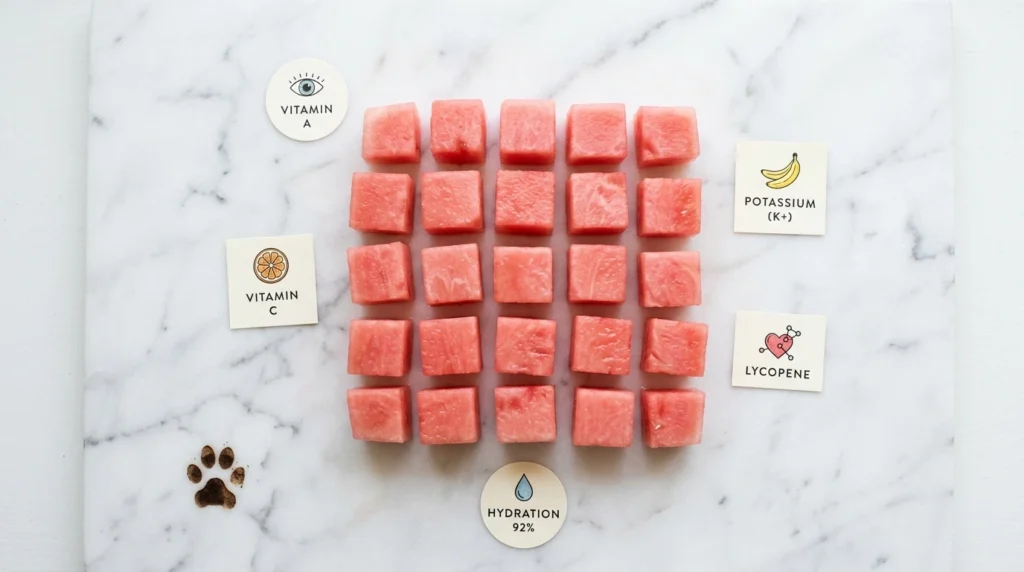
Watermelon offers several real health benefits for dogs that go beyond just being a tasty snack.
Hydration: At 92% water content, watermelon is one of the most hydrating foods on the planet. On hot summer days, a few pieces of cold watermelon can meaningfully support your dog’s fluid intake and help prevent dehydration — especially for active dogs or those who don’t drink enough water on their own.
Vitamin A: Supports healthy vision, immune function, skin health, and cell growth. Vitamin A is especially important for puppies and senior dogs.
Vitamin C: A natural antioxidant that helps neutralize free radicals, supports the immune system, and reduces inflammation. Particularly helpful for older dogs or those under physical stress.
Vitamin B6: Essential for protein metabolism, nervous system function, red blood cell production, and hormone regulation. Supports overall metabolic health in dogs.
Potassium: Supports heart function, healthy muscle contraction, and proper fluid balance throughout the body. An essential electrolyte for all dogs.
Lycopene: The compound that gives watermelon its pink-red color. Lycopene is a powerful antioxidant linked to reduced cancer risk, cardiovascular protection, and anti-inflammatory effects in research studies.
Low calories and no fat: At about 50 calories per cup with virtually zero fat, watermelon is one of the most guilt-free treats you can give a dog. Perfect for overweight dogs who still deserve something sweet.
Fiber: Supports healthy digestion, regular bowel movements, and a healthy gut microbiome.
Dogs and Watermelon Dietary Safety
Understanding watermelon’s place in your dog’s overall diet is important before making it a regular treat. Watermelon is safe, but dietary safety means more than just “not toxic.”
Treats of any kind — including fruit — should make up no more than 10% of your dog’s total daily caloric intake. The other 90% should come from a complete and balanced dog food that meets all of your dog’s nutritional needs. Watermelon is a supplement to a good diet, not a replacement for one.
For dogs with existing health conditions, dietary safety takes on extra importance. Dogs with diabetes should have watermelon only with veterinary approval, as the natural sugars can affect blood glucose. Dogs with kidney disease may need to limit potassium-rich foods including watermelon. Always check with your vet if your dog has any ongoing health condition before introducing new foods.
For healthy dogs without conditions, watermelon fits comfortably and safely into a varied treat rotation alongside other dog-safe fruits and vegetables. At Dogs Bread, we always recommend treating fruit as a bonus — a healthy, whole-food supplement — rather than a dietary cornerstone.
Can Dogs Eat Watermelon Rind?
No — dogs should not eat watermelon rind. The rind is the firm white and pale green layer between the pink flesh and the outer green skin. While it is not toxic to dogs, it is very tough and dense, making it extremely difficult for dogs to digest properly.
Eating watermelon rind commonly causes digestive upset — vomiting, diarrhea, and stomach cramps — because the tough fiber simply cannot be broken down effectively by a dog’s digestive system. More seriously, a large piece of rind can cause gastrointestinal obstruction — a blockage in the digestive tract that may require urgent veterinary treatment or surgery.
Small dogs are at particular risk because their digestive tracts are narrower and less equipped to pass tough, fibrous material. Always remove all of the rind — white and green portions — before giving watermelon to your dog. Serve only the soft pink flesh.
Can Dogs Eat Watermelon Seeds?
No — watermelon seeds should always be removed before giving watermelon to your dog. While one or two small seeds accidentally swallowed are unlikely to cause a serious problem in a large dog, seeds are a genuine concern for several reasons.
Watermelon seeds are hard and indigestible. In the digestive tract they can accumulate and contribute to intestinal blockage — particularly in small dogs. A blockage is a serious medical condition that causes vomiting, loss of appetite, abdominal pain, and inability to defecate, and often requires veterinary intervention.
Seeds also present a choking hazard, especially for smaller breeds who may try to swallow pieces of watermelon quickly without chewing properly.
The solution is simple: always remove seeds before serving. Seedless watermelon varieties are the most convenient option — but even seedless watermelons often contain small white immature seeds, which are softer and less concerning but worth removing when possible.
See Also: Can Dogs Eat Strawberries? Here’s Everything You Need to Know
Can Dogs Eat Watermelon Skin?
No — the outer green skin of a watermelon is not safe for dogs to eat. Like the rind, the tough outer skin is extremely difficult to digest and poses a real risk of gastrointestinal obstruction if swallowed. It is also very hard and rigid, making it a potential choking hazard.
Additionally, the outer skin of commercially grown watermelons may carry pesticide residue, as the skin is the part of the fruit that has been in direct contact with farming chemicals throughout its growth. Even after washing, the outer skin can retain chemicals in its surface and any cracks or texture.
Always cut watermelon so that the green skin and white rind are completely removed. Serve only the soft, seed-removed pink flesh. This is the only part of the watermelon that is genuinely safe and digestible for dogs.
Can Dogs Eat the Green Part of a Watermelon?
No — the green part of a watermelon includes both the outer skin and the green-tinged portion of the rind, neither of which is safe for dogs. Both are indigestible, potentially carry pesticide residue, and can cause digestive blockage or upset if eaten.
Some dog owners wonder if the very pale inner white layer close to the pink flesh might be okay — technically this is part of the rind and also not recommended, though it is softer than the outer green layer. The safest and simplest rule is this: only the pink flesh is safe. Everything outside the pink — white, pale green, or dark green — should be removed before serving.
When you prepare watermelon for your dog, cut generously away from the edges so that only clearly pink, fully ripe flesh remains. When in doubt, trim more rather than less.
Can Dogs Eat Yellow Watermelon?
Yes — yellow watermelon is completely safe for dogs. Yellow watermelon varieties have yellow or golden flesh instead of the classic pink-red, but the nutritional profile and safety status are essentially the same as regular watermelon.
One difference worth noting: yellow watermelon tends to be slightly sweeter than red varieties because it contains more natural sugar and less lycopene (which gives red watermelon its color and some of its antioxidant properties). This means yellow watermelon provides slightly less lycopene benefit, but is otherwise just as hydrating, just as low in calories, and just as enjoyable for dogs.
The same rules apply: remove all seeds and all rind, serve only the yellow flesh in appropriate portion sizes. Yellow watermelon makes a fun color variation for dogs who enjoy the fruit regularly.
Can Dogs Have Watermelon Rind?
While the juicy flesh of watermelon is generally safe for dogs, watermelon rind is not recommended. The rind is tough, fibrous, and difficult for dogs to digest. Eating large pieces of watermelon rind may lead to stomach upset, vomiting, diarrhea, or even intestinal blockage in some cases. Small dogs are especially at risk because the rind can become a choking hazard. To keep your pet safe, always remove the rind before serving watermelon and offer only the soft, red fruit in moderation.
Can Dogs Eat Watermelon Peel?
Many dog owners wonder if watermelon peel is safe for their pets. Although watermelon peel is not toxic, it can be hard for dogs to chew and digest properly. Consuming the peel may cause digestive discomfort, including bloating, gas, or stomach irritation. In severe cases, swallowing large chunks of peel could create an obstruction that requires veterinary attention. For this reason, it is best to discard the peel and provide only fresh watermelon flesh as a healthy treat.
Is Seedless Watermelon Safe for Dogs?
Seedless watermelon is one of the best watermelon options for dogs because it eliminates concerns about large seeds. The fruit contains plenty of water, making it a refreshing snack during warm weather, while also providing vitamins A, B6, and C. Even though seedless watermelon contains very few or no mature seeds, it should still be served in moderation due to its natural sugar content. Cutting the fruit into bite-sized pieces can make it easier and safer for dogs to enjoy.
Also Read: Can Dogs Eat Cinnamon? Safety, Risks & Feeding Guide 2026
Can Dogs Have Watermelon Skin?
Watermelon skin, also known as the outer green layer of the fruit, should generally be avoided when feeding watermelon to dogs. The skin is thick and difficult to digest, which can increase the risk of gastrointestinal issues. Some dogs may try to chew on watermelon skin, but swallowing pieces can result in stomach discomfort or choking hazards. To ensure your dog receives the benefits of watermelon without the risks, remove the skin completely and serve only the ripe fruit portion.
Can Dogs Eat Watermelon Everyday?
Not recommended as a daily food for most dogs, though small amounts daily are unlikely to cause serious harm in healthy dogs. The main concern with daily watermelon feeding is that it can displace variety in the treat rotation and contribute to an excess of natural sugar over time.
While watermelon is relatively low in sugar compared to fruits like bananas or grapes, daily feeding still adds a consistent amount of fructose to the diet that goes beyond what most dogs actually need. For dogs managing weight or blood sugar, even “low sugar” fruit adds up cumulatively.
A healthier approach for most dogs is to offer watermelon several times per week during summer rather than every single day. This gives your dog the hydration and nutritional benefits without over-relying on one food. Rotate with other dog-safe fruits and vegetables for the best overall nutritional variety.
Can Dogs Eat Watermelon and Cantaloupe?
Yes — both watermelon and cantaloupe are safe for dogs, and they can be given together as a mixed fruit treat. Cantaloupe is similarly hydrating, low in calories, and rich in Vitamin A, Vitamin C, and beta-carotene. Together, they make a nutritious and refreshing summer snack that most dogs enjoy.
When combining fruits, the same moderation rules apply — total treat intake should stay within 10% of daily calories. So sharing that 10% between two fruits means smaller portions of each. Remove seeds from both fruits, remove rinds completely, and serve only the soft flesh cut into appropriately sized pieces for your dog.
A mixed watermelon and cantaloupe bowl is a popular summer treat idea — both fruits are cold, sweet, and hydrating, making them a perfect hot-weather combination for dogs.
Can Dogs Eat Watermelon with White Seeds?
The small, soft, pale white seeds found in seedless watermelon varieties are less concerning than the hard black seeds in seeded watermelons. These immature white seeds are softer, smaller, and more digestible than mature black seeds.
That said, it is still better practice to remove white seeds when possible before serving watermelon to your dog — particularly for small dogs where any seed accumulation in the gut could contribute to digestive issues. For large healthy dogs, a few soft white seeds accidentally consumed are unlikely to cause any problem.
The practical takeaway: seedless watermelon with white seeds is the most convenient and safest choice for dogs. Remove as many white seeds as you can easily see, but don’t stress if a few small ones slip through when serving to a healthy medium or large dog.
Can Dogs Eat Watermelon Ice Cream?
No — dogs should not eat watermelon ice cream. Commercial watermelon ice cream or watermelon-flavored frozen desserts made for humans contain several ingredients that are not safe for dogs.
Most watermelon ice cream products contain large amounts of added sugar, artificial watermelon flavoring, dairy cream, stabilizers, and preservatives. Some sugar-free varieties contain xylitol — an artificial sweetener that is extremely toxic to dogs and can cause life-threatening hypoglycemia and liver failure even in small amounts.
Even without xylitol, the high dairy and sugar content makes commercial watermelon ice cream inappropriate for dogs. Many dogs are also lactose intolerant and cannot digest dairy products well.
If you want to give your dog a cold watermelon-flavored frozen treat in summer, make your own. Blend seedless watermelon flesh, pour into silicone molds, and freeze. Simple, safe, and dogs love it just as much.
Can Dogs Eat Watermelon Sour Patch Kids?
Absolutely not. Watermelon Sour Patch Kids are candy — they contain no real watermelon whatsoever. They are made from refined sugar, corn syrup, artificial watermelon flavoring, citric acid, and artificial food coloring. None of these ingredients are safe or appropriate for dogs.
The high sugar content alone makes them harmful — causing digestive upset, blood sugar spikes, and contributing to weight gain and dental decay. The artificial coloring and flavoring agents can cause additional digestive irritation. Some sour candy products also contain modified starches or other additives that dogs cannot process safely.
There is no safe amount of Sour Patch Kids or any candy for a dog. If your dog accidentally ate a piece or two, watch for vomiting or digestive upset but a small accidental exposure is unlikely to be a medical emergency. If a large amount was consumed, contact your veterinarian.
See Also: Can Dogs Eat Bananas? Everything You Need to Know Before Feeding
How Much Watermelon Can Dogs Have?
Portion size depends primarily on your dog’s weight and overall daily diet. The standard pet nutrition guideline applies: treats should make up no more than 10% of total daily caloric intake.
Here is a practical guide by dog size:
Extra small dogs (under 10 lbs): 1 to 2 small cubes (roughly 1 inch each), a few times per week.
Small dogs (10 to 20 lbs): 2 to 3 small cubes per serving, a few times per week.
Medium dogs (20 to 50 lbs): A small handful — roughly half a cup of cubed flesh — a few times per week.
Large dogs (50 lbs and above): Up to one cup of cubed flesh per serving, several times per week.
These are upper limits, not daily targets. Always factor watermelon into the total treat budget for the day alongside any other treats. If your dog has had other treats earlier, reduce the watermelon portion accordingly.
How to Feed a Dog Watermelon?

Feeding watermelon to your dog is easy and takes just a couple of minutes of preparation. Follow these simple steps every time for safe and enjoyable serving.
Step 1: Choose a ripe watermelon — red, firm flesh, sweet smell.
Step 2: Cut a slice and remove all of the outer green skin and white rind completely. Cut generously — only serve clearly pink flesh.
Step 3: Remove all visible seeds — both black seeds and white seeds when possible.
Step 4: Cut the pink flesh into small, manageable cubes appropriate for your dog’s size. Roughly 1-inch cubes for medium dogs; smaller pieces for small breeds.
Step 5: Serve fresh, or refrigerate for up to two days in an airtight container. For a frozen treat, place cubes on a tray and freeze until solid.
Step 6: If it’s your dog’s first time eating watermelon, start with just one or two small pieces and wait 24 hours to check for any digestive reaction before giving more.
Fun Ways to Share Watermelon with Your Dog
Beyond just handing over a plain piece, there are several creative and enjoyable ways to incorporate watermelon into your dog’s treat routine — all safe and most dogs absolutely love them.
Frozen watermelon cubes: Cut seedless flesh into cubes, freeze on a parchment-lined tray, and store in a sealed bag. Serve one or two frozen cubes on a hot day for a refreshing, long-lasting cold treat.
Watermelon pupsicle: Blend seedless watermelon flesh until smooth. Pour into silicone molds or ice cube trays and freeze overnight. A simple, dog-safe frozen treat that requires zero added ingredients.
Watermelon and yogurt pupsicle: Blend watermelon flesh with a tablespoon of plain unsweetened yogurt. Freeze in silicone molds. The yogurt adds probiotics and protein alongside the watermelon’s hydration benefits.
Watermelon lick mat: Blend or mash watermelon flesh and spread it onto a lick mat. Freeze for 30 minutes. This makes a mentally engaging, slow-feeding activity that is also calming for anxious dogs.
Watermelon Kong stuffing: Mash or blend watermelon, mix with a small amount of plain yogurt, stuff into a Kong toy, and freeze overnight. Excellent for hot days, post-exercise cooldowns, or keeping your dog entertained.
Watermelon and blueberry mix: Combine small cubes of seedless watermelon with a few blueberries for a mixed berry and melon snack that is rich in antioxidants and loved by most dogs.
When Watermelon Becomes Unsafe
Watermelon is safe in the right context, but it becomes unsafe in specific situations that every dog owner should know and watch for.
When seeds are not removed: Hard black seeds accumulate in the gut and can cause intestinal blockage — a serious medical emergency requiring veterinary care.
When rind or skin is included: Tough, indigestible material that causes digestive upset and potential blockage. Always remove completely.
When portion sizes are too large: Too much at once causes diarrhea, gas, and stomach upset from the high water and fiber content overwhelming the digestive system.
When given to diabetic dogs without vet approval: The natural sugars in watermelon affect blood glucose. Diabetic dogs need specific dietary management.
When it comes from processed products: Watermelon candy, watermelon ice cream, watermelon-flavored drinks, or any product with added sugar, artificial flavoring, or xylitol. These are never safe for dogs.
When a dog is allergic: Rare but possible. Signs include itching, hives, swelling, vomiting, or diarrhea after eating. Stop immediately and contact your vet.
When given to dogs with kidney disease: High water and potassium content may be problematic for dogs with compromised kidney function. Always get veterinary guidance first.
See Also: Can Dogs Eat Apples? Benefits, Risks & Safe Serving Guide 2026
What Happens if a Dog Eats Too Much Watermelon?
Eating too much watermelon is unlikely to be a life-threatening emergency for most dogs since watermelon is not toxic — but it will almost certainly cause discomfort and digestive upset. Here is what to expect and what to do.
Likely symptoms from too much watermelon:
- Diarrhea or very loose stools
- Excessive gas and bloating
- Stomach cramps or discomfort
- Frequent urination (due to very high water content)
- Vomiting in some cases
These symptoms typically appear within a few hours of eating too much and usually resolve on their own within 12 to 24 hours.
What to do:
- Remove access to any more watermelon immediately.
- Provide fresh, clean water to prevent dehydration from diarrhea.
- Skip or reduce their next meal — offer plain boiled rice and chicken if they seem hungry but unsettled.
- Monitor closely for 24 hours.
Call your vet if:
- Symptoms are severe or worsening after 24 hours
- Your dog also ate seeds or rind (blockage risk)
- Your dog is very small, very young, or has existing health conditions
- Vomiting is persistent and your dog cannot keep water down
- Signs of abdominal pain or extreme lethargy appear
Can Puppies Eat Watermelon?
Yes — puppies can eat small amounts of watermelon, and it is generally safe for them. However, puppies require a bit more care when introducing any new food including fruit, because their digestive systems are still developing and more sensitive than adult dogs.
Start with a very small amount — just one or two tiny pieces of seed-free watermelon flesh — and wait 24 to 48 hours before giving more. Watch for any signs of digestive upset or allergic reaction.
Keep puppy portions much smaller than adult dog portions. A puppy’s primary nutrition must come from a complete, high-quality puppy food formulated to support healthy growth and development. Watermelon and any other treats are supplemental only and should make up a much smaller fraction of a puppy’s diet than in adult dogs.
Remove seeds and rind particularly carefully for puppies — their smaller digestive tracts are more vulnerable to blockage from any indigestible material. Consult your veterinarian about the right age and frequency for introducing fruit treats to your specific puppy.
Frequently Asked Questions
Can dogs eat watermelon every day?
Not recommended for most dogs. A few times per week is a healthier frequency. Daily feeding adds cumulative sugar and can displace variety in the diet. Small amounts daily are unlikely to cause harm in healthy adult dogs but regular rotation of treats is better practice.
Can dogs eat watermelon seeds?
No. Watermelon seeds are hard, indigestible, and can cause intestinal blockage — particularly in small dogs. Always remove all seeds before serving. Soft white seeds from seedless varieties are less dangerous but still better removed.
Can dogs eat watermelon rind?
No. The rind is tough and indigestible and can cause digestive upset or intestinal blockage. Serve only the soft pink flesh with rind and skin completely removed.
Is watermelon safe for dogs with diabetes?
Only with veterinary approval. The natural sugars in watermelon can affect blood glucose management in diabetic dogs. Always consult your vet before giving any fruit to a diabetic dog.
Can small dogs eat watermelon?
Yes, in very small amounts. Cut into tiny pieces, remove all seeds and rind, and give just one or two small cubes per serving. The risk of blockage from seeds or rind is proportionally higher in small dogs.
Can puppies eat watermelon?
Yes, in very small amounts with extra care. Remove all seeds and rind completely. Start with just one tiny piece and wait 24 to 48 hours. Primary nutrition must still come from complete puppy food.
What part of the watermelon is safe for dogs?
Only the soft pink flesh — with all seeds removed and all rind and green skin completely cut away. Nothing else from the watermelon is safe or appropriate for dogs.
Can dogs eat frozen watermelon?
Yes. Frozen watermelon cubes (seedless, rind removed) are a safe and wonderful summer treat that most dogs love. Freeze your own at home for the safest option.
Can dogs eat yellow watermelon?
Yes. Yellow watermelon is safe for dogs with the same rules — remove seeds and rind, serve only the yellow flesh. It is slightly sweeter than red watermelon and contains less lycopene.
Can dogs eat watermelon ice cream?
No. Commercial watermelon ice cream contains added sugar, dairy, artificial flavors, and possibly xylitol — none of which are safe for dogs. Make your own by blending seedless watermelon flesh and freezing it in silicone molds instead.
What happens if my dog eats watermelon candy like Sour Patch Kids?
A small accidental amount of candy is unlikely to be a medical emergency but watch for vomiting or digestive upset. If a large amount was eaten or the candy contained xylitol, contact your vet immediately.
How do I know if my dog is allergic to watermelon?
Signs include itching, hives, swelling around the face or throat, vomiting, or diarrhea after eating. Introduce watermelon slowly — just one small piece the first time — and wait 24 hours before giving more.
Conclusion
Watermelon is one of the best summer treats you can share with your dog. It is safe, hydrating, low in calories, and packed with real nutrients including vitamins A, B6, and C, potassium, lycopene, and fiber. Most dogs absolutely love the sweet, juicy taste — and you can feel genuinely good about giving it to them.


