

Can Dogs Eat Pineapple Core, Skin or Leaves? Full Safety Guide
You slice open a fresh pineapple, that tropical aroma fills the kitchen, and your dog immediately appears — tail going, nose working, eyes locked on every single piece. It’s one of those moments where you genuinely want to share but aren’t sure if you should. Can dogs eat pineapple? Is it safe? What about the core, the skin, the leaves? What if you only have canned pineapple in the house?
All great questions — and every single one of them is answered in this complete guide. Pineapple is actually one of the more interesting fruits to cover because there are so many forms of it and so many specific questions dog owners ask. Let’s cover every angle so you know exactly what’s safe, what’s not, and how to share this tropical treat with your dog the right way.
Can Dogs Eat Pineapple?
Yes — dogs can eat pineapple, and it is safe for most healthy dogs when served correctly. Pineapple is a non-toxic fruit that the American Kennel Club (AKC) recognizes as dog-friendly. It is packed with Vitamin C, Vitamin B6, thiamine, riboflavin, niacin, folate, manganese, copper, and dietary fiber — a genuinely impressive nutritional lineup.
The critical rules: serve only the soft inner flesh, never the tough core, spiky skin, or leaves. Fresh pineapple is the best form. Canned pineapple in syrup should be avoided due to added sugar. Portions must be kept small because pineapple is higher in natural sugar than many other dog-safe fruits.
Done right, pineapple is a delicious, hydrating, and nutritious tropical treat your dog will love.
Is Pineapple Good for Dogs?
Yes — pineapple is genuinely good for dogs, not just safe. It offers real, meaningful nutrition that supports multiple aspects of canine health. What makes pineapple stand out from many other fruits is its unique enzyme content — specifically bromelain.
Bromelain is a naturally occurring protease enzyme found almost exclusively in pineapple. It helps break down proteins in the digestive system, supports anti-inflammatory processes throughout the body, and has been studied for its potential role in wound healing, joint support, and immune modulation. For dogs, this enzyme is a real nutritional bonus that other common fruits simply do not offer.
Beyond bromelain, pineapple provides a broad range of vitamins and minerals that support immune health, energy metabolism, bone development, and healthy skin and coat. It is about 86% water, making it a reasonably hydrating treat. And at roughly 50 calories per cup of fresh chunks, it is a moderate-calorie fruit — not as low as blueberries, but still a reasonable treat option when portions are controlled.
What Are the Health Benefits of Pineapple for Dogs?
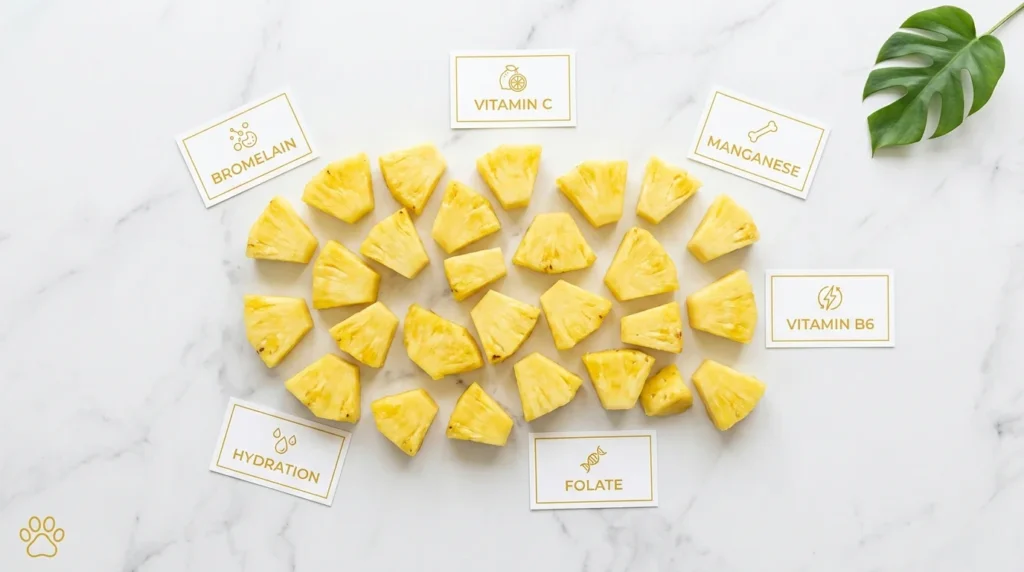
Let’s break down the specific health benefits pineapple provides to dogs.
Bromelain — The Standout Enzyme Bromelain is what makes pineapple genuinely special compared to other fruits. This protein-digesting enzyme supports nutrient absorption by helping break down dietary proteins more efficiently. It also has documented anti-inflammatory effects — useful for dogs with joint pain, arthritis, or post-surgical inflammation. Bromelain is most concentrated in fresh raw pineapple; it is significantly reduced or destroyed by heat, canning, and processing.
Vitamin C — Immune and Antioxidant Support Pineapple contains excellent amounts of Vitamin C — a major antioxidant that neutralizes free radicals, reduces cellular damage, and supports a strong immune response. For dogs recovering from illness, under physical stress, or in their senior years when the body’s own Vitamin C production decreases, dietary Vitamin C from pineapple provides meaningful support.
Manganese — Bone and Metabolic Health Pineapple is one of the richest food sources of manganese available. Manganese supports healthy bone formation, fat and carbohydrate metabolism, and collagen production — essential for joint and connective tissue health. For growing puppies and aging dogs with joint concerns, manganese is particularly valuable.
Vitamin B6 — Brain and Body Vitamin B6 (pyridoxine) supports protein metabolism, nervous system function, red blood cell production, and immune health. It plays a role in the synthesis of important neurotransmitters and helps regulate blood sugar levels — contributing to overall metabolic balance.
Thiamine, Riboflavin, and Niacin — Energy Metabolism These B vitamins work together to convert food into usable energy and support healthy nervous system and organ function. Pineapple provides all three, contributing to your dog’s daily B vitamin needs in a natural, whole-food form.
Folate — Cell Growth and DNA Folate supports DNA synthesis, cell division, and red blood cell production. It is especially important for pregnant dogs and growing puppies, but plays an ongoing role in maintaining healthy cell function throughout every life stage.
Copper — Iron Absorption and Coat Health Copper is a trace mineral that helps the body absorb iron properly, supports the formation of red blood cells, and contributes to healthy pigmentation in skin and coat. Pineapple provides a meaningful amount of dietary copper.
Hydration At 86% water content, pineapple is a reasonably hydrating fruit. During hot weather or after exercise, a few pieces of cold fresh pineapple can provide a small but helpful hydration contribution alongside your dog’s regular water intake.
Also Read: Can Dogs Eat Watermelon Rind or Seeds? Full Safety Guide
Can Pineapple Be Harmful to Dogs?
Yes — in certain situations, pineapple can be harmful to dogs. Understanding when and why keeps you in the safe zone.
Too much natural sugar: Pineapple is higher in natural sugar than many other dog-safe fruits. Too much pineapple at once or too frequently contributes to excess caloric and sugar intake, which can lead to weight gain, blood sugar instability, and digestive upset. Dogs with diabetes should only eat pineapple with explicit veterinary approval.
High acidity: Pineapple is a moderately acidic fruit. The acidity can irritate the gastrointestinal tract of dogs with sensitive stomachs, causing vomiting or diarrhea. Dogs with a history of acid reflux or digestive sensitivity may not tolerate pineapple well even in small amounts.
The core: The pineapple core is very tough and fibrous — much harder than the flesh — and poses a real choking and gastrointestinal blockage risk. Never give the core to a dog.
The skin/rind: The spiky outer skin of a pineapple is extremely tough, indigestible, and a serious choking and blockage hazard. It also contains higher concentrations of bromelain in a form that can cause mouth and throat irritation.
The leaves: The crown and leaves of a pineapple are tough, spiky, and indigestible — another choking and blockage risk with no nutritional benefit.
Canned pineapple in syrup: Heavy sugar syrup dramatically increases the sugar load of canned pineapple, making it inappropriate for dogs. Some products may also contain artificial sweeteners.
Can Dogs Eat All Parts of a Pineapple?
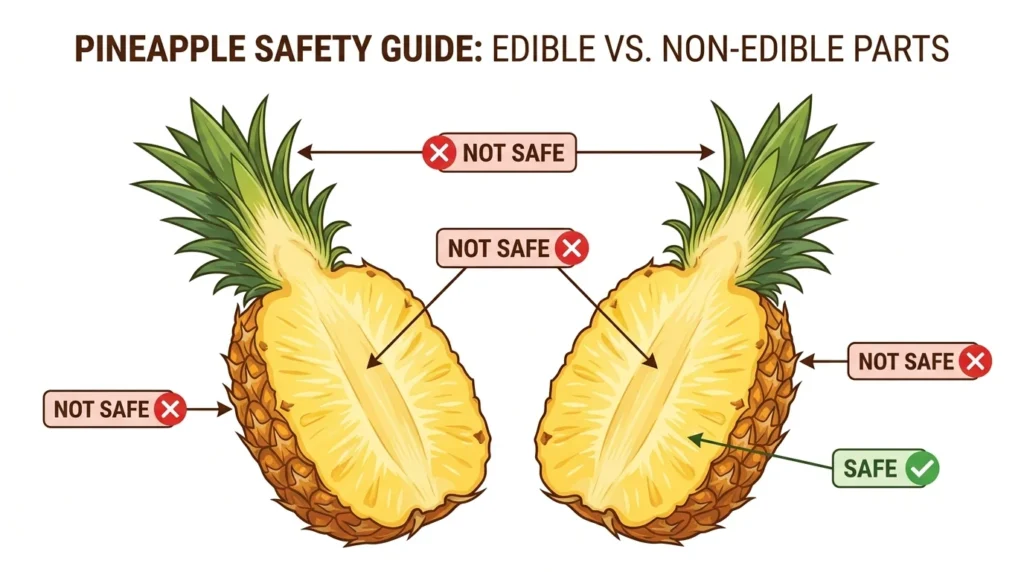
No — definitely not all parts. This is one of the most important things to understand about pineapple and dogs. The different parts of a pineapple have very different safety profiles.
The fresh inner flesh: Safe. This is the only part of a pineapple that should ever be given to a dog. The soft, ripe, yellow-gold inner flesh is nutritious, digestible, and safe in appropriate amounts.
The core: Not safe for dogs. The core is tough, dense, fibrous, and very difficult to chew and digest properly. It is a choking and blockage risk and should always be removed before serving pineapple to your dog.
The skin/rind: Not safe. The tough, spiky outer skin is indigestible, a serious choking hazard, and can cause digestive injury. Remove completely.
The leaves/crown: Not safe. The leaves are tough, spiky, and completely indigestible. They present a choking hazard and offer no nutritional value to dogs.
Canned pineapple in syrup: Not ideal — the syrup adds excessive sugar. Only plain canned pineapple in water or juice (with no added sugar) could be considered, and even then fresh is always better.
Can Dogs Be Allergic to Pineapple?
Yes — dogs can be allergic to pineapple, although true pineapple allergies in dogs are relatively uncommon. Bromelain, pineapple’s signature enzyme, is itself a potential allergen in some individuals, and some dogs may react to other compounds in the fruit.
Signs of a pineapple allergy or sensitivity in dogs include itching, hives or raised bumps on the skin, redness or swelling around the face or mouth, vomiting, diarrhea, or unusual lethargy after eating. These symptoms typically appear within minutes to a few hours of eating pineapple for the first time.
This is exactly why the slow introduction rule matters. Always give just one or two very small pieces of pineapple the first time your dog tries it. Wait 24 to 48 hours and watch carefully before giving more. If any reaction occurs, stop immediately and contact your veterinarian. Do not give pineapple again without discussing the reaction with your vet first.
Can Dogs Eat Pineapple Core?
No — dogs should not eat the pineapple core. The core of a pineapple is significantly tougher and more fibrous than the surrounding flesh. It does not chew down easily and is very difficult for the digestive system to break down properly.
For dogs that eat enthusiastically and quickly — which describes most dogs — a piece of pineapple core can easily cause choking. For dogs that manage to swallow it, pieces of tough pineapple core can cause gastrointestinal blockage — a potentially serious medical situation requiring veterinary care.
Always cut pineapple so that the core is completely removed before serving any flesh to your dog. The core is typically the whitish, firmer center column of the fruit. It is clearly distinguishable from the softer yellow flesh — when in doubt, remove more generously rather than less.
Can Dogs Eat Fresh Pineapple?
Yes — fresh pineapple is absolutely the best form to give your dog. Fresh, raw pineapple retains the full nutritional content — particularly bromelain, which is significantly reduced by heat, canning, and processing. All the vitamins, minerals, fiber, and beneficial enzymes are present in their most bioavailable form in fresh pineapple.
Fresh pineapple also has no added ingredients — no sugar syrup, no preservatives, no artificial anything. Just whole fruit nutrition exactly as nature intended.
When buying fresh pineapple for your dog, choose ripe fruit — golden yellow color, sweet tropical smell, and flesh that gives slightly under pressure. Underripe pineapple is more acidic and harder to digest. Overripe pineapple ferments and loses nutritional value. Ripe is the sweet spot.
Prepare by removing skin, leaves, and core completely. Cut the flesh into small cubes appropriate for your dog’s size and serve immediately or refrigerate in an airtight container for up to three days.
Also Read: Can Dogs Eat Apples? Benefits, Risks & Safe Serving Guide 2026
Can Dogs Eat Pineapple Chunks?
Yes — pineapple chunks are an ideal serving format for dogs. Chunks of peeled, cored, fresh pineapple flesh are easy to handle, easy to size appropriately for your dog, and easy to portion accurately.
For medium and large dogs, standard bite-sized pineapple chunks (roughly one inch) are appropriate. For small dogs, cut chunks into smaller pieces — half an inch or smaller — to prevent choking. For very small breeds, very thin slices or tiny dice are safer.
The term “pineapple chunks” can also refer to commercially prepared fresh or packaged pineapple — these are fine as long as they contain only plain pineapple with no added sugar, syrup, or other ingredients. Always check the label on any pre-cut packaged fruit before serving to your dog.
Can Dogs Eat Pineapple in Coconut Water?
Fresh pineapple naturally paired with a small amount of pure, unsweetened coconut water is generally safe for dogs and can actually be a nutritious and hydrating combination. Coconut water (not coconut milk, which is much higher in fat) provides electrolytes including potassium, magnesium, and sodium in natural proportions.
However, the key words are pure and unsweetened. Commercial coconut water products vary enormously in quality and content. Many contain added sugar, flavoring agents, or other additives that are not appropriate for dogs. Some flavored coconut water products contain artificial sweeteners including xylitol, which is extremely toxic to dogs.
If you want to give your dog a pineapple and coconut water treat, use fresh pineapple chunks and a small splash of pure, 100% natural coconut water with absolutely no added ingredients. Keep the total amount small and do not make this a regular daily treat given the combined sugar content.
Also Read: Can Dogs Eat Spinach? Benefits, Risks & Safe Serving Guide 2026
Can Dogs Eat Pineapple from Pizza?
No — dogs should not eat pineapple from pizza. This is a firm no, regardless of how harmless the pineapple component might seem. The issue is not the pineapple itself but everything else on and in the pizza.
Pizza dough is high in refined carbohydrates and often contains garlic and onion powder — both of which are toxic to dogs. Pizza sauce almost always contains garlic and onion, which are toxic to dogs even in small amounts and can cause hemolytic anemia with regular exposure. Cheese adds high levels of fat and dairy. The pizza base itself often contains salt at levels too high for dogs.
The pineapple on a Hawaiian pizza has typically been cooked (reducing bromelain content) and is surrounded by all of these harmful ingredients. One small piece accidentally dropped on the floor is unlikely to cause serious harm, but pizza should never be given to dogs intentionally — pineapple topping or not.
Can Dogs Eat Canned Pineapple?
This depends entirely on the type of canned pineapple. There are two main categories.
Canned pineapple in heavy syrup or light syrup: Do not give to dogs. The sugar syrup dramatically increases the sugar content of the pineapple, making it inappropriate — particularly for small dogs where even a small amount of syrup represents a significant sugar load. Many syrup-packed canned fruits also contain preservatives and artificial ingredients.
Canned pineapple in 100% pineapple juice or water (no added sugar): This is the safer canned option. Plain canned pineapple in its own juice with no added sugar or syrup is acceptable as an occasional treat in small amounts. However, even this option is less ideal than fresh pineapple because the canning process applies heat that significantly reduces or destroys the bromelain enzyme content — eliminating one of pineapple’s key nutritional advantages.
If you only have canned pineapple available, rinse the chunks under water to further reduce any sugar content, and give only a small amount. But whenever possible, choose fresh over canned.
Can Dogs Eat Dried Pineapple?
Dried pineapple is generally not recommended for dogs. Here is why.
The drying process removes almost all of the water content from pineapple while concentrating everything else — including natural sugars, calories, and fiber. A small amount of dried pineapple has significantly more sugar and calories than a much larger amount of fresh pineapple. For dogs already prone to weight gain or blood sugar issues, this concentrated sugar is a real concern.
Commercial dried pineapple products compound the problem further. Most commercially available dried pineapple for human consumption is heavily sweetened with added sugar to compensate for the natural tartness that becomes more pronounced during drying. Some products also contain sulfur dioxide as a preservative to maintain color, and artificial flavoring.
If you specifically want to use pineapple as a lightweight portable training treat, look for unsweetened, preservative-free dehydrated pineapple with one ingredient only — pineapple — and use only a tiny pinch at a time. Fresh is always the better choice.
Can Dogs Eat Pineapple Skin?
No — pineapple skin should never be given to dogs under any circumstances. The outer skin of a pineapple is one of the toughest, most indigestible surfaces of any common fruit. Its rigid, spiky texture creates serious risks.
The spiky protrusions on pineapple skin can physically injure the inside of a dog’s mouth, throat, and digestive tract. The skin itself is impossible for dogs to properly chew or digest and can cause gastrointestinal blockage if swallowed. Even small pieces of pineapple skin pose real choking and injury risks.
Beyond the physical risks, the outer skin of commercially grown pineapples may carry surface pesticide or fungicide residue from farming. Always cut pineapple skin away completely and generously before serving. Only the clean inner yellow flesh should ever reach your dog’s bowl.
Can Dogs Eat Pink Pineapple?
Pink pineapple — commercially known as Pinkglow pineapple — is a proprietary variety developed and sold by Del Monte Fresh Produce. Its distinctive pink flesh comes from a genetic modification that redirects lycopene (the same antioxidant that gives tomatoes and watermelon their red color) into the flesh rather than converting it to the typical yellow color.
Pink pineapple is safe for dogs in the same way regular pineapple is safe — the flesh (without core, skin, or leaves) is non-toxic and nutritious. The lycopene content may actually provide an additional antioxidant benefit compared to regular yellow pineapple, as lycopene is a well-studied carotenoid with anti-inflammatory and cell-protective properties.
However, pink pineapple is significantly more expensive than regular pineapple and not widely available. From a practical standpoint, regular fresh yellow pineapple provides essentially the same benefits at a fraction of the cost. But if you happen to have pink pineapple and want to share a piece with your dog, it is perfectly safe prepared the same way as any other variety.
See Also: Can Dogs Eat Bananas? Everything You Need to Know Before Feeding
Can Dogs Eat Pineapple Safely?
Yes — pineapple can absolutely be given to dogs safely when the right preparation steps are followed every time. The safety is entirely in the preparation.
Safe serving checklist every time:
- Use fresh, ripe pineapple whenever possible
- Remove all skin and spiky rind — completely
- Remove all leaves and crown — completely
- Remove the tough central core — completely
- Cut the remaining soft yellow flesh into small, appropriately sized pieces
- Serve in conservative amounts based on your dog’s size
- Introduce slowly the first time — just one or two small pieces
- Wait 24 hours the first time before giving more
- Never give canned pineapple in syrup
- Never give pineapple juice
- Never give dried, sweetened, or processed pineapple products
Follow these steps and pineapple is as safe as any fruit treat you can give your dog.
Can Dogs Eat Frozen Pineapple?
Yes — frozen pineapple is a safe and genuinely excellent treat option, especially during summer months. Frozen pineapple holds all of its nutritional content well — vitamins, minerals, and fiber are well preserved through freezing. However, freezing does slightly affect the bromelain enzyme activity, so frozen is nutritionally close to but not quite as optimal as fresh.
The cold, firm texture of frozen pineapple is enjoyable for most dogs and provides a refreshing way to consume the fruit. It lasts longer as a treat than fresh pineapple, which keeps dogs engaged for longer.
To make frozen pineapple treats at home: peel a fresh pineapple, remove the core, cut the flesh into small cubes, lay flat on a parchment-lined baking tray, freeze until solid, then transfer to a sealed freezer bag. Store for up to three months. Serve one to three small cubes as a hot-weather treat. For a more elaborate frozen treat, blend fresh pineapple with plain yogurt and freeze in silicone molds.
Can Dogs Eat Pineapple Juice?
No — dogs should not drink pineapple juice. While fresh pineapple juice made from real pineapple contains the same vitamins as the whole fruit, it is highly concentrated in natural sugar and completely lacks the fiber that slows sugar absorption in the whole fruit.
A cup of pineapple juice contains the sugar from several whole pineapples in a rapidly absorbed, high-glycemic form that causes a much more significant blood sugar spike than eating the whole fruit. This is particularly concerning for dogs with diabetes, but is problematic for healthy dogs too when consumed regularly.
Commercial pineapple juice is even more problematic — typically containing added sugar, high-fructose corn syrup, preservatives, and artificial flavoring. Even “100% pure” commercial pineapple juice often contains added vitamin C and other supplements not formulated for dogs.
The bromelain enzyme is also less stable in juice form and degrades quickly after pressing. There is simply no benefit from pineapple juice that cannot be better obtained through a small piece of fresh pineapple flesh. Always choose the whole fruit.
Can Dogs Eat Cooked Pineapple?
Technically safe in small amounts, but not the best choice. The primary reason is that cooking pineapple — through any method including grilling, baking, sautéing, or boiling — destroys most or all of the bromelain enzyme content, which is one of the key nutritional advantages of pineapple over other fruits.
Cooked pineapple also tends to be prepared with added ingredients in human cuisine — sugar, butter, caramel, spices — all of which are not appropriate for dogs. Plain cooked pineapple with no added ingredients would be the only acceptable form, and even then the nutritional advantages over fresh are minimal.
If you are grilling or cooking pineapple for a family meal, simply set a few pieces of fresh raw pineapple aside for your dog before cooking. This takes seconds and ensures your dog gets the full nutritional benefit — including the bromelain — rather than a heated, enzyme-depleted version.
Can Dogs Eat Cottage Cheese with Pineapple?
Plain cottage cheese with fresh pineapple pieces can be a safe combination for most dogs — but it requires careful consideration of both components.
Cottage cheese is generally safe for dogs. It is lower in lactose than most dairy products, relatively high in protein, and most dogs digest it reasonably well. It provides calcium, phosphorus, and B vitamins. However, dogs with lactose intolerance may still react to cottage cheese with digestive upset.
The pineapple component should be fresh (not canned in syrup), with core removed, and in small amounts. The natural acidity of pineapple paired with dairy can potentially cause more digestive upset in sensitive dogs than either food alone.
If you want to try this combination, use a small amount of plain, low-sodium cottage cheese with one or two small fresh pineapple pieces. Introduce it slowly and watch for any digestive reaction. Avoid flavored cottage cheese products — these contain added sugar and artificial ingredients.
Can Dogs Eat Pineapple Slices?
Yes — pineapple slices are a perfectly fine serving format, provided they are properly prepared. A “slice” of pineapple typically refers to a cross-section round of the fruit, which includes both the outer ring of flesh and the central core. For dogs, you need to remove the outer skin and the core from each slice before serving, leaving only the ring of soft yellow flesh.
These prepared flesh rings can then be cut into smaller pieces appropriate for your dog’s size. For large dogs, a quarter of a flesh ring is a reasonable serving. For medium dogs, smaller pieces from that quarter. For small dogs, very small bite-sized pieces to prevent choking.
Pre-cut fresh pineapple slices available in grocery store produce sections are convenient but always check that they contain only plain pineapple with no added sugar, juice, or preservatives before serving to your dog.
Can Dogs Eat Baked Pineapple?
Technically safe in very small amounts if baked plain with no added ingredients — but not a great choice for the same reasons as cooked pineapple generally. Baking destroys the bromelain enzyme content and reduces the Vitamin C concentration, removing key nutritional benefits.
More importantly, baked pineapple in the context of human food preparation almost always involves added sugar, butter, brown sugar glaze, rum, or other ingredients completely inappropriate for dogs. Pineapple upside-down cake, baked pineapple rings, caramelized pineapple — all of these contain ingredients that range from unhealthy to potentially toxic for dogs.
Plain baked pineapple pieces — literally just pineapple in the oven with nothing added — would be safe in small amounts but offers no advantages over fresh. Save the baked versions for your own plate and give your dog a couple of fresh pieces instead.
Can Dogs Eat Pineapple Leaves?
No — pineapple leaves should never be given to dogs. The crown of leaves at the top of a pineapple is tough, fibrous, and completely indigestible. The leaves themselves have stiff edges that can be physically sharp and injure the inside of a dog’s mouth, throat, and digestive tract.
Beyond the physical injury risk, the leaves are a serious choking hazard and could cause gastrointestinal blockage if swallowed whole or in large pieces. They offer no nutritional value whatsoever to dogs.
When preparing pineapple for your dog, always remove the entire crown including all leaves before cutting into the fruit. Store the prepared pineapple away from where your dog could access the discarded crown and leaves — some dogs will investigate and attempt to chew on them given the strong tropical smell. Put crown and leaves directly in the trash or compost where your dog cannot reach them.
See Also: Can Dogs Eat Watermelon Rind or Seeds? Full Safety Guide
Can Small Dogs Eat Pineapple?
Yes — small dogs can eat pineapple, but they require extra care regarding portion sizes and piece sizes compared to larger breeds. The same nutritional benefits and the same risks apply to small dogs as to any other dog, but the proportions matter more at a smaller body weight.
For extra small dogs (under 10 pounds), one to two very small cubes of fresh pineapple flesh per serving is more than sufficient. Cut pieces to no larger than half an inch to minimize choking risk. The higher sugar content of pineapple means a small treat goes further proportionally for a tiny dog.
For small breeds (10 to 20 pounds), two to three small cubes per serving is appropriate. Watch carefully for any signs of digestive sensitivity — small dogs tend to be more reactive to acidic foods than larger breeds.
For all small dogs, the choking concern with any solid food is proportionally higher than for large dogs. Always cut into appropriately tiny pieces and supervise the first time any new food is given.
Can Dogs Eat Pineapple from a Can?
As covered in the canned pineapple section, this depends entirely on what the pineapple is canned in. Pineapple canned in heavy syrup or light syrup — no. The sugar content is too high. Pineapple canned in 100% natural pineapple juice with no added sugar — acceptable in small amounts as an occasional treat, though fresh is always preferable.
When using canned pineapple in juice, rinse the chunks briefly under cold water to remove as much of the residual syrup or juice as possible, pat dry, and serve a small amount. The canning process has already reduced the bromelain content significantly, so the main benefit is the remaining vitamins and fiber rather than the enzyme.
Check the label carefully every time — ingredients should list only pineapple and pineapple juice, nothing else. Avoid any product with added ascorbic acid in high amounts, citric acid preservatives, or any form of sweetener.
Can Dogs Eat Pineapple Sherbet?
No — dogs should not eat pineapple sherbet. Sherbet is a frozen dessert made with fruit juice or fruit flavoring, sugar, and typically some dairy (milk or cream). Commercial pineapple sherbet contains large amounts of added refined sugar, artificial pineapple flavoring, dairy products, and often food coloring and stabilizers.
The high sugar content alone makes sherbet inappropriate for dogs. Some sherbet products also contain artificial sweeteners in addition to or instead of refined sugar, and as always, xylitol in any form is acutely toxic to dogs.
If you want to give your dog a cold, sweet, pineapple-flavored frozen treat — and this is entirely achievable — make your own safe version. Blend fresh pineapple chunks with a tablespoon of plain unsweetened yogurt, pour into silicone molds, and freeze. The result is a naturally sweet, probiotic-containing, genuinely healthy frozen treat that your dog will enjoy just as much as sherbet without any of the concerns.
Can Dogs Eat Pineapple Sausage?
No — dogs should not eat pineapple sausage. Sausages of any kind — whether containing pineapple or not — are not appropriate food for dogs. Standard sausages are high in fat, high in salt, and contain spices, garlic, onion, and other seasonings that are toxic or harmful to dogs.
Pineapple sausage specifically (a variety found in some Asian cuisines and processed meat sections) adds the pineapple component to an already problematic meat product. The pineapple in sausage is cooked (eliminating bromelain), often sweetened, and present in such small amounts relative to the harmful sausage ingredients that it offers no meaningful benefit.
If your dog accidentally ate a tiny piece of pineapple sausage, monitor for digestive upset but a very small accidental exposure is unlikely to be a serious emergency. Pineapple sausage should never be given intentionally and should not be part of your dog’s food routine.
How Much Pineapple Can Dogs Have?
Pineapple is higher in natural sugar than fruits like blueberries or strawberries, which means portion control is particularly important. The standard treat guideline applies — treats should not exceed 10% of daily caloric intake — but with pineapple, staying toward the lower end of that 10% is wise.
Extra small dogs (under 10 lbs): 1 to 2 very small cubes (half inch), a few times per week.
Small dogs (10 to 20 lbs): 2 to 3 small cubes (half to one inch), a few times per week.
Medium dogs (20 to 50 lbs): 3 to 5 cubes (one inch), a few times per week.
Large dogs (50 lbs and above): Up to a small handful — 5 to 8 cubes — a few times per week.
These are maximum amounts per serving. If your dog has had other treats during the day, reduce the pineapple amount. For dogs with diabetes or weight concerns, these amounts should be further reduced or avoided without veterinary guidance.
Frequently Asked Questions
Can dogs eat pineapple safely?
Yes — the fresh inner flesh of pineapple, with skin, core, and leaves removed, is safe for most healthy dogs in moderate amounts. Introduce slowly and keep portions conservative given the natural sugar content.
Is pineapple good for dogs?
Yes. Pineapple provides Vitamin C, B vitamins, manganese, copper, fiber, and the unique enzyme bromelain — all genuinely beneficial for dogs. Fresh raw pineapple maximizes these nutritional benefits.
Can dogs eat pineapple core?
No. The pineapple core is very tough and fibrous, posing real choking and gastrointestinal blockage risks. Always remove the core completely before serving.
Can dogs eat pineapple skin?
No. The spiky outer skin is physically dangerous, completely indigestible, and can injure a dog’s mouth and digestive tract. Remove completely and discard.
Can dogs eat canned pineapple?
Only canned in 100% juice with no added sugar. Canned in syrup — no. Fresh is always the better choice since canning destroys the bromelain enzyme.
Can dogs eat dried pineapple?
Only plain unsweetened dehydrated pineapple in tiny amounts. Most commercial dried pineapple contains added sugar, making it inappropriate. Use fresh pineapple instead whenever possible.
Can dogs eat pineapple juice?
No. Too high in concentrated sugar and acidity, and lacks the fiber of whole fruit. Give small pieces of fresh flesh instead.
Can dogs eat frozen pineapple?
Yes. Plain frozen pineapple pieces (no added sugar) are a safe and refreshing summer treat. Make your own by freezing fresh pineapple cubes at home.
Can dogs eat pineapple from pizza?
No. Pizza contains garlic, onion, high fat, and salt — all harmful to dogs — regardless of the pineapple topping.
Can dogs eat pineapple leaves?
No. Pineapple leaves are tough, sharp-edged, completely indigestible, and a serious choking and blockage hazard. Discard completely.
Can small dogs eat pineapple?
Yes, in very small pieces and very small amounts. Cut into tiny pieces, limit to one to two small cubes per serving, and watch for digestive sensitivity given small dogs’ lower tolerance for acidic foods.
Can dogs be allergic to pineapple?
Yes, though uncommon. Signs include itching, hives, swelling, vomiting, or diarrhea. Introduce slowly and watch for 24 to 48 hours the first time.
Can dogs eat pink pineapple?
Yes. Pink pineapple (Pinkglow variety) is safe for dogs with the same preparation rules as regular pineapple. The pink color from lycopene may provide additional antioxidant benefits.
Can dogs eat pineapple sherbet?
No. Sherbet contains large amounts of added sugar, dairy, and artificial ingredients. Make a safe homemade frozen pineapple treat with plain yogurt instead.
Can dogs eat pineapple sausage?
No. Sausage contains harmful seasonings, high salt, garlic, onion, and high fat — all problematic for dogs. The pineapple content does not make sausage appropriate for dogs.
What happens if my dog eats too much pineapple?
Likely digestive upset — diarrhea, gas, or vomiting — from the sugar, acidity, and fiber. Ensure fresh water access, monitor for 24 hours, reduce next meal. Contact vet if symptoms are severe or prolonged.
Conclusion
Pineapple is a safe, nutritious, and genuinely enjoyable treat for most healthy dogs — when it’s the right part, in the right form, in the right amount. The soft inner flesh of fresh ripe pineapple offers an impressive nutritional profile including bromelain, Vitamin C, manganese, B vitamins, copper, and fiber. These are real benefits that make pineapple stand out as one of the more nutritionally interesting fruits you can share with your dog.
The rules are simple and non-negotiable:
- Only the fresh inner flesh — no skin, no core, no leaves, ever
- Fresh pineapple is always the best form — maximizes bromelain and vitamin content
- Frozen plain pineapple is the second-best option — great for summer
- Canned in 100% juice with no added sugar is acceptable occasionally
- Avoid canned in syrup, dried, juiced, cooked, or processed pineapple products
- Never give pineapple from pizza, sausage, sherbet, candy, or any human food preparation
- Keep portions conservative — pineapple is higher in sugar than many other dog-safe fruits
- Introduce slowly the first time and watch for any allergic or digestive reaction
- Dogs with diabetes, obesity, kidney disease, or acid reflux need veterinary approval first
With these guidelines followed every time, pineapple can be a delightful tropical addition to your dog’s treat rotation — something different, something nutritious, and something most dogs genuinely love.
For more complete, trustworthy guides on what dogs can and cannot eat — covering dozens of fruits, vegetables, proteins, dairy products, and everyday human foods — visit Dogs Bread. Whether you’re doing a quick food safety check or researching a complete nutrition plan for your dog’s specific breed, age, or health condition, Dogs Bread provides clear, honest, research-backed answers that every dog owner can use with confidence.
Your dog depends on your good judgment. With the right information, you can always deliver exactly that.
Also Read: Can Dogs Eat Strawberries? Here’s Everything You Need to Know
Papaya is another safe tropical option — our guide on can dogs eat papaya explains how to serve it.


