

Can Dogs Eat Strawberries? Here’s Everything You Need to Know
If you’ve ever been sitting on the couch enjoying a bowl of fresh strawberries and noticed your dog staring at you with those big, hopeful eyes — you already know the feeling. You want to share, but you’re not sure if it’s safe. Can dogs eat strawberries? Will the seeds hurt them? What about the green tops? What if your dog already ate some?
You’re in the right place. This complete guide covers everything you need to know about dogs and strawberries — the benefits, the risks, how to serve them, how much is too much, and answers to every specific question you might have. Whether you’re wondering about raw strawberries, frozen ones, freeze-dried ones, or strawberry ice cream, we’ve got clear and honest answers for you right here.
Can Dogs Eat Strawberries?
Yes — dogs can eat strawberries, and they are safe for most healthy dogs.
Strawberries are non-toxic to dogs. The American Kennel Club (AKC) and the ASPCA both confirm that strawberries do not contain any compounds that are poisonous to dogs. When served fresh, clean, and in the right amount, strawberries are actually a genuinely healthy treat option for your pup.
That said, there are important rules. Not all forms of strawberries are safe. Strawberry-flavored products like jelly, ice cream, syrup, and candy can contain added sugar, artificial flavors, and — most dangerously — artificial sweeteners like xylitol, which is extremely toxic to dogs. So while the fruit itself is safe, anything strawberry-flavored from a store needs to be looked at carefully before sharing with your dog.
The key rules in short: serve fresh, wash well, remove the tops, cut into pieces, and give in moderation. Do all of that and strawberries make a fantastic, low-calorie, nutritious treat that most dogs absolutely love.
Are Strawberries Toxic to Dogs?
No — strawberries are completely non-toxic to dogs, and this is one of the most important things to understand right from the start. Unlike grapes and raisins, which can cause sudden kidney failure in dogs even in tiny amounts, strawberries have no compounds that are dangerous or poisonous to dogs. They are not on any veterinary toxic food list. The ASPCA lists strawberries as a non-toxic plant for dogs, cats, and horses.
This puts strawberries in a very safe category of fruits — alongside blueberries, watermelon, apples (without seeds), and bananas — that dogs can enjoy as part of a balanced and varied diet.
Now, “non-toxic” doesn’t mean “unlimited.” Strawberries still contain natural fruit sugar (fructose), and too much of any sugar — even natural sugar — can lead to digestive upset, loose stools, or weight gain over time. For dogs with conditions like diabetes or pancreatitis, even natural sugars need to be monitored carefully. But for a healthy dog, a few strawberries here and there carry no toxic risk whatsoever.
The one major trap to watch out for is strawberry-flavored products. Many of these contain xylitol, which IS highly toxic to dogs. Xylitol causes a sudden dangerous drop in blood sugar and can lead to liver failure within hours. Always read ingredient labels on anything that is strawberry-flavored before letting your dog near it.
When it comes to the actual fruit — whole, raw, fresh strawberries — you can rest easy. They are safe, healthy, and perfectly fine to share with your dog.
Are Strawberries Safe for Dogs?
Yes, fresh and plain strawberries are safe for dogs — but “safe” comes with a few important conditions that every dog owner needs to follow to keep things truly risk-free.
Wash them first. Strawberries are consistently ranked among the “Dirty Dozen” — a list of fruits and vegetables with the highest pesticide residue in commercial farming. This matters even more for dogs because their smaller bodies process toxins differently than humans do. A thorough rinse under cold running water for at least 30 seconds removes most surface pesticide residue. Better yet, buy organic strawberries when you plan to share them with your dog — this removes the pesticide concern almost entirely.
Remove the green top. The leafy green cap (called the calyx) and the stem are not toxic, but they are harder for dogs to digest and can be a choking hazard, especially for smaller breeds. They can also hold more pesticide residue than the berry itself since they’re often skipped during washing. It literally takes one second to hull a strawberry, so just make it a habit.
Cut into appropriate pieces. A whole strawberry can be a choking risk for small or medium dogs, and even large dogs tend to swallow treats fast without chewing properly. Cut the berry into slices or quarters based on your dog’s size. For very small dogs like Chihuahuas or Yorkies, cut into several small pieces.
Introduce slowly. If your dog has never eaten strawberries before, start with just one small piece and wait 24 hours to check for any signs of a bad reaction — things like vomiting, diarrhea, skin irritation, or excessive itching. Most dogs handle strawberries without any problems, but food sensitivities vary from dog to dog.
Are Strawberries Good for Dogs?
Beyond just being safe, strawberries are genuinely good for dogs. They are not empty calories or junk food — they are a whole fruit packed with real vitamins, minerals, fiber, and antioxidants that support your dog’s health in meaningful ways.
One of the biggest selling points is how low in calories strawberries are. A single medium-sized strawberry contains roughly 4 to 5 calories. Compare that to a commercial dog treat, which can easily contain 30 to 50 calories or more. For a dog that needs to watch its weight — which is a very common issue in pet dogs — strawberries are one of the smartest treat choices you can make.
Strawberries are also about 91% water, which means they provide a small but real hydration boost. This is especially helpful during hot summer months, for older dogs who don’t drink as much as they should, or for active dogs after a walk or play session.
The nutrient profile is impressive for a small fruit. Strawberries contain Vitamin C, fiber, folate (Vitamin B9), potassium, magnesium, and a range of antioxidant compounds. Each of these plays a role in supporting your dog’s immune system, digestion, heart function, and cellular health.
At Dogs Bread, we always recommend choosing whole food treats like fresh fruits over processed snacks when possible — and strawberries are one of the best examples of a natural treat that dogs love and their bodies can genuinely use.
Health Benefits of Strawberries for Dogs
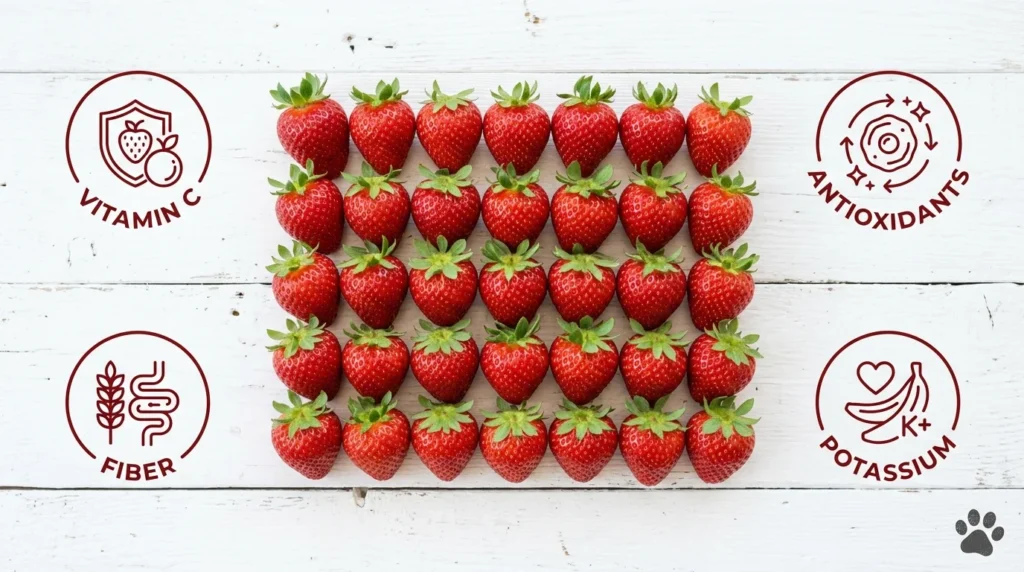
Let’s go deeper into the specific health benefits because this is where things get really interesting for dog owners who want to make smart nutrition choices.
Immune System Support
Strawberries are one of the richest natural sources of Vitamin C available in everyday food. While dogs can produce their own Vitamin C internally (unlike humans, who must get it from diet), extra dietary Vitamin C is still helpful — particularly during periods of physical stress, illness, recovery from surgery, or in senior dogs whose bodies produce less of it naturally. Vitamin C is a powerful antioxidant that neutralizes harmful free radicals in the body, protecting cells from damage and supporting the immune system’s ability to fight off infection and disease. Adding a few strawberries to your dog’s treat rotation a couple of times a week can give their immune defenses a small but real boost.
Reduced Inflammation
The bright red color of strawberries comes from natural pigment compounds called anthocyanins — and these are among the most well-studied anti-inflammatory compounds in the plant kingdom. Chronic low-grade inflammation is behind many of the most common health problems in aging dogs, including joint pain and arthritis, skin conditions, inflammatory bowel disease, and even some forms of heart disease. While strawberries alone won’t cure any of these conditions, including anti-inflammatory foods as part of a regular, balanced diet does matter over the long term. Think of it as building a strong nutritional foundation — every healthy food choice adds up.
Digestive Health
Strawberries contain good amounts of dietary fiber, both soluble and insoluble. Soluble fiber absorbs water and slows digestion, which helps regulate blood sugar and keeps your dog feeling full longer. Insoluble fiber adds bulk to stools and helps move food through the digestive tract at a healthy pace, preventing both constipation and diarrhea. Perhaps most importantly, dietary fiber feeds the beneficial bacteria that live in your dog’s gut — the microbiome. A healthy gut microbiome is increasingly recognized as central to overall immune function, mood, skin health, and more. Giving your dog a couple of strawberries a few times per week is a small but meaningful contribution to gut health.
Weight Management
If your dog is overweight — and obesity is one of the most common health problems in pet dogs in the modern world — treats are one of the first things to look at. Many commercial treats are surprisingly high in calories, fat, and artificial ingredients. Strawberries are a genuinely smart swap. At 4 to 5 calories per berry, they are a fraction of the caloric cost of most packaged treats. They are naturally sweet, which satisfies a dog’s desire for something tasty. And the fiber content means they are slightly filling. For dogs in weight loss programs, strawberries give you a way to reward and treat your dog without derailing their calorie goals.
Dental Health
Strawberries contain a naturally occurring compound called malic acid. Malic acid has mild bleaching properties and has been shown to help remove surface staining from teeth. While this isn’t a replacement for regular tooth brushing — which should be a part of every dog’s care routine — it can help keep teeth a bit brighter naturally. The slightly rough and bumpy texture of a fresh strawberry also provides a very gentle mechanical scrubbing effect on the surface of teeth and gums as the dog chews. Again, not a replacement for a toothbrush, but a pleasant bonus.
Hydration Support
At 91% water content, strawberries are one of the most hydrating whole foods you can give your dog. This matters most in summer, during exercise, or for dogs who tend not to drink enough water on their own — which is more common than many owners realize, especially in older dogs. A few slices of cold or lightly frozen strawberry on a hot afternoon is a refreshing, hydrating, and nutritious treat all in one.
Risks of Feeding Strawberries to Dogs
No food is completely without risk, and strawberries are no exception. Here are the main risks to be aware of so you can feed them responsibly and catch any problems early.
Excess Natural Sugar Strawberries contain fructose — natural fruit sugar. While this is much healthier than refined white sugar, it can still be a problem if consumed in large quantities over time. Excess sugar in any form can lead to weight gain, blood sugar instability, dental decay, and digestive upset in dogs. This is especially important for dogs who are already overweight, or for those diagnosed with diabetes or insulin resistance. Moderation is always the rule with any fruit.
Allergic Reactions Food allergies in dogs are less common than many owners fear, but they do happen. Some dogs can be allergic or sensitive to strawberries. Signs of a food allergic reaction include hives or raised bumps on the skin, excessive scratching or licking, swelling around the face, mouth, or throat, vomiting, or diarrhea. These symptoms usually appear within a few hours of eating the new food. If you notice any of these after giving your dog strawberry for the first time, stop immediately and contact your veterinarian. This is exactly why the “introduce slowly” rule matters so much.
Choking Hazard A whole strawberry, while not huge, can still be a choking hazard — especially for small breeds and for dogs who eat fast. Dogs are naturally eager to gulp down treats quickly without much chewing, particularly when excited. For this reason, always cut strawberries into appropriately sized pieces before serving. For large breeds, halves or quarters are fine. For small and toy breeds, cut into several small pieces.
Pesticide Contamination Conventionally grown strawberries are regularly found on the Environmental Working Group’s “Dirty Dozen” list — produce items that consistently test for the highest levels of pesticide residue. Because dogs are smaller than humans and their livers process certain chemicals differently, pesticide exposure is proportionally more concerning for them. Always wash strawberries thoroughly under cold running water before serving them to your dog. Organic strawberries are a safer choice if you plan to share them with your pet regularly.
Digestive Upset in Large Quantities Even in dogs without allergies and in perfectly healthy individuals, eating too many strawberries at once can cause temporary digestive upset. The combination of fiber and natural sugar can be too much for the gut to handle in large quantities, leading to loose stools, gas, or mild stomach discomfort. This is not a serious medical emergency in most cases, but it is uncomfortable for your dog and messy for you. Stick to appropriate portion sizes.
XYLITOL — The Most Serious Risk This deserves its own section and its own warning. Xylitol is an artificial sweetener used in many low-sugar and sugar-free human food products. It is completely harmless to humans but extremely toxic — potentially lethal — to dogs. Even a small amount of xylitol can cause a dangerous and rapid drop in blood sugar (hypoglycemia) and can lead to acute liver failure within 24 to 72 hours. Signs of xylitol poisoning include weakness, vomiting, loss of coordination, seizures, and collapse. If you suspect your dog ate anything containing xylitol, call your vet or the ASPCA Animal Poison Control Center immediately — do not wait for symptoms to appear.
Never give your dog strawberry jelly, strawberry jam, strawberry-flavored yogurt, strawberry candy, or any strawberry-flavored processed product without first reading the ingredient label and confirming it contains no xylitol.
See Also: Can Dogs Eat Watermelon Rind or Seeds? Full Safety Guide
Can Dogs Eat Strawberries Raw?
Yes — and raw is actually the ideal way to serve strawberries to your dog. Raw, fresh strawberries retain 100% of their natural vitamins, minerals, fiber, and antioxidant content. Nothing has been added, nothing has been removed or destroyed by heat. This is the most nutritious form you can offer.
When you cook fruit or process it into jams, juices, or other products, heat and chemical processes degrade many of the sensitive vitamins — particularly Vitamin C, which is heat-sensitive. A raw strawberry delivers far more nutritional value than a cooked or processed one. So if you’re going to give your dog a strawberry, fresh and raw is always the best choice.
The preparation is simple. Rinse thoroughly under cold water for at least 30 seconds. Remove the green leafy top and stem. Slice into pieces appropriate for your dog’s size. Serve immediately or refrigerate for up to two days. That’s it. No cooking, no preparation beyond that is needed.
Most dogs absolutely love the taste of raw strawberries. The natural sweetness, the juicy texture, and the fresh smell are all very appealing to dogs. If your dog seems uncertain at first — some dogs are initially suspicious of new foods — try mashing a tiny bit of strawberry and mixing it into their regular food as an introduction. Once they get a taste, most dogs come around very quickly.
Can Dogs Eat Strawberry Jam?
Many dog owners wonder whether strawberry jam is a safe treat for their pets. While strawberries themselves are generally safe for dogs, strawberry jam is not the best option. Most jams contain high amounts of sugar, artificial sweeteners, preservatives, and additives that can upset a dog’s digestive system. Some sugar-free jams may even contain xylitol, which is highly toxic to dogs. If you want to share strawberries with your pet, fresh strawberries are a much healthier and safer choice than processed jam products.
Can Dogs Eat Strawberry Preserves?
Strawberry preserves are similar to jam but often contain larger fruit pieces and significant amounts of added sugar. Although the strawberry content itself is not harmful, the extra sugar and preservatives can contribute to weight gain, dental issues, and digestive discomfort in dogs. Feeding preserves regularly is not recommended. Dogs benefit more from fresh or frozen strawberries without added ingredients. Always check product labels carefully before offering any processed fruit products to your pet.
Can Dogs Eat Strawberry Uncrustables?
Strawberry Uncrustables are not considered a healthy snack for dogs. These packaged sandwiches contain processed bread, strawberry filling, added sugars, and preservatives that provide little nutritional value for pets. While a small bite is unlikely to cause serious harm in most dogs, regular consumption may lead to stomach upset or unnecessary calorie intake. Instead of giving your dog processed snacks like strawberry Uncrustables, choose fresh strawberries or dog-friendly fruits as occasional treats.
Can Dogs Eat Strawberry Seeds?
Yes, dogs can safely eat strawberry seeds. Unlike some fruit seeds that contain potentially harmful compounds, strawberry seeds are tiny and generally harmless when consumed in normal amounts. They are naturally present on the fruit and do not pose a choking hazard for most dogs. However, strawberries should still be served in moderation as part of a balanced diet. Washing strawberries thoroughly before feeding them to your dog helps remove dirt, pesticides, and other contaminants.
Is Strawberry Yogurt Good for Dogs?
Strawberry yogurt may seem like a healthy snack, but it is not always the best choice for dogs. Many commercial strawberry yogurts contain added sugars, artificial flavors, and sweeteners that can be unhealthy for pets. Some dogs are also lactose intolerant and may experience digestive issues after consuming dairy products. If you want to offer yogurt, choose plain, unsweetened yogurt and mix in a few fresh strawberries. This provides a healthier alternative with fewer unnecessary ingredients.
Are Wild Strawberries Poisonous to Dogs?
Wild strawberries are generally not poisonous to dogs and can be eaten safely in small amounts. In fact, they offer many of the same nutrients found in cultivated strawberries, including vitamins, antioxidants, and fiber. However, caution is important when allowing dogs to eat wild berries because some plants may look similar to strawberries but could be harmful. Always identify wild fruits correctly and avoid areas that may have been treated with pesticides or chemicals.
See Also: Can Dogs Eat Cashews? Benefits, Risks & Safe Feeding Guide for Dogs
ASPCA: Are Strawberries Toxic to Dogs?
According to the ASPCA, strawberries are not considered toxic to dogs. Fresh strawberries can be a healthy treat when fed in moderation and may provide beneficial nutrients such as vitamin C, fiber, and antioxidants. Despite being non-toxic, strawberries should still be offered as an occasional snack rather than a major part of a dog’s diet. Introducing any new food gradually helps monitor for potential digestive sensitivities or allergic reactions.
Can Dogs Eat Frozen Strawberries?
Yes, frozen strawberries are completely safe for dogs and can actually be a wonderful treat — especially during the summer months when dogs need something refreshing to cool down. The cold, firm texture is enjoyable for most dogs, almost like a natural chew toy that happens to be delicious. Frozen fruits also tend to last a bit longer as a treat since they take more time to eat, which means they hold your dog’s attention and give them a more satisfying chewing experience.
The most important rule with frozen strawberries is to make sure they are plain — no added sugar, no syrup, no artificial flavors, no sweeteners. Many commercially frozen fruit products that you find in grocery stores have added sweeteners or preservatives. Always read the label before buying frozen fruit to share with your dog. The safest approach by far is to freeze fresh strawberries yourself at home. The process is simple: wash them, hull them (remove the tops), slice them into appropriate pieces, lay them flat on a baking sheet lined with parchment paper, and put them in the freezer. Once frozen solid, transfer them to a sealed bag or container and store for up to three months.
One small note: very hard frozen whole strawberries could potentially be challenging on teeth for small dogs or older dogs with dental sensitivity. Either let them thaw for one to two minutes first, or freeze them already sliced so the pieces are smaller and easier to chew.
Can Dogs Eat Freeze-Dried Strawberries?
Freeze-dried strawberries are generally safe for dogs, but they come with one important caveat that every owner needs to understand before offering them. The freeze-drying process removes almost all of the moisture content from the strawberry while leaving everything else behind — including all the natural sugars. This means that freeze-dried strawberries are a significantly more concentrated source of sugar than fresh strawberries. A small handful of freeze-dried strawberries can have the sugar equivalent of several whole fresh berries.
This doesn’t make them dangerous, but it does mean you need to be much more conservative with the portion size. Think of freeze-dried strawberries as a concentrated training treat rather than a snack. Use just a few tiny pieces — literally a pinch — especially for small dogs. For large dogs, a small tablespoon-sized amount as an occasional treat is fine.
The other thing to always do before buying freeze-dried strawberry products is read the label carefully. Some commercially packaged freeze-dried fruit products made for human consumption include added sugar, salt, citric acid, or other ingredients that aren’t ideal for dogs. Look for products that list only one ingredient: strawberries.
On the positive side, freeze-dried strawberries are lightweight, portable, and have an intense strawberry flavor that dogs tend to go absolutely wild for. For training sessions where you need small, high-value treats that are easy to carry, they are a convenient option — just use them sparingly.
Can Dogs Eat Blueberries and Strawberries Together?
Yes — both blueberries and strawberries are completely safe for dogs, and combining them makes for a genuinely excellent snack. Blueberries are widely regarded as one of the best fruits you can give a dog. They are lower in sugar than most other fruits, extremely rich in antioxidants (particularly a compound called pterostilbene), and contain good amounts of Vitamin C, Vitamin K, and fiber. Together, blueberries and strawberries create a powerful berry combination that delivers a broad spectrum of vitamins, minerals, and antioxidant compounds.
Many dog owners who enjoy making homemade dog treats combine these two fruits in all sorts of creative ways. You can mix a few frozen blueberries and some frozen sliced strawberries in a puzzle feeder or a Kong toy for an enriching and tasty activity. You can blend them with plain yogurt and pour into silicone molds to make homemade “pupsicles” — frozen treats that dogs absolutely love in summer. You can even mix small pieces of both into homemade dog treats baked with oat flour and egg.
The same moderation rules apply when combining fruits. The total treat amount should still stay within the general guideline of no more than 10% of your dog’s daily caloric intake. Mixing two fruits doesn’t double the allowed amount — you’re sharing that 10% between both.
Can Dogs Eat Strawberries and Bananas?
Yes, both strawberries and bananas are safe for dogs. Combined, they make a sweet and nutritious snack. However, there is an important consideration when mixing these two fruits — bananas are significantly higher in sugar and calories than strawberries. A single medium banana contains about 105 calories and 14 grams of sugar, compared to a strawberry’s 4 to 5 calories. So the combination creates a higher-sugar, higher-calorie snack than either fruit alone.
For very active dogs, working dogs, or dogs participating in agility or sporting activities, a slice of banana plus one or two strawberry pieces makes a good energy-boosting reward after exercise. The natural carbohydrates provide quick energy, and the potassium in both fruits supports muscle function and recovery.
For less active dogs, older dogs, or dogs that are overweight or managing their weight, keep the banana-strawberry combination as a rare occasional treat. A thin banana slice and one small strawberry piece is more than enough for a small or medium-sized dog in this situation. Always factor these fruit treats into your dog’s overall daily calorie count, especially if they are getting other treats throughout the day.
Can Dogs Eat the Tops of Strawberries?
This is one of the most frequently asked questions dog owners have — especially when their dog swipes a strawberry whole before they get a chance to prepare it. The good news is that the green leafy top of a strawberry, called the calyx, is not toxic to dogs. The leaves, the stem, and the green cap are all non-toxic. If your dog accidentally ate a whole strawberry including the top, you don’t need to panic or rush to the vet.
That said, there are good reasons to always remove the top before intentionally feeding strawberries to your dog. The calyx and stem are harder and tougher than the fruit itself, making them harder to digest — particularly for dogs with sensitive stomachs. The stem in particular can be a choking hazard for small dogs, as it is slightly rigid and stringy.
There’s also a pesticide consideration. The leafy top of a strawberry tends to trap more dirt and pesticide residue than the smooth surface of the berry itself. When people wash strawberries, they often focus on the fruit and miss the nooks and crannies around the calyx. By removing the top entirely before serving, you eliminate this concern.
Hulling a strawberry — removing the top — takes literally one second. It’s the easiest food prep step imaginable. Making it a habit every single time you give your dog a strawberry is the safest and most responsible approach.
Can Dogs Eat Strawberry Seeds?
Yes, completely. Strawberry seeds are 100% safe for dogs and there is absolutely no need to try to remove them before serving. The tiny yellowish seeds you see on the surface of a strawberry are technically called achenes — they’re actually the true fruits of the strawberry plant, while the red flesh is a swollen receptacle. But from a dog nutrition and safety perspective, all of this is beside the point. The seeds are tiny, very soft, and fully digestible. They pass through a dog’s digestive system without causing any harm or irritation.
This is a very important distinction from other fruits where seeds or pits ARE dangerous. Apple seeds, cherry pits, peach pits, and plum pits contain cyanide compounds that are toxic to dogs. Grape seeds are part of the toxic grape plant. But strawberry seeds contain none of these harmful compounds and pose zero risk. You can give your dog a whole sliced strawberry — seeds and all — without any concern.
The only preparation you ever need to do with strawberries before giving them to your dog is to wash them well, remove the green top and stem, and cut them into appropriately sized pieces. Seeds are not a concern at all.
Can Dogs Eat Strawberries Every Day?
Technically possible for healthy dogs in small amounts — but not something most veterinary nutritionists would recommend as a daily practice for most dogs. The main reason is the cumulative sugar intake. Even though the natural sugar in strawberries is much healthier than refined sugar, it is still sugar — and it adds up over time. Feeding strawberries every day, even in small amounts, means a consistent daily addition of fructose to your dog’s diet that goes beyond what a dog actually needs.
The second reason is dietary variety. Rotating different healthy treats — strawberries some days, blueberries other days, a piece of carrot another day, a bit of cucumber the next — ensures that your dog gets exposure to a broader range of micronutrients and doesn’t develop a strong preference for just one food. Food variety is also good for gut health, as different plants feed different beneficial bacterial strains in the gut microbiome.
If you want to incorporate strawberries regularly, two to four times per week is a healthy and sustainable frequency for most dogs. If you specifically want to give something strawberry-flavored every single day, a far better approach is to blend a very small amount — just half a berry or so — into your dog’s regular meal rather than giving whole berry pieces as treats. This way the amount per day is extremely minimal.
As always, adjust frequency and amount based on your dog’s size, overall diet, health status, and calorie needs.
Can Dogs Eat Strawberry Yogurt?
The short answer is: it depends entirely on what kind of yogurt we’re talking about. Plain, unsweetened yogurt mixed with fresh strawberry pieces that you add yourself — yes, that can be a safe and healthy treat for most dogs. Store-bought strawberry-flavored yogurt — absolutely not, in most cases.
Here’s why. Commercial strawberry yogurt products are made with significant amounts of added sugar, artificial strawberry flavoring, and preservatives. Many brands also use artificial sweeteners in their “light” or “low sugar” versions — and some of these sweeteners, particularly xylitol, are extremely toxic to dogs. Even a single serving of xylitol-containing yogurt could be enough to seriously harm or kill a dog, depending on the dog’s size and the concentration of xylitol in the product.
Plain yogurt, on the other hand, contains protein, calcium, and live probiotic cultures (beneficial bacteria) that support gut health and digestion in dogs. Look for plain, unsweetened yogurt — full-fat or low-fat both work. Greek yogurt is fine as long as it is plain. Add a few small pieces of fresh strawberry to a tablespoon or two of plain yogurt and you have a nutritious, probiotic-rich treat that most dogs enjoy tremendously.
One additional note: some dogs are lactose intolerant, meaning their bodies produce insufficient amounts of the enzyme lactase needed to break down the lactose in dairy products. Signs of lactose intolerance include gas, bloating, diarrhea, or stomach discomfort after eating dairy. If your dog shows any of these signs after eating yogurt, skip the dairy component and just stick to fresh strawberry pieces alone.
See Also: Can Dogs Eat Bananas? Everything You Need to Know Before Feeding
Can Dogs Eat Strawberry Jelly?
No — dogs should not eat strawberry jelly under any circumstances. This is one of the clearest “avoid” items when it comes to dogs and strawberry-related foods, and the reasons are straightforward.
Commercial strawberry jelly is made primarily with refined sugar — enormous quantities of it. A single tablespoon of standard strawberry jelly contains around 10 to 13 grams of sugar. That is an unreasonable amount of refined sugar for a dog of any size. Refined sugar offers zero nutritional value to dogs and contributes to weight gain, dental decay, blood sugar spikes, and digestive problems. No responsible veterinary nutritionist would ever recommend feeding jelly to a dog.
Beyond the sugar issue, many strawberry jelly and jam products — particularly “light,” “no-sugar,” “sugar-free,” or “low-calorie” varieties — replace the refined sugar with artificial sweeteners including xylitol. As we have already discussed in this guide, xylitol is acutely toxic to dogs and potentially life-threatening even in small amounts.
There is simply no reason to ever give strawberry jelly to a dog. It has no nutritional benefit, it is loaded with harmful sugar, and it may contain ingredients that are literally poisonous to dogs. If your dog wants something sweet and strawberry-flavored, give them a couple of slices of actual fresh strawberry. That is always the better choice.
Can Dogs Eat Strawberry Ice Cream?
No — strawberry ice cream is not safe to give to dogs, and this is a firm recommendation regardless of how much your dog begs for a lick. Regular commercial strawberry ice cream has several problems when it comes to dogs.
First, ice cream is a dairy product made from cream and milk, which are high in lactose. Many adult dogs are lactose intolerant to some degree and do not produce enough of the enzyme lactase to properly digest large amounts of dairy. Eating ice cream can result in digestive upset, gas, bloating, diarrhea, and stomach cramps.
Second, ice cream is loaded with added sugar — typically 15 to 25 grams per serving. This is far more sugar than a dog should consume at any one time. Regular exposure to this level of sugar contributes to obesity, dental disease, and blood sugar dysregulation in dogs.
Third, many ice cream products — particularly soft-serve, frozen yogurt, and “light” ice cream varieties — contain artificial sweeteners including xylitol, which, as we have repeatedly emphasized in this guide, is extremely toxic to dogs.
Fourth, some strawberry ice cream products contain additional ingredients that are harmful to dogs — things like chocolate swirls or macadamia nut pieces.
If you want to give your dog a cold, sweet, strawberry treat in summer, make your own dog-safe version at home. Blend fresh strawberries with plain unsweetened yogurt or coconut milk, pour into silicone molds or an ice cube tray, and freeze. The result is a healthy, safe, and delicious frozen treat that your dog will love just as much — if not more — than ice cream.
Can Dogs Eat Wild Strawberries?
Wild strawberries, known botanically as Fragaria vesca, are the same species as the cultivated strawberries you buy in a grocery store — just smaller, more intensely flavored, and found growing naturally in fields, forests, trail edges, and parks across many parts of the world. The good news is that wild strawberries are not toxic to dogs. They contain the same nutritional compounds as cultivated strawberries and none of the harmful ones.
However, the environment in which wild strawberries grow is the concern — not the fruit itself. Strawberries growing along roadsides, near agricultural fields, or in parks may have been exposed to herbicides, pesticides, fertilizers, or road runoff. These chemicals are not visible to the naked eye and are not removed just by your dog eating the berry. Additionally, strawberries in public parks or trails may be in areas where other animals and dogs have defecated, introducing the risk of bacteria, parasites, or pathogens.
If you are hiking in a known-clean area away from roads and agriculture, and you’re confident the wild strawberries haven’t been treated, letting your dog eat a few is unlikely to cause harm. But as a general rule, it’s much safer to stick to store-bought strawberries that you can wash properly and whose origin is at least somewhat known. The convenience of wild strawberries simply isn’t worth the uncertainty when it comes to your dog’s safety.
Can Dogs Eat Whole Strawberries?
A whole, uncut strawberry can be eaten safely by large dogs in most cases. For large breeds like Labrador Retrievers, German Shepherds, Golden Retrievers, and similar-sized dogs, a whole medium strawberry isn’t going to cause choking issues in most cases. These dogs have larger mouths and stronger jaw muscles that can handle the berry well.
However, even for large dogs, slicing strawberries is still the better practice. Here’s why: dogs are enthusiastic eaters. They tend to gulp treats down fast without much chewing, especially when they’re excited. A whole strawberry swallowed in one piece doesn’t get broken down as efficiently during digestion as a sliced one does, and there’s still a non-zero choking risk even for big dogs.
For small dogs — Chihuahuas, Pomeranians, Maltese, Shih Tzus, Yorkies, Dachshunds, and similar small breeds — a whole strawberry is definitely too large and presents a genuine choking hazard. Always cut strawberries into several small pieces for small dogs.
Slicing also serves another practical purpose: portion control and psychological satisfaction. A sliced strawberry feels like multiple treats to a dog rather than just one, spreading the enjoyment over more bites and making the treat feel more generous — even though the total amount is the same.
How to Serve Strawberries to Your Dog

Now that you understand the benefits, risks, and different forms, here is a clear and practical guide to preparing and serving strawberries safely every time.
Step-by-Step Preparation:
- Buy fresh, ripe strawberries. Organic is best if you share regularly with your dog.
- Rinse thoroughly under cold running water for at least 30 seconds. Rub gently to remove residue.
- Hull the strawberry — remove the green leafy cap and stem completely.
- Cut into pieces appropriate for your dog’s size. Large dogs: halves or quarters. Medium dogs: quarters. Small dogs: several small pieces.
- Serve immediately as a fresh treat. Refrigerate leftovers in an airtight container for up to two days.
Safe Ways to Serve:
| Form | Safe? | Notes |
|---|---|---|
| Fresh / Raw | ✅ Yes | Always the best option |
| Frozen (plain) | ✅ Yes | Great summer treat. No added sugar. |
| Freeze-dried (plain) | ✅ Small amounts | Higher sugar. Use sparingly. |
| Blended / Puréed | ✅ Yes | Great mixed into food or frozen |
| With plain unsweetened yogurt | ✅ Yes (if tolerated) | No added sugar, no xylitol |
| Strawberry jelly or jam | ❌ No | High sugar, possible xylitol |
| Strawberry ice cream | ❌ No | Dairy, high sugar, toxic additives |
| Strawberry candy or syrup | ❌ No | Pure sugar, artificial ingredients |
| Store-bought strawberry yogurt | ❌ No | Added sugar, artificial flavors |
How Many Strawberries Can a Dog Eat?
The general rule in pet nutrition is that all treats — including fresh fruit — should account for no more than 10% of your dog’s total daily caloric intake. The remaining 90% should come from a complete and balanced dog food. This 10% rule exists because fruits, while healthy, don’t provide the complete nutritional profile that dogs need — they are supplements to a good diet, not replacements for one.
Here is a practical portion guide by dog size:
Small dogs (under 20 lbs / 9 kg): 1 to 2 small strawberries, two to three times per week. That might be just one medium berry cut into several pieces per session.
Medium dogs (20 to 50 lbs / 9 to 23 kg): 3 to 4 strawberries per treat session, a few times per week.
Large dogs (50 lbs / 23 kg and above): 5 to 6 strawberries per treat session, a few times per week.
These are maximum amounts, not targets or goals. Less is always fine. If your dog is on any kind of prescription diet, weight management program, or has a health condition, check with your veterinarian for a personalized recommendation before adding strawberries or any fruit to their diet.
Which Dogs Should Not Eat Strawberries?
While most healthy dogs can enjoy strawberries without any problems, there are specific groups of dogs for whom strawberries may not be the best choice — or for whom you should consult a veterinarian before adding them to the diet.
Diabetic dogs: Natural fruit sugars affect blood glucose levels. For dogs managing diabetes with diet and medication, even small amounts of fructose can interfere with blood sugar control. Always check with your vet before giving any fruit to a diabetic dog.
Obese or overweight dogs: While strawberries are low in calories, they still add to the daily calorie total. For dogs on a very strict calorie-restricted weight loss plan, even low-calorie treats may need to be limited. Lower-sugar options like cucumber slices, carrot sticks, or green beans might be better choices for these dogs.
Dogs with kidney disease: Kidney disease often requires a carefully controlled diet low in certain minerals, including potassium and phosphorus. Strawberries contain potassium and may not be appropriate for dogs with compromised kidney function. Consult your vet for specific dietary guidance.
Dogs with pancreatitis: Pancreatitis requires a low-fat, easily digestible diet during and after flare-ups. While strawberries are low in fat, any dietary additions should be approved by a veterinarian for dogs with this condition.
Dogs with known strawberry allergies: Rare, but if your dog has previously shown signs of allergic reaction to strawberries, avoid them entirely and discuss safe alternatives with your vet.
Dogs on certain medications: Some medications interact with specific foods or nutrients. If your dog is on long-term medication, ask your vet whether fruit treats are appropriate.
Which Strawberries Should Dogs Not Eat?
Not all forms of strawberry are safe, and being clear on what to avoid is just as important as knowing what’s safe to give. Here is a definitive list of strawberry forms and products that should never be given to dogs:
Strawberries in syrup (canned or jarred): Packed in sugar syrup. Extremely high in refined sugar. Avoid completely.
Strawberry jam or jelly: High in refined sugar, possibly containing xylitol or other artificial sweeteners. No nutritional value for dogs. Always avoid.
Strawberry candy, gummies, or hard candy: Pure sugar and artificial ingredients. Zero real strawberry. Completely off-limits for dogs.
Strawberry ice cream: Dairy, high sugar, and possibly artificial sweeteners or other harmful additives.
Store-bought strawberry yogurt: Added sugar, artificial strawberry flavoring, and possible xylitol. Always use plain yogurt with fresh fruit instead.
Strawberry-flavored protein bars or supplements: Made for human metabolism and contain nutrients at doses not appropriate or safe for dogs.
Unwashed strawberries: The pesticide residue on commercial strawberries is a real concern. Always wash before serving.
Strawberries given to ill or medically compromised dogs without vet approval: Even safe foods need a vet check-in when a dog has ongoing health conditions.
The pattern is clear: whole, plain, fresh or frozen strawberries = good. Processed, sweetened, flavored, or packaged strawberry products = almost always bad.
Frequently Asked Questions
Can dogs eat strawberries every day?
It is not recommended. Feeding strawberries every day leads to cumulative sugar intake that is unnecessary for dogs. A few times per week is a healthier and more balanced approach. If you want to include strawberries daily, use a very small amount blended into their food.
Can puppies eat strawberries?
Yes, puppies can eat a small amount of fresh strawberry. However, puppies have more sensitive digestive systems than adult dogs, so introduce very slowly — just a tiny piece to start. Their primary nutrition should still come entirely from a high-quality, complete puppy food.
What happens if my dog eats too many strawberries?
Most likely temporary digestive upset — soft stools, diarrhea, or gas. This typically resolves within 24 hours. If your dog ate a very large quantity, or if symptoms are severe or prolonged, contact your veterinarian.
Can dogs eat strawberry tops and leaves?
The tops are not toxic, but they are harder to digest and can be a choking hazard. It is always safer and better practice to remove the green cap and stem before giving a strawberry to your dog.
Are strawberry seeds safe for dogs?
Yes, completely. Strawberry seeds are tiny, soft, fully digestible, and contain no harmful compounds. You do not need to remove them. Just wash, hull, slice, and serve.
Can dogs eat blueberries and strawberries together?
Yes! Both are dog-safe fruits. Together they make a nutritious and antioxidant-rich berry treat. Keep the total combined amount within the 10% daily calorie guideline.
Can dogs eat strawberry yogurt from the store?
No. Store-bought strawberry yogurt contains added sugar, artificial flavoring, and may contain xylitol. Always use plain unsweetened yogurt with fresh strawberry pieces added by you.
Can dogs eat wild strawberries found outside?
Wild strawberries are not toxic, but they may be contaminated with pesticides, herbicides, or animal waste depending on where they grow. Washed, store-bought strawberries are always the safer choice.
How do I introduce strawberries to my dog for the first time?
Start with just one small piece — about a quarter of a medium strawberry. Wait 24 hours and watch for any signs of allergic reaction or digestive upset. If all is well, gradually increase to a normal-sized portion over the next week.
Can large dogs eat more strawberries than small dogs?
Yes. Portion size should always be proportional to your dog’s body weight and daily caloric needs. A large dog over 50 lbs can have 5 to 6 strawberries, while a small dog under 20 lbs should have just 1 to 2. The 10% treat rule applies regardless of size.
Can I use strawberries as training treats?
Yes — small pieces of fresh or freeze-dried strawberry (use sparingly for freeze-dried) make excellent training treats. They are small enough to eat quickly without interrupting the training flow, and most dogs find them highly motivating.
My dog ate strawberry jelly. Should I be worried?
It depends on the product. Check the ingredient label immediately. If it contains xylitol, contact your veterinarian or the ASPCA Animal Poison Control Center right away — do not wait for symptoms. If it is made with regular sugar and your dog only ate a small amount, watch for digestive upset but a vet visit may not be necessary. When in doubt, call your vet.
Should You Feed Your Dog Strawberries?
After going through all the evidence, the science, the safety data, and the practical experience — the answer is a clear and confident yes. Strawberries are one of the best fruits you can share with your dog.
They are non-toxic, nutritious, low in calories, naturally sweet, and most dogs absolutely love them. They deliver real vitamins, antioxidants, and fiber that support immune health, digestion, inflammation management, weight control, and more. They are a far better treat choice than most packaged commercial options.
Strawberries and plain yogurt make a safe combo — our guide on can dogs eat yogurt covers which yogurts are safe.


