

Can Dogs Eat Mango? Benefits, Risks & Safe Serving Guide 2026
It’s a warm afternoon, you’re slicing into a perfectly ripe mango, that tropical sweet smell fills the room, and your dog appears out of nowhere — tail wagging, nose twitching, eyes locked on every golden slice. You want to share. But should you? Can dogs eat mango? What about the pit, the skin, the seeds? What if you only have dried mango or frozen mango chunks in the house?
These are exactly the right questions, and every single one is answered in this complete guide. Mango is one of the more interesting fruits to cover because it has so many forms, so many parts, and so many specific questions that dog owners ask. This guide covers every angle thoroughly so you can share this tropical treat with your dog confidently and safely.
Can Dogs Eat Mango?
Yes — dogs can eat mango, and it is safe for most healthy dogs when prepared correctly. The American Kennel Club (AKC) lists mango as a dog-friendly fruit. The soft, ripe inner flesh of a mango is non-toxic, naturally sweet, and genuinely nutritious — packed with Vitamins A, B6, C, and E, along with fiber, potassium, and antioxidants.
The critical rules: always remove the large central pit completely — it is a serious choking hazard and contains small amounts of cyanide. Always remove the skin — it can be difficult to digest and some dogs react to the urushiol-related compounds on mango skin. Serve only the soft ripe flesh in appropriate portions.
Done correctly, mango is a delicious, hydrating, and nutritious tropical treat that most dogs absolutely love.
Are Mangoes Good for Dogs?
Yes — mangoes are genuinely good for dogs. They are not just a safe snack; they offer a rich and diverse nutritional profile that supports multiple aspects of canine health. Mango is often called the “king of fruits” for humans, and for dogs, it earns a similar title as one of the most nutritionally complete fruit options available.
Mango contains four major vitamins — A, B6, C, and E — which is an unusually broad vitamin spectrum for a single fruit. Each of these plays a different role in dog health. Beyond vitamins, mango provides potassium for heart and muscle health, beta-carotene for vision and immune support, dietary fiber for digestion, and various antioxidant compounds that protect cells from oxidative damage.
Mango is also about 83% water, making it a reasonably hydrating treat. For active dogs in hot weather, a few cold pieces of mango can be a refreshing and nutritious way to supplement hydration alongside regular water intake.
The natural sweetness of mango is one of the highest of any common dog-safe fruit, which is a reason to be mindful of portions — but it also means most dogs are immediately enthusiastic about it as a treat.
What Are the Health Benefits of Mango for Dogs?
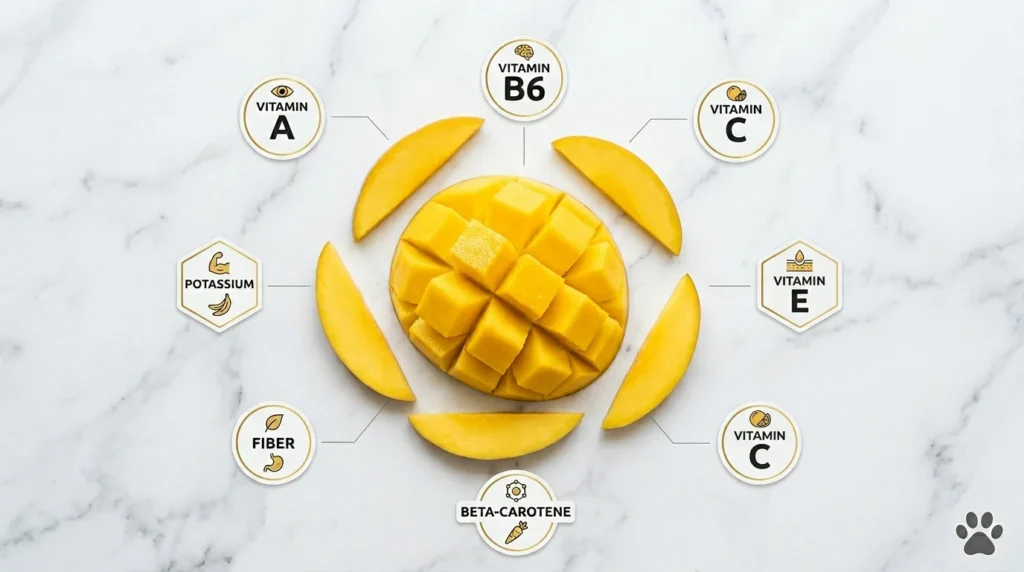
Let’s break down the specific health benefits mango provides to dogs.
Vitamin A — Vision, Immunity, and Skin Health Mango is exceptionally rich in beta-carotene, which the body converts to Vitamin A as needed. Vitamin A supports healthy vision, particularly night vision and the prevention of age-related eye degeneration. It also plays a critical role in immune function, helping the body respond to infections and maintain healthy mucosal barriers. For skin and coat health, Vitamin A supports cell renewal and reduces dryness and flakiness. Senior dogs and dogs with skin conditions particularly benefit from adequate Vitamin A.
Vitamin C — Antioxidant and Immune Support Mango is one of the richer fruit sources of Vitamin C available. This powerful antioxidant neutralizes free radicals that cause cellular aging and chronic disease. Vitamin C also supports the production of collagen — essential for healthy joints, tendons, skin, and wound healing. For dogs under physical stress, recovering from illness, or in their senior years, additional dietary Vitamin C from mango provides meaningful immune support.
Vitamin B6 — Brain and Metabolic Health Vitamin B6 (pyridoxine) is essential for protein metabolism, nervous system function, red blood cell production, and the regulation of blood glucose levels. It also plays a role in the synthesis of neurotransmitters that affect mood and cognitive function. Mango provides a meaningful amount of B6 in a natural, bioavailable form.
Vitamin E — Cellular Protection Vitamin E is a fat-soluble antioxidant that protects cell membranes from oxidative damage. It supports immune function, skin health, and eye health. As dogs age, adequate Vitamin E becomes increasingly important for maintaining healthy cellular function and protecting against age-related deterioration. Mango provides Vitamin E alongside other fat-soluble nutrients in a naturally balanced form.
Beta-Carotene — Antioxidant and Anti-Cancer Beyond its conversion to Vitamin A, beta-carotene acts as a direct antioxidant in its own right. Research links high beta-carotene intake with reduced cancer risk, cardiovascular protection, and slower aging. For dogs — which have significant cancer rates particularly in certain breeds — including beta-carotene rich foods in the diet provides meaningful cellular protection.
Potassium — Heart and Muscle Function Mango provides good amounts of potassium, an essential electrolyte that regulates heart rhythm, supports proper muscle contraction, and maintains healthy fluid balance. Potassium is particularly important for active and working dogs whose muscles work hard during exercise or activity.
Dietary Fiber — Digestive Health The fiber in mango supports healthy digestion — regulating the pace of food movement through the gut, supporting beneficial gut bacteria, and contributing to regular, healthy bowel movements. The fiber in ripe mango is predominantly soluble, which slows digestion and helps stabilize blood sugar levels after eating.
Hydration At approximately 83% water content, mango is a reasonably hydrating fruit. On hot days or for dogs who do not drink enough water, a few pieces of cold or frozen mango contribute to fluid intake alongside regular water.
Possible Dangers of Eating Mango
Understanding when and how mango can be dangerous allows you to feed it responsibly and avoid the pitfalls that turn a healthy treat into a health problem.
The Pit — Choking and Cyanide Risk The mango pit (also called the stone or seed) is the most serious danger. It is large — much larger than apple seeds or cherry pits — and presents an obvious and severe choking hazard. For most dog sizes, swallowing a whole mango pit could cause life-threatening gastrointestinal obstruction requiring emergency surgery.
Beyond the physical hazard, the mango pit contains amygdalin — the same cyanide-releasing compound found in apple seeds and cherry pits. While a dog would need to break open and consume significant amounts of the pit to reach toxic doses, the physical blockage risk alone makes the pit extremely dangerous.
Always remove the pit completely and discard it where your dog cannot access it.
The Skin — Digestive Irritation and Urushiol Mango skin should not be given to dogs. Mango is related to poison ivy, poison oak, and poison sumac — all of which belong to the Anacardiaceae family. The mango skin and sap contain urushiol-related compounds (specifically mangiferin and resinous components) that can cause allergic skin reactions and digestive irritation in sensitive individuals — both humans and dogs.
The skin is also tough and difficult for dogs to properly chew and digest, presenting a choking and digestive upset risk.
High Sugar Content Mango is one of the highest-sugar common fruits — a single cup of fresh mango contains about 23 grams of natural sugar. This high sugar content means mango should be given in smaller portions than lower-sugar fruits like blueberries or strawberries. Dogs with diabetes, obesity, or insulin resistance should only eat mango with explicit veterinary approval.
Digestive Upset from Overfeeding Too much mango at once — because of the high fiber, high sugar, and high water content — can overwhelm the digestive system, causing diarrhea, gas, bloating, and stomach discomfort. Moderation is particularly important with mango compared to lower-sugar fruits.
Allergic Reactions Some dogs are sensitive or allergic to mango. Signs include itching, hives, swelling, vomiting, or diarrhea after eating. Introduce mango slowly the first time — just one or two small pieces — and wait 24 to 48 hours before giving more.
Can Mango Make Dogs Sick?
Yes — in specific situations, mango can make dogs sick. Understanding these situations helps you avoid them.
Eating the pit or skin: The pit is a choking and blockage emergency. The skin can cause digestive irritation and allergic reactions in sensitive dogs. Always remove both completely.
Eating too much at once: The high sugar and fiber content can cause rapid onset digestive upset — vomiting, diarrhea, bloating — when consumed in large amounts even in healthy dogs.
Eating underripe mango: Green mango is significantly more acidic and harder to digest than ripe mango. The high acidity can irritate the stomach lining and cause vomiting or diarrhea.
Eating mango-flavored products with additives: Mango ice cream, mango sorbet, mango-flavored candy, mango yogurt with added sugar, mango shake — all contain added sugar, artificial flavoring, dairy, and potentially xylitol, all of which can make dogs sick.
Dogs with pre-existing conditions: Dogs with diabetes, obesity, pancreatitis, or kidney disease may react more severely to mango’s high sugar content and should only eat it with veterinary guidance.
If your dog eats mango skin, the pit, or a large quantity of mango flesh and shows symptoms beyond mild digestive upset, contact your veterinarian promptly.
Can Dogs Eat Mango Skin?
No — dogs should not eat mango skin. While mango skin is not acutely toxic in the way that grape skin is, it is problematic for several important reasons and should always be removed before serving mango to your dog.
First, mango belongs to the Anacardiaceae plant family — the same family as poison ivy, poison oak, and cashews. The skin of the mango contains urushiol-related compounds that can cause contact allergic reactions in sensitive individuals. Some dogs may develop skin irritation around the mouth and face, or digestive upset, from eating mango skin.
Second, mango skin is tough, fibrous, and difficult for dogs to properly chew and digest. It can cause digestive irritation and, in pieces that are not thoroughly chewed, presents a choking and partial blockage risk.
Third, the outer surface of commercially grown mangoes may carry pesticide and fungicide residue, and the waxy coating of the skin concentrates these surface chemicals.
Always peel the mango completely before giving any to your dog. Only the soft, golden inner flesh is safe.
See Also: Can Dogs Eat Broccoli? Raw, Cooked, Stems & Every Form Covered
Can Dogs Eat Mango Peels?
This is the same question as mango skin — the peel is the same as the skin, and the answer is the same: no. Mango peels should never be given to dogs.
The peel contains the urushiol-related compounds that can cause allergic reactions, is tough and indigestible, and can carry pesticide residue on its outer surface. Remove all peel completely and thoroughly before serving mango to your dog.
Some dog owners ask whether the very thin inner layer just below the peel (the flesh closest to the skin) is also a concern. This flesh is safe — once all the skin is removed, the remaining soft flesh is fine to serve. Cut generously when peeling to ensure no skin is left on the flesh pieces you plan to give your dog.
Can Dogs Eat Mango Seeds?
No — mango seeds (the hard central pit) should never be given to dogs, under any circumstances. The mango seed is the most dangerous part of the mango for dogs, for two independent reasons.
The first and most immediately dangerous risk is physical obstruction. The mango pit is large — significantly larger than most other fruit pits — and its oval, flattened shape makes it difficult to pass through the digestive tract. If a dog manages to swallow a mango pit or even a large piece of one, it can cause gastrointestinal obstruction — a life-threatening emergency requiring veterinary intervention or surgery.
The second concern is chemical — the mango seed contains amygdalin, a cyanogenic glycoside that releases hydrogen cyanide when digested. While the seed’s hard outer shell makes it difficult to crack and consume in large amounts, any cracking and consumption of seed material carries a cyanide risk.
Discard the mango pit immediately after removing it — and make sure to place it in a bin your dog cannot access, as the sweet mango smell on the pit may attract them to try to chew on it.
Can Dogs Eat Mango Pits?
Same as seeds — mango pits are the large central stone of the fruit. “Pit,” “stone,” and “seed” all refer to the same part of the mango in common usage. The answer is the same: never give the mango pit to a dog.
Remove the pit before preparing mango for your dog. The most reliable method is to stand the mango on its end, then slice down on either side of the central flat pit — you will end up with two large mango “cheeks” of flesh that contain no pit. You can then scoop the flesh from the skin with a spoon or score and cube it. The pit remains attached to a thin middle slice that you discard entirely.
After removing the pit, check the flesh pieces to ensure no pit fragments remain. Dispose of the pit safely out of your dog’s reach.
Can Dogs Eat Mango Stones?
“Stone” is another term for the mango pit — the large, hard central seed of the fruit. Same answer as above: never. The mango stone is a choking and obstruction hazard and contains cyanogenic compounds. Remove completely and discard safely before serving mango to your dog.
This terminology question comes up often because “stone fruit” is the botanical category for fruits with a large central pit — including mangoes, peaches, plums, cherries, and apricots. In all stone fruits, the pit/stone represents the most dangerous part for dogs — a combination of physical obstruction risk and cyanide-containing compounds. In all stone fruits, the stone must be removed before giving the fruit to your dog.
Can Dogs Eat Dried Mango?
Dried mango is generally not recommended for dogs, and commercially available dried mango is definitely off-limits in most cases. Here is why.
The drying process removes most of the water content from mango while concentrating everything else — natural sugars, fiber, and calories. Mango is already a high-sugar fruit compared to many other dog-safe options. Dried mango takes that already-high sugar content and concentrates it dramatically. A small piece of dried mango can have the sugar equivalent of several pieces of fresh mango.
More critically, almost all commercially available dried mango products contain large amounts of added sugar — sometimes more sugar than the mango itself contributes naturally. They may also contain sulfur dioxide preservatives (to maintain color and shelf life), citric acid, and artificial flavoring. None of these added ingredients are appropriate for dogs.
If you specifically want to give your dog a dried mango treat, the only acceptable form would be plain, unsweetened, additive-free dehydrated mango — one ingredient only. Even then, use a very tiny pinch given the concentrated sugar content. Fresh mango is always the better choice.
Can Dogs Eat Dried Mango Slices?
Same answer as dried mango above — dried mango slices are not recommended. Whether in chunk or slice form, dried mango sold for human consumption almost universally contains added sugar and preservatives.
Dried mango slices are also typically sticky — a texture that can cling to teeth and gums, potentially contributing to dental decay. The concentrated sugar is particularly problematic in this regard.
If you encounter a product specifically marketed as a dog treat that uses unsweetened dehydrated mango, the amounts given should still be very small given the sugar concentration. For the best nutritional outcome and the safest serving, always choose fresh mango over any dried form.
Can Dogs Eat Green Mango?
Not recommended. Green mango is simply unripe mango — the flesh has not yet developed its characteristic sweetness and has a significantly different nutritional and chemical profile than ripe mango.
Green mango is much more acidic than ripe mango. This high acidity can irritate the stomach lining of dogs and cause vomiting, diarrhea, or general digestive discomfort. The flesh is also firmer and less sweet — making it less palatable to most dogs and harder to digest properly.
Green mango also contains higher levels of certain compounds that are reduced as the fruit ripens. While it is not toxic, it offers none of the appealing flavor or digestive gentleness of ripe mango and has a much higher risk of causing digestive upset.
Stick to fully ripe mango for your dog — golden yellow flesh with no firmness or green tinge, sweet fragrant smell, and slightly soft texture when gently pressed. This is when mango is at its safest, most nutritious, and most enjoyable for dogs.
Can Dogs Eat Mango Safely?
Yes — dogs can eat mango safely when the correct preparation steps are followed every time without exception.
Complete safe-serving checklist for mango:
- Use only fully ripe mango — golden yellow flesh, sweet smell, slightly soft
- Remove all skin completely — no urushiol-related compounds or tough fibrous skin
- Remove the central pit/stone/seed completely — no exceptions
- Discard the pit where your dog cannot access it
- Cut the soft flesh into small, appropriately sized pieces for your dog
- Serve plain — no added sugar, no seasoning, no additives
- Keep portions conservative — mango is high in natural sugar
- Introduce slowly the first time — just one or two small pieces
- Wait 24 to 48 hours after the first introduction before giving more
- Never give mango-flavored products — ice cream, sorbet, shake, candy, yogurt with sugar
- Dogs with diabetes, obesity, or pancreatitis need vet approval first
Follow these steps every time and mango is as safe as any treat you can give your dog.
See Also: Can Dogs Eat Pineapple Core, Skin or Leaves? Full Safety Guide
Can Dogs Eat Fresh Mango?
Yes — fresh mango is the best form to give your dog. Fresh, ripe mango retains its full nutritional content — all four vitamins (A, B6, C, E), potassium, beta-carotene, fiber, and beneficial antioxidants at maximum potency. Nothing is added and nothing is reduced through processing.
Fresh mango also contains natural moisture that supports hydration and makes it easy to eat and digest. The texture is soft enough that it does not present the choking challenge of harder raw vegetables, and the natural sweetness is highly appealing to most dogs.
When buying fresh mango for your dog, look for mangoes that yield slightly to gentle pressure (indicating ripeness), have a sweet tropical smell at the stem end, and have golden-yellow skin with no large areas of green. Common varieties like Ataulfo (honey mango), Tommy Atkins, Kent, and Keitt are all safe and appropriate for dogs.
Prepare fresh mango by peeling completely, removing the pit, and cutting the soft flesh into small pieces. Serve immediately or refrigerate in an airtight container for up to three days.
Can Dogs Eat Frozen Mango?
Yes — frozen mango is safe for dogs and is actually a wonderful treat option, particularly during hot summer months. Frozen mango retains most of its nutritional content well — vitamins, minerals, and antioxidants are well preserved through the freezing process.
The cold, firm texture of frozen mango is enjoyable for most dogs and provides a refreshing way to enjoy the fruit. Frozen mango pieces also last longer as a treat than fresh, which keeps dogs engaged for longer — particularly useful for managing boredom or providing mental stimulation.
The most important rule: always use plain frozen mango with no added sugar, syrup, or additives. Frozen mango sold in grocery stores is typically just mango with no added ingredients — but always check the label. The safest option is to freeze fresh mango at home: peel, pit, cut into small cubes, freeze flat on a parchment-lined tray, then transfer to a sealed freezer bag.
Serve one to three small frozen cubes as a summer treat. Let the pieces thaw for a minute or two for small dogs or dogs with sensitive teeth before serving.
Can Dogs Eat Frozen Mango Chunks?
Yes — same as frozen mango above. Frozen mango chunks (the pre-cut frozen mango sold in grocery store freezer sections) are generally safe for dogs as long as they contain only mango with no added sugar, syrup, preservatives, or flavor additives.
The chunk format is actually convenient for dogs because it is already cut into roughly bite-sized pieces. However, frozen mango chunks sold for human consumption may be quite large — always assess whether the chunk size is appropriate for your dog and cut into smaller pieces if needed before serving, particularly for small and medium breeds.
Check that the product contains one ingredient only: mango. Nothing else should be on the label. Brands with one-ingredient frozen mango are the safest and most appropriate choice for sharing with dogs.
Can Dogs Eat Mango Slices?
Yes — mango slices are an ideal serving format for dogs. “Slices” of peeled, pit-free mango flesh are easy to portion, easy to size appropriately for different dog sizes, and easy for dogs to eat comfortably.
Thin slices of mango flesh are particularly good for smaller dogs and for first-time introductions — they are easy to chew, digest quickly, and can be easily portioned to exactly the right amount. For large dogs, slightly thicker slices or small chunks are fine.
Pre-cut fresh mango slices are widely available in grocery store produce sections. Check that they contain only mango — no added sugar, citric acid spray, or preservatives. Alternatively, slice fresh mango yourself for complete control over preparation.
Can Dogs Eat Honey Mango?
Yes — honey mango (Ataulfo mango, also known as Champagne mango) is safe for dogs. Honey mangoes are smaller, rounder, and more golden than standard Tommy Atkins mangoes, with a notably sweeter, less fibrous, and creamier flesh. They are one of the sweetest mango varieties available.
The sweeter, creamier flesh of honey mangoes makes them particularly palatable to dogs — most dogs that enjoy mango go absolutely wild for the honey variety. However, the higher sweetness level also means a slightly higher sugar content per serving compared to less sweet varieties. Keep portions appropriately conservative.
Honey mangoes have a thinner pit and less fibrous flesh than other varieties, which actually makes them slightly easier to prepare for dogs — less stringy fiber to deal with. Peel, remove the small pit, and serve the soft flesh in small pieces.
Can Dogs Eat Mango Yogurt?
Only if it is plain, unsweetened yogurt with fresh mango pieces added by you — never store-bought mango-flavored yogurt. This is the same rule that applies to strawberry yogurt, banana yogurt, and all other flavored yogurt products.
Commercial mango yogurt products contain large amounts of added sugar, artificial mango flavoring, thickeners, and often artificial sweeteners including xylitol in “light” or “low sugar” varieties. Xylitol is acutely toxic to dogs and potentially lethal even in small amounts. Even without xylitol, the added sugar in commercial mango yogurt makes it inappropriate for dogs.
Plain, unsweetened yogurt (Greek or regular) with a few small pieces of fresh ripe mango added is a safe and genuinely nutritious combination. Plain yogurt provides protein, calcium, and probiotics. Combined with mango’s vitamins and antioxidants, it makes a nutrient-rich treat. Use one to two tablespoons of plain yogurt with a few small mango pieces for medium dogs.
Check first whether your dog tolerates dairy — lactose-intolerant dogs will show digestive upset after eating yogurt.
Can Dogs Eat Mango Ice Cream?
No — dogs should not eat mango ice cream. Commercial mango ice cream contains dairy, large amounts of added refined sugar, artificial mango flavoring, stabilizers, preservatives, and food coloring — none of which are appropriate for dogs.
Many dogs are also lactose intolerant and cannot properly digest dairy products, making ice cream especially problematic for these individuals regardless of the flavor. The high fat content of full-fat ice cream can trigger digestive upset or, with regular exposure, contribute to pancreatitis.
Some ice cream products and frozen desserts labeled as “light” or “no sugar added” may contain xylitol — a deadly sweetener for dogs.
If you want to give your dog a cold, creamy, mango-flavored frozen treat — and this is entirely achievable at home — blend fresh ripe mango with plain unsweetened yogurt or coconut milk (unsweetened), pour into silicone molds or an ice cube tray, and freeze. The result is a genuinely safe and delicious frozen treat that most dogs love just as much as ice cream, with no harmful ingredients.
Can Dogs Eat Mango Popsicles?
It depends entirely on the type of popsicle and its ingredients. Commercial mango popsicles — whether ice lolly style or creamy ice cream bar style — contain large amounts of added sugar, artificial flavoring, food coloring, and possibly artificial sweeteners. These are not appropriate for dogs.
However, homemade mango popsicles made from dog-safe ingredients are a wonderful treat idea. Simply blend peeled, pitted fresh mango (or frozen mango) until smooth, pour into ice cube trays or silicone popsicle molds, and freeze. You can enhance the treat by blending with a splash of coconut water (unsweetened, no additives) or a tablespoon of plain yogurt. Freeze until solid and serve as a summer popsicle.
This homemade version gives your dog the mango flavor and the satisfying cold texture without any harmful additives. It is one of the most enjoyable ways to share mango with your dog during hot weather.
See Also: Can Dogs Eat Bananas? Everything You Need to Know Before Feeding
Can Dogs Eat Mango Sorbet?
No — commercial mango sorbet is not appropriate for dogs. Sorbet is made with fruit juice or puree, large amounts of refined sugar, and often citric acid, artificial flavoring, and food coloring. Some sugar-free varieties contain artificial sweeteners including xylitol.
While sorbet is dairy-free (unlike ice cream), the sugar content alone makes commercial mango sorbet inappropriate. A serving of mango sorbet typically contains 20-30 grams of added sugar — many times more than the natural sugar from fresh mango in an appropriate dog treat portion.
As with ice cream and popsicles, the safe alternative is a homemade version using only ripe mango blended with a splash of water or coconut water, frozen in molds. No added sugar, no additives, just pure mango. Safe, refreshing, and most dogs love it.
Can Dogs Eat Mango Shake?
No — mango shake (mango smoothie) made for human consumption is not appropriate for dogs. Mango shakes typically contain mango blended with milk or cream, added sugar, condensed milk, ice cream, or flavored syrup. The dairy content, high sugar, and added ingredients make them problematic for dogs on multiple levels.
Even a “simple” mango banana shake blended at home for yourself contains enough sugar and dairy to cause digestive upset in many dogs. And commercially prepared mango shakes from cafes or bottled versions contain preservatives, artificial flavors, added sugar, and sometimes even ice cream.
If you want to make a mango-based drink your dog can enjoy, blend fresh mango with water or a small splash of unsweetened coconut water — no milk, no sugar, no ice cream. Serve a very small amount in their bowl as an occasional flavor boost. Or simply give them the whole fruit pieces, which are easier to portion accurately.
How to Serve Mango for Dogs
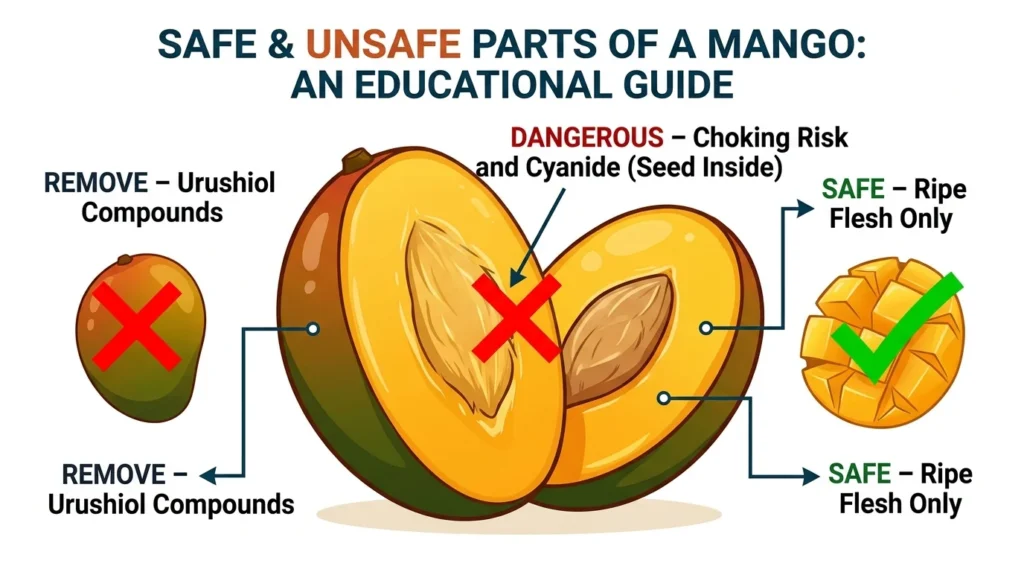
There are several safe and enjoyable ways to incorporate mango into your dog’s treat routine. Here is a practical guide to the best serving methods.
Plain fresh mango pieces: The simplest and always best option. Peel completely, remove pit, cut soft flesh into small cubes. Serve immediately or refrigerate for up to three days.
Frozen mango cubes: Freeze peeled, pitted mango pieces on a parchment-lined tray until solid. Store in a sealed freezer bag. Serve one to three cubes as a refreshing summer treat.
Mango and plain yogurt bowl: Mix a few small mango pieces with one to two tablespoons of plain unsweetened yogurt. Serve as a nutrient-rich treat.
Mango pupsicle: Blend fresh mango with plain yogurt or coconut water and freeze in silicone molds. A homemade frozen treat dogs love.
Mango lick mat: Blend or mash fresh mango and spread on a lick mat. Freeze for 20 to 30 minutes for a calming, slow-feeding activity.
Mango Kong stuffing: Put small mango pieces inside a Kong toy, freeze overnight. A long-lasting, mentally engaging treat.
Mango as a food topper: Add one or two very small pieces of mango to your dog’s regular meal for a natural flavor boost — good for picky eaters.
How Much Mango Can Dogs Eat?
Mango is one of the higher-sugar fruits in the dog-safe category, which means portion control is especially important. Use the standard treat guideline — treats should not exceed 10% of daily caloric intake — but with mango, err toward the conservative end.
Extra small dogs (under 10 lbs): 1 to 2 very small cubes (half-inch), a few times per week.
Small dogs (10 to 20 lbs): 2 to 3 small cubes (half to one inch), a few times per week.
Medium dogs (20 to 50 lbs): 3 to 5 cubes (one inch), a few times per week.
Large dogs (50 lbs and above): Up to a small handful — 5 to 7 cubes — a few times per week.
These are maximum amounts, not daily targets. Mango is best given a few times per week rather than daily, rotating with other lower-sugar fruit and vegetable options. Factor mango into the total daily treat budget alongside any other treats given that day.
Can Puppies Eat Mango?
Yes — puppies can eat small amounts of fresh ripe mango, but with extra care and even more conservative portions than adult dogs. Puppies have developing digestive systems that are more sensitive than those of adult dogs, and the high sugar content of mango requires particular mindfulness with young dogs.
Start with a single tiny piece — no larger than your thumbnail — and wait 48 hours (longer than the 24 hours recommended for adult dogs) before giving more. Watch for any signs of digestive upset or allergic reaction.
The pit and skin rules are even more critical for puppies — a puppy encountering a mango pit is at extreme risk of choking or obstruction. Always ensure all preparation is complete before a puppy has any access to mango.
Most importantly, mango should never displace any portion of a puppy’s complete puppy food. Puppies have specific and critical nutritional requirements for healthy growth — the right balance of protein, calcium, and other nutrients — that only a complete, AAFCO-approved puppy food can provide. Mango is supplemental only — an occasional tiny treat at most.
Can Dogs Be Allergic to Mango?
Yes — dogs can be allergic or sensitive to mango, though true mango allergies in dogs are uncommon. The most common forms of mango-related reactions in dogs are:
Oral allergy syndrome: Some dogs react to proteins in mango skin or flesh with mild swelling, itching, or irritation around the mouth and muzzle. This is often a cross-reactivity with other allergens.
Skin contact reaction: Mango belongs to the same plant family as poison ivy and contains related compounds (urushiol-related) in its skin and sap. Dogs that chew on mango skin or come into contact with mango sap may develop skin redness, hives, or swelling — particularly around the mouth and nose. This is a direct contact reaction, not a true food allergy.
Gastrointestinal sensitivity: Some dogs have general digestive sensitivity to mango without a true allergic mechanism — they simply do not tolerate the high fiber and sugar content well, showing vomiting, diarrhea, or gas after eating even small amounts.
Signs of mango allergy or sensitivity include: itching (especially around the face), hives or raised bumps on skin, swelling around the mouth or throat, vomiting, diarrhea, and unusual lethargy. If any of these occur, stop giving mango and contact your veterinarian.
The slow introduction rule applies here as always — just one or two tiny pieces the first time, then wait and watch before giving more.
Frequently Asked Questions
Can dogs eat mango safely?
Yes — peeled, pitted fresh ripe mango flesh is safe for most healthy dogs in moderate amounts. Remove all skin and the pit every time. Serve plain in small pieces. Introduce slowly.
Can dogs eat mango skin?
No. Mango skin contains urushiol-related compounds that can cause allergic reactions and digestive irritation. It is also tough and difficult to digest. Always peel completely before serving.
Can dogs eat mango seeds?
No. The mango seed/pit/stone is a serious choking and obstruction hazard and contains cyanogenic compounds. Remove completely and discard safely — away from where your dog can access it.
Can dogs eat dried mango?
Not recommended. Most commercial dried mango contains added sugar and preservatives. Plain unsweetened dehydrated mango is safer but highly concentrated in sugar. Fresh is always better.
Can dogs eat frozen mango?
Yes. Plain frozen mango with no added sugar or additives is safe and makes a wonderful summer treat. Buy one-ingredient frozen mango or freeze fresh mango at home.
Are mangoes good for dogs?
Yes. Mango provides Vitamins A, B6, C, and E, potassium, beta-carotene, fiber, and antioxidants — real nutritional benefits for dogs. It is high in natural sugar, so moderation is important.
Can dogs eat mango pits?
No. Mango pits are large, can cause life-threatening gastrointestinal obstruction, and contain cyanogenic compounds. Never give a mango pit to a dog.
Can dogs eat green mango?
Not recommended. Green mango is unripe and significantly more acidic than ripe mango — it can irritate the stomach and cause vomiting or diarrhea. Always use fully ripe mango.
Can dogs eat mango ice cream?
No. Commercial mango ice cream contains dairy, large amounts of added sugar, artificial flavoring, and possibly xylitol. Make a safe homemade frozen mango treat instead.
Can dogs eat mango yogurt?
Only plain, unsweetened yogurt with fresh mango pieces added by you. Never store-bought mango-flavored yogurt, which contains added sugar and possibly xylitol.
Can dogs eat honey mango?
Yes. Honey mango (Ataulfo variety) is safe for dogs. It is sweeter than standard mango, so keep portions slightly smaller. Peel completely and remove the pit before serving.
How much mango can a dog eat?
Small dogs: 1-3 small cubes a few times per week. Medium dogs: 3-5 cubes. Large dogs: 5-7 cubes. Never more than 10% of daily caloric intake total from all treats.
Can dogs be allergic to mango?
Yes, though uncommon. Signs include itching, hives, swelling around the mouth, vomiting, or diarrhea. Introduce mango slowly and watch for 24 to 48 hours after the first serving.
What happens if my dog eats too much mango?
Digestive upset — diarrhea, gas, vomiting — from the high sugar and fiber content. Ensure water access, monitor for 24 hours, reduce next meal. Contact vet if symptoms are severe or if the pit was consumed.
Can puppies eat mango?
Yes, in very small amounts of peeled, pitted fresh mango. Start with one tiny piece, wait 48 hours. Primary nutrition must come from complete puppy food.
Conclusion
Mango is one of the most nutritionally impressive fruits you can share with your dog — and when served correctly, it is a safe, hydrating, and genuinely health-supporting treat that most dogs absolutely love. The combination of Vitamins A, B6, C, and E in a single fruit makes mango stand out from simpler fruit options. The beta-carotene, potassium, and antioxidants add further nutritional value that benefits dogs of all ages and sizes.
The non-negotiable rules — simple and easy to follow every time:
- Always peel completely — no skin, no sap, no urushiol-related exposure
- Always remove the pit/stone/seed completely — choking and blockage risk plus cyanogenic compounds
- Serve only the soft ripe flesh, plain with no additives
- Fresh or plain frozen mango are the best forms
- Avoid dried mango, mango ice cream, sorbet, shake, commercial yogurt, and all mango-flavored processed products
- Keep portions conservative — mango is high in natural sugar
- Give a few times per week rather than daily — rotate with other lower-sugar treats
- Introduce slowly and watch for any allergic reaction or digestive sensitivity
- Dogs with diabetes, obesity, or pancreatitis need vet approval first
- Puppies can have tiny amounts of ripe flesh — start even smaller and wait longer
With these guidelines followed every time, mango becomes one of the most enjoyable, nutritious, and safe treats in your dog’s rotation. The tropical sweetness, the vibrant color, the versatility in serving — from fresh pieces to frozen treats to yogurt bowls — makes mango a fun and genuinely valuable addition to any dog’s diet.
For more complete guides on what dogs can and cannot eat — covering dozens of fruits, vegetables, proteins, dairy products, and everyday human foods — visit Dogs Bread. It is one of the most trusted and comprehensive pet nutrition resources for dog owners who want clear, research-backed, practical answers they can use with confidence every day. Whether you are doing a quick food safety check or building a complete healthy treat plan for your dog, Dogs Bread has the information you need — written simply, honestly, and with your dog’s best health in mind.
See Also: Can Dogs Eat Grapes? The Dangerous Truth Every Owner Must Know
Another tropical fruit dogs can enjoy is papaya — see can dogs eat papaya for portions and prep.


