

Can Dogs Eat Apples? Benefits, Risks & Safe Serving Guide 2026
You’re sitting at the kitchen table, slicing up a fresh apple, and your dog trots over with that familiar hopeful look. You want to share — but should you? Can dogs eat apples safely? What about the skin? The seeds? The core? What if your dog already grabbed a slice before you could react?
These are exactly the right questions to ask. Apples are one of the most common fruits in any household, and knowing how to share them safely with your dog makes a real difference. This complete guide covers every angle of the topic — all the different apple varieties, apple products, preparation methods, benefits, risks, and what to do if things go wrong.
Can Dogs Eat Apples?
Yes — dogs can eat apples, and they are safe for most healthy dogs. The American Kennel Club (AKC) confirms that apples are a dog-friendly fruit. They are non-toxic, low in calories, and contain several beneficial nutrients including Vitamin A, Vitamin C, fiber, and antioxidants.
The critical rules: always remove the seeds and the core before giving apple to your dog. Apple seeds contain amygdalin — a compound that releases cyanide when digested. While a few seeds accidentally consumed are unlikely to cause serious harm, seeds should never be given intentionally. Remove them every single time.
With seeds and core removed, apples are a genuinely excellent treat for dogs — crunchy, naturally sweet, nutritious, and most dogs love them.
Are Apples Good for Dogs?
Yes — apples are genuinely good for dogs when prepared and served correctly. They are not just a safe treat; they actually offer meaningful nutritional value that supports your dog’s health.
Apples are low in calories — a medium apple contains roughly 95 calories, but a few thin slices given as a treat contain far less. They are high in fiber, which supports healthy digestion. They contain Vitamin A for healthy skin and immune function, and Vitamin C as a natural antioxidant that helps fight cellular damage.
Apples also contain polyphenols — plant compounds with antioxidant and anti-inflammatory properties — as well as quercetin, a flavonoid linked to reduced inflammation and improved immune response. The crunchy texture also provides a gentle mechanical cleaning effect on teeth and gums, making apples a useful natural dental aid.
For dogs watching their weight or needing a low-calorie treat option, apples rank among the best choices available. The natural sweetness satisfies cravings without the fat or artificial ingredients found in most commercial treats.
Are Apples Bad for Dogs?
Apples are not bad for dogs when prepared correctly — but they become bad in specific situations that every dog owner must understand. Knowing when apples are harmful is just as important as knowing when they are safe.
The most serious concern is apple seeds. Seeds contain amygdalin, which the body converts to cyanide during digestion. A small number of seeds from one apple is unlikely to cause acute toxicity in a large dog, but regular exposure or a large quantity of seeds in a small dog can cause real harm. Symptoms of cyanide exposure include difficulty breathing, bright red gums, shock, and collapse. Never give seeds intentionally.
Apple cores are also problematic — tough, difficult to digest, and a choking hazard. The stem carries the same seed-related concern. Too much apple at once causes digestive upset due to the fiber and sugar content. And dogs with diabetes or obesity should only eat apple with veterinary guidance due to the natural sugar.
Avoid commercial apple products — apple juice, applesauce with added sugar, dried apples with preservatives — and you remove most of the risk associated with this fruit.
Also Read: Can Dogs Eat Salmon? A Safe Feeding Guide for Dog Owners
Why Apples Can Be a Healthy Treat for Dogs?
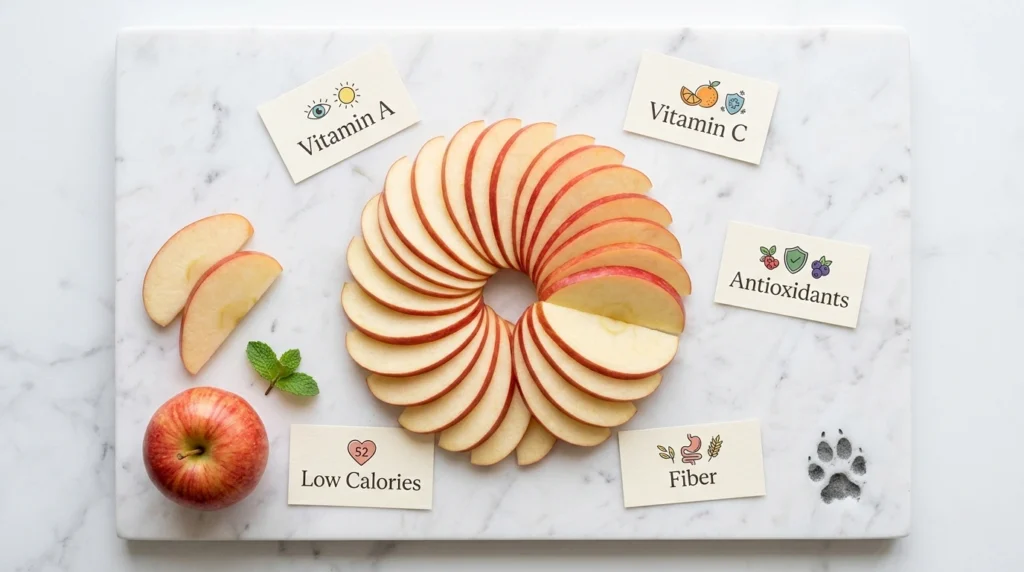
Apples offer several compelling reasons to include them in your dog’s treat rotation — beyond just being safe to eat.
First, they are a whole food. Unlike most commercial dog treats, which contain processed ingredients, preservatives, artificial colors, and flavoring agents, a fresh apple slice is exactly what it appears to be — nothing added, nothing artificial.
Second, the nutritional profile is genuinely useful. Fiber supports gut health and regular digestion. Vitamin A supports skin, coat, and immune function. Vitamin C acts as an antioxidant. Quercetin and other polyphenols provide anti-inflammatory benefits that are particularly valuable for aging dogs.
Third, the crunchy texture makes apples naturally good for dental health. Chewing on a firm apple slice scrubs the surface of teeth gently, helping to reduce plaque and tartar buildup and freshen breath.
Fourth, apples are extremely accessible and affordable. They are available year-round, inexpensive, and require minimal preparation — making them one of the most practical healthy treat options for everyday dog owners.
Risks of Feeding Apples to Dogs
Understanding the risks allows you to feed apples responsibly and avoid the pitfalls that turn a healthy treat into a health problem.
Apple Seeds — Cyanide Risk: This is the most important risk to understand. Apple seeds contain amygdalin, a cyanogenic glycoside that releases hydrogen cyanide when metabolized. While a single seed or two from one apple is unlikely to cause acute toxicity in a medium or large dog, the risk increases with the number of seeds consumed and is proportionally higher for small dogs. Never give seeds intentionally, and always core the apple fully before serving.
Apple Core — Choking and Blockage: The core of an apple is hard, dense, and difficult to digest. For dogs that eat quickly — which most dogs do — swallowing a large piece of core can cause choking or gastrointestinal obstruction. Remove the core completely before serving any apple to any dog, regardless of size.
Too Much Sugar: Apples contain natural fructose. While this is healthier than refined sugar, excessive natural sugar still contributes to weight gain, blood sugar instability, and dental decay over time. Moderation is essential — apples are a treat, not a dietary staple.
Digestive Upset from Overfeeding: Too much apple at once — particularly the fiber and sugar content together — can overwhelm the digestive system and cause diarrhea, gas, bloating, and stomach discomfort. Stick to appropriate portion sizes.
Allergic Reactions: Uncommon but possible. Signs include itching, hives, swelling, vomiting, or diarrhea after eating. Always introduce apple slowly the first time and watch for any reaction.
Pesticide Residue: Conventionally grown apples are among the produce items with higher pesticide residue levels. Always wash apples thoroughly before serving. Peeling the apple removes most pesticide risk if you are concerned about skin residue.
Can Dogs Eat Apples with Skin?
Yes — apple skin is safe for dogs to eat in most cases. The skin contains a significant portion of the apple’s nutritional content, including fiber, Vitamin C, and polyphenol antioxidants. Removing the skin actually removes some of the apple’s best nutritional value.
However, there are two considerations. First, pesticide residue concentrates on the skin of conventionally grown apples. Always wash the apple thoroughly under running water before serving — this removes most surface residue. For dogs that eat apple regularly, buying organic apples reduces this concern significantly.
Second, some dogs with very sensitive digestion may find the skin slightly harder to digest than the flesh alone. If your dog has a history of digestive sensitivity, start with peeled apple and see how they tolerate it before introducing skin.
For most healthy dogs, apple with skin is perfectly fine and actually more nutritious than peeled apple.
Can Dogs Eat Apples with the Peel?
This is the same question as apple skin — and yes, the peel is safe for most dogs. Apple peel is simply the skin of the apple, and as noted above, it is actually more nutritious than the flesh alone in terms of fiber and antioxidant content.
The same preparation rules apply: wash thoroughly, remove seeds and core, cut into appropriate pieces. Serving apple with the peel intact is completely fine and even preferable from a nutritional standpoint.
If you are concerned about pesticides, buy organic or peel the apple before serving. But if you are using washed conventional apples and your dog is healthy, leaving the peel on is perfectly acceptable and adds nutritional value to the treat.
Can Dogs Eat Green Apples?
Yes — green apples are safe for dogs. Green apple varieties like Granny Smith are simply a different variety of apple with a tarter flavor profile and slightly different sugar content, but the same basic safety status as any other apple variety.
Green apples are generally lower in sugar than red apple varieties, which can actually make them a slightly better choice for dogs managing their weight or blood sugar. The lower sweetness level means some dogs may be less enthusiastic about green apples than sweet red ones, but they are equally nutritious and completely safe.
The same preparation rules apply: remove seeds and core completely, wash the apple, cut into appropriate sized pieces. Whether your dog prefers the tartness of green apples or the sweetness of red ones is purely a matter of individual taste.
Can Dogs Eat Granny Smith Apples?
Yes — Granny Smith apples are completely safe for dogs. They are one of the most popular green apple varieties and are available year-round in most grocery stores. Granny Smiths are notably tart and firm, with a lower sugar content than most red apple varieties.
The lower sugar content of Granny Smith apples actually makes them a particularly good choice for dogs on calorie-controlled or low-sugar diets. They still provide the same beneficial fiber, Vitamin C, and antioxidant content as other apple varieties.
Some dogs enjoy the tart crunch of Granny Smith apples, while others may prefer sweeter varieties. Both are fine. Prepare them the same way as any apple — washed, cored, seeded, and sliced into appropriately sized pieces before serving.
See Also: Can Dogs Eat Strawberries? Here’s Everything You Need to Know
Can Dogs Eat Red Apples?
Yes — red apple varieties including Gala, Fuji, Honeycrisp, Red Delicious, and similar varieties are all safe for dogs. Red apples tend to be sweeter than green varieties because they generally have a higher natural sugar content.
This sweeter flavor means most dogs are very enthusiastic about red apple slices. However, the higher sugar content is worth keeping in mind for portion control — particularly for smaller dogs or those managing weight. A few slices of a sweet red apple deliver more natural sugar than the same amount of tart green apple.
Nutritionally, red and green apples are closely comparable — both offer fiber, vitamins, and antioxidants. Red apples may contain slightly more quercetin due to the pigments in their skin. All apple varieties are good choices when prepared correctly.
Can Dogs Eat Fuji Apples?
Yes — Fuji apples are safe for dogs and are actually a popular choice among dog owners because of their firm, crisp texture and naturally sweet flavor that most dogs love. Fuji apples have a higher sugar content than many other varieties due to their notable sweetness, which is worth being mindful of for portion control.
The firm texture of Fuji apples makes them satisfying for dogs to chew, and the crunch provides a gentle mechanical dental cleaning benefit. Cut into thin slices or small chunks appropriate for your dog’s size, remove all seeds and core, and serve fresh.
Fuji apples are available year-round in most grocery stores, making them a convenient everyday treat option. Nutritionally they offer the same broad benefits as other apple varieties — fiber, Vitamin A, Vitamin C, and polyphenol antioxidants.
Can Dogs Eat Crab Apples?
No — dogs should not eat crab apples. This is an important exception to the general “apples are safe” rule. Crab apples are a different category of apple from cultivated eating apples, and they present real risks for dogs.
Crab apple trees (Malus species) produce small, tart fruits that are considered toxic to dogs by the ASPCA. The flesh, seeds, stems, and leaves of crab apple trees all contain cyanogenic glycosides — the same type of compounds found in apple seeds, but present throughout the entire crab apple rather than only in the seeds.
If your dog eats crab apples — particularly if they have access to a crab apple tree in your yard — watch for symptoms including vomiting, diarrhea, lethargy, difficulty breathing, and dilated pupils. Contact your veterinarian immediately if you suspect crab apple ingestion. This is one case where “apple” does not mean “safe.”
Can Dogs Eat Whole Apples?
No — giving a dog a whole apple is not a good idea, even for large breeds. A whole apple includes the core, seeds, and stem — all of which need to be removed before serving. Beyond the seed toxicity risk, a whole apple is simply too large for any dog to eat safely. It is a choking hazard and encourages fast, poorly chewed eating that increases the risk of swallowing dangerous parts.
Even large dogs should receive apple cut into manageable slices or chunks rather than a whole apple. Slicing also helps you confirm that seeds and core have been removed completely — something you cannot easily verify if you hand over a whole apple.
The preparation rule is absolute: always slice, always core, always deseed before serving apple to your dog, regardless of their size.
Can Dogs Eat Apple Cores?
No — dogs should not eat apple cores. The core of an apple is problematic for several reasons. First and most importantly, the core contains the seeds — the most dangerous part of the apple due to the amygdalin (cyanide-releasing compound) they contain.
Second, the core is dense, tough, and difficult to digest. Dogs that swallow large pieces of apple core can experience gastrointestinal distress, and in some cases, larger pieces can cause a partial blockage in the digestive tract. For small dogs, even a moderate piece of core presents a meaningful choking and obstruction risk.
Third, the core and stem area concentrates more of the fiber and tougher cellulose material from the fruit, making it harder on the digestive system than the flesh. Always core the apple completely and discard the core before giving apple to your dog.
Can Dogs Eat Apples with Cinnamon?
Yes — a very small amount of cinnamon on apple slices is generally safe for dogs, as cinnamon itself is not toxic to dogs in small amounts. In fact, cinnamon has some mild anti-inflammatory and blood sugar stabilizing properties that could be considered beneficial.
However, there are important cautions. Large amounts of cinnamon — or cinnamon in concentrated forms like essential oil or powder — can cause irritation to a dog’s mouth, throat, and digestive system, as well as potential liver problems with chronic exposure. The key is very small amounts.
If you want to add cinnamon to apple slices for your dog, use just a tiny pinch of ground cinnamon (not cinnamon oil) sprinkled lightly over a few slices. Avoid pre-made cinnamon apple products or baked apple treats made for humans, which often contain sugar, butter, and other ingredients that are not dog-friendly.
Can Dogs Eat Apples and Peanut Butter?
Yes — apple and peanut butter is one of the most beloved dog treat combinations, and it is completely safe when prepared correctly. Most dogs go absolutely wild for the combination of sweet, crunchy apple with rich, creamy peanut butter.
The critical rule — as always with peanut butter — is to check the label for xylitol. Xylitol is an artificial sweetener added to many “natural,” “reduced sugar,” and “no sugar added” peanut butter brands. It is harmless to humans but extremely toxic to dogs. Even a small amount can cause dangerous hypoglycemia (blood sugar drop) and acute liver failure. Always read the ingredients every time, including on brands you have used before, since formulations can change.
Once you have confirmed the peanut butter is xylitol-free, the apple and peanut butter combination is a safe, protein-rich, and much-loved treat. Spread a thin amount on a few apple slices, stuff into a Kong toy with apple chunks, or use as a training reward.
Can Dogs Eat Apples and Strawberries?
Yes — both apples and strawberries are safe for dogs, and they can be served together as a mixed fruit treat. Both fruits are low in calories, rich in vitamins and antioxidants, and enjoyed by most dogs. Combined, they provide a broad spectrum of nutrients including Vitamin C, fiber, potassium, and various antioxidant compounds.
When combining fruits, remember that the total treat amount should still stay within the standard guideline of no more than 10% of your dog’s daily caloric intake. Sharing that 10% between two fruits means slightly smaller portions of each.
Prepare both fruits properly — core and deseed the apple, wash and hull the strawberries, cut both into appropriately sized pieces. A mixed apple and strawberry bowl is a colorful, nutritious, and naturally sweet treat that most dogs genuinely enjoy.
Can Dogs Eat Dried Apples?
Dried apples require careful consideration. Plain dehydrated apple slices with no added ingredients are technically safe for dogs in small amounts, but they come with important caveats.
The drying process concentrates everything in the apple — including the natural sugars. A small amount of dried apple has significantly more sugar than the same weight of fresh apple. This concentrated sugar content can cause digestive upset and adds more calories and fructose than fresh apple for the same apparent portion size.
Commercial dried apple products are an additional concern. Most store-bought dried apple snacks contain added sugar, sulfur dioxide preservatives (to maintain color), and sometimes salt or artificial flavoring. These additions make them unsuitable for dogs.
If you want to use dried apple as an occasional dog treat, look for a product that contains only apple with no added ingredients, and use only a tiny amount — a fraction of what you would give in fresh form. Better yet, stick to fresh apple which is safer, more hydrating, and easier to portion accurately.
See Also: Can Dogs Eat Watermelon Rind or Seeds? Full Safety Guide
Can Dogs Eat Applesauce?
Applesauce can be safe for dogs — but only if it is plain, unsweetened applesauce with no added ingredients. Plain applesauce is simply cooked, blended apple flesh, and it retains most of the apple’s nutritional value in a softer, easier-to-eat form. It can actually be a good option for senior dogs with dental problems who find crunchy fresh apple difficult to chew.
The problem is that most commercially available applesauce is not plain. The vast majority of store-bought applesauce products contain added sugar, high-fructose corn syrup, preservatives, and artificial flavoring. Some “light” or “sugar-free” varieties contain artificial sweeteners including xylitol, which is acutely toxic to dogs.
Always read the ingredient label before giving applesauce to your dog. The label should list only apples — nothing else. A small spoonful of plain unsweetened applesauce is a safe and digestible treat. Anything with added sugar, sweeteners, or other ingredients should be avoided entirely.
Can Dogs Eat Apple Slices?
Yes — apple slices are actually the ideal way to serve apple to your dog. Slicing the apple gives you the opportunity to confirm that seeds are removed, allows you to size the pieces appropriately for your dog, and makes it easier to control portion sizes.
Thin slices or small chunks of apple are easy for dogs to eat comfortably without choking, and the flat surface of a slice is particularly satisfying for dogs to crunch on. For small dogs, cut slices into smaller pieces. For large dogs, a few full thin slices are fine.
Apple slices can be served fresh, refrigerated for up to two days in an airtight container, or frozen for a cold treat. All of these options are safe and enjoyable. Slicing is always the recommended serving method — never give whole or cored-only apples.
Can Dogs Eat Apples Everyday?
Feeding apple to your dog every day is not recommended for most dogs, although a very small daily amount is unlikely to cause serious harm in healthy adult dogs. The main concern with daily apple feeding is cumulative sugar intake and calorie addition over time.
A few thin apple slices per day may seem insignificant, but the natural fructose adds up consistently across weeks and months. For dogs managing weight, blood sugar, or dental health, this daily sugar addition is worth avoiding. For dogs on strict diets, every treat — even healthy ones — contributes to the overall caloric picture.
A better approach is to give apple two to four times per week as a treat rather than every day. Rotate with other dog-safe fruits and vegetables to provide variety and a broader range of micronutrients. This keeps apple enjoyable as a special treat rather than an expected daily routine that may lead to over-reliance.
How Many Apples Can Dogs Eat?
Portion size matters significantly with apples. Follow the standard pet nutrition guideline: treats of all kinds — including fruit — should make up no more than 10% of your dog’s total daily caloric intake.
Here is a practical guide by dog size:
Extra small dogs (under 10 lbs): 1 to 2 thin apple slices, two to three times per week.
Small dogs (10 to 20 lbs): 2 to 3 thin slices per serving, a few times per week.
Medium dogs (20 to 50 lbs): A small handful — roughly 4 to 6 thin slices — per serving, a few times per week.
Large dogs (50 lbs and above): Up to half an apple per serving (well cored and deseeded), a few times per week.
These are upper limits, not daily targets. Always factor apple into the total treat budget for the day. If your dog has had other treats, reduce the apple portion accordingly to stay within the 10% guideline.
How to Safely Feed Apples to Dogs
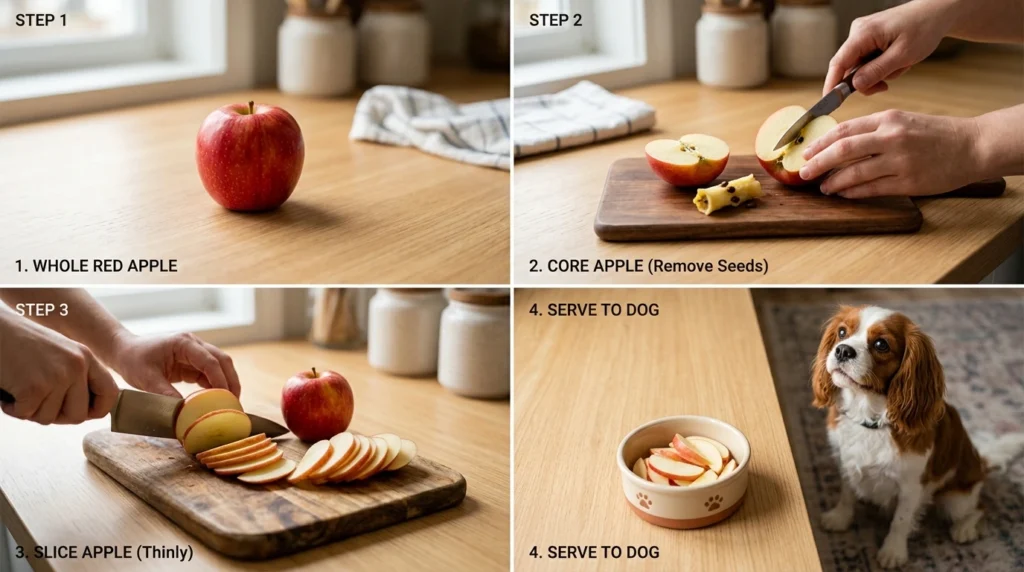
Safe apple preparation is straightforward and takes just a couple of minutes. Here is the exact process to follow every single time:
Step 1 — Choose the right apple: Select a ripe, fresh apple. Any common eating variety — Gala, Fuji, Honeycrisp, Golden Delicious, Granny Smith — is fine. Avoid crab apples entirely.
Step 2 — Wash thoroughly: Rinse under cold running water for at least 30 seconds, scrubbing the skin gently to remove pesticide residue and surface dirt. Organic apples are the safest choice if you give apple regularly.
Step 3 — Remove the core completely: Cut around the core and discard it along with the stem. Make sure no seeds remain. Even a well-cored apple sometimes has fragments of seeds near the seed pockets — check carefully.
Step 4 — Cut into appropriate pieces: Slice into thin rounds or chunks. Adjust the size based on your dog’s size — smaller pieces for smaller dogs.
Step 5 — Serve or store: Serve immediately for maximum freshness, or refrigerate in an airtight container for up to two days. For a cold treat, freeze slices on a tray and store in a sealed bag for up to three months.
Step 6 — First time introduction: If apple is new for your dog, give just one or two slices and wait 24 hours before giving more. This allows you to spot any allergic reaction or digestive sensitivity.
The Right Way to Feed Apples to Your Dog
Beyond basic safety preparation, there are several ways to serve apple that make the experience more enjoyable and enriching for your dog.
Plain fresh slices: The simplest and always reliable option. Washed, cored, deseeded, sliced. Most dogs are very happy with this.
Frozen apple slices: Freeze washed, cored, deseeded apple slices on a parchment-lined tray. Serve one or two frozen slices as a refreshing summer treat that lasts longer than fresh.
Apple and peanut butter: Spread a thin layer of xylitol-free peanut butter on an apple slice. A universally beloved combination for most dogs.
Apple Kong stuffing: Cut apple into small chunks, stuff into a Kong toy with a bit of plain peanut butter or yogurt, freeze overnight. Excellent for mental stimulation and slow eating.
Apple lick mat: Blend or mash apple flesh (no skin if preferred) and spread onto a lick mat. Freeze for 20 to 30 minutes for a calming, slow-eating activity.
Apple mixed with other safe fruits: Combine apple slices with strawberry pieces, blueberries, or watermelon chunks for a mixed fruit treat bowl.
Homemade apple dog treats: Mash one cored, peeled apple with one egg and one cup of oat flour. Roll into small balls and bake at 350°F (175°C) for 15 minutes. Cool completely before serving.
What Other Fruits Can Dogs Eat?
Apple is one of several dog-safe fruits worth knowing about. If you enjoy sharing fruit with your dog, here are other safe options to rotate into the treat routine:
Blueberries: One of the best fruits for dogs. Very low in sugar, extremely high in antioxidants, easy to serve, and most dogs love them. No preparation needed beyond a quick wash.
Strawberries: Safe and nutritious — Vitamin C, fiber, and antioxidants. Wash, hull, and slice. Low in calories and very popular with dogs.
Watermelon: Excellent hydration source. Remove seeds and rind completely. Serve only the pink flesh. Great summer treat.
Bananas: Higher in sugar than most fruits but rich in potassium and Vitamin B6. Serve in small amounts a few times per week.
Mango: Safe when peeled and pitted. High in Vitamins A, B6, C, and E. Very sweet — serve in small amounts.
Pineapple: Safe in small amounts. High in natural sugar. Bromelain enzyme supports digestion. Remove skin and core.
Cantaloupe: Hydrating and nutritious. Remove seeds and rind. Good source of Vitamin A and beta-carotene.
Fruits to always avoid: Grapes and raisins (highly toxic), cherries (pits contain cyanide, flesh can cause digestive issues), avocado (contains persin which is toxic to dogs), and crab apples as discussed above.
See Also: Can Dogs Eat Bananas? Everything You Need to Know Before Feeding
How Apples Compare to Other Dog-Friendly Fruits
Understanding how apples stack up against other safe fruits helps you make smarter choices for your dog’s treat rotation.
Apple vs. Banana: Apples are lower in calories and sugar than bananas. A few apple slices have significantly fewer calories than an equivalent amount of banana. However, bananas are richer in potassium and Vitamin B6. Both are good choices — use both in rotation.
Apple vs. Blueberry: Blueberries have a stronger antioxidant profile than apples due to their very high anthocyanin content. Blueberries are also lower in sugar per serving and require zero preparation. Apples provide more fiber and the dental cleaning benefit from their crunchy texture. Both are excellent.
Apple vs. Watermelon: Watermelon wins on hydration (92% water vs. apple’s 86%). Apples have more fiber. Watermelon has fewer calories per cup. Both are solid summer treat options — watermelon is particularly great for hydration, apple for fiber and dental benefits.
Apple vs. Strawberry: Very similar nutritional profiles — both low calorie, good Vitamin C, good fiber. Strawberries are slightly lower in sugar. Both are excellent choices. Combining them is a great idea.
Overall, apple holds its own very well against other dog-friendly fruits. The crunchy texture and widespread availability make apples one of the most practical everyday fruit treat choices for dog owners.
My Dog Ate Too Much Apple — What Do I Do?
First — do not panic. Eating too much apple is not a toxic emergency in the same way that grape or xylitol ingestion would be. Apples are not acutely toxic. However, eating too much apple — particularly with seeds or core — can cause real discomfort and some situations that need monitoring.
If your dog ate too much apple flesh (no seeds, no core): Expect temporary digestive upset — loose stools, diarrhea, gas, or bloating — within a few hours. This is caused by the high fiber and sugar content overwhelming the digestive system. It is uncomfortable but typically resolves within 12 to 24 hours on its own.
What to do: Ensure fresh water is available. Skip or reduce their next meal or offer a small amount of plain boiled rice and chicken if they seem hungry but unsettled. Monitor for 24 hours.
If your dog ate apple seeds or the core: This is a more serious situation. A few seeds from one apple in a medium or large dog is unlikely to cause acute toxicity, but monitor carefully for signs of cyanide exposure — difficulty breathing, bright red gums, excessive salivation, vomiting, weakness, or collapse. Contact your veterinarian immediately if any of these symptoms appear. For small dogs, even a small number of seeds warrants a vet call.
If your dog ate crab apples: Contact your veterinarian immediately. Crab apples are toxic to dogs and require prompt veterinary assessment.
When to call the vet:
- Your dog ate a significant number of apple seeds
- Your dog ate crab apples
- Digestive symptoms are severe or not improving after 24 hours
- Your dog is very small, very young, or has existing health conditions
- Signs of abdominal pain, extreme lethargy, or breathing difficulty appear
Are Apples Bad for Puppies?
No — apples are not bad for puppies when properly prepared. Puppies can eat small amounts of apple safely, but they require extra care and smaller portions than adult dogs.
Puppies have developing digestive systems that are more sensitive than those of adult dogs. Their gut microbiome is still establishing itself, and new foods — including fruit — can cause more pronounced digestive reactions in puppies than in fully developed adult dogs.
The preparation rules are the same but even more important for puppies: remove every seed, remove the core completely, cut into very small pieces appropriate for the puppy’s small mouth. The risk of choking on a larger piece is higher for puppies, and the risk of digestive upset from seeds or too much fiber is also proportionally greater.
Start with a very tiny amount — just one or two tiny pieces — and wait 24 to 48 hours before giving more. Watch for any signs of digestive upset or allergic reaction.
Most importantly, apple should never replace any portion of a puppy’s complete puppy food. Puppies have specific and critical nutritional requirements for healthy growth and development that only a complete, AAFCO-approved puppy food can meet. Apple is supplemental only — a tiny occasional treat, not a dietary component.
If you are unsure about introducing fruit to your puppy at a specific age, ask your veterinarian for personalized guidance based on your puppy’s breed, size, and development stage.
Frequently Asked Questions
Can dogs eat apple seeds?
No. Apple seeds contain amygdalin, which releases cyanide when metabolized. While one or two seeds accidentally consumed by a large dog are unlikely to cause acute toxicity, seeds should never be given intentionally. Remove all seeds every single time before serving apple to your dog.
Can dogs eat apple cores?
No. Apple cores contain seeds (toxic) and are tough, dense, and difficult to digest. They present a choking and blockage risk. Always remove the core completely before serving.
Can dogs eat apple skin or peel?
Yes. Apple skin is safe and actually more nutritious than the flesh alone, containing more fiber and antioxidants. Wash the apple thoroughly to remove pesticide residue. Peel if you prefer or if your dog has a sensitive stomach.
Can dogs eat green apples?
Yes. Green apple varieties including Granny Smith are completely safe. They tend to be lower in sugar than red varieties, which can make them a good choice for dogs managing weight or blood sugar.
Can dogs eat crab apples?
No. Crab apples are toxic to dogs — the flesh, seeds, leaves, and stems all contain cyanogenic glycosides. Avoid entirely and contact your vet if your dog has eaten crab apples.
Can dogs eat applesauce?
Only plain, unsweetened applesauce with no added ingredients. Most commercial applesauce contains added sugar or artificial sweeteners. Always read the label — it should list only apples.
Can dogs eat dried apples?
Only plain dehydrated apple with no added sugar, preservatives, or salt, and only in very small amounts due to the concentrated sugar content. Most commercial dried apple products contain added ingredients that are not dog-appropriate.
Can dogs eat apples everyday?
Not recommended. Two to four times per week is a healthier frequency. Daily feeding adds cumulative sugar and displaces variety in the treat rotation. Small amounts daily are unlikely to cause serious harm in healthy adult dogs but regular rotation is better practice.
Are apples safe for puppies?
Yes, in very small amounts with careful preparation. Remove all seeds and core, cut into tiny pieces, and start with just one or two pieces. Wait 24 to 48 hours before giving more. Primary nutrition must come from complete puppy food.
Can dogs eat apples with cinnamon?
A very small pinch of ground cinnamon on apple slices is safe and may offer mild anti-inflammatory benefits. Avoid large amounts, concentrated cinnamon oil, or pre-made cinnamon apple products with added sugar.
What happens if my dog eats too many apples?
Likely temporary digestive upset — diarrhea, gas, bloating — that resolves within 12 to 24 hours. If seeds were consumed, monitor for signs of cyanide exposure and contact your vet if symptoms appear.
Can dogs eat apples and peanut butter together?
Yes — one of the best dog treat combinations. Always verify the peanut butter is xylitol-free before giving it to your dog. Use a thin spread on apple slices and keep total portions moderate.
How many apple slices can a dog eat?
Depends on size: small dogs 1–3 thin slices, medium dogs 4–6 slices, large dogs up to half an apple — all cored and deseeded. Treats should total no more than 10% of daily caloric intake.
Conclusion
Apples are one of the best and most accessible healthy treats you can share with your dog. They are safe, nutritious, low in calories, crunchy, and naturally sweet — everything a good dog treat should be. With the right preparation, they offer real health benefits including fiber for digestion, Vitamin C for immune support, and antioxidants that help fight inflammation and cellular aging.
The rules are simple and non-negotiable:
- Always remove all seeds — they contain toxic amygdalin
- Always remove the core and stem — choking and blockage risk
- Wash the apple thoroughly before serving — pesticide residue
- Cut into appropriately sized pieces for your dog’s size
- Serve in moderation — a few times per week, not daily
- Never give crab apples — they are toxic to dogs
- Avoid commercial apple products with added sugar, sweeteners, or xylitol
- Plain unsweetened applesauce is the only processed apple product that can be safe
- Introduce slowly the first time and watch for any reaction
Whether you slice a few pieces as a training reward, freeze them for a summer cold treat, or combine them with peanut butter in a Kong toy, apples are a versatile and genuinely valuable addition to your dog’s treat rotation.
Apples are one of many dog-safe fruits — see our what fruits can dogs eat hub for the full safe and toxic lists.
For more complete, honest guides on what dogs can and cannot eat — covering dozens of fruits, vegetables, proteins, and common human foods — visit Dogs Bread. It is one of the most comprehensive and trustworthy pet nutrition resources available for dog owners who want real answers backed by pet nutrition knowledge. From everyday food questions to complete feeding guides for specific breeds and life stages, Dogs Bread covers it all in simple, clear language that every dog owner can use.
Your dog deserves the best choices you can make for them. With reliable information at your fingertips, you can always feel confident you are doing exactly that.


