

Can Dogs Eat Peaches? Benefits, Pit Danger & Feeding Guide 2026
It is summer peach season — you slice open a perfectly ripe peach, that sweet fragrance fills the kitchen, and your dog appears instantly, nose working, eyes on every golden slice. You want to share. But can dogs eat peaches? What about the pit? The skin? Canned peaches in syrup? Frozen peaches?
Peaches are one of summer’s most beloved fruits, and the good news is that dogs can enjoy them too — with some important rules that every dog owner needs to understand. This complete guide covers every question dog owners ask about peaches and dogs, every variety, every form, every part of the fruit, and every situation you might encounter.
Can Dogs Eat Peaches?
Yes — dogs can eat peaches, and the soft flesh of a fresh, ripe peach is safe for most healthy dogs when properly prepared. The AKC confirms that peaches are a dog-safe fruit. Peach flesh provides Vitamin A, Vitamin C, Vitamin E, potassium, fiber, and various antioxidants that genuinely benefit dogs.
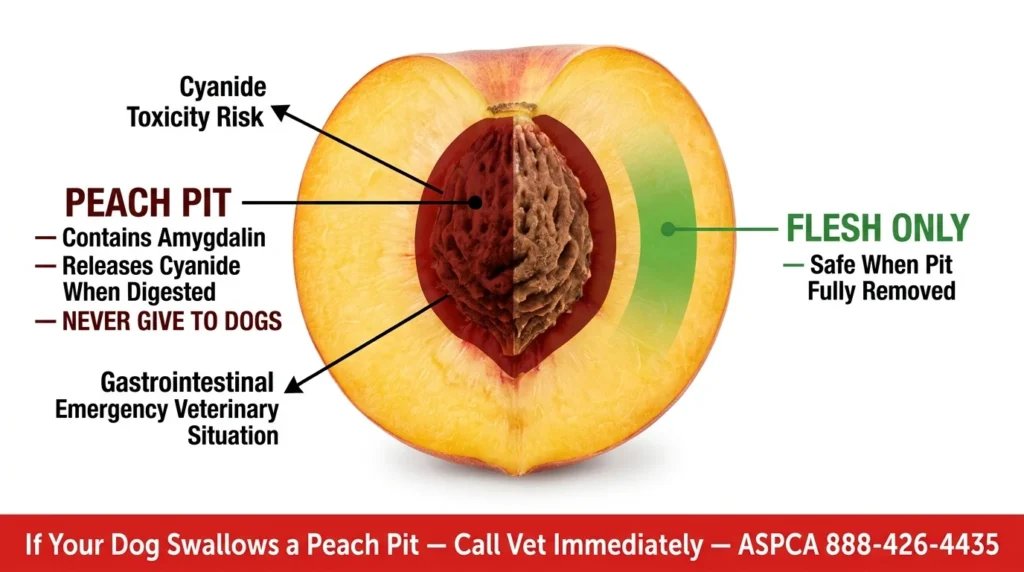
The critical rule: always remove the pit completely before giving any peach to your dog. Peach pits contain amygdalin — a cyanogenic compound that releases hydrogen cyanide when metabolized. The pit also presents a serious choking and gastrointestinal obstruction hazard. With the pit fully removed, ripe peach flesh is a safe, nutritious, and genuinely enjoyable treat for most dogs.
Are Peaches Safe for Dogs?
Yes — fresh, ripe peach flesh with the pit completely removed is safe for most healthy dogs. Peaches are not on any veterinary toxic food list for their flesh, and they appear in various natural dog treats and commercial dog food flavors for good reason.
However, peach safety requires consistent adherence to preparation rules. The safety profile of peaches changes dramatically depending on which part of the peach is served and how it was prepared.
Safe: Fresh ripe peach flesh, pit completely removed, skin optionally removed, plain with no additions.
Not safe: The pit (cyanide and obstruction risk), the leaves and stems (cyanogenic compounds), canned peaches in heavy syrup (extreme sugar), peach-flavored products with added sugar or xylitol.
For dogs with diabetes, obesity, or sensitive stomachs, peach flesh should only be given with veterinary guidance due to the natural sugar content. For all other healthy adult dogs, prepared peach flesh is a genuinely safe seasonal treat.
Are Peaches Good for Dogs?
Yes — peaches are genuinely good for dogs when served correctly. They offer a meaningful nutritional profile that goes well beyond simply being “not toxic.” Peach flesh contains a range of vitamins, minerals, antioxidants, and fiber that provide real health benefits.
What makes peaches particularly appealing as a dog treat is the combination of sweetness (which most dogs love), juiciness (which contributes to hydration), and nutritional density (vitamins A, C, and E, plus potassium and fiber). At roughly 38 calories per 100 grams of peach flesh, peaches are a moderate-calorie fruit — not as low-calorie as blueberries or cucumber, but not as calorie-dense as bananas.
The fiber content in peaches supports digestive health. The antioxidants — particularly beta-carotene, chlorogenic acid, and various flavonoids — provide cellular protective benefits. For a summer fruit that most dogs find absolutely delicious, the nutritional case for peaches is genuinely strong.
Benefits of Peaches for Dogs
Let’s examine the specific health benefits peaches provide to dogs in meaningful detail.
Vitamin A (from Beta-Carotene) — Vision, Immunity, and Skin Peaches are rich in beta-carotene, which the body converts to Vitamin A as needed. The golden-orange color of ripe peach flesh comes directly from carotenoid pigments including beta-carotene. Vitamin A supports healthy vision — particularly night vision and age-related eye health — immune function, proper cell growth, and healthy skin and coat. For senior dogs with declining vision or dogs with skin and coat issues, the beta-carotene in peaches provides meaningful targeted nutritional support.
Vitamin C — Antioxidant and Immune Defense Peaches provide meaningful amounts of Vitamin C — a water-soluble antioxidant that neutralizes free radicals, supports immune function, and contributes to collagen production for healthy joints, skin, and wound healing. While dogs produce their own Vitamin C, additional dietary C supports immune resilience — valuable for older dogs, stressed dogs, or those recovering from illness or surgery.
Vitamin E — Cellular Protection Peaches contain Vitamin E — a fat-soluble antioxidant that protects cell membranes from oxidative damage, supports immune function, and contributes to healthy skin. As dogs age, adequate Vitamin E becomes increasingly important for maintaining healthy cellular function. Peaches provide a natural, bioavailable form of this important antioxidant.
Potassium — Heart and Muscle Health Peaches provide potassium — an essential electrolyte that regulates heart rhythm, supports proper muscle contraction, and maintains healthy fluid balance throughout the body. For active and working dogs, adequate potassium supports physical performance and recovery. For senior dogs with heart concerns, discuss potassium-rich foods including peaches with your veterinarian.
Dietary Fiber — Digestive Health The fiber in peaches supports healthy digestion in multiple ways. Soluble fiber slows digestion and helps regulate blood sugar — moderating the speed at which the fruit’s natural sugars are absorbed. Insoluble fiber adds bulk to stool and supports regular bowel movements. The fiber in peaches also feeds beneficial gut bacteria, supporting the microbiome that underpins immune function and overall health.
Antioxidant Plant Compounds Beyond the vitamins, peaches contain chlorogenic acid (a polyphenol with anti-inflammatory and antioxidant properties), catechins, and various flavonoids that provide additional cellular protection. These compounds work synergistically with the vitamins to create a comprehensive antioxidant effect that supports healthy aging and disease prevention in dogs.
Niacin (Vitamin B3) — Energy Metabolism Peaches provide niacin, which supports the conversion of food into usable energy, contributes to healthy skin and coat, and supports proper enzymatic function throughout the body. Adequate niacin is important for metabolic health at every life stage.
Hydration Support Fresh peaches are approximately 89% water — making them a good hydrating food. On hot summer days, cold or chilled peach pieces provide meaningful fluid intake alongside regular water. This is particularly useful for dogs that don’t drink enough water on their own.
Are Peaches Ever Bad for Dogs?
Yes — peaches become bad for dogs in specific and important situations. Understanding these allows you to avoid the pitfalls while still enjoying the benefits.
The Pit — Cyanide and Obstruction This is the most serious concern with peaches for dogs. Peach pits contain amygdalin — a cyanogenic glycoside that releases hydrogen cyanide when metabolized. The pit is also large enough to cause gastrointestinal obstruction, particularly in small and medium dogs. A swallowed peach pit can become lodged in the esophagus, stomach, or intestines — requiring emergency surgery. Never give a dog access to a peach with its pit, and always discard pits in sealed bins where dogs cannot access them.
Peach Leaves and Stems — Cyanogenic Risk Like cherry and apple plants, peach trees (Prunus persica) contain cyanogenic compounds in their leaves and stems — more concentrated than in the pit in some cases. Dogs should never have access to peach tree leaves, stems, or bark. If you have a peach tree in your garden, ensure your dog cannot access fallen leaves, particularly wilted leaves where cyanogenic glycosides become more concentrated.
Canned Peaches in Syrup — Sugar Crisis Commercial canned peaches in heavy syrup contain enormous amounts of added sugar — typically 20 to 30 grams of sugar per half-cup serving. This is many times more sugar than fresh peach flesh and completely inappropriate for dogs. Regular canned peaches in light syrup are only slightly better. The syrup’s high sugar content can cause digestive upset, blood sugar spikes, and for diabetic dogs, a genuine medical crisis.
Overripe or Fermented Peaches — Alcohol Risk Overripe peaches that have begun to ferment produce small amounts of alcohol. Dogs are significantly more sensitive to alcohol than humans — even small amounts can cause alcohol toxicity. Never give overripe, mushy, or fermented peaches to dogs. Always use fresh, firm, ripe (not overripe) peaches.
High Sugar in Large Amounts Even fresh peach flesh has meaningful natural sugar (approximately 8 to 9 grams per medium peach). Daily or excessive feeding contributes to blood sugar instability, weight gain, and dental issues over time. Moderation is essential.
Risks of Feeding Peaches to Dogs
Here is a comprehensive look at the specific risks to understand for responsible feeding.
Amygdalin in the Pit — Cyanide Toxicity The peach pit contains amygdalin that releases hydrogen cyanide when metabolized. Cyanide poisoning symptoms include bright red gums, difficulty breathing, dilated pupils, weakness, seizures, and potentially death in severe cases. If your dog swallows a peach pit, contact your veterinarian or ASPCA Animal Poison Control (888-426-4435) immediately.
Physical Obstruction from the Pit Beyond cyanide, the peach pit can cause gastrointestinal obstruction — a serious, potentially life-threatening physical blockage. Signs include persistent vomiting, loss of appetite, lethargy, and abdominal pain. Obstruction may require emergency surgery.
Digestive Upset from Too Much Too much peach flesh at once causes digestive upset — loose stools, diarrhea, gas, and bloating — from the high sugar and fiber content overwhelming the digestive system.
Allergic Reactions Peach allergies in dogs are uncommon but possible. Signs include itching, hives, swelling, vomiting, or diarrhea after eating. Introduce peaches slowly and watch for 24 hours.
Pesticide Residue Commercially grown peaches are frequently among produce items with higher pesticide residue. Always wash peach skin thoroughly before serving, or peel before giving to your dog.
Xylitol in Peach-Flavored Products Some peach-flavored products, “light” canned peaches, or sugar-free peach products may contain xylitol — acutely toxic to dogs. Always check labels on any peach-derived product before giving to your dog.
Can Dogs Eat Canned Peaches?
This depends entirely on what the peaches are canned in. Most commercial canned peach products are not appropriate for dogs.
Canned peaches in heavy syrup: Absolutely not. Heavy syrup contains massive amounts of added sugar — 20 to 30 grams per half-cup serving — completely inappropriate for any dog. The sugar load can cause digestive upset and for diabetic dogs represents a medical emergency.
Canned peaches in light syrup: Still not recommended. Light syrup contains less sugar than heavy syrup but still significantly more than fresh peaches. Not appropriate for regular giving.
Canned peaches in 100% juice (no added sugar): This is the only canned format with any potential acceptability. Plain peaches canned in their own juice with absolutely no added sugar or preservatives might be given in very small amounts after draining and rinsing thoroughly. However, even this option is nutritionally inferior to fresh peach and the canning process affects vitamin content.
“No sugar added” or “light” varieties: Always check for xylitol in these products — artificial sweeteners are commonly used in reduced-sugar canned fruit.
The recommendation: Fresh peach is always the best choice. Avoid all canned varieties unless you have confirmed they are plain peach in 100% juice with no additives, and even then, fresh is preferable.
Can Dogs Eat White Peaches?
Yes — white peaches are safe for dogs with the same preparation rules as yellow peaches. White peaches are a variety of peach (Prunus persica) with pale white to cream-colored flesh, typically sweeter and less acidic than yellow varieties.
The sweeter, lower-acid profile of white peaches means they may be better tolerated by dogs with mild digestive sensitivity to more acidic fruits. However, the higher sweetness also means slightly more natural sugar per piece — keep portions slightly more conservative than with yellow varieties.
Remove the pit completely (same cyanide risk as all peach pits), remove the stem, wash the skin or peel it, and serve the white flesh in small pieces. White peaches tend to be softer when ripe, making them easy to cut into dog-appropriate pieces.
Can Dogs Eat Fresh Peaches?
Yes — fresh, ripe peaches are the absolute best form to give your dog. Fresh peaches retain their full complement of vitamins, antioxidants, fiber, and water content at maximum nutritional potency. Vitamin C and Vitamin E in particular are heat-sensitive and better preserved in fresh versus cooked or processed forms.
Fresh peaches also have no added ingredients — no syrup, no preservatives, no added sugar, no artificial anything. This makes them nutritionally pure and free of the concerns associated with processed peach products.
When selecting fresh peaches for your dog, choose fruit that is fully ripe — giving slightly to gentle pressure, with a sweet fragrant smell and no green tinge near the stem. Fully ripe peaches are sweeter, more digestible, and more nutritious than underripe ones. Avoid overripe, mushy, or fermented-smelling peaches entirely.
See Also: Can Dogs Eat Cherries? Pits, Toxicity & Complete Safety Guide
Can Dogs Eat Peaches and Nectarines?
Yes — both peaches and nectarines are safe for dogs with the same preparation rules. Nectarines are essentially smooth-skinned peaches — they are the same species (Prunus persica) with a genetic variation that produces smooth rather than fuzzy skin. The flesh, nutritional profile, and safety considerations are nearly identical.
Both fruits contain amygdalin in their pits — remove the pit completely from both before giving any flesh to your dog. Both have naturally sweet, juicy flesh that most dogs enjoy. Nectarines may be slightly easier for some dogs to eat due to their smooth skin (no fuzz), and some dogs prefer the slightly different flavor profile.
You can give your dog peach and nectarine flesh together as a mixed stone fruit treat, alongside other dog-safe stone fruits like plums. Keep total amounts within portion guidelines since both contain natural sugar. Remove all pits and stems from both fruits before serving.
Can Dogs Eat Peaches with Skin?
Yes — peach skin is safe for most dogs. The fuzzy skin of a peach is not toxic and is edible for dogs. It contains fiber and some antioxidant compounds concentrated in the skin layer.
However, there are practical considerations. First, peach skin may carry pesticide residue — wash thoroughly before serving. Second, the fuzzy texture of peach skin can be mildly irritating to some dogs’ mouths and digestive systems. If your dog seems to react to the fuzz — excessive licking, pawing at the mouth — peeling before serving is the better approach.
For dogs that tolerate peach skin without issue, leaving it on is fine and slightly more nutritious. For dogs with sensitive mouths or those bothered by the texture, peeling is easy and eliminates the concern.
Can Dogs Eat Nectarines and Peaches?
Same as the peaches and nectarines section above — yes, both are safe. Together they provide a mixed stone fruit treat with complementary flavors and similar nutritional profiles. Serve both pitted, plain, and in appropriate amounts. The smooth skin of nectarines versus the fuzzy skin of peaches gives dogs a slightly different textural experience that many find enjoyable.
Can Dogs Eat Frozen Peaches?
Yes — plain frozen peaches (no added sugar, no syrup, no artificial ingredients) are safe for dogs and make an excellent summer treat. Frozen peach pieces maintain most of their nutritional value through the freezing process — vitamins, minerals, and antioxidants are well preserved. The cold texture is refreshing and most dogs enjoy frozen fruit treats.
Plain frozen peach slices (home frozen): This is the best option. Pit, peel optionally, slice fresh ripe peaches into thin slices or small cubes, freeze flat on a parchment-lined tray until solid, then store in a sealed freezer bag. Serve one to three pieces as a summer treat.
Commercially frozen peaches: Many grocery store frozen peach products contain added sugar or citric acid as a preservative. Always read the ingredient label — the only ingredient should be peaches. Some products also add ascorbic acid (Vitamin C) to preserve color — this is safe for dogs in the amounts used in food.
Allow frozen peaches to soften very slightly before serving to small dogs or dogs with dental sensitivity — very hard frozen pieces can stress teeth.
Can Dogs Eat Peaches in Syrup?
No — peaches in syrup are not appropriate for dogs, whether heavy syrup, light syrup, or medium syrup. Any syrup-based canned peach product contains sugar at levels completely inappropriate for dogs.
Heavy syrup peaches can contain 20 to 30 grams of added sugar per serving — an amount that would cause immediate digestive upset in most dogs and could create a blood sugar crisis in diabetic dogs. Even “light syrup” varieties contain significant added sugar beyond the fruit’s natural content.
Never give peaches in syrup to your dog. If you want to share peaches with your dog and only have canned peaches available, choose “in 100% juice” with no added sugar, drain and rinse thoroughly, and give only a very small amount.
Can Dogs Eat Yellow Peaches?
Yes — yellow peaches are the most common commercial peach variety and are completely safe for dogs when properly prepared. Yellow peaches have golden-yellow flesh with a sweet-tart flavor profile and are what most people mean when they simply say “peaches.”
The yellow flesh of yellow peaches contains good amounts of beta-carotene (slightly more than white peaches), Vitamin C, Vitamin E, and potassium. The more pronounced tartness of yellow versus white peaches comes from higher natural acid content — this means they may cause more digestive irritation in very sensitive dogs than sweeter, lower-acid white varieties.
Remove the pit completely, wash the skin or peel, and cut into appropriate pieces for your dog. Yellow peaches are the most widely available variety and make an excellent seasonal treat.
Can Dogs Eat Dried Peaches?
Not recommended. Dried peaches present similar concerns to other dried fruit for dogs.
Sugar concentration: The drying process removes water but concentrates everything else — including natural sugars. A small amount of dried peaches has significantly more sugar per gram than the equivalent amount of fresh peaches. This concentrated sugar load is not appropriate for regular dog treat use.
Added sugar: Most commercially available dried peaches for human consumption contain added sugar to compensate for tartness that intensifies when water is removed. This makes commercial dried peaches even more sugar-dense than the natural concentration alone.
Sulfur dioxide preservative: Many dried fruit products contain sulfur dioxide as a preservative to maintain color and prevent spoilage. While not acutely toxic, sulfur dioxide can cause digestive irritation in sensitive dogs.
Pit concerns: While commercial dried peaches are typically pitted before drying, it is worth being cautious about any pit fragments that might survive processing.
The recommendation: choose fresh or plain frozen peach. If you specifically want a portable peach treat for training, freeze-dried peach slices with one ingredient (peach, no sugar added) in very tiny amounts are the closest acceptable option.
Can Dogs Eat Peaches in Juice?
Peaches canned in 100% pure fruit juice with no added sugar are the one canned peach format with any potential acceptability for dogs. However, even this option requires evaluation.
The juice used in these products is typically peach juice or white grape juice — both of which add extra natural fruit sugar on top of the peach flesh’s own sugar. The canning process also significantly reduces heat-sensitive vitamins compared to fresh peach. And commercial peach-in-juice products may still contain preservatives like citric acid (generally safe) or other additives.
If peach-in-juice is your only option: drain completely, rinse the peach pieces under water, and give a very small amount. But fresh peach is always nutritionally superior and more appropriate. When possible, choose fresh.
See Also: Can Dogs Eat Cantaloupe? Rind, Seeds & Safe Serving Guide 2026
Can Dogs Eat Peaches Safely?
Yes — peaches can be fed to dogs safely with consistent adherence to preparation rules. The safety checklist for peaches is straightforward.
Complete safety checklist for peaches:
- Choose fully ripe, firm fresh peaches with no overripe or fermented smell
- Wash the skin thoroughly under cold running water to remove pesticide residue
- Remove the pit completely — every single time, no exceptions
- Remove the stem completely
- Peel optionally (skin is safe but fuzz may irritate some dogs)
- Cut the flesh into small, appropriately sized pieces for your dog
- Serve plain — no sugar, no honey, no syrup, no added ingredients
- Give in appropriate amounts based on dog size (see table below)
- Introduce slowly the first time — one small piece, wait 24 hours
- Never give peaches in syrup, dried with added sugar, or fermented peaches
- Ensure dogs cannot access peach pits, leaves, or stems from peach trees
- For diabetic, obese, or pancreatic-sensitive dogs — consult vet first
Can Dogs Eat Peaches Seeds?
No — peach seeds (the pit/stone) should never be given to dogs and should always be removed before serving peach flesh. The terminology here is important: what people call “peach seeds” usually refers to the entire pit or to the almond-shaped seed kernel inside the pit.
The peach pit’s outer shell plus the seed kernel inside together contain amygdalin — the cyanogenic compound that releases hydrogen cyanide. Even if the outer pit shell is cracked open and only the inner seed/kernel is considered, it still contains amygdalin at significant concentration.
Never give peach pits, peach seeds, or any part of the peach pit to dogs. Remove completely before serving. Discard in sealed bins where dogs cannot access them.
Can Dogs Eat Peaches Slices?
Yes — peach slices (with pit removed and skin optionally removed) are an excellent and practical serving format for dogs. Sliced peach is easy to portion, easy to inspect for pit fragments after cutting, and satisfying for dogs to eat.
Thin peach slices are particularly good for training treats — they are soft, aromatic, and can be cut into many smaller pieces from a single slice for use as frequent training rewards. For large dogs, a full peach slice is a good sized treat. For medium dogs, half a slice. For small dogs, a quarter slice or thin strip.
After cutting peach into slices, always run your thumb along the cut surface near where the pit was to confirm no pit fragments remain before giving to your dog.
Can Dogs Have Sliced Peaches?
Yes — same as the above. Sliced peaches, properly pitted and prepared, are a great format for sharing with dogs. This question is often asked slightly differently because people want to confirm that both the concept of “sliced” and the fruit itself are acceptable — both are. The answer remains: pit removed, stem removed, plain, appropriately sized for your dog.
How to Safely Serve Peaches for Dogs
Here is a complete step-by-step preparation and serving guide for sharing peaches with your dog safely every time.
Step 1 — Choose the right peach: Select a fresh, ripe peach that is firm but yields slightly to pressure, has a sweet fragrant smell at the stem end, and has no signs of overripeness, mold, or fermentation.
Step 2 — Wash thoroughly: Rinse under cold running water and gently scrub the fuzzy skin to remove pesticide residue and surface contaminants.
Step 3 — Remove the pit completely: Cut around the pit and remove it entirely. Do not simply cut around it and assume no pit material remains — carefully inspect the cut surfaces and use your thumb to feel for any hard fragments.
Step 4 — Remove the stem completely: Remove the small stem from the top of the peach.
Step 5 — Decide on skin: Leave skin on (more fiber, some antioxidants) or peel (removes fuzz that may irritate some dogs). Both options are safe.
Step 6 — Cut into appropriate pieces: Thin slices or small cubes depending on your dog’s size. Small dogs need small pieces; large dogs can handle larger slices.
Step 7 — Serve plain: No sugar, no honey, no cinnamon, no yogurt with sweetener, no syrup. Just plain peach.
Step 8 — Store properly: Refrigerate unused portions in an airtight container for up to two days. For frozen peach treats, freeze prepared pieces flat on a tray before bagging.
Serving ideas:
- Fresh room-temperature pieces — simple and delicious
- Chilled pieces from the refrigerator — refreshing in summer
- Frozen peach cubes — excellent summer treat
- Peach food topper — tiny pieces over regular food
- Peach Kong stuffing — small pieces in Kong, freeze overnight
- Peach and plain yogurt mix — combine with plain unsweetened yogurt
How Many Peaches Can a Dog Eat?
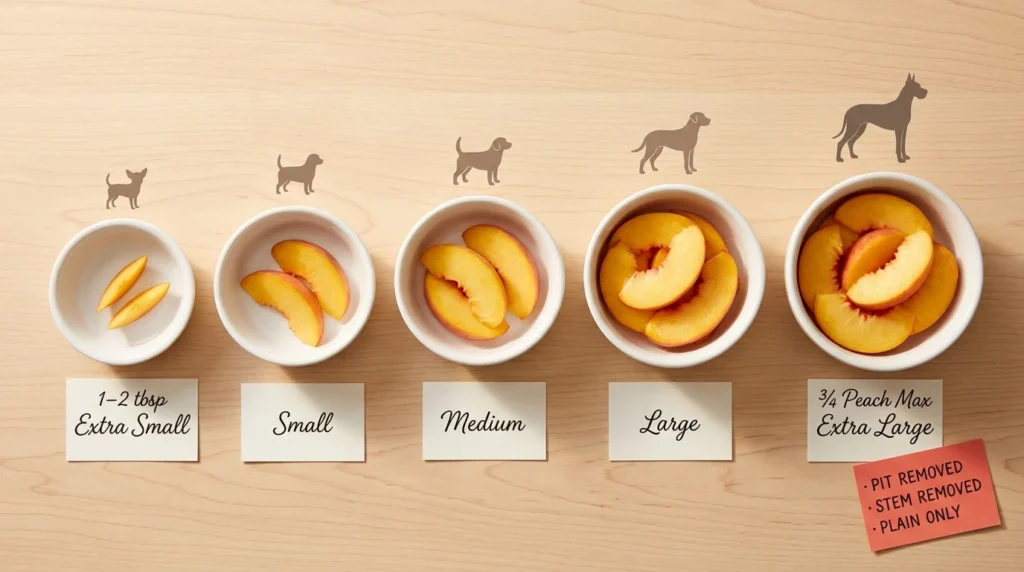
The standard treat guideline applies — treats should not exceed 10% of your dog’s daily caloric intake. Because peaches have natural sugar (approximately 8 to 9 grams per medium peach), moderation is genuinely important.
How Many Peaches Can a Dog Eat? — Portion Guide by Dog Size
| Dog Size | Weight Range | Fresh Peach Flesh Per Serving | Daily Maximum | Frequency |
|---|---|---|---|---|
| Extra Small | Under 10 lbs | 1–2 thin slices or a few small pieces | 1–2 tablespoons | 2–3 times per week |
| Small | 10–20 lbs | 2–3 thin slices or small pieces | 2–3 tablespoons | 2–3 times per week |
| Medium | 20–50 lbs | 3–4 thin slices or half a peach | ¼ of a medium peach | A few times per week |
| Large | 50–90 lbs | 4–6 slices or half to most of a peach | ½ of a medium peach | A few times per week |
| Extra Large | 90 lbs + | Most of a medium peach | ¾ of a medium peach | A few times per week |
Important notes on this table:
- These are maximum amounts for plain, fresh peach flesh only — pit removed, stem removed.
- Diabetic dogs: no peaches without explicit veterinary approval — natural sugar affects blood glucose.
- Overweight dogs: reduce portions significantly — peach has more natural sugar than lower-calorie treats like cucumber.
- “A few times per week” is better than daily — rotating fruit treats provides better nutritional variety.
- Factor peach into the total daily treat budget alongside any other treats given that day.
- Never count the pit, skin (if removed), or stem in the portion — flesh only.
- Canned peaches in syrup: zero — not appropriate in any amount regardless of dog size.
How Much Peach Can Dogs Eat?
This is essentially the same question as above, answered through the portion table. The key additional point worth emphasizing: peach portions should be measured as the flesh only, with all non-flesh components (pit, skin if removed, stem, juice) excluded from consideration.
For dogs being introduced to peaches for the first time, start with significantly less than the table maximum — just one or two small pieces regardless of dog size — and wait 24 hours to observe for any digestive reaction or allergic response before increasing to normal portion sizes.
See Also: Can Dogs Eat Celery for Weight Loss? Benefits & Portion Guide 2026
Can Puppies Eat Peaches?
Yes — puppies can eat small amounts of properly prepared peach flesh, and it can actually be a nutritious treat for growing dogs. The beta-carotene, Vitamin C, and folate in peaches support puppy development, and the juicy sweetness makes them appealing to young dogs discovering new foods.
However, puppies require extra careful preparation and even smaller portions than adult dogs.
The pit removal rule is even more critical for puppies — puppies are more likely to grab food quickly and swallow before thoroughly chewing. Never give a puppy a whole peach or access to a peach with its pit. Even partial pit exposure is more dangerous for a small puppy than for a large adult dog.
Start with just one or two very small pieces and wait 48 hours before giving more. Cut pieces very small — thumbnail-sized or smaller — to prevent choking.
Primary nutrition must come entirely from complete, age-appropriate puppy food. Peach is supplemental only.
Frequently Asked Questions
Can dogs eat peaches?
Yes — fresh peach flesh with the pit completely removed is safe for most healthy dogs. Peaches provide Vitamin A, C, and E, potassium, and fiber. Always remove the pit (cyanide risk), serve plain, and keep portions appropriate for your dog’s size.
Are peaches safe for dogs?
Yes, with proper preparation. Remove the pit and stem completely, wash skin or peel, and serve only the fresh flesh plain. Canned peaches in syrup, dried peaches with added sugar, and overripe fermented peaches are not safe.
Are peaches good for dogs?
Yes. Peaches contain beta-carotene (Vitamin A), Vitamin C, Vitamin E, potassium, fiber, and antioxidants — real nutritional benefits for dogs. The flesh is nutritious when properly prepared and pit-free.
Can dogs eat canned peaches?
Only peaches canned in 100% juice with no added sugar — drained and rinsed before serving — may be given in very small amounts. Canned in heavy or light syrup: never. Fresh peach is always preferable.
Can dogs eat white peaches?
Yes. White peaches are safe for dogs with the same preparation rules — pit removed, plain flesh only. Their sweeter, lower-acid profile may actually suit dogs with mild digestive sensitivity better than yellow varieties.
Can dogs eat fresh peaches?
Yes. Fresh peaches are the best form for dogs — maximum nutrition, no added ingredients, no processing concerns. Choose ripe, fragrant peaches, remove the pit completely, and serve plain.
Can dogs eat peaches and nectarines?
Yes. Both are safe for dogs with the same preparation rules — pit removed, stem removed, plain flesh only. Nectarines are smooth-skinned peaches with a nearly identical nutritional profile.
Can dogs eat peaches with skin?
Yes — peach skin is not toxic. It adds some fiber and antioxidants. Wash thoroughly to remove pesticide residue. If your dog is bothered by the fuzzy texture, peel before serving.
Can dogs eat frozen peaches?
Yes — plain frozen peaches with no added sugar or syrup are safe and make an excellent summer treat. Home-frozen fresh peach slices are the safest option.
Can dogs eat peaches in syrup?
No. Peaches in syrup — heavy or light — contain far too much added sugar for dogs. Never give syrup-based canned peaches to your dog.
Can dogs eat yellow peaches?
Yes. Yellow peaches are the most common variety and completely safe when properly prepared. Remove the pit, wash skin or peel, and serve plain flesh in appropriate portions.
Can dogs eat dried peaches?
Not recommended. Dried peaches concentrate natural sugars and usually contain added sugar and sulfur dioxide preservatives. Choose fresh or plain frozen peach instead.
Can dogs eat peach seeds?
No. Peach pits and seeds contain amygdalin that releases cyanide when metabolized. They also pose gastrointestinal obstruction risk. Remove completely before serving any peach to your dog.
Can dogs eat peach slices?
Yes — pitted, plain peach slices are an excellent serving format. Easy to portion, inspect for pit fragments, and appropriate for dogs of different sizes.
Can dogs be allergic to peaches?
Yes, though uncommon. Signs include itching, hives, swelling, vomiting, or diarrhea. Introduce slowly (one small piece, 24-hour wait) the first time.
What happens if a dog eats a peach pit?
Contact your veterinarian or ASPCA Animal Poison Control (888-426-4435) immediately. The pit contains amygdalin (cyanide risk) and can cause gastrointestinal obstruction. Do not wait for symptoms — prompt veterinary communication is essential.
How much peach can a dog eat daily?
See the portion table. Extra small dogs: 1–2 tablespoons of flesh. Small: 2–3 tablespoons. Medium: ¼ of a peach. Large: ½ peach. Extra large: ¾ peach. A few times per week is better than daily.
Can puppies eat peaches?
Yes, in very small amounts of properly pitted, plain peach flesh. Cut into tiny pieces, start with one or two pieces, wait 48 hours. Never give puppies access to whole or pitted-but-still-accessible peaches. Primary nutrition from complete puppy food.
Conclusion
Peaches are one of summer’s genuinely excellent dog treats — sweet, juicy, nutritious, and most dogs absolutely love them. The flesh of a properly prepared peach provides Vitamin A, C, and E, potassium, fiber, and antioxidants that meaningfully contribute to canine health. And the joy on most dogs’ faces when they get a piece of ripe summer peach is hard to beat.
The complete rules for safe and enjoyable peach sharing:
Always do:
- Remove the pit completely — every single time, no exceptions
- Remove the stem completely
- Wash the skin thoroughly or peel before serving
- Serve only the fresh flesh, plain and unseasoned
- Cut into appropriately sized pieces for your dog’s size
- Give in moderate amounts — a few times per week, not daily
- Inspect cut surfaces for pit fragments before serving
- Introduce slowly the first time
- Store pits in sealed bins inaccessible to dogs
Never do:
- Give whole peaches with pits to dogs
- Give peaches in syrup — extreme sugar
- Give dried peaches with added sugar
- Give overripe or fermented-smelling peaches — alcohol risk
- Allow dogs access to peach tree leaves, stems, or fallen leaves
- Give to diabetic dogs without veterinary approval
- Give without ensuring complete pit removal
Also Read: Can Dogs Eat Popcorn? Buttered, Kettle Corn & Every Type Covered


