

Can Dogs Eat Cantaloupe? Rind, Seeds & Safe Serving Guide 2026
It is a hot summer afternoon, you slice open a ripe cantaloupe, that sweet honeyed aroma fills the kitchen, and your dog immediately appears at your feet — tail wagging, nose working, eyes tracking every piece of orange fruit you cut. You want to share. But is cantaloupe safe for dogs? What about the seeds? The rind? The skin? What if your dog eats too much?
Cantaloupe is one of summer’s most beloved fruits, and the good news is that dogs can enjoy it too — with some important rules. This complete guide answers every question dog owners ask about cantaloupe and dogs — every form, every part, every variety, every product, and every practical detail you need to share this refreshing summer treat safely and confidently.
Can Dogs Eat Cantaloupe?
Yes — dogs can eat cantaloupe, and it is safe for most healthy dogs when properly prepared. The American Kennel Club (AKC) confirms that cantaloupe is a dog-safe fruit. It is packed with Vitamin A, Vitamin B6, Vitamin C, potassium, folate, fiber, and niacin. It is also approximately 90% water — making it one of the most hydrating fruit treats available.
The preparation rules are simple: remove the rind and seeds completely, serve only the soft orange flesh in appropriately sized pieces, and keep portions within reasonable limits because cantaloupe is moderately high in natural sugar compared to lower-sugar fruits like blueberries.
For healthy dogs, cantaloupe is a genuinely excellent summer treat — refreshing, nutritious, hydrating, and most dogs find it absolutely delicious.
Are Melons Good for Dogs?
Yes — melons are genuinely good for dogs, and cantaloupe in particular is one of the better melon choices for canine health. Melons as a category — including cantaloupe, honeydew, and watermelon — share common traits that make them valuable fruit treats for dogs: high water content for hydration, natural sweetness that dogs find appealing, and meaningful nutritional content.
Cantaloupe specifically excels within the melon family for dogs because of its exceptional beta-carotene content — the orange pigment that gives cantaloupe its distinctive color and converts to Vitamin A in the body. Beta-carotene is a powerful antioxidant, and cantaloupe is among the richest food sources available.
The combination of high water content, excellent Vitamin A precursor content, Vitamin C, potassium, and dietary fiber makes cantaloupe stand out as a fruit with real nutritional value for dogs — not just empty natural sugar. When served correctly and in appropriate amounts, cantaloupe is one of the better summer fruits you can share with your dog.
Can Cantaloupe Be Bad for Dogs?
Cantaloupe can become bad for dogs in specific situations that require clear understanding. None of these involve toxicity — cantaloupe flesh is not toxic to dogs — but they do involve real health and safety concerns.
The rind and seeds: The rind of cantaloupe is tough, fibrous, and difficult to digest. It can cause gastrointestinal obstruction, particularly in small dogs. The textured, netted surface of the rind also harbors bacteria and pesticide residue. Seeds should be removed before serving — they are not toxic but are a potential choking hazard and unnecessary digestive burden.
High sugar content: Cantaloupe is higher in natural sugar than many other dog-safe fruits. The glycemic index of cantaloupe is moderate to high. For diabetic dogs, obese dogs, or those with insulin resistance, the sugar content can interfere with blood glucose management. These dogs should only eat cantaloupe with veterinary guidance.
Too much at once: Overfeeding cantaloupe causes digestive upset from the combination of high fiber, high sugar, and high water content hitting the digestive system simultaneously — gas, bloating, loose stools, or diarrhea.
Unripe or green cantaloupe: Unripe cantaloupe is harder, less digestible, and may cause more digestive irritation than ripe fruit.
The Dangers of Eating Cantaloupe
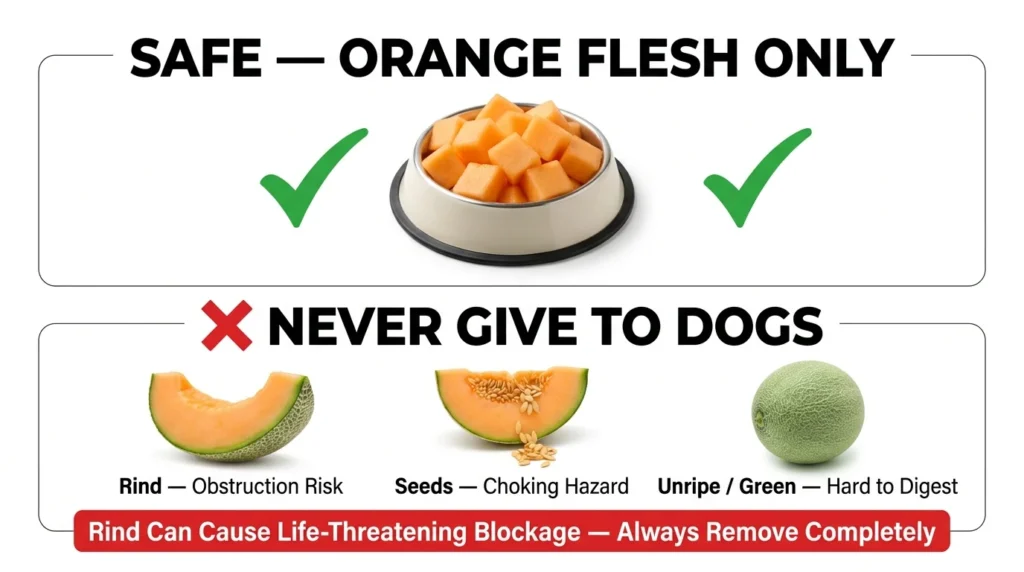
While cantaloupe flesh is safe, there are genuine dangers associated with specific parts of the fruit and with overconsumption.
Cantaloupe Rind — Obstruction Risk The rind of cantaloupe is one of the more significant physical dangers associated with this fruit for dogs. The outer skin and the firm white-green layer beneath it are extremely tough, fibrous, and completely indigestible for dogs. Unlike the soft orange flesh, which dogs can chew and digest without difficulty, the rind resists chewing and digestion entirely.
If a dog swallows a piece of cantaloupe rind — which is likely if they grab a piece with rind still attached — it can become lodged in the esophagus, stomach, or intestinal tract, causing an obstruction. Obstruction symptoms include persistent vomiting, loss of appetite, lethargy, abdominal pain, and inability to defecate. This is a veterinary emergency that may require surgery.
Seeds — Choking Hazard Cantaloupe seeds are slippery, moderately sized, and easy to swallow accidentally. While not toxic, they are hard, indigestible, and in accumulation can contribute to digestive tract irritation. For small dogs, accumulated seeds could potentially contribute to a partial obstruction. Always remove seeds before serving.
Bacterial Contamination on the Rind The netted, rough surface of cantaloupe rind is one of the most bacteria-hospitable surfaces of any common fruit. Cantaloupe has been associated with Salmonella outbreaks in humans because the rough rind texture traps bacteria that can then be transferred to the flesh when the fruit is cut. Always wash cantaloupe thoroughly before cutting — this helps prevent bacteria from the outer surface from contaminating the inner flesh as the knife passes through.
Excessive Sugar for Diabetic Dogs The natural sugar content of cantaloupe — roughly 12 to 13 grams per cup — is meaningful for dogs with diabetes or insulin resistance. Never give cantaloupe to a diabetic dog without explicit veterinary approval.
Health Benefits of Cantaloupe for Dogs
Let’s break down the specific nutritional benefits cantaloupe provides to dogs in meaningful detail.
Beta-Carotene and Vitamin A — Vision, Immunity, and Skin Cantaloupe is one of the richest food sources of beta-carotene available in common fruit. The orange color of cantaloupe flesh comes directly from beta-carotene, which the body converts to Vitamin A as needed. Vitamin A supports healthy vision — particularly night vision and the prevention of age-related eye changes — immune system function, proper cell growth, and healthy skin and coat. For senior dogs with declining vision or dogs with skin issues, the beta-carotene in cantaloupe provides targeted, meaningful nutritional support.
Vitamin C — Antioxidant and Immune Support Cantaloupe provides meaningful amounts of Vitamin C — a powerful antioxidant that neutralizes free radicals, supports immune function, and contributes to collagen synthesis for healthy joints, skin, and wound healing. While dogs produce their own Vitamin C, additional dietary C supports immune resilience, particularly for older dogs, stressed dogs, and those recovering from illness. The Vitamin C content of fresh cantaloupe is highest in fully ripe fruit.
Vitamin B6 — Brain and Metabolic Health Vitamin B6 (pyridoxine) supports protein metabolism, nervous system function, red blood cell production, immune health, and blood glucose regulation. Cantaloupe provides a meaningful amount of B6 in a natural, bioavailable form. For dogs, adequate B6 supports energy metabolism, cognitive function, and overall metabolic balance.
Potassium — Heart and Muscle Function Cantaloupe is a good source of potassium — an essential electrolyte that regulates heart rhythm, supports proper muscle contraction, and maintains healthy fluid balance. For active and working dogs, adequate potassium supports performance and recovery. For senior dogs with heart concerns, discuss potassium-rich foods including cantaloupe with your veterinarian.
Folate — Cellular Health and DNA Synthesis Folate (Vitamin B9) supports DNA synthesis, cell division, and red blood cell production. Particularly important for pregnant dogs and growing puppies, folate ensures healthy cell reproduction throughout the body.
Niacin (Vitamin B3) — Energy Metabolism and Skin Niacin supports the conversion of food into usable energy, contributes to healthy skin and coat, and supports proper enzyme function. Dogs with niacin deficiency develop a distinctive skin condition called black tongue disease — niacin-rich foods like cantaloupe contribute to preventing deficiency.
Hydration — 90% Water Content Cantaloupe is approximately 90% water — making it one of the most hydrating fruits available. On hot summer days, cold cantaloupe pieces can meaningfully supplement your dog’s fluid intake alongside regular water. This is particularly valuable for dogs that don’t drink enough water independently, active dogs after exercise, or senior dogs whose hydration can decline.
Dietary Fiber — Digestive Health The fiber in cantaloupe supports healthy digestion — regulating the pace of food movement through the gut, feeding beneficial gut bacteria, and contributing to regular bowel movements. The predominantly soluble fiber in cantaloupe also helps slow sugar absorption, moderating the blood sugar spike that would otherwise occur from the fruit’s natural sugar content.
Can Dogs Eat Cantaloupe Melon?
Yes — cantaloupe melon is safe for dogs when properly prepared. “Cantaloupe melon” refers simply to the cantaloupe fruit (Cucumis melo var. reticulatus in North America, or similar varieties in other regions). Everything covered in this guide applies specifically to cantaloupe melon.
Cantaloupe is the orange-fleshed, netted-rind melon most commonly found in North American and European grocery stores from late spring through early fall. Its distinctive orange color (from beta-carotene), sweet honey-like flavor, and high water content make it particularly appealing and nutritious.
Remove the rind and seeds, cut the orange flesh into small cubes appropriate for your dog’s size, cool or chill if preferred, and serve plain. A few cubes of ripe cantaloupe on a summer day is a genuinely excellent treat for most healthy dogs.
See Also: Can Dogs Eat Celery for Weight Loss? Benefits & Portion Guide 2026
Can Dogs Eat Cantaloupe Skin?
No — cantaloupe skin (the outer green-netted rind) should never be given to dogs. The outer skin and the firm layer beneath it (the rind) are both problematic for the same reasons: they are extremely tough, fibrous, and completely indigestible for dogs.
The rough, netted texture of cantaloupe skin harbors bacteria and potentially pesticide residue from farming. When you cut a cantaloupe, always wash the outer surface first to prevent bacteria from the skin being transferred to the flesh by the knife. This bacterial concern applies when preparing cantaloupe for humans too — but for dogs who might try to eat the skin directly, it is even more relevant.
Always cut cantaloupe so that all skin and rind is completely removed, leaving only the soft orange flesh. For your dog’s portion, be generous with how much rind you remove — cut a little deeper into the fruit to ensure only clean, rind-free flesh reaches your dog’s bowl.
Can Dogs Eat Cantaloupe Rind?
No — cantaloupe rind should never be given to dogs, and this is one of the most important safety rules with this fruit. The rind includes both the outer green-netted skin and the firm white-green layer just beneath it, both of which need to be completely removed before serving.
As discussed in the dangers section, cantaloupe rind is one of the more significant obstruction risks among common fruits. Its tough, fibrous structure does not break down properly in the canine digestive system and can become lodged in the gastrointestinal tract — a potentially life-threatening situation.
After parties, cookouts, or family gatherings where cantaloupe was served, always collect all rind pieces and discard in a sealed bin where your dog cannot access them. Dogs attracted by the strong cantaloupe smell on the rind may try to eat discarded pieces — this is a genuine risk at summer events where cantaloupe scraps might be accessible.
Can Dogs Eat Cantaloupe Seeds?
Seeds should be removed before giving cantaloupe to your dog. Cantaloupe seeds are not toxic to dogs — they do not contain the cyanide-releasing compounds found in apple or cherry seeds — but they are a physical concern rather than a chemical one.
Cantaloupe seeds are slippery, moderately sized, and easy to swallow without being properly chewed. While one or two accidentally consumed seeds are unlikely to cause serious harm in a medium or large dog, seeds do not digest properly and in larger quantities could potentially cause digestive irritation or contribute to a partial blockage in smaller dogs.
The practical solution is simple: scoop out the seed cavity completely before serving. Use a spoon to remove all the seeds and the stringy seed area in the center of the cantaloupe. This takes seconds and completely eliminates the seed concern.
Can Dogs Eat Honeydew and Cantaloupe?
Yes — both honeydew melon and cantaloupe are safe for dogs and can be given together as a mixed melon treat. Honeydew has a pale green-white flesh compared to cantaloupe’s orange, with a milder, less sweet flavor and slightly different nutritional profile.
Honeydew is somewhat lower in beta-carotene than cantaloupe (it has less of the orange pigment) but provides good amounts of Vitamin C, potassium, and Vitamin B6. Together, cantaloupe and honeydew offer complementary nutrients and different flavor profiles that many dogs enjoy.
When combining melons, remember that both contain natural sugar — the combined sugar from two melon types adds up more quickly than either alone. Keep total mixed melon portions within the same guidelines as single melon serving. Remove rinds and seeds from both, cut into appropriate pieces, and serve plain.
Can Dogs Eat Watermelon and Cantaloupe?
Yes — both watermelon and cantaloupe are safe for dogs and make an excellent combined summer fruit treat. Together they cover different nutritional profiles: watermelon is particularly high in lycopene and very low in calories (even lower than cantaloupe), while cantaloupe is richer in beta-carotene and Vitamin A. Together they provide a broader antioxidant spectrum than either fruit alone.
Both are highly hydrating (watermelon is 92% water, cantaloupe 90%), making the combination particularly valuable as a hot-weather hydration treat. The different colors, textures, and flavors create a more interesting treat experience that dogs engage with enthusiastically.
Remove watermelon seeds and rind, remove cantaloupe seeds and rind, cut both into small cubes, and combine in a bowl. Keep total combined melon amount within the per-meal and daily portion guidelines for your dog’s size.
Can Dogs Eat Melon or Cantaloupe?
This question asks about melons in general, and the answer is that most melon varieties are safe for dogs when properly prepared. In addition to cantaloupe and honeydew (addressed above), other melon types safe for dogs include:
Casaba melon: Safe for dogs. White-cream flesh, mild flavor, lower sugar than cantaloupe. Same preparation rules apply — rind and seeds removed.
Galia melon: Safe for dogs. A cross between cantaloupe and honeydew with golden-green flesh and a sweet, aromatic flavor. Rind and seeds removed.
Persian melon: Safe for dogs. Similar to cantaloupe with a slightly different flavor and texture. Rind and seeds removed before serving.
Canary melon (Juan Canary): Safe for dogs. Bright yellow skin, white flesh, very sweet. Rind and seeds removed.
The consistent rule across all melon varieties for dogs is: soft inner flesh only, rind and seeds always removed, served plain in appropriate amounts. The flavor and nutritional profiles vary between melon types but none of the common sweet melon varieties are toxic to dogs.
Can Dogs Eat Green Cantaloupe?
Not recommended. Green cantaloupe refers to unripe cantaloupe — fruit that has not yet developed its characteristic orange flesh, sweet aroma, and soft texture. Unripe cantaloupe is firmer, less sweet, more starchy, and significantly more difficult to digest than fully ripe fruit.
Dogs that eat unripe cantaloupe are more likely to experience digestive upset — gas, bloating, or stomach discomfort — because the unripe starch has not yet converted to the natural sugars that make ripe cantaloupe easy to digest and sweet.
Additionally, unripe cantaloupe is harder and denser, creating a higher choking risk than soft, ripe flesh. The flavor of unripe cantaloupe is also much less appealing to dogs, making it a poor choice even from a palatability standpoint.
Always choose fully ripe cantaloupe for your dog — fragrant, yielding to gentle pressure, and with fully orange flesh throughout.
See Also: Can Dogs Eat Popcorn? Buttered, Kettle Corn & Every Type Covered
Can Dogs Eat Cantaloupe Everyday?
Not recommended for most dogs. While cantaloupe is safe and nutritious, its natural sugar content makes daily feeding a concern — particularly for dogs managing weight or blood sugar.
Cantaloupe contains approximately 12 to 13 grams of sugar per cup. This is not extremely high compared to some fruits, but it is significantly higher than lower-sugar options like blueberries or cucumber. Daily cantaloupe feeding adds a consistent amount of fructose to the diet that accumulates over time, potentially contributing to weight gain and blood sugar instability with regular daily intake.
A better approach is to include cantaloupe in the treat rotation several times per week during summer season rather than every day. Rotate cantaloupe with lower-sugar fruit options (blueberries, strawberries) and low-calorie vegetable treats (celery, cucumber, carrots) for the best overall nutritional variety. This provides cantaloupe’s benefits without over-relying on a single fruit source.
Can Dogs Eat Cantaloupe Safely?
Yes — cantaloupe can be fed to dogs safely with consistent adherence to the preparation guidelines. The safety checklist for cantaloupe is straightforward.
Complete safety checklist for cantaloupe:
- Choose fully ripe cantaloupe — fragrant, yielding to gentle pressure, fully orange flesh
- Wash the outer surface thoroughly before cutting — reduces bacterial transfer from skin to flesh
- Remove ALL rind and skin completely and generously — white and green layers both
- Scoop out all seeds and stringy seed cavity material
- Cut the orange flesh into small cubes appropriate for your dog’s size
- Serve plain — no salt, no sugar, no honey, no lime juice, no seasoning
- Cool or chill for a more refreshing treat (optional)
- Introduce slowly the first time — just one or two small cubes, wait 24 hours
- Keep portions within the guidelines in the table below
- Never give to diabetic dogs without explicit veterinary approval
- Monitor for any digestive reaction, particularly with first-time feeding
Can Dogs Eat Cantaloupe Shell?
“Shell” refers to the same structure as the rind — the hard outer casing of the cantaloupe. The answer is the same as for rind: no, dogs should not eat the cantaloupe shell. It is tough, fibrous, indigestible, and a gastrointestinal obstruction risk.
Whether called skin, rind, shell, or outer layer — any part of cantaloupe other than the soft orange inner flesh is not appropriate for dogs. The orange flesh is the only part of the cantaloupe that should reach your dog’s bowl.
Can Dogs Eat Melon Slices?
Yes — melon slices (properly prepared) are an ideal serving format for dogs. In the context of dog feeding, a “melon slice” means a piece of cantaloupe flesh with all rind removed — just the soft orange fruit portion, cut into a manageable slice or cube.
Melon slices are easy to portion, easy to size for different dog sizes, and satisfying for dogs to eat. For large dogs, a generous slice of orange flesh (no rind) is a great treat. For medium dogs, cut into several pieces. For small dogs, cut into very small cubes to prevent choking.
Pre-packaged fresh melon slices from grocery stores can be appropriate if they contain only plain melon with no added sugar, syrup, citric acid, or preservatives. Always check the label before buying packaged cut melon for your dog.
Can Dogs Eat Cantaloupe Chunks?
Yes — cantaloupe chunks are one of the most practical and popular formats for sharing cantaloupe with dogs. Chunks of rind-free, seed-free cantaloupe flesh are easy to portion accurately, easy to cut to the right size, and easy for dogs to eat and digest.
One-inch chunks are appropriate for most medium and large dogs. For small dogs, cut chunks into halves or quarters — half-inch to three-quarter-inch pieces. For very small toy breeds, very small cubes are the safest format.
Cantaloupe chunks can be served fresh at room temperature, chilled from the refrigerator (particularly refreshing in summer), or frozen for a longer-lasting cold treat. All three serving temperatures are safe — choose based on your dog’s preference and the weather.
How to Offer Melon to Your Dog?
There are several safe and enjoyable ways to offer cantaloupe and other melons to your dog. Here is a practical guide to the best serving methods.
Fresh cantaloupe cubes: The simplest approach. Remove rind and seeds, cut into appropriate-sized cubes, serve immediately or refrigerate for up to three days in an airtight container. Plain and delicious.
Chilled cantaloupe: Refrigerate prepared cantaloupe cubes and serve cold. The chilled temperature is particularly appealing in summer and many dogs prefer cold fruit treats.
Frozen cantaloupe cubes: Cut rind-free, seed-free cantaloupe into cubes, freeze flat on a parchment-lined tray until solid, then store in a sealed bag. Serve one to three frozen cubes as a summer cooling treat. Frozen cantaloupe provides a longer-lasting chewing experience that keeps dogs engaged.
Cantaloupe pupsicle: Blend rind-free, seed-free cantaloupe until smooth. Pour into silicone molds or ice cube trays. Freeze overnight. Serve as a refreshing frozen summer treat.
Cantaloupe and plain yogurt: Mix small cantaloupe cubes with one to two tablespoons of plain unsweetened yogurt. Serve fresh or freeze in silicone molds. The yogurt adds probiotics and protein to complement cantaloupe’s vitamins.
Cantaloupe food topper: Cut cantaloupe into very small pieces and scatter a tablespoon over your dog’s regular meal as a flavor enhancement and nutritional boost.
Mixed melon bowl: Combine cantaloupe cubes with watermelon cubes and honeydew pieces (all rind-free and seed-free) for a colorful summer melon treat mix.
Cantaloupe Kong stuffing: Press small cantaloupe pieces into a Kong toy. Freeze overnight for a long-lasting summer treat that provides mental stimulation.
How Much Cantaloupe Can Dogs Eat?
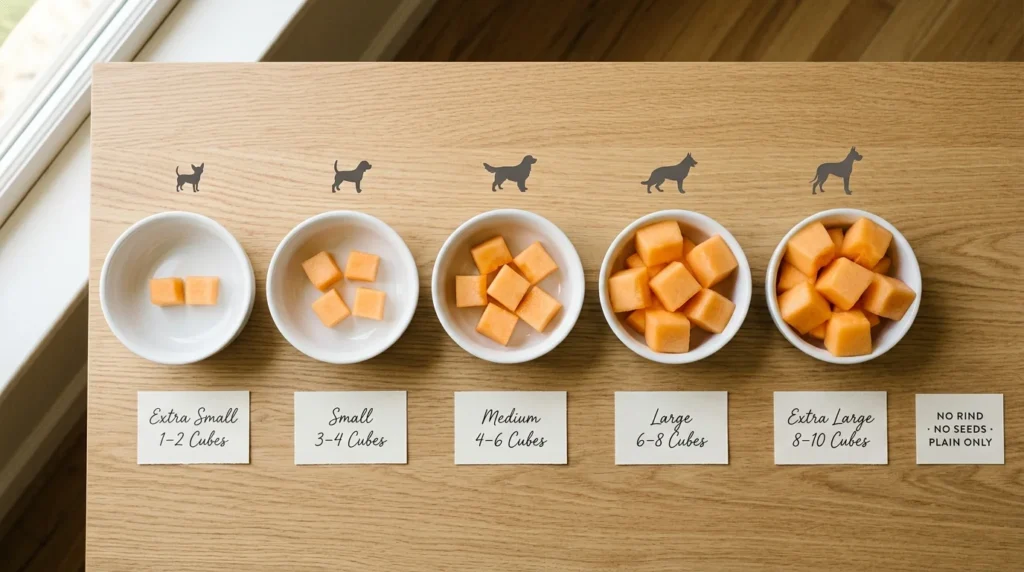
The standard treat guideline applies — treats should not exceed 10% of your dog’s daily caloric intake. Because cantaloupe contains natural sugar (approximately 12 to 13 grams per cup) and is moderately caloric compared to very low-calorie vegetables, portion control is genuinely important.
How Much Cantaloupe Can Dogs Eat? — Portion Guide by Dog Size
| Dog Size | Weight Range | Cantaloupe Per Serving (Max) | Daily Maximum | Frequency |
|---|---|---|---|---|
| Extra Small | Under 10 lbs | 1–2 small cubes (½ inch) | 1–2 tablespoons | 2–3 times per week |
| Small | 10–20 lbs | 3–4 small cubes (½–¾ inch) | 2–3 tablespoons | 2–3 times per week |
| Medium | 20–50 lbs | 4–6 cubes (1 inch each) | ¼ cup | A few times per week |
| Large | 50–90 lbs | 6–8 cubes (1 inch each) | ⅓–½ cup | A few times per week |
| Extra Large | 90 lbs + | 8–10 cubes (1 inch each) | ½–¾ cup | A few times per week |
Important notes on this table:
- These are maximum amounts for plain, rind-free, seed-free cantaloupe flesh only.
- Diabetic dogs: no cantaloupe without explicit veterinary approval — the sugar content affects blood glucose management.
- Overweight dogs: reduce portions significantly — the natural sugar contributes to caloric intake even without being “high calorie” per piece.
- Factor cantaloupe into the total daily treat budget alongside any other treats given that day.
- Daily cantaloupe is not recommended — a few times per week is more appropriate for most dogs.
- When combining with other fruits (watermelon, honeydew), reduce cantaloupe portion accordingly since the total sugar from multiple fruits adds up.
What If Your Dog Ate Too Much Cantaloupe?
The appropriate response depends on what was eaten and how much.
If your dog ate too much cantaloupe flesh (no rind or seeds): Expect temporary digestive upset — loose stools, diarrhea, gas, or bloating — from the high sugar, fiber, and water content overwhelming the digestive system at once. This is uncomfortable but not a toxic emergency for most healthy dogs. Ensure fresh water access (dehydration from diarrhea is a concern despite cantaloupe’s high water content), reduce or skip the next meal, offer plain boiled rice and chicken if they seem hungry but unsettled, and monitor for 24 hours.
If your dog ate cantaloupe rind: Contact your veterinarian promptly. The rind poses a gastrointestinal obstruction risk — particularly for smaller dogs. Signs of obstruction include persistent vomiting, loss of appetite, lethargy, abdominal pain, and straining without producing stool. Obstruction can develop over hours to days. Do not wait for symptoms if you know a significant amount of rind was consumed.
If your dog ate cantaloupe seeds: A few seeds accidentally consumed by a medium or large dog are unlikely to cause serious harm. Monitor for any digestive upset. For small dogs that consumed multiple seeds, contact your vet for guidance.
When to contact your vet:
- Any consumption of cantaloupe rind — obstruction risk
- Symptoms are severe or not improving after 24 hours
- Your dog is very small, very young, or has existing health conditions
- Diabetic dogs that ate significant cantaloupe — blood sugar monitoring may be needed
- Persistent vomiting or inability to keep water down
Can Puppies Eat Cantaloupe?
Yes — puppies can eat small amounts of rind-free, seed-free cantaloupe flesh, and it is actually a nutritious treat for growing dogs. The beta-carotene (Vitamin A), folate, and Vitamin C in cantaloupe support puppy development — Vitamin A for eye and immune development, folate for healthy cell growth, and Vitamin C as an antioxidant.
However, puppies require extra care with portion sizes and preparation. Cut cantaloupe into very small pieces appropriate for the puppy’s size and age. Very young puppies (under 12 weeks) should have only very soft, small pieces of fully ripe cantaloupe — nothing hard or large. Start with just one or two tiny pieces and wait 24 to 48 hours before giving more.
Cantaloupe should never displace puppy food. Puppies have critical and specific nutritional requirements for healthy growth that only a complete, AAFCO-approved puppy food can meet. Cantaloupe is supplemental only — an occasional treat, not a dietary staple.
Frequently Asked Questions
Can dogs eat cantaloupe?
Yes. Plain, rind-free, seed-free cantaloupe flesh is safe for most healthy dogs. It provides Vitamin A (from beta-carotene), Vitamin C, Vitamin B6, potassium, and hydration. Remove all rind and seeds before serving, and keep portions appropriate for your dog’s size.
Can dogs eat cantaloupe melon?
Yes. Cantaloupe melon is safe for dogs when properly prepared — rind and seeds removed, only the orange flesh served plain. It is one of the most nutritious summer fruit treats available for dogs.
Can dogs eat cantaloupe skin?
No. Cantaloupe skin (the outer netted rind) is tough, fibrous, indigestible, and harbors bacteria and pesticide residue. It poses a gastrointestinal obstruction risk. Always remove completely before serving.
Can dogs eat cantaloupe rind?
No. Cantaloupe rind is the outer skin plus the white-green layer beneath it — all of which is indigestible and an obstruction risk. Remove generously before serving any cantaloupe to your dog.
Can dogs eat cantaloupe seeds?
Seeds should always be removed. They are not toxic but are hard, indigestible, and potentially a choking hazard. Scoop out the entire seed cavity before serving cantaloupe to your dog.
Can dogs eat honeydew and cantaloupe?
Yes. Both are safe for dogs and complement each other nutritionally. Remove rinds and seeds from both, cut into appropriate pieces, and combine. Keep total melon amount within your dog’s portion guidelines.
Can dogs eat watermelon and cantaloupe?
Yes. Both are safe and highly hydrating summer fruits. Together they provide lycopene (watermelon) and beta-carotene (cantaloupe) for complementary antioxidant coverage. Remove rinds and seeds from both before combining.
Can dogs eat green cantaloupe?
Not recommended. Green cantaloupe is unripe — harder to digest, less sweet, and more likely to cause digestive upset. Always choose fully ripe, orange-fleshed cantaloupe for your dog.
Can dogs eat cantaloupe everyday?
Not recommended. The natural sugar content (12–13g per cup) makes daily cantaloupe a concern for blood sugar management and weight. Feed several times per week as part of a varied treat rotation.
Can dogs eat cantaloupe safely?
Yes — when rind and seeds are removed, cantaloupe is served plain without any additions, and portions are kept appropriate for your dog’s size. Introduce slowly the first time.
Can dogs eat melon slices?
Yes — melon slices with all rind removed are safe and an ideal serving format. Ensure no rind or seeds remain before giving any melon slice to your dog.
Can dogs eat cantaloupe chunks?
Yes. Rind-free, seed-free cantaloupe flesh cut into chunks is a practical and popular serving format. Size appropriately for your dog — smaller chunks for smaller dogs.
Are melons good for dogs?
Yes. Most sweet melons including cantaloupe, honeydew, and watermelon are good for dogs — hydrating, nutritious, and enjoyed by most dogs. The consistent rule: rind and seeds always removed, served plain.
Can dogs be allergic to cantaloupe?
Cantaloupe allergies in dogs are uncommon but possible. Signs include itching, hives, swelling, vomiting, or diarrhea after eating. Introduce slowly and watch for 24 hours the first time.
What happens if a dog eats too much cantaloupe?
Digestive upset — loose stools, diarrhea, gas — from the sugar, fiber, and water content. Ensure water access, reduce the next meal, monitor 24 hours. Contact your vet if rind was also consumed (obstruction risk) or if symptoms are severe.
Can diabetic dogs eat cantaloupe?
Only with explicit veterinary approval. Cantaloupe has moderate to high glycemic index and contains meaningful natural sugar. Diabetic dogs need careful blood sugar management — any fruit addition requires vet guidance.
Conclusion
Cantaloupe is one of summer’s most genuinely excellent dog treats. When properly prepared, it offers meaningful nutrition — particularly the exceptional beta-carotene and Vitamin A content that makes cantaloupe stand out among fruits — alongside excellent hydration, natural sweetness, and a refreshing quality that makes it perfect for warm-weather sharing with your dog.
The complete rules to follow every time:
- Choose fully ripe cantaloupe — fragrant, soft to gentle pressure, fully orange flesh
- Wash the outer surface thoroughly before cutting — reduces bacterial transfer
- Remove ALL rind generously — both outer netted skin and white-green inner layer
- Scoop out all seeds and stringy seed cavity material completely
- Serve only the soft orange flesh, plain, in appropriately sized pieces
- Never give rind — obstruction risk, the most serious cantaloupe safety concern
- Keep portions conservative — cantaloupe is moderately high in natural sugar
- Feed several times per week rather than daily
- Never give to diabetic dogs without veterinary approval
- Introduce slowly the first time and watch for any reaction
- After family events where cantaloupe was served, collect all rind scraps for sealed disposal — dogs attracted by the smell may try to eat discarded rind pieces
Also Read: Can Dogs Eat Potatoes? Safe Types, Risks & Feeding Guide 2026


