

Can Dogs Eat Peas? Benefits, Risks & Safe Feeding Tips
Yes, dogs can eat peas, and they are generally considered a safe and healthy treat when offered in moderation. Peas are a common vegetable that contains important nutrients such as fiber, vitamins, minerals, and plant-based protein. Many dog owners add small amounts of plain peas to their dog’s meals or use them as a training reward.
However, not every type of peas preparation is suitable for dogs. The safety of peas depends on how they are served, the amount given, and your dog’s individual health needs. Fresh, cooked, or frozen plain peas can be beneficial, while seasoned or processed pea products may create health problems. Understanding the right way to feed peas can help you keep your dog healthy and happy.
Can Dogs Eat Peas?
Dogs can eat peas safely when they are served plain and in appropriate amounts. Green peas, garden peas, sugar snap peas, and snow peas are among the varieties that dogs can usually enjoy. These small vegetables are naturally low in calories and contain nutrients that can support your dog’s overall health. Many commercial dog foods also include peas as a source of carbohydrates and plant-based nutrients.
Although peas are safe for most dogs, they should not replace a balanced diet. Dogs need nutrients from high-quality dog food, and treats like peas should only make up a small part of their daily intake. Before introducing peas, start with a small amount and observe your dog for any signs of digestive discomfort, allergies, or unusual reactions.
Also Read: Can Dogs Eat Scrambled Eggs? Benefits, Risks & Safe Guide
How Many Can Dogs Eat Peas? Can Your Dog Eat?
The amount of peas your dog can eat depends on their size, age, activity level, and overall health. Peas should be treated as an occasional snack rather than a regular meal because too many vegetables can upset your dog’s digestive system. A small dog may only need a few peas, while larger dogs can handle a slightly bigger serving.
Following the 10% treat rule is a good approach, meaning treats and snacks should not provide more than 10% of your dog’s daily calories. Always introduce new foods slowly and adjust the quantity according to your dog’s response. If your dog has a sensitive stomach or a medical condition, ask your veterinarian before adding peas regularly.
| Dog Size | Amount of Peas | How Often |
|---|---|---|
| Small Dogs | 1–2 teaspoons | Occasionally |
| Medium Dogs | 1–2 tablespoons | Few times per week |
| Large Dogs | 2–4 tablespoons | Few times per week |
| Puppies | A few soft cooked peas | Only occasionally |
Can Dogs Eat Peas Skin?
Dogs can eat pea skin, and it is generally not considered harmful when given in small amounts. The outer layer of peas contains fiber that can support healthy digestion and help your dog maintain regular bowel movements. Fresh pea pods, such as those from sugar snap peas and snow peas, can also be eaten by many dogs.
However, pea skin can sometimes be difficult for certain dogs to digest, especially dogs with sensitive stomachs or older dogs with weaker digestion. Feeding too much pea skin may lead to gas, bloating, or loose stools. Cutting pea pods into smaller pieces and introducing them gradually can make them easier and safer for your dog to consume.
Can Dogs Eat Peas Seeds?
Yes, dogs can eat pea seeds because they are the edible part of peas that humans commonly consume. Pea seeds contain beneficial nutrients including fiber, vitamin C, vitamin K, antioxidants, and plant-based protein. These nutrients can contribute to healthy digestion, immune support, and overall wellness when peas are included as a small part of a dog’s diet.
Even though pea seeds are safe, they should always be served without harmful additions. Avoid giving your dog peas mixed with garlic, onion, excessive salt, butter, or spicy seasonings because these ingredients can be dangerous for dogs. Plain fresh or cooked pea seeds are the best option for a safe and healthy treat.
Also Read: Can Dogs Eat Lima Beans? Benefits, Risks & Safe Guide
Can Dogs Eat Peas Peel?
Pea peel is safe for dogs in moderation because it does not contain toxic substances that can harm them. The peel provides additional fiber, which may help support digestive health and improve stool consistency. Some dogs enjoy eating whole pea pods, especially crunchy varieties like sugar snap peas.
Despite being safe, pea peel should not become a major part of your dog’s diet. Large amounts of fibrous foods can sometimes cause digestive problems, including stomach discomfort or diarrhea. If you are feeding peas with the peel, make sure they are fresh, properly washed, and cut into manageable pieces to reduce choking risks.
Can Dogs Eat Peas Safely?
Dogs can eat peas safely when they are prepared correctly and served in moderation. Plain fresh peas, steamed peas, or frozen peas without added ingredients are usually safe choices for healthy dogs. Peas can provide useful nutrients while also being a low-calorie snack option compared to many processed treats.
The biggest safety concern is not the peas themselves but the ingredients added during preparation. Canned peas with high sodium, peas cooked with butter, or dishes containing onion and garlic should be avoided. Always consider your dog’s specific health condition, and consult your veterinarian if your dog has kidney problems or special dietary requirements.
Can Puppies Eat Peas Skin?
Puppies can eat small amounts of pea skin, but extra care is needed because their digestive systems are still developing. While pea skin is not toxic for puppies, too much fiber can cause stomach discomfort, gas, or loose stools. For young dogs, it is usually better to start with soft, cooked peas without large amounts of skin.
When introducing peas to puppies, always begin with a very small portion and observe how they react. Puppies have different nutritional requirements than adult dogs, so treats like peas should only be an occasional addition to their balanced puppy diet. If your puppy has digestive issues or food sensitivities, speak with your veterinarian before adding new foods.
Also Read: Can Dogs Eat Cilantro? Benefits, Risks & Safe Feeding Guide
Can Dogs Eat Peas Yogurt?
Dogs can eat peas mixed with plain yogurt if both ingredients are suitable for them. Plain yogurt can provide probiotics that support digestive health, while peas add fiber, vitamins, and minerals. This combination can be used as an occasional treat, especially when served in small portions.
However, not all yogurts are safe for dogs. Avoid flavored yogurts that contain sugar, artificial sweeteners, chocolate, or xylitol because these ingredients can be harmful. Choose plain, unsweetened yogurt and make sure your dog can tolerate dairy products before offering peas with yogurt as a snack.
Can Dogs Eat Dried Peas?
Dried peas are not the best choice for dogs because they are much harder and more difficult to digest compared to fresh or cooked peas. Uncooked dried peas can expand during digestion and may cause stomach discomfort. Their hard texture can also create a choking risk, especially for small dogs.
If you want to offer dried peas, they should be properly cooked until soft and served without salt or seasoning. Even cooked dried peas should only be given occasionally because they contain concentrated fiber that may lead to gas or digestive problems if consumed in large amounts.
Can Dogs Eat Peas Everyday?
Dogs can eat peas, but feeding them every day is usually not necessary. Although peas contain valuable nutrients, dogs need a balanced diet that includes the right combination of proteins, fats, carbohydrates, vitamins, and minerals. Too many peas may replace other important nutrients your dog needs.
For most healthy dogs, peas are better offered as an occasional treat rather than a daily food. A few servings per week are generally enough to provide nutritional benefits without causing digestive issues. Always consider your dog’s size, activity level, and health condition before making peas a regular part of their diet.
Can Dogs Eat Peas Raw?
Dogs can eat raw peas, especially fresh green peas, sugar snap peas, and snow peas. Raw peas contain natural nutrients and can provide fiber, antioxidants, and vitamins that support your dog’s health. Many dogs enjoy the crunchy texture of fresh peas as a small snack.
Before feeding raw peas, wash them properly to remove dirt, chemicals, or unwanted residue. Raw peas should be served in moderation because some dogs may experience gas or digestive discomfort from eating too many raw vegetables. For dogs with sensitive stomachs, cooked peas may be easier to digest.
Can Dogs Eat Peas Cooked?
Cooked peas are one of the safest and easiest forms of peas for dogs to digest. When peas are steamed or boiled without salt, butter, oil, or seasonings, they become a soft and nutritious snack. Cooking can also make peas easier for puppies, senior dogs, and dogs with sensitive digestion to handle.
When preparing cooked peas for your dog, avoid recipes made for humans because they often contain ingredients that are unsafe for pets. Plain cooked peas can be mixed with regular dog food or offered separately as a small reward. Always allow cooked peas to cool before serving them to your dog.
Also Read: Can Dogs Eat Rib Bones? Risks, Dangers & Safe Alternatives
Is Peas Good for Dogs to Eat?
Peas can be a healthy addition to a dog’s diet because they contain several important nutrients. They provide dietary fiber, vitamin A, vitamin C, vitamin K, iron, potassium, and antioxidants. These nutrients can support digestion, immune function, and general health when peas are given in suitable amounts.
Another benefit of peas is that they are naturally low in fat and calories, making them a better snack option than many processed treats. However, peas should support your dog’s main diet rather than replace high-quality dog food. Balanced nutrition is the most important factor in maintaining your dog’s long-term health.
How to Safely Share Peas With Your Dog
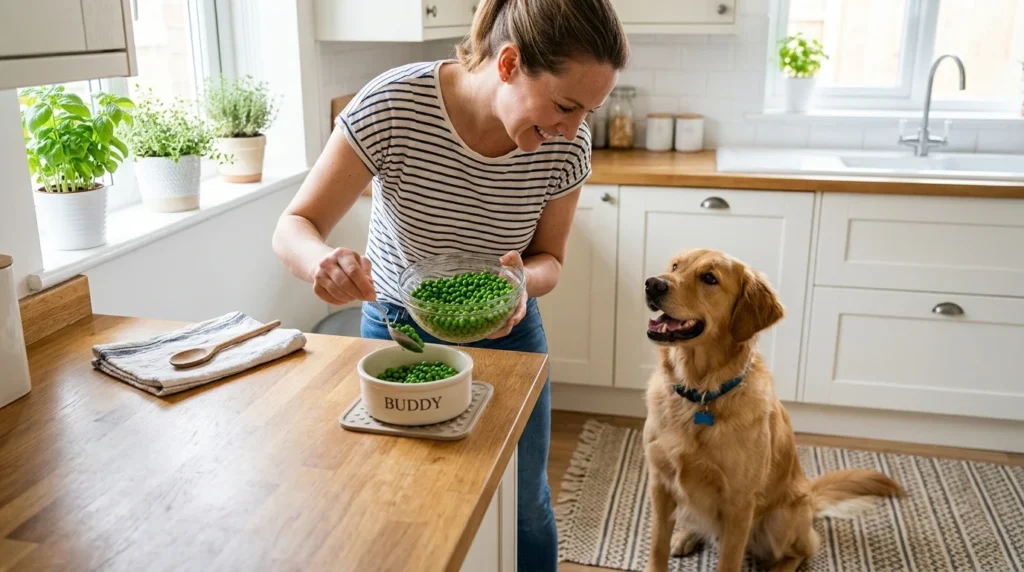
The safest way to share peas with your dog is to serve them plain, fresh, or lightly cooked without any added ingredients. Wash fresh peas thoroughly before feeding and remove any spoiled pieces. If using frozen peas, make sure they do not contain added salt, sauces, or seasonings.
See Also: Can Dogs Eat Cauliflower? Benefits, Risks, and Feeding Tips
Start with a small amount when introducing peas for the first time. Monitor your dog for signs of digestive problems such as vomiting, diarrhea, bloating, or excessive gas. Cutting larger pea pods into smaller pieces can also reduce choking risks and make them easier for your dog to eat.
Does Peas Have Benefits For Dogs?
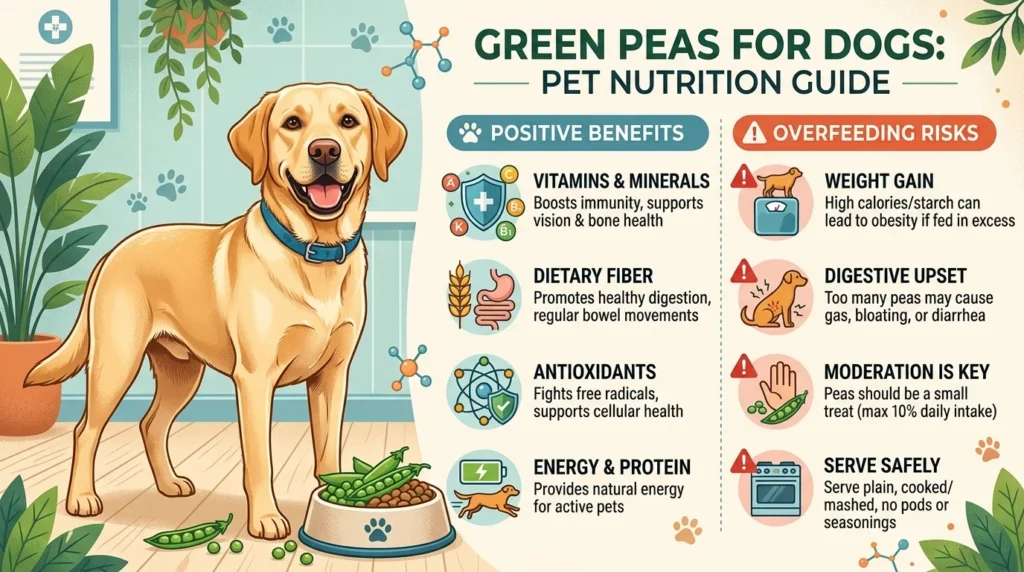
Peas provide several nutritional benefits for dogs when included as an occasional treat. The fiber found in peas can support healthy digestion, while antioxidants help protect cells from damage. Vitamins and minerals in peas contribute to maintaining a healthy immune system, strong bones, and normal body functions.
See Also: Can Dogs Eat Zucchini? Safe Feeding Guide for Dog Owners
Because peas are low in calories and contain nutrients that support overall wellness, they can be a useful treat option for many dogs. They may also help dogs feel satisfied because of their fiber content. However, the benefits of peas are only achieved when they are served in moderation as part of a balanced diet.
Does Peas Have Any Risks For Dogs?
Although peas are generally safe for dogs, they can cause problems when fed in excessive amounts. Too many peas may lead to gas, bloating, stomach upset, or diarrhea because of their high fiber content. Dogs with sensitive digestive systems may need smaller portions or may not tolerate peas well.
Dogs with kidney-related health issues should only eat peas after consulting a veterinarian because peas contain natural compounds called purines. It is also important to avoid processed pea dishes containing onion, garlic, salt, or harmful seasonings. Choosing plain peas and controlling portions can help reduce potential risks.
Frequently Asked Questions
Can dogs eat frozen peas?
Yes, dogs can eat plain frozen peas. Make sure they do not contain added salt, butter, sauces, or seasonings. Allowing them to thaw slightly can make them easier for some dogs to chew and digest.
Are canned peas safe for dogs?
Canned peas are not the best option because many brands contain high levels of sodium. If you use canned peas, choose a low-sodium variety and rinse them before serving, but fresh or frozen plain peas are usually better.
Can dogs eat pea pods?
Yes, some dogs can eat pea pods, especially sugar snap peas and snow peas. However, larger pods should be cut into smaller pieces to reduce choking risks and improve digestion.
Can dogs be allergic to peas?
Although pea allergies are uncommon in dogs, some pets may develop food sensitivities. If your dog experiences itching, vomiting, diarrhea, or skin irritation after eating peas, stop feeding them and consult a veterinarian.
Are peas good for dogs with sensitive stomachs?
Some dogs with sensitive stomachs may tolerate small amounts of cooked peas, while others may experience gas or digestive discomfort. Introduce peas slowly and monitor your dog’s reaction before offering them again.
Conclusion
Peas can be a safe and nutritious treat for most dogs when they are served correctly and in moderation. Whether your dog eats fresh, cooked, or frozen peas, the most important factors are portion size, preparation method, and your dog’s individual health needs. Plain peas can provide fiber, vitamins, minerals, and antioxidants that support your dog’s overall wellness.
Every dog is different, so always introduce new foods slowly and watch for any negative reactions. For more helpful pet nutrition guides, feeding advice, and answers about what foods are safe for dogs, visit PunzTrend. Our easy-to-understand pet articles help dog owners make better choices for their furry friends.
See Also: Can Dogs Eat Pineapple Core, Skin or Leaves? Full Safety Guide


