

Can Dogs Eat Olives? Benefits, Risks & Safe Feeding Guide
Olives are a popular snack for people and are commonly used in salads, pizzas, and Mediterranean dishes. Since many dogs enjoy tasting human foods, pet owners often wonder whether olives are safe to share. The answer depends on the type of olive, whether it contains a pit, and if it has been seasoned or stuffed with other ingredients.
Plain olives are not toxic to dogs and can be eaten in small amounts. However, many commercial olives are high in sodium or contain fillings and seasonings that may not be safe for pets. Learning the benefits, risks, and proper serving methods can help you decide if olives should be an occasional treat for your dog.
Can Dogs Eat Olives?
Yes, dogs can eat plain olives in moderation. Both green and black olives are generally non-toxic to dogs and may provide healthy fats, antioxidants, and small amounts of vitamins. However, olives are not considered an essential part of a dog’s diet and should only be offered occasionally.
Most store-bought olives are preserved in salty brine, which contains high levels of sodium. Excess salt can be harmful to dogs, so it is best to choose plain, unsalted olives and rinse them before serving. Always remove the pit to reduce the risk of choking.
How Many Olives Can Dogs Eat? Can Your Dog Eat?
The number of olives a dog can safely eat depends on their size, age, and overall health. Olives should be treated as an occasional snack rather than a regular food. Feeding too many olives may upset your dog’s stomach because of their fat and sodium content.
Choose plain, pitted olives and offer only small portions. Dogs with kidney disease, heart disease, or those on low-sodium diets should generally avoid olives unless a veterinarian recommends otherwise.
| Dog Size | Recommended Olive Amount | Frequency |
|---|---|---|
| Small Dogs | 1 olive | Occasionally |
| Medium Dogs | 2 olives | Occasionally |
| Large Dogs | 2–3 olives | Occasionally |
| Puppies | Very small amount | With caution |
Can Dogs Eat Green Olives?
Yes, dogs can eat plain green olives if they are pitted and served in moderation. Green olives contain healthy fats and antioxidants, but they are usually stored in salty brine, which makes rinsing them before serving important.
Avoid green olives stuffed with garlic, cheese, peppers, or other fillings because these ingredients may not be safe for dogs. Fresh or low-sodium plain green olives are the safest choice when offered as an occasional treat.
Can Dogs Eat Black Olives?
Dogs can eat plain black olives in small quantities. Like green olives, black olives are non-toxic and contain beneficial nutrients, including healthy fats and antioxidants. They can occasionally be offered as a snack if they are plain and pit-free.
Many canned black olives also contain added sodium. Rinse them thoroughly before serving and avoid flavored varieties that contain herbs, spices, or preservatives. Moderation is important because olives are naturally high in fat.
Also Read: Can Dogs Eat Fries? Safety, Risks & Healthy Alternatives
Can Dogs Eat Olive Pits?
No, dogs should never eat olive pits. Olive pits are hard and can easily become lodged in a dog’s throat, creating a choking hazard. They may also damage teeth or cause intestinal blockages if swallowed.
Always remove the pit before offering an olive to your dog. Even large dogs can experience problems if they swallow multiple pits. Taking a few extra seconds to remove the pit greatly reduces the risk of injury.
Can Dogs Eat Stuffed Olives?
Dogs should avoid stuffed olives because the fillings may contain ingredients that are unsafe. Many stuffed olives include garlic, onions, blue cheese, spicy peppers, or seasonings that can upset a dog’s stomach or even be toxic.
Even if the filling seems harmless, stuffed olives usually contain more sodium than plain olives. Plain, pitted olives without fillings are always the safer option for dogs.
Can Dogs Eat Olives Every Day?
Dogs should not eat olives every day. Although plain olives are generally safe in small amounts, they are high in fat and often contain sodium, making them unsuitable as a daily treat.
A balanced dog food already provides the nutrients your dog needs. Olives should only be offered occasionally to avoid unnecessary calories, excess sodium, and digestive discomfort.
Can Puppies Eat Olives?
Puppies can eat a very small amount of plain, pitted olive, but it is generally not recommended because puppies have sensitive digestive systems. During their growth stage, puppies need a balanced diet that provides the correct amount of protein, fat, vitamins, and minerals. Olives do not offer any essential nutrients that puppies cannot get from quality puppy food.
If you decide to let your puppy taste an olive, make sure it is plain, unsalted, and pit-free. Introduce it slowly and watch for signs of stomach upset, such as vomiting or diarrhea. Avoid making olives a regular snack for young dogs.
Can Dogs Eat Olive Oil?
Yes, dogs can have small amounts of olive oil, and many veterinarians consider it safe when used in moderation. Olive oil contains healthy monounsaturated fats and antioxidants that may help support skin health, coat condition, and overall wellness. Some owners add a small amount to their dog’s food for extra flavor.
Although olive oil has potential benefits, it is also high in calories. Feeding too much may contribute to weight gain or digestive upset. Always use plain extra virgin olive oil without added flavorings, herbs, or spices, and consult your veterinarian before adding it to your dog’s regular diet.
Also Read: Can Dogs Eat Lettuce? Benefits, Risks & Safe Feeding Guide
Can Dogs Eat Kalamata Olives?
Dogs can eat plain Kalamata olives in very small amounts, but they are usually preserved in salty brine, making them higher in sodium than fresh olives. Too much sodium can lead to excessive thirst and other health concerns, especially in dogs with kidney or heart problems.
If you choose to offer a Kalamata olive, rinse it thoroughly to remove excess salt and always remove the pit first. Because of their strong flavor and higher salt content, Kalamata olives should only be given as an occasional treat.
Can Dogs Eat Canned Olives?
Dogs can eat plain canned olives if they are pitted and rinsed well, but they are not the healthiest option. Most canned olives contain preservatives and high levels of sodium because they are stored in brine to extend shelf life.
Fresh olives or low-sodium varieties are better choices when available. If using canned olives, limit the serving size and avoid products that contain herbs, garlic, peppers, cheese, or other added ingredients.
What Happens If a Dog Eats Olives?
If a dog eats one or two plain, pitted olives, they will usually experience no serious problems. Most healthy dogs can digest plain olives without difficulty when eaten in small amounts. Some dogs may experience mild stomach upset if they eat several olives at once.
Problems are more likely if your dog eats olives with pits, stuffed olives, or large quantities of salty olives. Symptoms may include vomiting, diarrhea, excessive thirst, choking, or constipation. Contact your veterinarian if your dog swallows olive pits or develops concerning symptoms.
Is Olives Good for Dogs to Eat?
Plain olives can provide small amounts of healthy fats, vitamin E, antioxidants, and other nutrients that may support overall health. These nutrients help protect body cells from damage and may contribute to healthy skin and a shiny coat.
However, olives should not be considered a superfood for dogs. Their high fat and sodium content means they should only be given occasionally. Dogs receive all the nutrients they need from a complete and balanced dog food without relying on olives.
Also Read: Can Dogs Eat Bell Peppers? Safe Feeding Guide for Dog Owners
How to Safely Share Olives With Your Dog

The safest way to feed olives is to choose plain, unsalted, pitted olives with no added flavorings. Wash or rinse olives thoroughly to reduce excess sodium before cutting them into small bite-sized pieces that are easy to chew..
See Also: Can Dogs Eat Spinach? Benefits, Risks & Safe Serving Guide 2026
Never feed olives stuffed with garlic, onions, cheese, peppers, or spicy ingredients. Offer only a small amount as an occasional treat and always supervise your dog while they are eating to reduce the risk of choking.
Does Olives Have Benefits For Dogs?
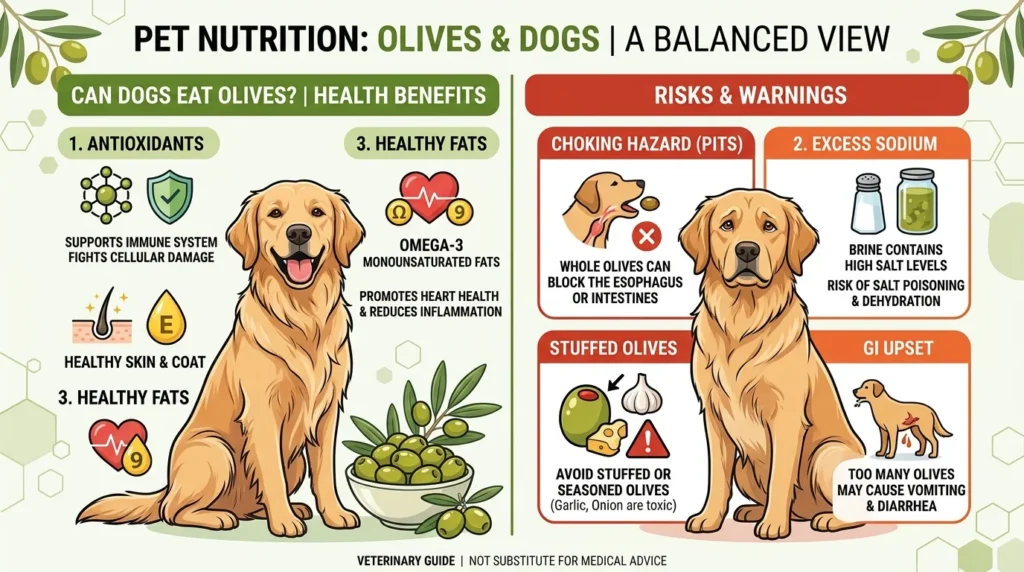
Olives contain healthy monounsaturated fats, antioxidants, vitamin E, and small amounts of minerals that may support your dog’s immune system, skin, and coat. These nutrients may also help protect cells from oxidative stress when consumed in moderation.
See Also: Can Dogs Eat Tuna Safely? What Every Dog Owner Should Know
Although olives provide some nutritional value, the benefits are relatively small because dogs only need tiny servings. A balanced commercial dog food already supplies these nutrients in appropriate amounts for most healthy dogs.
Does Olives Have Any Risks For Dogs?
Yes, olives can present several risks if they are not served properly. Olive pits can cause choking, dental damage, or intestinal blockages. Salted olives may expose dogs to excessive sodium, while stuffed or flavored olives may contain toxic ingredients such as garlic or onions.
Eating too many olives may also cause stomach upset because of their fat content. Dogs with obesity, pancreatitis, kidney disease, or heart disease should only eat olives if approved by a veterinarian.
Frequently Asked Questions
Can dogs eat olives safely?
Yes, dogs can safely eat plain, pitted, unsalted olives in moderation. Avoid stuffed, seasoned, or heavily salted olives.
Can dogs eat olive pits?
No. Olive pits are dangerous because they can cause choking, broken teeth, or intestinal blockages.
Can dogs eat black and green olives?
Yes, both black and green olives are generally safe if they are plain, pitted, and served in small amounts.
Can dogs eat olives every day?
No. Olives should only be an occasional treat because they are naturally high in fat and often contain added sodium.
Is olive oil safe for dogs?
Yes, small amounts of plain extra virgin olive oil are generally considered safe for healthy dogs when used in moderation.
Conclusion
Dogs can eat plain, pitted olives in moderation, but they should never become a regular part of their diet. While olives provide healthy fats and antioxidants, they are often high in sodium and may pose choking risks if the pits are not removed.
For the safest experience, choose plain unsalted olives, remove every pit, avoid stuffed or seasoned varieties, and offer only small portions occasionally. Following these simple precautions allows your dog to enjoy olives safely while maintaining a balanced and healthy diet.
See Also: Can Dogs Eat Pears? Benefits, Risks, Safe Serving Guide & 2026


