

Can Dogs Eat Grits? Safety, Benefits, Risks & Portions
Can dogs eat grits? Yes, dogs can eat plain, fully cooked grits in small amounts, as long as they are prepared without ingredients that can be harmful to dogs. Grits are made from ground corn and are generally not toxic to dogs by themselves. However, the way grits are prepared matters a lot because traditional recipes often contain butter, salt, cheese, milk, bacon, gravy, or seasonings that may cause digestive problems or other health concerns.
If you want to share grits with your dog, the safest option is plain cooked grits that have cooled down and contain no onion, garlic, excessive salt, or rich toppings. Grits should also be an occasional treat rather than a regular replacement for balanced dog food.
Can Dogs Eat Grits?
Dogs can eat plain grits when they are cooked properly and served in moderation. Grits are primarily made from corn, which is generally safe for dogs when prepared appropriately. Plain grits can provide carbohydrates and calories, but they are not nutritionally complete enough to replace a dog’s normal diet.
The main concern is usually not the grits themselves but the ingredients added during preparation. Grits made with large amounts of butter, cheese, salt, cream, bacon, sausage, or seasoning can be much less suitable for dogs. For a simple dog-friendly option, prepare grits with water and serve a small cooled portion without toppings.
Are Grits Safe for Dogs?
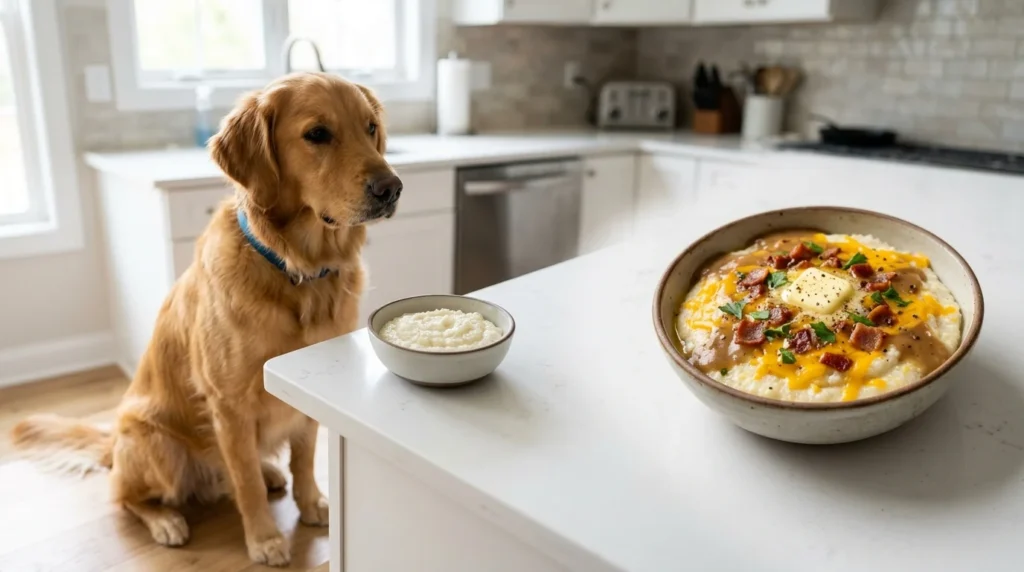
Plain, cooked grits are generally safe for most healthy dogs when offered occasionally and in small portions. Because grits are soft after cooking, they can be easier to chew than some dry foods. However, every dog can respond differently to new foods, so it is best to introduce grits gradually.
Grits should always be fully cooked before being offered to a dog. Avoid giving your dog dry grits because uncooked grains can be difficult to digest. You should also check the ingredients carefully if the grits come from a restaurant, packaged meal, or prepared family dish.
Can Dogs Eat Plain Grits?
Plain grits are one of the better ways to share this food with a dog. If the grits are cooked with water and contain no harmful seasonings, a small amount can generally be offered as an occasional treat. Plain grits are especially preferable to heavily seasoned versions because you have more control over what your dog consumes.
Even plain grits should not become a major part of your dog’s diet. They mainly provide carbohydrates and calories rather than the complete balance of protein, fats, vitamins, and minerals found in quality dog food. Think of plain grits as an occasional addition rather than a dietary staple.
Can Dogs Eat Cooked Grits?
Yes, cooked grits are generally suitable for dogs when they are plain and served in moderation. Cooking softens the corn and makes the food easier for a dog to consume. Before serving, allow the grits to cool completely because hot food can burn your dog’s mouth.
Avoid adding ingredients simply because they are common in human grits recipes. Butter, heavy cream, cheese, bacon grease, and salty seasonings can significantly increase the fat and sodium content. Simple cooked grits made with water are a much safer choice.
Can Dogs Eat Grits With Milk?
Grits cooked with milk are not automatically toxic to dogs, but they may cause digestive upset in dogs that have difficulty digesting lactose. Some dogs tolerate small amounts of dairy while others develop gas, loose stools, vomiting, or abdominal discomfort after consuming it.
For this reason, water-cooked grits are usually the simpler option when you intentionally want to share grits with your dog. If your dog has previously reacted badly to dairy products, avoid milk-based grits altogether. Never assume that because your dog enjoys milk-based foods, larger portions are appropriate.
Can Dogs Eat Grits With Butter?
It is best to avoid serving grits with butter to your dog. A tiny accidental amount is unlikely to be a serious problem for most healthy dogs, but butter is high in fat and can make a simple food unnecessarily rich. Larger amounts of fatty foods may cause stomach upset and can be particularly unsuitable for dogs prone to digestive issues.
If you are preparing grits specifically for your dog, leave the butter out. Plain grits provide a much simpler option. Your dog’s regular meals should already supply the fats needed for a balanced diet, so there is no nutritional reason to add a generous amount of butter to their grits.
Can Dogs Eat Grits With Cheese?
Cheesy grits are popular among people, but they are not the best choice for dogs. Cheese can add significant amounts of fat and calories, while some dogs may also have trouble digesting dairy. The additional salt found in many cheeses is another reason to avoid making cheesy grits a regular dog treat.
If your dog accidentally eats a small amount of cheesy grits, monitor them for digestive symptoms such as vomiting, diarrhea, gas, or abdominal discomfort. For intentional feeding, plain grits are preferable. If you want to give your dog cheese separately, keep the portion small and choose a plain, dog-appropriate variety without added seasonings.
Can Dogs Eat Grits With Salt?
Dogs need sodium in their diet, but adding extra salt to grits is unnecessary. Too much salt can be harmful, particularly when a dog consumes a large quantity. Human recipes can contain considerably more salt than a dog needs from an occasional treat.
When preparing grits for your dog, skip the salt. Plain grits are easier to portion and reduce the chance of accidentally giving your dog excessive sodium. If your dog eats a small amount of salted grits, they may simply experience increased thirst or mild stomach upset, but larger amounts or concerning symptoms should be discussed with a veterinarian.
Can Dogs Eat Grits With Garlic or Onion?
Grits containing garlic or onion should not be given to dogs. Garlic and onions belong to the Allium family and can be harmful to dogs. This applies to various forms, including fresh, cooked, dried, powdered, and concentrated versions. Garlic powder and onion powder can be particularly easy to overlook in seasoned dishes.
This is why restaurant or family-style grits can be risky even when the basic corn ingredient is safe. Always check the recipe before sharing human food with your dog. If your dog has eaten grits containing a significant amount of onion or garlic, contact a veterinarian promptly for advice based on the amount consumed and your dog’s size.
Can Dogs Eat Grits Every Day?
Grits should not normally be given to dogs every day. Although plain cooked grits can be safe in small portions, they do not provide all of the nutrients a dog needs for long-term health. Feeding too many grits can also add extra calories and carbohydrates to the diet without providing the nutritional balance found in complete dog food.
If you occasionally use a small amount of plain grits as a treat, keep it as a limited part of your dog’s overall food intake. Treats and extras should not crowd out nutritionally complete meals. Dogs with weight-management concerns may need even tighter control over calorie-dense human foods.
Can Puppies Eat Grits?
Puppies can potentially eat a small amount of plain, fully cooked grits, but they have different nutritional needs from adult dogs. Growing puppies require a balanced diet formulated to support development, so human foods should remain occasional extras rather than becoming a significant source of calories.
If you decide to introduce grits to a puppy, use a tiny amount of plain, cooled grits and watch for digestive changes. Avoid milk, butter, cheese, salt, onion, garlic, and other rich ingredients. If your puppy has a sensitive stomach or is on a veterinarian-recommended diet, ask your veterinarian before adding human foods.
Can Small Dogs Eat Grits?
Small dogs can eat plain cooked grits, but portion size matters more because even a seemingly small serving can represent a substantial amount of their daily calories. Start with a very small portion and observe how your dog reacts before offering it again.
Small breeds should never be given large spoonfuls simply because grits are soft and easy to eat. Keep the food plain and treat it as an occasional addition. If your small dog has consumed a large amount of grits, especially grits containing butter, salt, cheese, onion, or garlic, contact your veterinarian for individualized guidance.
See Also: Can Dogs Eat Turkey? Benefits, Risks & Safe Feeding Guide
Can Large Dogs Eat Grits?
Large dogs can generally have plain cooked grits in moderation. Their larger body size may allow for a somewhat larger treat portion than a toy breed, but that does not mean they should receive unlimited amounts. Grits still provide calories without being a complete source of canine nutrition.
For a large dog, a small serving of plain grits can be used occasionally as a treat or mixed into a balanced meal if appropriate. Keep the recipe simple and avoid rich toppings. If your dog has a medical condition or follows a prescription diet, check with your veterinarian before adding human foods.
How Much Grits Can Dogs Eat?
The appropriate amount depends on your dog’s size, overall diet, calorie needs, and individual health. Because grits are an extra food rather than a complete canine meal, the safest approach is to keep the serving small. A first serving should be particularly small so you can see whether your dog develops digestive problems.
| Dog Size | Starting Portion | Feeding Frequency |
|---|---|---|
| Toy / Very Small | About 1 teaspoon | Occasionally |
| Small | About 1–2 teaspoons | Occasionally |
| Medium | About 1 tablespoon | Occasionally |
| Large | About 1–2 tablespoons | Occasionally |
| Very Large | About 2 tablespoons | Occasionally |
These are conservative starting portions rather than universal medical limits. Your dog’s normal food, activity level, weight, age, and health conditions should all be considered when deciding how much human food to provide. If your dog experiences vomiting, diarrhea, unusual thirst, weakness, or other concerning symptoms after eating grits, stop offering them and contact your veterinarian.
Are Grits Good for Dogs?
Plain grits can offer dogs some carbohydrates and calories, but they should not be considered a highly nutritious food for dogs. Grits are made from corn and can provide energy, but they do not contain the complete nutritional balance a dog needs from its regular diet. Their value is mainly as an occasional food rather than a health supplement.
If your dog enjoys plain grits and tolerates them well, a small serving can be included occasionally. However, there is no need to add grits to your dog’s meals simply for health benefits. A complete and balanced dog food should remain the primary source of nutrition.
Do Grits Have Any Benefits for Dogs?
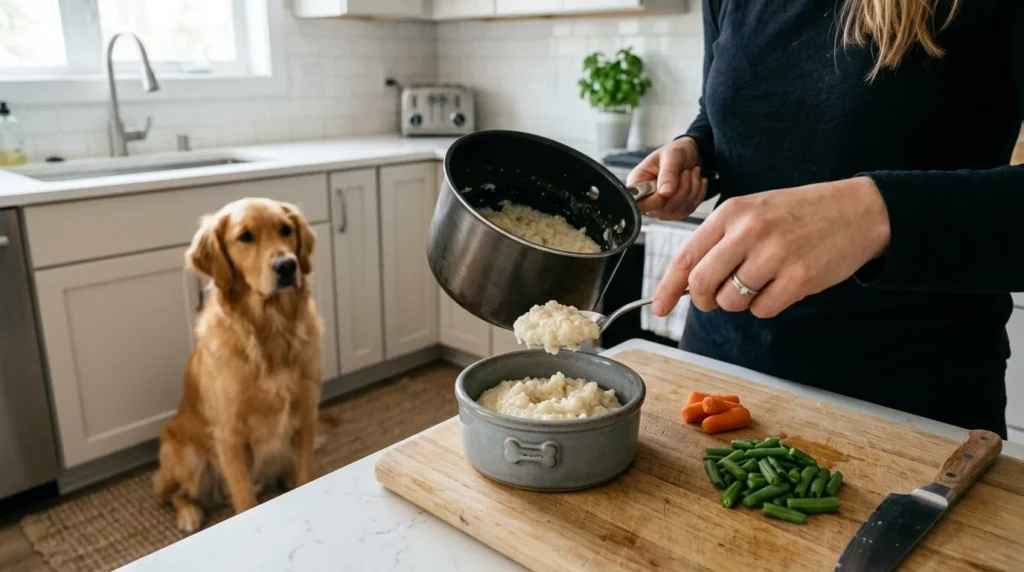
The main potential benefit of plain grits is that they provide carbohydrates, which can contribute energy. Their soft texture after cooking can also make them easy for many dogs to eat. However, these benefits are relatively limited because dogs can obtain energy and essential nutrients from foods specifically formulated for their nutritional requirements.
Grits may also be useful as an occasional way to add variety to a dog’s diet when served plain. Still, variety should never come at the expense of balanced nutrition. Grits should not be promoted as a treatment for digestive problems, weight loss, illness, or nutritional deficiencies unless a veterinarian specifically recommends them.
Can Dogs Eat Grits for an Upset Stomach?
Some owners consider bland foods such as plain grains when a dog has an upset stomach, but grits should not automatically be used as a home treatment. Digestive problems can have many causes, including dietary changes, infections, parasites, toxins, or underlying medical conditions. Feeding grits will not address the underlying cause.
If your dog has mild digestive upset, follow your veterinarian’s advice rather than relying on a human-food remedy. Persistent vomiting, repeated diarrhea, blood in the stool, severe abdominal pain, weakness, dehydration, or other concerning symptoms require veterinary attention.
Can Dogs Eat Cheese Grits?
Cheese grits are best avoided as a regular dog treat. The cheese can add fat, calories, and sodium, while some dogs have difficulty digesting dairy products. Rich cheese-based recipes can also contain other ingredients that are unsuitable for dogs.
If your dog accidentally eats a small amount of cheese grits, monitor them for signs of digestive upset. For future treats, plain cooked grits without cheese are a safer choice. If the dish contains onion, garlic, or large quantities of other potentially harmful ingredients, contact your veterinarian for advice.
Can Dogs Eat Grits With Bacon?
Grits with bacon are not a good choice for dogs. Bacon is high in fat and sodium, and adding it to grits turns an otherwise simple food into a much richer meal. Large amounts of fatty foods can cause digestive problems and may be particularly inappropriate for dogs with certain health conditions.
If your dog has eaten a small accidental portion, watch for vomiting, diarrhea, abdominal discomfort, or unusual behavior. Avoid intentionally sharing bacon-loaded grits. Plain cooked grits are a much better option when you want to give your dog a small taste of this food.
Can Dogs Eat Grits With Gravy?
Grits covered with gravy should generally be kept away from dogs. Gravy recipes often contain significant amounts of salt and fat and may include onion, garlic, spices, or other ingredients that are not appropriate for canine consumption.
If you want to share grits with your dog, prepare a separate plain portion before adding gravy or seasonings to the human serving. This allows you to control exactly what your dog eats. Restaurant grits and prepared breakfast dishes deserve extra caution because their ingredients and seasoning levels may be difficult to determine.
Can Dogs Eat Instant Grits?
Dogs may be able to eat a small amount of plain instant grits if the product contains only dog-safe ingredients and is prepared according to its instructions. However, many flavored instant grits contain added salt, cheese powders, artificial flavors, seasonings, or other ingredients that make them less suitable for dogs.
Always read the ingredient list before sharing packaged grits. Plain, unseasoned cooked grits are generally a simpler choice than flavored varieties. Never assume that a product is safe merely because its main ingredient is corn.
Can Dogs Eat Grits From a Restaurant?
Restaurant grits can be difficult to evaluate because you may not know exactly how they were prepared. They may contain butter, cream, cheese, bacon, salt, gravy, onion, garlic, or other seasonings. Even when none of these ingredients are immediately visible, they may be incorporated into the recipe.
For this reason, it is safer to avoid giving dogs restaurant-style grits unless you can confirm that they are plain and free from harmful ingredients. If you want to share grits, homemade plain grits are easier to control and portion appropriately.
Can Dogs Eat Grits With Eggs?
Plain cooked grits can be combined with plain, fully cooked eggs in a small amount if both foods are tolerated by your dog. Eggs can provide protein, while grits mainly contribute carbohydrates. The combination should still be treated as an occasional addition rather than a complete meal.
Avoid turning the combination into a typical heavily seasoned breakfast. Skip salt, pepper, onion, garlic, butter, hot sauce, and excessive cheese. Plain cooked egg mixed with a small amount of cooled grits is a much simpler option for dogs.
See Also: Can Dogs Eat Raw Eggs? Benefits, Risks & Safety Guide
Can Dogs Eat Grits With Chicken?
Plain grits can occasionally be served with plain cooked chicken. Chicken provides protein, while grits provide carbohydrates, but the combination should still be kept relatively small unless your veterinarian has specifically included these foods in your dog’s diet.
Use boneless, fully cooked chicken without onion, garlic, spicy seasoning, excessive salt, or sauces. Remove bones completely before serving. Never use heavily seasoned fried chicken as a substitute for plain cooked chicken. When combining foods, simplicity is usually the safest approach.
Can Dogs Eat Grits With Vegetables?
Some dog-safe vegetables can be mixed with a small amount of plain grits. Options such as cooked carrots, green beans, or plain pumpkin may be suitable for many dogs when prepared without harmful seasonings. However, not every vegetable is safe for dogs, so ingredients should be checked individually.
Keep the mixture simple and avoid onion, garlic, heavily salted vegetables, sauces, and spicy seasonings. The vegetable and grits mixture should remain a small part of your dog’s overall diet rather than replacing complete dog food.
What Are the Risks of Feeding Grits to Dogs?
Plain grits are generally not considered toxic to dogs, but they can still cause problems when served in excessive amounts or prepared with unsuitable ingredients. Too many grits can contribute unnecessary calories and may cause digestive upset, especially if your dog is not accustomed to grain-based foods.
The bigger risks often come from additions such as butter, cheese, bacon, gravy, salt, onion, and garlic. Dogs with food sensitivities or certain medical conditions may also need to avoid particular ingredients. Always consider the complete recipe rather than looking at the grits alone.
Can Grits Cause Diarrhea in Dogs?
Grits can potentially contribute to diarrhea if a dog eats too much, receives a sudden dietary change, or consumes grits containing rich ingredients such as butter, cheese, cream, or grease. Some dogs may also have individual food sensitivities that make them react differently to new foods.
If your dog develops mild diarrhea after eating grits, stop giving the grits and monitor them closely. Make sure fresh water is available. If diarrhea is severe, persistent, contains blood, occurs with vomiting or weakness, or affects a young puppy or medically vulnerable dog, contact a veterinarian promptly.
Can Grits Cause Constipation in Dogs?
Grits are not a guaranteed treatment for constipation. A dog that eats a large amount of any unfamiliar food may experience digestive changes, and feeding too many grits can displace other foods from the diet. Constipation can also have causes that require veterinary assessment.
If your dog is repeatedly straining to defecate, has not passed stool for an unusual length of time, appears painful, vomits, becomes lethargic, or has a swollen abdomen, seek veterinary advice. Avoid treating persistent constipation with large quantities of grits or other human foods without professional guidance.
How to Safely Give Grits to Your Dog
Start with plain grits cooked with water and allow them to cool before serving. Check that the recipe contains no onion, garlic, excessive salt, spicy seasonings, or rich toppings. Introduce only a small amount the first time and observe your dog for digestive changes.
Keep grits occasional and make sure they do not replace your dog’s complete and balanced food. If your dog has allergies, digestive sensitivities, weight concerns, or a medical condition, ask your veterinarian whether grits are appropriate before making them part of the diet.
What to Do If Your Dog Eats Grits
If your dog eats a small amount of plain cooked grits, there is usually no reason to panic. Check what ingredients were included and monitor your dog for vomiting, diarrhea, unusual thirst, abdominal discomfort, weakness, or other unusual symptoms.
If the grits contained onion, garlic, large amounts of salt, or another potentially harmful ingredient, contact a veterinarian or pet poison service promptly rather than waiting for symptoms. Also seek veterinary advice if your dog consumed a very large amount or develops significant or worsening symptoms.
Frequently Asked Questions
Can dogs eat plain grits?
Yes. Plain, fully cooked grits can generally be given to dogs in small amounts as an occasional treat. Avoid salt, onion, garlic, butter, and rich toppings.
Can puppies eat grits?
Puppies may be able to eat a tiny amount of plain cooked grits, but their primary food should be a complete and balanced puppy diet. Introduce new foods cautiously.
Can dogs eat grits with butter?
It is better to avoid butter. Butter is high in fat and can make grits unnecessarily rich. Plain grits prepared with water are a safer choice.
Can dogs eat cheesy grits?
Cheesy grits are not recommended as a regular treat because cheese can add fat, calories, and sodium. They may also cause digestive problems in dogs sensitive to dairy.
What should I do if my dog eats seasoned grits?
Check the ingredients first. If the grits contain onion, garlic, excessive salt, or another potentially harmful ingredient, contact your veterinarian for advice. Monitor your dog closely for unusual symptoms.
Conclusion
So, can dogs eat grits? Yes, plain, fully cooked grits can generally be given to dogs in small amounts and on an occasional basis. The safest version is simple grits prepared with water and served plain after cooling. Avoid common human additions such as onion, garlic, excessive salt, butter, cheese, bacon, and gravy.
Grits should remain an occasional treat rather than becoming a major part of your dog’s diet. If your dog has a medical condition, food sensitivity, special dietary requirements, or accidentally eats a large amount of seasoned grits, consult your veterinarian for personalized advice.
See Also: Can Dogs Eat Ham? Benefits, Risks & Safe Feeding Guide