

Can Dogs Eat Apple Cores? Risks, Seeds & Safe Apple Tips
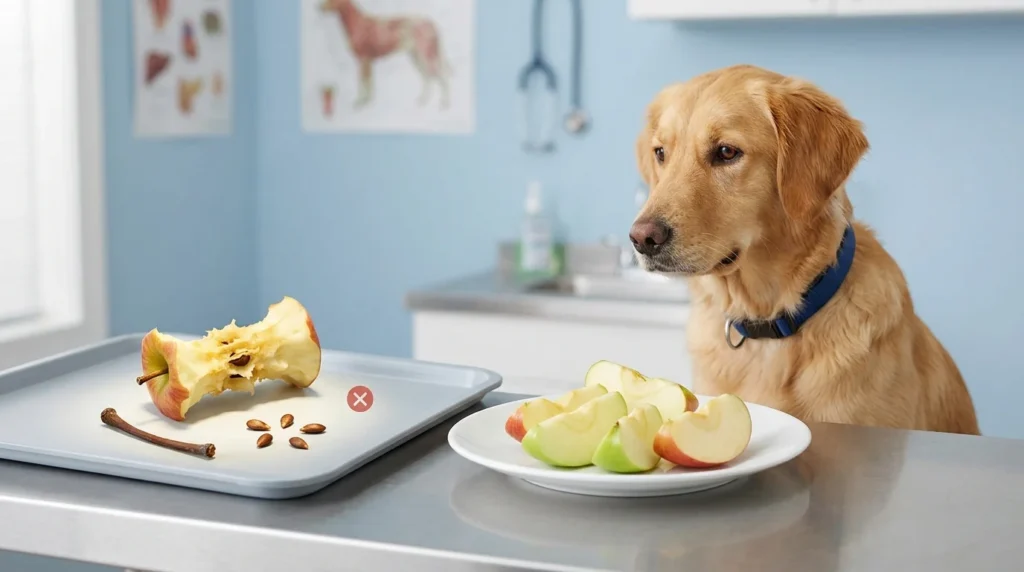
Dogs should not eat apple cores. While the flesh of an apple can be a healthy occasional treat for many dogs, the core is much harder and can create a choking or intestinal blockage risk. Apple seeds also contain amygdalin, a compound that can release cyanide when the seeds are chewed or crushed.
If you want to give your dog apple, remove the entire core, stem, and seeds first. Cut the remaining apple flesh into small, bite-sized pieces and offer it in moderation. Proper preparation makes apples a much safer treat than allowing your dog to chew on the whole fruit.
Can Dogs Eat Apple Cores?
No, dogs should not intentionally eat apple cores. The core is tough and fibrous, making it difficult for dogs to chew and digest. A swallowed piece can potentially become lodged in the digestive tract or create a choking hazard.
The core also contains the apple seeds. Although an occasional accidentally swallowed seed is unlikely to cause cyanide poisoning, it is still best to remove all seeds and the entire core before giving apples to your dog.
Are Apple Cores Safe for Dogs?
Apple cores are not considered a safe part of an apple treat for dogs. The main concerns are the physical structure of the core and the seeds contained within it. Larger pieces may cause choking or an intestinal obstruction.
Instead of giving your dog an entire apple, cut away the core and stem. Serve only the soft flesh in small pieces that are easy for your dog to chew.
Can Dogs Eat Apple Seeds?
Dogs should not be given apple seeds intentionally. Apple seeds contain amygdalin, which can release cyanide when the seeds are crushed or chewed. The amount in a few seeds is generally unlikely to cause poisoning in a healthy dog, but avoiding them is the safest approach.
Always remove the seeds along with the core before serving apple. If your dog has consumed a large quantity of crushed or chewed apple seeds, contact your veterinarian promptly for advice.
Can Dogs Eat Apple Skin?
Yes, dogs can generally eat apple skin when the apple has been washed properly. The skin contains fiber and other plant compounds and is not the main safety concern associated with apples.
Some dogs may have difficulty digesting large amounts of apple skin, particularly if they have sensitive stomachs. Washing the fruit and cutting it into small pieces can make it easier to eat.
Can Dogs Eat Apple Flesh?
Yes. Plain apple flesh is generally safe for dogs in moderation and can provide water, fiber, and several nutrients. It can be used as an occasional low-calorie treat for many healthy dogs.
Remove the core, stem, and seeds before serving. Avoid giving apples covered in sugar, caramel, chocolate, artificial sweeteners, or other ingredients that may be unsafe for dogs.
Can Dogs Eat the Apple Stem?
It is best not to let dogs eat apple stems. The stem is tough and can be difficult to chew or digest, and it is an unnecessary part of the fruit.
When preparing an apple for your dog, remove the stem and core completely. Give your dog only the clean apple flesh and, if desired, the washed skin.
What Happens If a Dog Eats an Apple Core?
If a dog eats a small piece of apple core, it may pass through the digestive system without causing a problem. However, larger pieces can become lodged in the throat or digestive tract and may cause an obstruction.
Watch your dog for vomiting, loss of appetite, abdominal discomfort, lethargy, difficulty passing stool, or repeated attempts to vomit. If symptoms develop or your dog swallowed a large core, contact your veterinarian promptly.
What Happens If a Dog Eats an Apple With Seeds?

Accidentally swallowing one or two apple seeds is generally unlikely to cause cyanide poisoning because the seeds typically need to be chewed or crushed to release significant amounts of cyanide-forming compounds.
However, consuming a large number of chewed seeds can be more concerning. If your dog has eaten many apple seeds, particularly after chewing them, contact your veterinarian for guidance.
Can Apple Cores Cause a Blockage in Dogs?
Yes. Apple cores can potentially cause an intestinal blockage, particularly in small dogs or dogs that swallow large pieces without chewing. The risk depends on the amount consumed and the size of the dog.
A blockage can become a serious medical problem. Signs may include repeated vomiting, abdominal pain, lack of appetite, lethargy, constipation, diarrhea, or difficulty passing stool. Veterinary assessment is important if these symptoms occur.
Can Apple Cores Cause Choking?
Yes. A large or partially chewed apple core can become lodged in a dog’s throat. Dogs that tend to swallow food quickly may be at greater risk of choking on hard pieces of fruit.
Always cut apples into small pieces after removing the core and stem. Do not give a whole apple as a chew toy, even if your dog normally handles firm foods well.
Can Puppies Eat Apple Cores?
No. Puppies should not be given apple cores. Their small size makes a hard core more difficult to manage, and they may be more likely to swallow pieces without chewing them properly.
Once a puppy is eating solid food, a small piece of washed apple flesh can be offered as an occasional treat. Remove all seeds, the core, and the stem first.
Can Dogs Eat Apple Cores Every Day?
No. Apple cores should never be part of a dog’s regular diet. They provide no meaningful benefit that cannot be obtained from the safe edible flesh, while introducing unnecessary choking and blockage risks.
If you want to give your dog apples regularly as occasional treats, use small portions of core-free apple flesh. Treats should remain limited so they do not replace complete and balanced dog food.
How Much Apple Can Dogs Eat?
The appropriate serving depends on your dog’s size, overall diet, calorie needs, and individual tolerance. Start with a few small pieces of core-free apple when introducing it for the first time.
Too much apple can cause digestive upset because it contains natural sugar and fiber. Keep portions modest and consider apple an occasional treat rather than a major part of your dog’s diet.
| Dog Size | Suggested Starting Portion |
|---|---|
| Small Dogs | 1–2 small pieces |
| Medium Dogs | 2–4 small pieces |
| Large Dogs | A small handful of pieces |
| Puppies | A tiny piece when appropriate |
Are Apples Good for Dogs?
Plain apple flesh can be a nutritious occasional snack for dogs. Apples contain water, fiber, vitamin C, and other plant compounds, while their natural sweetness can make them appealing to many pets.
However, apples are not essential to canine nutrition. A complete and balanced dog food should remain the foundation of the diet, with apples used only as an optional treat.
Do Apples Have Benefits for Dogs?
The fiber in apples can contribute to normal digestive function, while the fruit’s water content can add moisture to an occasional snack. Apples also provide several vitamins and plant compounds.
These benefits apply mainly to the edible flesh, not the core. Removing the core, seeds, and stem allows your dog to enjoy the fruit while avoiding the main safety concerns.
Can Dogs Eat Cooked Apples Without the Core?
Plain cooked apple flesh can generally be given to dogs when the core, seeds, and stem have been removed. Cooking can soften the fruit and make it easier for some dogs to chew.
Avoid adding sugar, cinnamon blends containing unsafe ingredients, butter, caramel, artificial sweeteners, or other dessert ingredients. Plain cooked apple is preferable to apple pie or other sweetened preparations.
How to Safely Give Apples to Your Dog
Wash the apple thoroughly before preparing it. Remove the stem, core, and every seed, then cut the remaining flesh into small pieces that are appropriate for your dog’s size.
Start with a small portion if your dog has never eaten apple before. Serve it plain and avoid caramel, chocolate, sugar, artificial sweeteners, or other toppings that can make an otherwise safe fruit unsuitable for dogs.
Can Dogs Eat Apple Slices?
Yes, dogs can generally eat small apple slices as long as the core, seeds, and stem have been removed. Apple slices can be a crunchy and refreshing occasional treat.
Cut larger slices into smaller pieces for dogs that swallow food quickly. Moderation is important because apples contain natural sugars and fiber that can cause digestive upset when eaten in excess.
See ALso: Can Dogs Eat Cheese? The Complete Safe-Feeding Guide (2026)
Can Dogs Eat Whole Apples?
It is better not to give a whole apple to a dog. A dog may chew or swallow the core, seeds, and stem, creating unnecessary choking, blockage, and seed-related concerns.
Instead, prepare the apple first. Removing the unsafe parts and cutting the flesh into manageable pieces gives your dog the benefits of the fruit without encouraging them to consume the core.
Can Dogs Eat Apple Cores After Cooking?
Cooking does not make an apple core an appropriate food for dogs. The core remains tough and can still present a choking or intestinal obstruction risk.
If you cook apples for your dog, remove the entire core, seeds, and stem before cooking. Offer only the softened flesh without added sugar, butter, or sweeteners.
Can Dogs Eat Apple Cores in Applesauce?
Commercial applesauce may be made from apples without intact cores, but it is not automatically a good choice for dogs. Many products contain added sugar, artificial sweeteners, or other ingredients.
If you want to give applesauce, choose plain, unsweetened applesauce with no harmful ingredients and offer only a small amount. Homemade applesauce can be prepared using peeled or unpeeled apple flesh with the core and seeds completely removed.
Can Dogs Eat Apple Pie?
Apple pie is not a suitable treat for dogs. It commonly contains sugar, butter, high-fat pastry, and other ingredients that can cause digestive upset or contribute unnecessary calories.
Some recipes may also contain raisins, artificial sweeteners, or other ingredients that can be dangerous to dogs. Plain fresh apple flesh is a much safer option.
Can Dogs Eat Apple Butter?
Apple butter is generally not recommended for dogs because it often contains concentrated sugar and other sweeteners. Some products may contain spices or additional ingredients that are unnecessary for pets.
If you want your dog to enjoy apple, use a few pieces of fresh, core-free apple instead. This makes it easier to control exactly what your dog consumes.
Can Dogs Eat Apple Juice?
Apple juice is not necessary for dogs and is generally a poor substitute for fresh apple. Juice contains concentrated natural sugar and usually provides less fiber than the whole fruit.
Dogs should primarily drink fresh water. If you want to offer apple as a treat, give a few pieces of fresh apple flesh instead of juice.
Can Dogs Eat Green Apples?
Yes, dogs can generally eat small amounts of green apple flesh. Green apples are not toxic to dogs and can be offered in the same way as other edible apple varieties.
Remove the core, seeds, and stem before serving. Green apples can be more tart than some red varieties, so your dog may prefer sweeter ripe apples.
Can Dogs Eat Red Apples?
Yes. Plain flesh from red apples is generally safe for dogs when the core, seeds, and stem are removed. Red apples can provide fiber, water, and several nutrients.
Do not assume the entire fruit is safe simply because the flesh is edible. Always prepare the apple before giving it to your dog rather than letting the dog chew the whole fruit.
Can Dogs Eat Apple Cores With Peanut Butter?
Apple flesh and plain peanut butter can sometimes be combined as an occasional dog treat, but apple cores should never be included. The core remains a choking and blockage concern.
If you use peanut butter, choose a product without xylitol and avoid excessive salt or added ingredients. Remove the apple core and seeds completely before combining the foods.
Can Dogs Eat Apple Seeds Every Day?
No. Apple seeds should not be intentionally included in a dog’s diet. They contain amygdalin, which can release cyanide when seeds are chewed or crushed.
Although a few accidentally swallowed seeds are unlikely to cause poisoning in most dogs, removing all seeds is the safest practice. Never deliberately feed your dog a large quantity of apple seeds.
See Also: Can Dogs Eat Popcorn? Buttered, Kettle Corn & Every Type Covered
What Are the Signs of an Apple Core Blockage?
A gastrointestinal blockage may cause vomiting, loss of appetite, abdominal pain, lethargy, constipation, diarrhea, difficulty passing stool, or repeated attempts to vomit. Symptoms can vary depending on where the obstruction occurs.
If you know your dog swallowed a large apple core or develops concerning symptoms after eating one, contact your veterinarian promptly. An obstruction can become serious and may require veterinary treatment.
What Should You Do If Your Dog Eats an Apple Core?
If your dog swallowed a small piece of apple core and is behaving normally, monitor them closely for changes in appetite, vomiting, stool, energy level, or abdominal comfort. Do not give additional cores or whole apples.
If your dog swallowed an entire core, a large piece, or several cores, contact your veterinarian for advice. Seek prompt veterinary attention if your dog develops repeated vomiting, severe abdominal pain, weakness, difficulty breathing, or other serious symptoms.
What Should You Do If Your Dog Eats Many Apple Seeds?
If your dog has eaten several apple seeds, especially if the seeds were chewed or crushed, contact your veterinarian and explain approximately how many seeds were consumed and your dog’s size.
Do not wait for symptoms if a large quantity may have been consumed. Veterinary professionals can assess the potential exposure and tell you what steps are appropriate for your dog.
Frequently Asked Questions
Can dogs eat apple cores?
No. Dogs should not eat apple cores because they can create choking and intestinal blockage risks and contain apple seeds.
Can dogs eat apple seeds?
Dogs should not intentionally eat apple seeds. The seeds contain amygdalin, which can release cyanide when chewed or crushed.
Can dogs eat apple skin?
Yes. Washed apple skin is generally safe for dogs when given in moderation, although some dogs may have difficulty digesting large amounts.
What should I do if my dog swallowed an apple core?
Contact your veterinarian, especially if the entire core or a large piece was swallowed. Monitor for vomiting, loss of appetite, abdominal pain, lethargy, or difficulty passing stool.
How should I prepare apples for my dog?
Wash the apple, remove the stem, core, and seeds completely, then cut the edible flesh into small pieces. Serve it plain and in moderation.
Conclusion
Dogs should not eat apple cores. Although plain apple flesh can be a safe and nutritious occasional treat, the hard core can create choking and intestinal blockage risks, while the seeds contain compounds that can release cyanide when chewed or crushed.
For a safer apple treat, wash the fruit thoroughly, remove the entire core, stem, and seeds, and cut the remaining flesh into small pieces. Keep portions moderate and avoid sweetened or processed apple products containing potentially harmful ingredients.
See Also: Can Dogs Eat Potatoes? Safe Types, Risks & Feeding Guide 2026


