

Can Dogs Eat Steak? Benefits, Risks & Safe Feeding Tips
Yes, dogs can generally eat steak when it is properly prepared and served in moderation. Plain, thoroughly cooked steak can provide high-quality protein and other nutrients that dogs can use as part of a balanced diet. However, steak prepared for humans often contains ingredients that are not suitable for dogs.
The safest approach is to give your dog a small portion of plain cooked steak without seasoning, sauces, butter, excessive fat, or bones. Raw or undercooked steak carries food-safety risks, while heavily seasoned or fatty steak can cause digestive problems. How the steak is prepared matters just as much as the meat itself.
Can Dogs Eat Steak?
Dogs can eat plain, thoroughly cooked steak in moderation. Beef is a source of protein, iron, zinc, and other nutrients, and many dogs enjoy its taste. Steak can be used as an occasional treat or mixed into a dog’s regular food in a small amount.
However, steak should not replace a complete and balanced dog food. Remove bones and excessive fat, and make sure the steak does not contain onion, garlic, excessive salt, spicy seasoning, or rich sauces before giving it to your dog.
Is Steak Safe for Dogs?
Plain cooked steak is generally safe for healthy dogs when prepared correctly. The biggest concerns usually come from preparation, portion size, fat content, bones, and seasonings rather than the beef itself.
Choose a plain cut of steak and cook it thoroughly. Allow it to cool, remove any bones and excess fat, and cut it into small pieces that are easy for your dog to chew and swallow.
Can Dogs Eat Cooked Steak?
Yes, cooked steak can be a suitable occasional treat for dogs. Thorough cooking reduces the food-safety risks associated with raw or undercooked meat. Plain beef also provides protein that can complement a dog’s regular diet.
Do not cook the steak with ingredients such as garlic, onion, heavy salt, spicy rubs, or rich sauces. A simple piece of thoroughly cooked, unseasoned steak is a much better choice than a seasoned restaurant-style steak.
Can Dogs Eat Steak Rare?
It is better not to give dogs rare or undercooked steak. Undercooked meat can contain harmful bacteria and parasites, creating food-safety risks for both dogs and people in the household.
Thoroughly cooked steak is a safer option. If your dog accidentally eats a small piece of rare steak, monitor them for vomiting, diarrhea, loss of appetite, lethargy, or other unusual symptoms and contact your veterinarian if concerning symptoms develop.
Can Dogs Eat Medium-Rare Steak?
Medium-rare steak is still partially undercooked, so it carries more food-safety risk than thoroughly cooked meat. Dogs are not immune to foodborne bacteria simply because they may tolerate some foods that humans cannot.
If you want to share steak with your dog, set aside a plain portion and cook it thoroughly. This gives your dog the protein and flavor of beef while reducing unnecessary risks associated with undercooked meat.
Can Dogs Eat Well-Done Steak?
Plain well-done steak can generally be eaten by dogs when served in a suitable portion. Thorough cooking reduces the risk of harmful bacteria compared with raw or undercooked meat.
Well-done steak can become tough if overcooked, so cut it into small pieces that your dog can chew comfortably. Remove charred portions, excessive fat, seasoning, and all bones before serving.
Can Dogs Eat Steak Fat?
Dogs can eat small amounts of beef fat, but large quantities are not recommended. Fat is calorie-dense and can cause digestive upset in some dogs. High-fat meals can also increase the risk of pancreatitis in susceptible dogs.
Trim excessive visible fat from steak before giving it to your dog. Leaner pieces of thoroughly cooked beef are generally a better choice than fatty scraps from your plate.
Can Dogs Eat Steak Bones?
Steak bones can be dangerous for dogs. Bones can cause choking, broken teeth, mouth injuries, intestinal obstruction, or injuries to the digestive tract. Cooked bones can also become brittle and splinter.
Never give your dog a cooked steak bone simply because they enjoy chewing. Remove all bones before serving steak, and dispose of them securely so your dog cannot access them from the trash.
Can Dogs Eat Steak With Seasoning?
Dogs should not be given steak heavily seasoned with human spices or seasoning blends. Common steak seasonings may contain large amounts of salt, garlic, onion, chili, or other ingredients that can be harmful or irritating to dogs.
If you plan to share steak, prepare a separate plain portion for your dog before adding seasonings to the rest of the meat. Plain steak is safer and easier to portion.
Can Dogs Eat Steak With Salt?
A small amount of sodium is part of a normal canine diet, but heavily salted steak is unnecessary and should be avoided. Excessive salt intake can cause serious problems, especially if a dog consumes a large quantity.
Do not add salt to your dog’s steak. If you are cooking steak for the family, set aside an unseasoned portion for your dog before seasoning the meat.
Can Dogs Eat Steak With Garlic?
No, dogs should not intentionally eat steak prepared with garlic. Garlic belongs to the Allium family and can damage red blood cells when enough is consumed, potentially causing anemia.
Garlic butter, garlic seasoning, garlic powder, and sauces containing garlic should therefore be kept away from dogs. Give your dog plain steak instead.
Can Dogs Eat Steak With Onion?
Dogs should not eat steak containing onion. Onions can damage red blood cells and may cause anemia. This applies to raw, cooked, powdered, and concentrated forms of onion.
Restaurant steak, steak sandwiches, gravies, and prepared dishes may contain onion without it being immediately obvious. Always check the ingredients before sharing human food with your dog.
See Also: Can Dogs Eat Cheese? The Complete Safe-Feeding Guide (2026)
Can Dogs Eat Steak Sauce?
Most steak sauces are not ideal for dogs. They may contain high levels of sodium, sugar, spices, garlic, onion, or other ingredients that can cause problems for pets.
There is no need to add sauce to your dog’s steak. Plain cooked beef provides plenty of flavor on its own and allows you to avoid unnecessary ingredients.
Can Dogs Eat Steak From a Restaurant?
Restaurant steak is not automatically safe for dogs because it is commonly cooked with butter, oil, salt, garlic, pepper, sauces, or seasoning blends. The meat may also be served with onions or other ingredients that dogs should avoid.
If you want to share steak from a restaurant meal, choose a plain piece only if you know how it was prepared. A safer option is to prepare a small unseasoned portion at home specifically for your dog.
Can Dogs Eat Steak Every Day?
Dogs should not rely on steak as an everyday food unless a veterinarian or veterinary nutrition professional has specifically formulated the diet. Plain steak alone does not provide all the nutrients a dog needs for long-term health.
Steak is best used as an occasional treat or topper in a small amount. Your dog’s primary diet should remain complete and balanced for their life stage and nutritional needs.
How Much Steak Can Dogs Eat?
The appropriate amount depends on your dog’s size, activity level, calorie requirements, and overall diet. Start with a small amount when introducing steak and monitor your dog for digestive upset.
Steak should remain an occasional extra rather than a large part of the daily diet. Remove visible fat and bones and cut the meat into small pieces appropriate for your dog’s size.
| Dog Size | Suggested Starting Portion |
|---|---|
| Small Dogs | 1–2 small pieces |
| Medium Dogs | 2–4 small pieces |
| Large Dogs | A small handful of lean pieces |
| Puppies | A tiny amount when appropriate |
Are There Benefits of Steak for Dogs?
Plain steak can provide high-quality protein and nutrients such as iron and zinc. Protein supports normal muscle maintenance and other important functions in a dog’s body.
However, these nutrients are also available through properly formulated complete and balanced dog foods. Steak should therefore be considered an optional treat rather than a nutritional requirement.
Can Puppies Eat Steak?
Puppies can generally eat a small amount of plain, thoroughly cooked steak once they are eating solid food, but their primary diet should be a complete and balanced puppy food designed to support growth.
Remove all bones, excess fat, and seasonings before offering steak. Cut it into very small pieces and introduce it gradually to reduce the chance of digestive upset.
What Happens If a Dog Eats Too Much Steak?
Eating too much steak can cause digestive upset because of its fat and calorie content. A dog may develop vomiting, diarrhea, gas, abdominal discomfort, or a reduced appetite after consuming a large amount.
If your dog eats a very large quantity of steak, especially fatty steak or steak containing bones and seasonings, monitor them closely and contact your veterinarian if concerning symptoms develop.
How to Safely Give Steak to Your Dog
Choose a lean cut of steak and cook it thoroughly without adding salt, garlic, onion, butter, spicy seasonings, or sauces. Once the steak has cooled, remove all bones and excessive visible fat before serving it to your dog.
Cut the meat into small, bite-sized pieces appropriate for your dog’s size. Start with a small amount, especially if your dog has never eaten steak before, and watch for signs of digestive upset.
Can Dogs Eat Steak Raw?
Dogs can physically eat raw steak, but raw meat can contain harmful bacteria and parasites. Even fresh, high-quality steak is not guaranteed to be free from microorganisms that can cause illness.
Thoroughly cooked steak is a lower-risk option for most dogs. If your dog accidentally eats raw steak, monitor for vomiting, diarrhea, lethargy, loss of appetite, or other unusual symptoms and contact your veterinarian if symptoms become concerning.
Can Dogs Eat Steak Fat and Gristle?
Small amounts of fat may not cause a problem for every dog, but large quantities of steak fat can be difficult to digest. High-fat foods may cause vomiting or diarrhea and can contribute to pancreatitis in susceptible dogs.
Gristle can also be tough and difficult to chew. Trim away excessive fat and tough connective tissue and give your dog lean, thoroughly cooked pieces instead.
Can Dogs Eat Steak Trimmings?
Steak trimmings can contain a large amount of fat, seasoning, or other unwanted parts of the meat. They are therefore not the best choice for a dog treat.
If you want to share steak trimmings, remove the excessive fat and any seasoned portions. Lean, plain cooked steak is generally a better option.
Can Dogs Eat Steak With Butter?
It is best not to give dogs steak cooked with large amounts of butter. Butter is high in fat and can add unnecessary calories, while a fatty meal may cause digestive problems in some dogs.
Prepare a small piece of steak without butter or rich cooking fats if you intend to share it with your dog. Plain cooked beef is sufficient.
Can Dogs Eat Steak With Black Pepper?

A tiny accidental amount of black pepper is unlikely to cause serious poisoning in most dogs, but adding pepper to your dog’s food is unnecessary. Larger amounts may irritate the mouth or digestive tract.
When preparing steak for your dog, leave out pepper and other strong seasonings. Plain meat makes it easier to control what your dog consumes.
Can Dogs Eat Steak With A1 Sauce?
A1-style steak sauces are generally not recommended for dogs because they can contain high amounts of sodium, sugar, spices, and ingredients such as onion or garlic.
Instead of giving your dog steak covered in sauce, set aside a small piece of plain cooked steak. This avoids unnecessary ingredients and makes the treat easier to portion.
Can Dogs Eat Steak and Potatoes?
Plain cooked steak and plain cooked potato can both be suitable in small amounts for many dogs. However, potatoes should be thoroughly cooked and served without butter, salt, garlic, onion, or rich sauces.
A meal containing steak, mashed potatoes, gravy, butter, and seasoning may be much less suitable. If sharing these foods, keep each component plain and give only a small portion.
Can Dogs Eat Steak and Eggs?
Plain thoroughly cooked steak and plain cooked eggs can generally be eaten by dogs in moderation. Both foods provide protein, but they are calorie-dense and should not replace a complete and balanced diet.
Avoid preparing the combination with butter, salt, garlic, onion, cheese, or heavy seasoning. A small amount of plain cooked food is the safer approach.
Can Dogs Eat Steak and Rice?
Plain cooked steak and plain cooked rice can generally be given in small amounts to many healthy dogs. However, the combination should not become the dog’s main diet unless it has been properly formulated to meet all nutritional requirements.
Avoid sauces, seasonings, garlic, onion, and excessive oil. If your veterinarian has recommended a specific diet for your dog, follow that plan rather than replacing it with steak and rice.
Can Dogs Eat Steak Scraps?
Some plain lean steak scraps can be used as an occasional treat, but scraps from a dinner plate may contain fat, bones, salt, sauces, or seasonings that are unsuitable for dogs.
Before giving scraps, inspect them carefully and remove anything unsafe. It is better to set aside a plain piece of steak before preparing the human meal.
Can Dogs Eat Steak With Cheese?
Small amounts of plain cheese may be tolerated by some dogs, but cheese can be high in fat and calories. Some dogs are also sensitive to dairy products and may develop gas or diarrhea.
Steak does not need cheese to be a suitable dog treat. If you combine the foods, keep the amount very small and avoid cheeses containing garlic, onion, spices, or other added ingredients.
Can Dogs Eat Steak Marinade?
Dogs should not be given steak marinades. Marinades commonly contain ingredients such as garlic, onion, salt, sugar, vinegar, spices, or large amounts of oil.
Even if the steak itself is safe, the marinade can make it unsuitable. Prepare a separate plain piece for your dog before marinating or seasoning the rest of the steak.
What Are the Risks of Steak for Dogs?
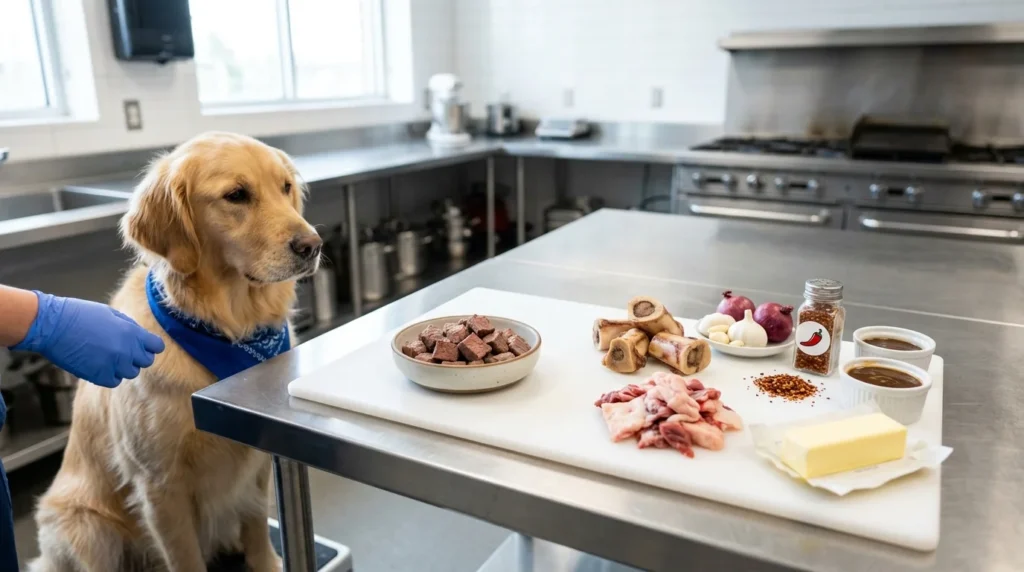
Plain cooked steak is generally low risk in moderation, but excessive fat, bones, seasonings, raw meat, and large portions can create problems. Possible issues include digestive upset, choking, intestinal blockage, foodborne illness, and excessive calorie intake.
Seasoned steak can introduce additional risks from ingredients such as onion and garlic. For this reason, preparation is an important part of safely sharing steak with a dog.
What Should You Do If Your Dog Eats a Steak Bone?
If your dog has swallowed a steak bone, contact your veterinarian for advice rather than assuming it will pass safely. Cooked bones can splinter and may cause choking, obstruction, or injury to the digestive tract.
Watch for vomiting, gagging, abdominal pain, lethargy, loss of appetite, difficulty passing stool, or blood in the stool. Seek prompt veterinary care if any serious symptoms appear.
See Also: Can Dogs Eat Popcorn? Buttered, Kettle Corn & Every Type Covered
What Should You Do If Your Dog Eats Seasoned Steak?
Check what seasonings and ingredients were used. Garlic, onion, large amounts of salt, spicy ingredients, and rich sauces can create additional concerns beyond the steak itself.
If your dog ate a large amount or the steak contained potentially harmful ingredients, contact your veterinarian and provide the ingredient information if available. Monitor your dog for vomiting, diarrhea, weakness, excessive thirst, or other unusual symptoms.
Frequently Asked Questions
Can dogs eat steak?
Yes. Dogs can generally eat small amounts of plain, thoroughly cooked steak. Remove bones, excessive fat, and all unsafe seasonings before serving.
Can dogs eat raw steak?
Raw steak carries bacterial and parasite risks, so thoroughly cooked steak is generally a safer option for dogs.
Can dogs eat steak bones?
No. Steak bones can cause choking, broken teeth, intestinal blockage, or digestive tract injuries. Cooked bones can also splinter.
Can puppies eat steak?
Puppies can generally have a small amount of plain cooked steak once they eat solid food, but their primary diet should be complete and balanced puppy food.
How much steak can a dog eat?
Start with a small amount of lean, cooked steak. The appropriate portion depends on your dog’s size, calorie needs, activity level, and overall diet.
Conclusion
Dogs can eat plain, thoroughly cooked steak in moderation. Steak can provide protein, iron, zinc, and other nutrients, but it should remain an occasional treat rather than replacing complete and balanced dog food.
For the safest option, remove bones and excess fat and avoid raw or undercooked meat, salt, garlic, onion, spicy seasonings, butter, marinades, and sauces. A small portion of plain cooked steak is the simplest way to let your dog enjoy beef while minimizing unnecessary risks.
See Also: Can Dogs Eat Potatoes? Safe Types, Risks & Feeding Guide 2026


