

Can Dogs Eat Green Grapes? Toxicity, Risks & What to Do
No, dogs should not eat green grapes. Green grapes may look like a harmless fruit, but grapes of different colors and varieties can cause serious health problems in dogs. Grape consumption has been associated with acute kidney injury and, in severe cases, kidney failure.
There is currently no reliably safe amount of grapes for dogs, and individual sensitivity can vary. Because it is impossible to predict which dog will become seriously ill or how many grapes may cause a problem, the safest approach is to keep green grapes completely out of your dog’s diet.
Can Dogs Eat Green Grapes?
No. Green grapes should not be given to dogs. This includes seedless green grapes, grapes with seeds, peeled grapes, and grapes used in different foods or desserts.
The exact substance responsible for grape toxicity has not been fully established, but veterinary evidence has linked grape and raisin ingestion with acute kidney injury in dogs. Because the risk is unpredictable, grapes should be treated as unsafe rather than as an occasional treat.
Are Green Grapes Toxic to Dogs?
Yes, green grapes can be toxic to dogs. Grape poisoning can potentially lead to sudden kidney damage, and some affected dogs can develop life-threatening kidney failure.
Not every dog will react in the same way, and a dog may appear normal immediately after eating grapes. This does not mean the fruit is safe. Early veterinary advice is important after a known grape ingestion.
Why Can’t Dogs Eat Green Grapes?
Dogs should not eat green grapes because grape ingestion can cause acute kidney injury. The amount that causes illness can vary, making it impossible to establish a dependable safe serving size for dogs.
Some dogs may become seriously ill after eating only a small number of grapes, while others may initially show few signs. This uncertainty is one of the main reasons veterinarians recommend avoiding grapes completely.
Can Dogs Eat Seedless Green Grapes?
No. Seedless green grapes are still considered unsafe for dogs. The absence of seeds does not remove the potential toxicity associated with grape consumption.
Do not assume that seedless grapes are safer than seeded grapes. Both should be kept away from dogs, and children should also be taught not to share grapes with pets.
Can Dogs Eat Peeled Green Grapes?
No. Removing the skin does not make green grapes safe for dogs. The potential risk is not simply related to the grape skin, so peeled grapes should also be avoided.
If you want to offer your dog a fruit treat, choose a dog-safe option such as a small amount of blueberries or strawberries instead. Always check that the fruit and its preparation are appropriate for dogs.
Can Dogs Eat Green Grape Seeds?
Green grapes should not be fed to dogs whether they contain seeds or not. The concern with grapes is not limited to the seeds, so removing the seeds does not make the fruit safe.
If a dog eats a grape containing a seed, the entire grape ingestion should be taken seriously. Contact your veterinarian promptly rather than assuming that removing or swallowing the seed changes the risk.
Can Puppies Eat Green Grapes?
No. Puppies should not eat green grapes. Young dogs can also experience serious effects from grape ingestion, and their smaller body size makes accidental consumption particularly concerning.
Keep grapes and grape-containing foods away from puppies. If a puppy eats even a small number of grapes, contact a veterinarian or emergency veterinary service promptly for specific advice.
Can Dogs Eat Green Grapes Every Day?
No. Green grapes should never be included in a dog’s daily diet. Unlike some fruits that can be given occasionally, grapes are considered unsafe for dogs.
Do not use grapes as training rewards or food toppers. Instead, choose appropriate dog treats or small portions of fruits known to be safe for dogs.
How Many Green Grapes Can a Dog Eat?
There is no reliably safe number of green grapes for dogs. Because individual sensitivity varies and serious kidney problems have been reported after grape ingestion, it is best to consider any grape consumption potentially dangerous.
If your dog has eaten grapes, do not wait to determine whether the amount was large enough to cause symptoms. Contact a veterinarian promptly and provide information about the approximate number of grapes eaten, your dog’s weight, and when the ingestion occurred.
What Happens If a Dog Eats Green Grapes?
A dog that eats green grapes may initially appear completely normal. However, signs of grape toxicity can develop later and may include vomiting, diarrhea, loss of appetite, lethargy, weakness, abdominal discomfort, increased thirst, or changes in urination.
In serious cases, grape ingestion can result in acute kidney injury and reduced or absent urine production. Because symptoms may be delayed, waiting for visible illness before seeking help can be dangerous.
Signs of Green Grape Poisoning in Dogs
Early signs can include vomiting, diarrhea, tiredness, reduced appetite, abdominal discomfort, excessive thirst, or general weakness. These symptoms may occur within hours after ingestion, but the timing can vary.
More serious kidney-related signs can include changes in urination, dehydration, severe lethargy, or little to no urine production. A dog showing these symptoms after eating grapes needs urgent veterinary attention.
See ALso: Can Dogs Eat Rib Bones? Risks, Dangers & Safe Alternatives
What Should You Do If Your Dog Eats Green Grapes?
If your dog eats green grapes, contact your veterinarian promptly. Do not wait for symptoms to develop because early treatment may be important in reducing the risk of serious kidney complications.
Tell the veterinarian your dog’s approximate weight, how many grapes were eaten if known, what type of grapes they were, and when the ingestion happened. Do not induce vomiting unless a veterinarian specifically instructs you to do so.
Can Dogs Eat Green Grapes in Small Amounts?
Green grapes should not be intentionally given to dogs, even in small amounts. There is no dependable serving size that can guarantee safety because dogs can respond differently to grape exposure.
If your dog accidentally eats one grape, do not panic, but do contact your veterinarian for individualized guidance. Prompt professional advice is safer than trying to determine the risk based only on the number of grapes consumed.
Can Dogs Eat Green Grapes Without Seeds?
No. Seedless green grapes are still unsafe for dogs. Grape toxicity is not caused simply by the presence of seeds, so seedless varieties should also be considered dangerous.
Keep all varieties of grapes away from your dog, including green, red, purple, and seedless grapes. Store grapes in areas your dog cannot access and dispose of dropped grapes immediately.
How to Keep Green Grapes Away From Your Dog
Store grapes in a closed refrigerator compartment or another location your dog cannot access. Dogs can quickly grab grapes from countertops, tables, grocery bags, or open containers, so keeping them out of reach is an important safety step.
Be especially careful during family meals, picnics, and children’s snacks. Pick up dropped grapes immediately and teach children not to share grapes or raisins with dogs. Check your dog’s surroundings after meals to make sure none have been left on the floor.
Can Dogs Eat Green Grapes in Fruit Salad?
No. Green grapes should not be included in a fruit salad that you plan to share with your dog. Even if the other fruits are safe, the grapes can still pose a serious risk.
If you want to prepare a fruit treat for your dog, use dog-safe fruits such as blueberries, strawberries, or small pieces of seedless watermelon without the rind. Keep grapes separate from your dog’s food and treats.
Can Dogs Eat Green Grapes in Yogurt?
No. Adding green grapes to yogurt does not make them safe for dogs. The potential toxicity associated with grapes remains regardless of whether they are mixed with another food.
If you give your dog plain yogurt, make sure it contains no xylitol or other harmful ingredients. You can add a small amount of a dog-safe fruit instead, such as blueberries, if your dog tolerates them.
Can Dogs Eat Green Grape Juice?
Green grape juice should not be given to dogs. Grape-derived products can still pose concerns, and juice may also contain concentrated sugars or additional ingredients that dogs do not need.
Fresh water is the best everyday drink for dogs. If your dog accidentally drinks or consumes a grape-containing product, check the ingredients and contact your veterinarian for guidance, particularly if grapes or raisins are listed.
See Also: Can Dogs Eat Sourdough Bread? Benefits, Risks & Safety
Can Dogs Eat Green Grape Jelly or Jam?
Green grape jelly and jam should not be used as treats for dogs. Besides grape-derived ingredients, these products commonly contain large amounts of sugar and may contain artificial sweeteners or other additives.
Some sugar-free products may contain xylitol, which is extremely dangerous to dogs. Never intentionally give your dog grape jelly, grape jam, or other grape-flavored products without confirming that every ingredient is safe.
Can Dogs Eat Raisins Made From Green Grapes?
No. Raisins should never be given to dogs. Raisins are dried grapes, and they are also associated with acute kidney injury in dogs. Drying does not remove the concern.
Because raisins are smaller and more concentrated than fresh grapes, they can be particularly easy for dogs to consume accidentally. Keep raisins, trail mix, baked goods containing raisins, and similar foods away from your dog.
Can Dogs Eat Green Grapes From a Garden?
No. Dogs should not be allowed to eat grapes growing in a garden or vineyard. Grapes are considered unsafe regardless of whether they are store-bought or homegrown.
If you have grapevines where your dog can roam, consider using secure fencing or another barrier. Remove fallen grapes from the ground regularly so your dog cannot eat them.
What Treatment May Be Needed After Grape Ingestion?
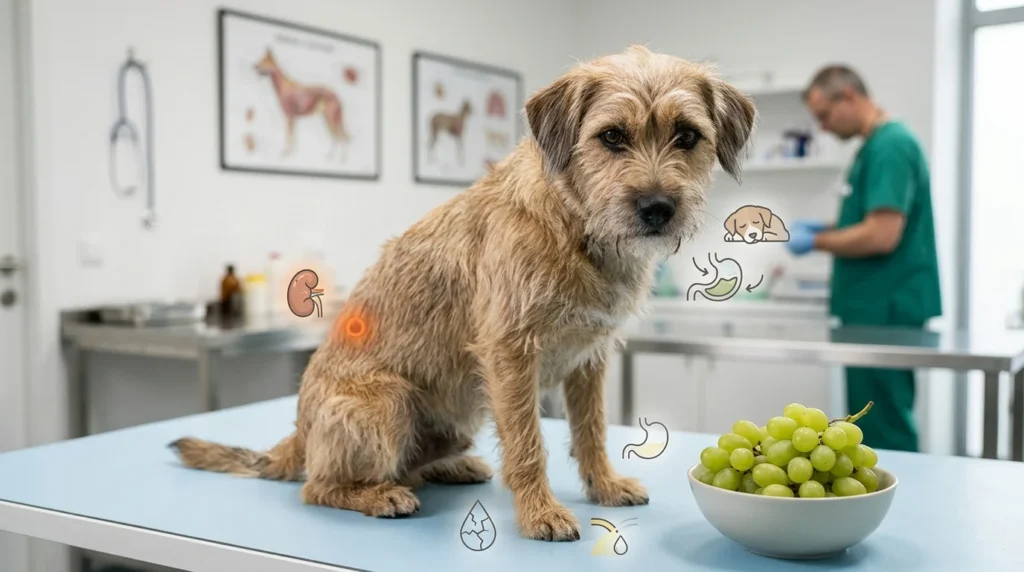
Veterinary treatment depends on how recently the grapes were eaten, the amount consumed, the dog’s health, and whether symptoms or kidney changes have developed. A veterinarian may recommend appropriate measures to reduce absorption and monitor kidney function.
Blood and urine testing may be used to assess kidney health, and dogs at risk may require intravenous fluids and close monitoring. Treatment decisions should always be made by a veterinarian rather than attempted at home.
Can a Dog Recover After Eating Green Grapes?
Many dogs can recover when grape ingestion is recognized and treated promptly, but the outcome depends on the amount consumed, the dog’s individual response, and whether kidney injury develops.
Early veterinary attention is important because kidney damage can become severe. A dog that looks normal after eating grapes should not automatically be considered safe without professional advice.
Do Green Grapes Have Any Benefits for Dogs?
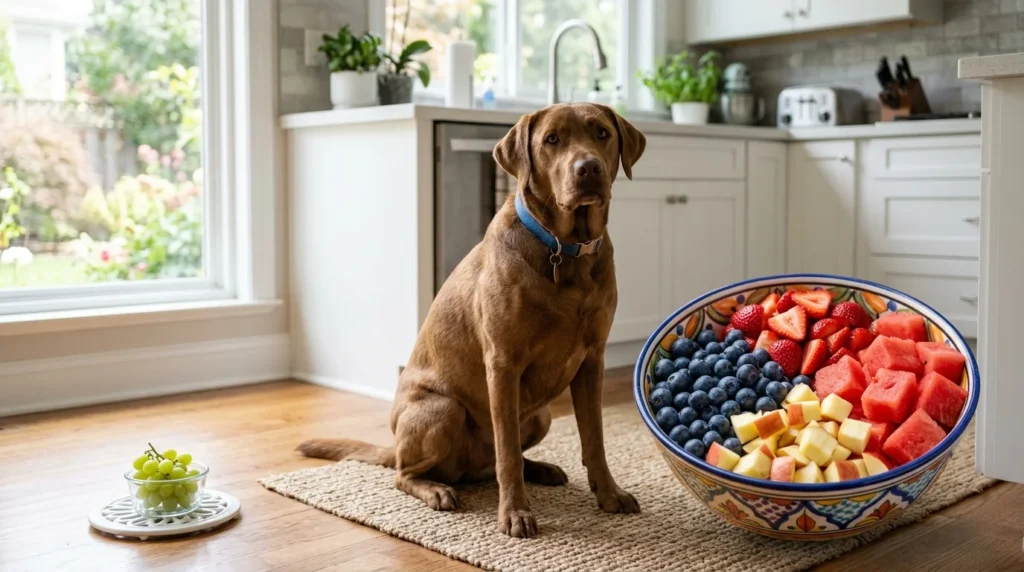
Green grapes contain water, carbohydrates, and various nutrients for humans, but these nutritional qualities do not make them an appropriate food for dogs. The potential health risk outweighs any possible nutritional benefit.
Dogs can obtain essential nutrients from complete and balanced canine food. If you want to offer fruit as an occasional treat, choose fruits that are recognized as safer for dogs rather than trying to make grapes part of their diet.
Frequently Asked Questions
Can dogs eat green grapes?
No. Green grapes should not be given to dogs because grape ingestion can cause acute kidney injury and potentially life-threatening kidney failure.
How many green grapes can a dog eat safely?
There is no reliably safe number of grapes for dogs. Any known ingestion should be discussed with a veterinarian rather than assuming a small amount is harmless.
Can dogs eat seedless green grapes?
No. Seedless green grapes are still considered unsafe. Removing seeds does not eliminate the potential toxicity associated with grapes.
What should I do if my dog eats one green grape?
Contact your veterinarian promptly for individualized advice. Do not wait for symptoms to appear, as grape-related kidney problems may develop after an initially normal period.
Are raisins dangerous for dogs too?
Yes. Raisins are dried grapes and can also cause serious kidney injury in dogs. Keep raisins and foods containing raisins away from dogs.
Conclusion
Dogs should not eat green grapes, including seedless or peeled varieties. Grapes have been associated with acute kidney injury in dogs, and there is no dependable way to predict which dogs will become seriously ill or what amount will cause a reaction.
If your dog eats green grapes, contact a veterinarian promptly rather than waiting for symptoms. Keep grapes and raisins safely out of reach and choose safer fruit treats such as blueberries or strawberries when you want to share fruit with your dog.
See Also: Can Dogs Eat Lentils? Benefits, Risks & Safe Serving Tips


