
Can Dogs Eat Salami? Risks, Side Effects & Safe Alternatives
Last updated: 23 October 2026
Can dogs eat salami? No. Salami is one of the worst human foods you can hand a dog: a single slice packs enough salt and fat to upset a healthy stomach, and enough seasoning to do real harm. Rover’s veterinary-reviewed guide puts it plainly: one slice may cause an upset stomach at worst, but too much can lead to salt poisoning, vomiting, diarrhoea or excessive thirst, and a dog that eats a whole roll needs a vet immediately. PuppySimply’s vet-backed guide goes further, warning that small and toy breeds face serious risk from even a single slice, and that any salami containing garlic or onion powder is genuinely toxic. There is no safe serving size, no safe type and no preparation trick that turns salami into a dog treat.
Your Dog Just Ate Salami? Do This Now
Read this first, then read the rest. Speed matters more than the perfect response.
- Do not panic, and do not induce vomiting. PuppySimply is explicit on this point: never try to make your dog vomit at home. Fatty foods raise the risk of aspiration into the lungs, and forcing it can injure your dog’s throat. Let a professional decide whether vomiting is needed.
- Check the label and estimate the amount. KitchPrep advises checking the package for garlic, onion or chilli, and estimating how much your dog ate relative to its body weight. Note the time, the amount and the ingredients: your vet will ask for all three.
- Give fresh water, but do not force it. Salty meat drives thirst. KitchPrep says to offer fresh water without forcing large drinks all at once, and Dial A Vet’s veterinary team adds to keep plenty of fresh water available to counteract the sodium load.
- Call your vet now if any of these are true. Your dog ate a large amount or a whole stick, your dog is a puppy or a small breed, the salami contained garlic or onion powder, or your dog is vomiting, lethargic, trembling, bloated or breathing oddly. Rover says a dog that eats a whole roll of salami needs a vet immediately, and PuppySimply stresses that small dogs and puppies need prompt evaluation. When in doubt, call.
- Watch closely for 24 to 48 hours. Dial A Vet advises watching for vomiting or diarrhoea over the next 24 to 48 hours, and contacting your vet if you see distress or persistent symptoms. Keep the dog calm, skip rich food for the rest of the day and note any change in behaviour.

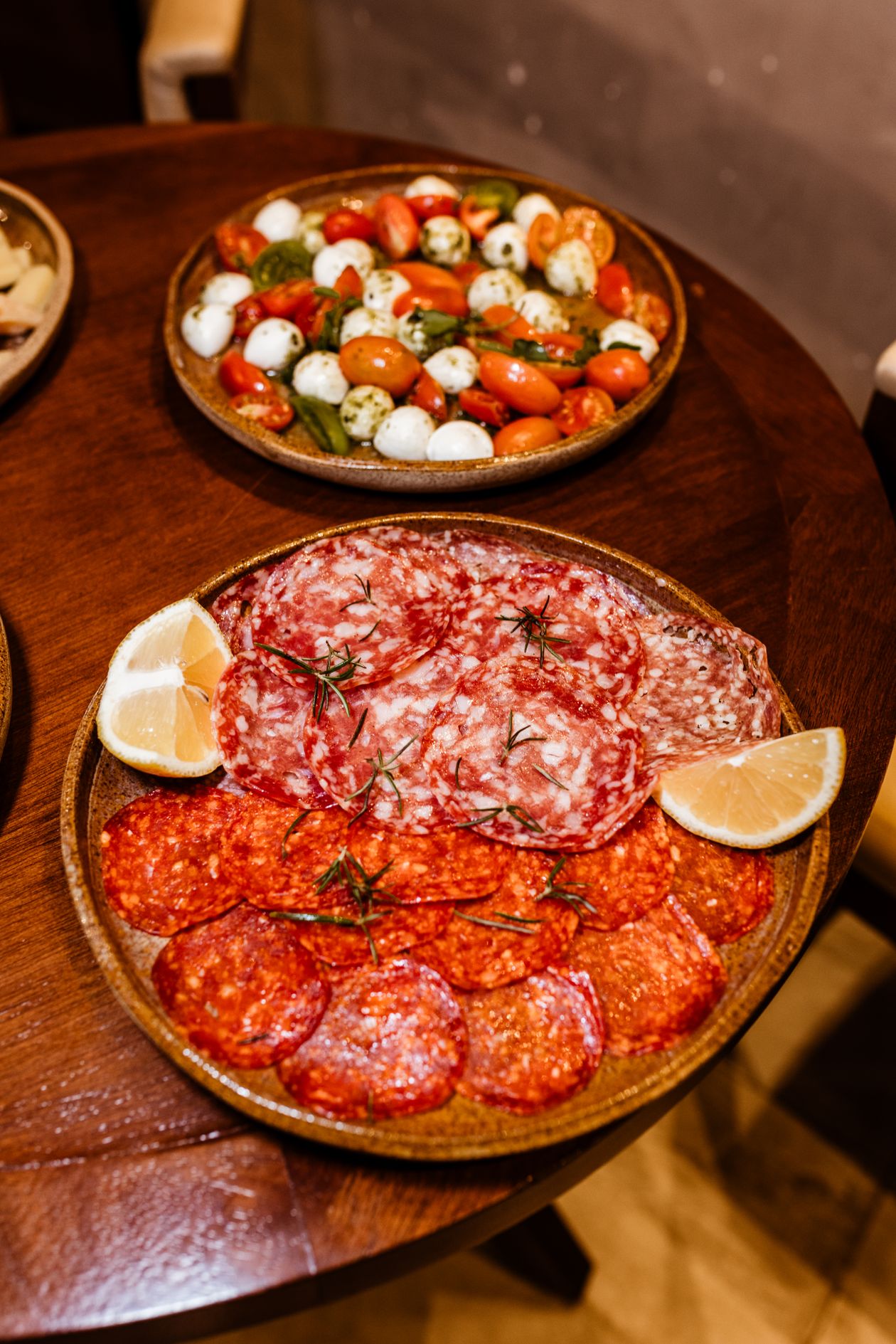
Salami sits firmly in the group of foods dogs should never eat. For the full picture, see our master guide to foods dogs can eat and our guide to foods dogs must never eat, which covers processed meats in one place.
Salt: the Biggest Danger in Every Slice
Salt is the number one reason salami is dangerous for dogs. KitchPrep publishes typical nutrition for 1 oz of salami: 400 to 600 mg of sodium, 100 to 120 kcal, 8 to 10 g of fat and 3 to 4 g of saturated fat. That is an enormous sodium load for a snack the size of a coin. The table below translates those published figures into slice-sized scenarios so you can see why even small amounts matter.
| Scenario | Estimated sodium* | What it means for a dog |
|---|---|---|
| One thin deli slice, about half an ounce | 200–300 mg | Enough to trigger heavy thirst and vomiting in a small dog |
| One standard slice, about 1 oz | 400–600 mg | PuppySimply warns a single slice puts toy breeds at serious risk |
| Two slices from a sandwich | 800–1,200 mg | Dial A Vet’s watch-for-symptoms territory for most dogs |
| A small whole stick, about 4 oz | 1,600–2,400 mg | Rover’s call-the-vet-immediately territory |
*Estimates are arithmetic derived from KitchPrep’s published figure of 400–600 mg sodium per 1 oz of salami. They are illustrations, not veterinary thresholds: real risk depends on your dog’s size, health and the salami’s recipe.
Too much sodium pulls water out of the body and forces the kidneys and heart to work harder. Rover lists the early signs: electrolyte imbalances, dehydration and high blood pressure. KitchPrep describes the escalation: restlessness and heavy drinking at first, then tremors, seizures or collapse in extreme cases. Dogs with heart or kidney disease, plus puppies and seniors, reach trouble faster, which is why KitchPrep flags them as the most fragile groups.
Fat: the Pancreatitis Trigger
Fat is the second punch. KitchPrep’s figures put 8 to 10 g of fat in a single ounce of salami, most of it saturated. A sudden fat load like that can trigger pancreatitis, a painful condition where the pancreas becomes inflamed and starts leaking digestive enzymes into nearby tissue. KitchPrep lists the warning signs: vomiting, a hunched posture, belly pain, diarrhoea and weakness, and notes that some cases need hospital care and can be life threatening.
PuppySimply adds an important nuance: the fat content alone can cause pancreatitis regardless of the dog’s size, so large dogs are not exempt. Rover agrees that even a small amount can bring on vomiting and diarrhoea, with smaller dogs at higher risk. Over time, regular fatty snacks lead to weight gain, joint strain and repeated pancreas stress, which KitchPrep says raises the risk of chronic pancreatitis.
Garlic and Onion Powder: the Toxic Seasonings
Many salami recipes include garlic or onion powder, and this is where salami crosses from unhealthy to genuinely toxic. PuppySimply explains that the sulfur compounds in allium plants damage red blood cells and cause haemolytic anaemia, and that powders are concentrated, so even small amounts matter. Rover names onion powder specifically as a toxic seasoning in salami that can cause red blood cell damage and organ failure.
KitchPrep adds that even modest amounts eaten often can damage red blood cells and lead to anaemia, with signs such as weakness, pale gums and rapid breathing. Chilli flakes, black pepper and other hot spices bring their own trouble through mouth and gut irritation. If the salami your dog ate lists garlic or onion anywhere on the label, treat the situation as more urgent and call your vet sooner. For the full breakdown of the onion danger, see our guide to onions and dogs.
Nitrites and Preservatives: the Hidden Chemical Load
Curing is what makes salami shelf-stable, and the curing agents are the least visible risk. PuppySimply explains that nitrates and nitrites preserve cured meats and give salami its colour, but they convert haemoglobin to methaemoglobin, which cannot carry oxygen, and that high doses are genuinely dangerous. The same source notes that nitrite poisoning causes tissue anoxia in animals exposed to high levels, and that many products also contain sulfite preservatives a dog’s system handles poorly.
An occasional tiny bite rarely causes trouble from preservatives alone, but regular feeding adds up, which is one more reason salami must never become a routine treat. Cooking does not fix any of this: heat leaves the salt, fat and preservatives exactly where they were.
Cured Meats Ranked: How Salami Compares
Salami is not uniquely bad: the whole cured-meat family shares the same salt, fat and seasoning problem. Dr. Nell Ostermeier, a veterinarian with Figo Pet Insurance, confirms that the risks apply to all cured meats, including prosciutto, pancetta, chorizo, speck and pepperoni. Here is how they compare, all within the avoid category.
| Cured meat | Why it is risky for dogs | Relative risk |
|---|---|---|
| Salami | High salt, high fat, garlic/onion powder, nitrites | Very high |
| Pepperoni | Same profile as salami, often spicier; KitchPrep notes extra gut irritation from the spices | |
| Chorizo | Paprika and chilli add gut irritation on top of the salt and fat load | Very high |
| Prosciutto | Extremely salty with a huge sodium load per slice | Very high |
| Pancetta | Very high fat plus salt; the fattiest of the list | Very high |
| Ham | Salty processed meat; Rover names ham among the sandwich meats to avoid | High |
| Bacon | High salt and fat with the same curing chemistry | High |
| Sausage | Salt, fat and spices; recipes vary but the profile is the same | High |
The same logic covers beef jerky and other dried, cured snacks. If you want the deep dive on salami’s closest cousin, read our guide to pepperoni and dogs; for the sandwich meats, see our ham guide, our bacon guide and our sausage guide.
The 48-Hour Symptom Watch Timeline
Most salami incidents reveal themselves within two days. Dial A Vet advises watching for vomiting or diarrhoea over the next 24 to 48 hours after a dog eats salami. Use this timeline to know what to expect and when to escalate.
| Timeframe | What to watch for | What to do |
|---|---|---|
| First 2 hours | Vomiting, drooling, lip-licking before vomiting (KitchPrep) | Remove any remaining salami; offer fresh water |
| 2–6 hours | Diarrhoea or soft stool, gas and noisy gut, restlessness, belly pain or odd stretching (KitchPrep) | Keep the dog calm; withhold rich food |
| 6–24 hours | Excessive thirst and urination, lethargy (Rover, PuppySimply) | Keep water available; call the vet if it persists |
| 24–48 hours | Hunched posture, belly pain, repeated vomiting or weakness (pancreatitis signs), tremors (KitchPrep, PuppySimply) | Any red flag means the vet, immediately |
Red flags that skip the timeline and go straight to the vet: repeated vomiting, blood in the stool, trouble breathing, tremors, bloating, extreme lethargy or unresponsiveness. KitchPrep adds one more scenario: dogs that swallow salami packaging or string ties need special care, because those items can cause choking or intestinal blockage, and sudden gagging, repeated attempts to vomit or an enlarged belly call for immediate veterinary help.

Dogs at Highest Risk From Salami
Some dogs have far less margin for error than others. These groups need a vet call sooner, even after a small amount:
- Small and toy breeds. PuppySimply warns that these dogs face serious risk from even a single slice, because the salt and fat hit harder per kilogram of body weight.
- Puppies. Their developing digestive systems handle salty, fatty, heavily processed food badly, and PuppySimply says they need prompt evaluation after eating salami.
- Seniors and dogs with kidney, liver or heart disease. KitchPrep flags these dogs as the most fragile, since their bodies cannot clear the sodium and fat load normally.
- Dogs with a pancreatitis history or obesity. A fatty snack is exactly the trigger their pancreas cannot afford (PuppySimply, KitchPrep).
Keeping Salami Away From Your Dog
Most salami incidents are thefts, not feedings. Charcuterie boards, sandwich prep and pizza boxes are the classic crime scenes: the meat smells irresistible and sits at nose height. Store salami out of your dog’s reach, clear boards promptly, and never use salami as a treat or training reward.
Two details from the old version of this guide are worth keeping. First, salami pizza is worse than salami alone: it adds cheese, garlic, tomato sauce and more sodium on top of the meat. Second, cooked salami is no safer, because cooking does not remove the salt, fat or preservatives. For the pizza angle in full, see our guide to pizza and dogs.
Safer Protein Treats Dogs Actually Enjoy
Salami does contain protein, iron and B vitamins, but lean cooked meats deliver the same nutrients without the salt, fat and seasonings. These swaps give your dog the meaty pay-off with none of the risk:
| Treat | Why it works |
|---|---|
| Plain cooked chicken breast | Lean protein with no salt or seasoning (Rover, PuppySimply) |
| Plain cooked turkey | Same profile; cut into small cubes for training (Rover) |
| Lean beef, trimmed of fat | Protein without the cure; cook it plain (KitchPrep, PuppySimply) |
| Plain cooked white fish | Lean, gentle and easy to portion (KitchPrep) |
| Carrots, green beans, blueberries, apple slices | Crunchy, low-calorie and dog-safe; straight from Rover’s safe list |
| Single-ingredient commercial dog treats | Formulated for canine digestion, so you know exactly what is inside (PuppySimply) |
Keep every treat unseasoned and within the 10% rule: veterinary nutrition guidelines remind owners that treats should stay under about ten percent of a dog’s daily calories. KitchPrep notes that salami breaks that rule in a single slice for many small and medium dogs.
Salami Questions Owners Actually Ask
Can dogs eat salami?
No. Salami combines high salt, high fat and often garlic or onion powder: ingredients that can damage red blood cells, strain the kidneys and trigger pancreatitis. PuppySimply’s vet-backed guide is blunt about it: there is no universally safe dose, and small breeds face serious risk from a single slice.
My dog ate salami. What should I do right now?
Do not induce vomiting. Check the label for garlic or onion, estimate how much was eaten, offer fresh water and call your vet if the amount was large, your dog is small or a puppy, or you see vomiting, lethargy, tremors or bloating. Then watch closely for 24 to 48 hours (Dial A Vet).
Can dogs eat salami pizza?
No, and it is worse than salami alone. Pizza adds cheese, garlic, tomato sauce and extra sodium to the same salty, fatty meat. See our guide to pizza and dogs for the full breakdown.
Can dogs eat cooked salami?
No. Cooking does not remove the excessive salt, fat or preservatives already in the meat. Heated salami is still a processed food with the same risks.
Can puppies eat salami?
Never. A puppy’s developing digestive system handles salty, fatty, heavily processed food very badly, and PuppySimply says puppies need prompt veterinary evaluation after eating it. Stick to balanced puppy food and puppy-safe treats.
Is turkey salami or low-sodium salami safe for dogs?
No. KitchPrep’s comparison of salami types finds turkey salami lower in fat on paper but just as salty, and reduced-sodium versions still cured, processed and seasoned. Marketing terms do not fix the core problem.
What deli meats can dogs eat?
Plain, unseasoned cooked meats like turkey or chicken breast are the safest deli-style options. PuppySimply advises avoiding cured sausages entirely. When in doubt, skip the deli counter and cook something plain.
This guide is for information only and is not a substitute for veterinary advice. If your dog eats salami and shows vomiting, diarrhoea, lethargy, tremors or breathing difficulty, contact your veterinarian or an emergency clinic promptly.


One Comment