

Can Dogs Eat Avocados? Benefits, Risks & Safe Feeding Guide
Avocados are a nutrient-rich fruit that people enjoy in salads, sandwiches, smoothies, and many other dishes. Because they contain healthy fats, vitamins, and fiber, many dog owners wonder whether avocados are also safe for their pets.
The answer is a little more complicated than a simple yes or no. Dogs can eat small amounts of ripe avocado flesh, but avocados also contain a natural compound called persin, and certain parts of the fruit can be dangerous. Understanding which parts are safe and which should be avoided is essential.
Can Dogs Eat Avocados?
Yes, dogs can eat a small amount of ripe avocado flesh occasionally. The soft green flesh is not considered highly toxic to dogs and contains healthy fats, vitamin E, vitamin B6, potassium, and fiber.
However, avocados should only be offered in moderation because they are high in fat, and other parts of the fruit—including the pit, skin, and leaves—can be harmful.
See Also: Can Dogs Eat Green Peppers? Benefits, Risks & Safe Feeding Guide
How Much Avocado Can Dogs Eat?
The correct serving size depends on your dog’s size, weight, and overall health. Since avocado is high in fat, only a small amount should be offered as an occasional treat.
Too much avocado may cause digestive upset or contribute to weight gain.
| Dog Size | Recommended Amount | Frequency |
|---|---|---|
| Small Dogs | 1–2 small cubes | Occasionally |
| Medium Dogs | 2–4 cubes | Occasionally |
| Large Dogs | A few small slices | Occasionally |
| Puppies | A tiny taste only | Rarely |
Can Dogs Eat Avocado Flesh?
Yes, ripe avocado flesh is the only part that may be given to dogs in small amounts. It contains healthy fats, fiber, and several vitamins that can support overall health.
Always remove the pit and peel completely before serving avocado to your dog.
Can Dogs Eat Avocado Pit?
No, dogs should never eat an avocado pit. The pit is a serious choking hazard and may cause an intestinal blockage if swallowed.
Even large dogs should never be allowed to chew or swallow avocado pits.
See Also: Can Dogs Eat Pumpkin? Benefits, Risks & Safe Feeding Guide
Can Dogs Eat Avocado Skin?
No, avocado skin should not be fed to dogs. It contains higher levels of persin than the flesh and is difficult to digest.
Eating the skin may lead to stomach upset or digestive problems.
Can Dogs Eat Guacamole?
No, dogs should never eat guacamole. Most guacamole recipes contain garlic, onion, salt, spices, or other ingredients that are toxic or unhealthy for dogs.
Even if the avocado itself is safe, the added ingredients make guacamole dangerous for pets.
Can Puppies Eat Avocados?
Puppies can have a tiny amount of ripe avocado flesh occasionally, but it is generally better to avoid introducing high-fat foods during early development.
Puppies have sensitive digestive systems, so new foods should always be introduced slowly and in very small portions.
Can Dogs Eat Avocados Every Day?
No, dogs should not eat avocados every day. Their high fat content makes them unsuitable as a daily food.
A balanced dog food should remain your dog’s primary source of nutrition, with avocado served only as an occasional treat.
Is Avocado Good for Dogs to Eat?
Ripe avocado flesh can provide some nutritional benefits for dogs when served in small amounts. It contains healthy fats, vitamin E, vitamin B6, potassium, and dietary fiber that may support healthy skin, coat, and digestion.
However, avocado is not an essential food for dogs, and its high fat content means it should only be given as an occasional treat rather than a regular part of the diet.
How to Safely Share Avocado With Your Dog

Only serve ripe avocado flesh. Remove the pit, peel, leaves, and stem completely before feeding because these parts contain more persin and may create choking or digestive hazards.
Offer small bite-sized pieces without salt, seasoning, lemon juice, onions, garlic, or other ingredients. Never feed guacamole or processed avocado products to your dog.
Does Avocado Have Benefits For Dogs?
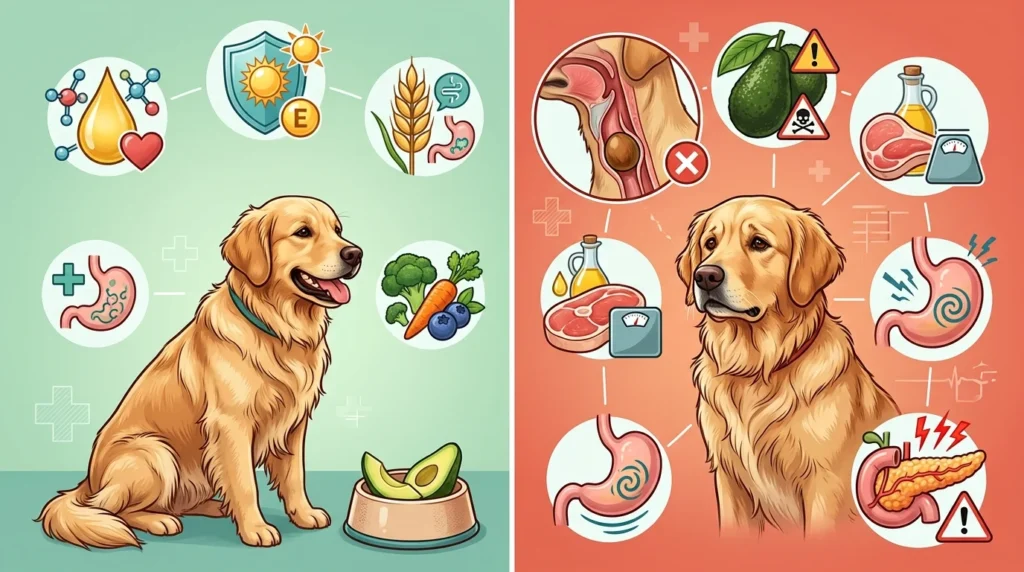
Yes, ripe avocado flesh contains nutrients that may support your dog’s health. Healthy fats help maintain skin and coat health, while fiber supports digestion. Vitamins E and B6 also contribute to normal body functions.
Although avocado contains beneficial nutrients, dogs can obtain these from balanced commercial dog food without needing avocado regularly.
Does Avocado Have Any Risks For Dogs?
Yes, avocado can present several risks. The pit is a choking hazard and may cause an intestinal blockage, while the skin, leaves, and stem contain higher amounts of persin and should never be eaten.
Too much avocado flesh may cause vomiting, diarrhea, stomach upset, or pancreatitis because of its high fat content. Dogs with pancreatitis or weight problems should avoid avocado unless approved by a veterinarian.
Frequently Asked Questions
Can dogs eat avocado?
Yes. Dogs can eat small amounts of ripe avocado flesh, but only occasionally.
Can dogs eat avocado pits?
No. Avocado pits are a serious choking hazard and can cause intestinal blockages.
Can dogs eat avocado skin?
No. Avocado skin is difficult to digest and contains higher levels of persin than the flesh.
Can dogs eat guacamole?
No. Guacamole often contains garlic, onion, salt, and spices that are harmful to dogs.
Can puppies eat avocado?
Puppies can have a tiny amount of ripe avocado flesh occasionally, but it is generally best to avoid high-fat treats during early development.
Conclusion
Dogs can safely eat small amounts of ripe avocado flesh, but only in moderation. The flesh provides healthy fats, vitamins, and fiber, while the pit, skin, leaves, and guacamole should always be avoided.
Serve only plain ripe avocado flesh in small portions, monitor your dog for digestive issues, and remember that a balanced dog food should always remain the foundation of your pet’s diet.
See Also: Can Dogs Eat Dragon Fruit? Benefits, Risks & Safe Feeding Guide


