

Can Dogs Eat Bell Peppers? Safe Feeding Guide for Dog Owners
Yes, dogs can eat bell peppers when they are served plain, fresh, and in small amounts. Bell peppers are sweet peppers, not spicy peppers, so they are usually gentle for dogs compared with chili peppers or jalapeños.
Still, your dog should not eat every part of the bell pepper. The safest choice is clean pepper flesh without stems, leaves, seeds, seasoning, salt, oil, or sauces. This guide explains raw, cooked, daily feeding, colors, risks, and safe serving amounts.
Can Dogs Eat Bell Peppers?
Yes, dogs can eat bell peppers safely when they are prepared the right way. Bell peppers are low in calories and contain water, fiber, vitamins, and antioxidants that may support your dog’s general health.
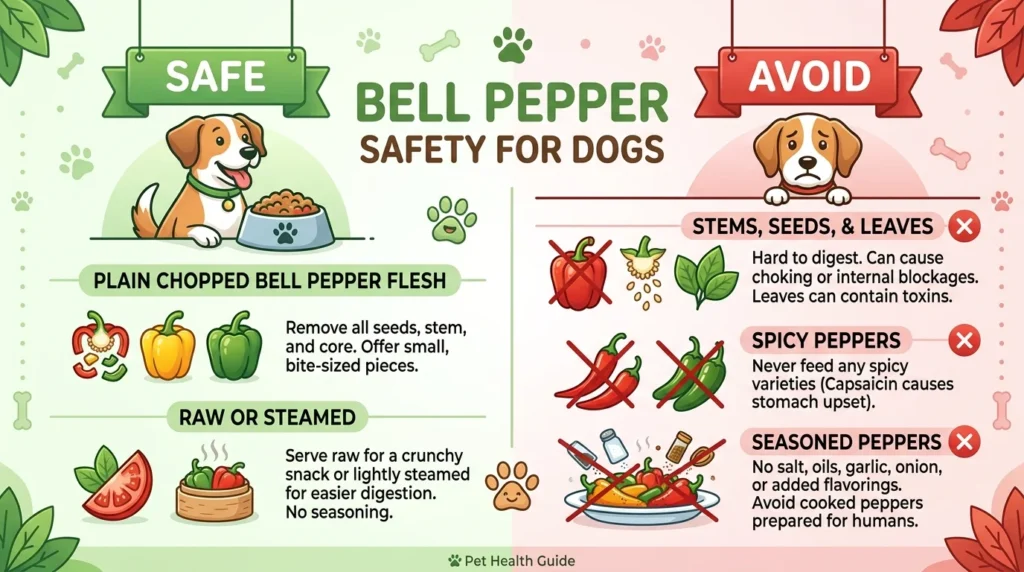
The best way to feed bell peppers is to wash them, remove the stem, seeds, and inner white parts, then cut the pepper into small pieces. Start with a small bite first. If your dog gets gas, vomiting, loose stool, or stomach discomfort, stop feeding bell peppers.
Can Dogs Eat Bell Peppers Raw?
Yes, dogs can eat raw bell peppers, but the pieces should be small and easy to chew. Raw bell peppers are crunchy, so some dogs enjoy them as a light snack or training treat.
However, raw pepper skin can be a little tough for sensitive dogs. If your dog has a delicate stomach, feed only one or two small pieces first. Never give a whole pepper to a dog because large pieces can be hard to chew and may cause choking.
Can Dogs Eat Bell Peppers Cooked?
Yes, dogs can eat cooked bell peppers if they are plain and soft. Steaming or lightly boiling bell peppers can make them easier to chew and digest, especially for puppies, senior dogs, or small breeds.
Do not cook bell peppers with onion, garlic, salt, butter, oil, sauces, or spicy seasoning. These extras can upset your dog’s stomach and may be unsafe. Plain cooked pepper pieces can be mixed with regular dog food as a small topper.
See Also: Can Dogs Eat Salmon? A Safe Feeding Guide for Dog Owners
Can Dogs Eat Bell Peppers Daily?
Dogs can eat small pieces of bell pepper daily, but it is not always necessary. Bell peppers should be treated as an extra snack, not a main part of your dog’s diet.
Most dogs already get balanced nutrition from their regular dog food. Too much bell pepper may cause gas, soft stool, or stomach upset. A safer routine is to feed bell peppers a few times per week in small portions, especially when your dog is new to this vegetable.
Can Dogs Eat Bell Peppers Seeds?
Dogs should not eat bell pepper seeds on purpose. Bell pepper seeds are not the most dangerous part, but they can be hard to digest and may irritate some dogs’ stomachs.
Before serving bell peppers, slice them open and remove the seeds, stem, and white inner core. This makes the snack cleaner and easier to chew. If your dog accidentally eats a few seeds, it may not cause harm, but regular feeding is not recommended.
Can Dogs Eat Bell Peppers Mini Sweet?
Yes, dogs can eat mini sweet bell peppers if they are plain, washed, and cut into small pieces. Mini sweet peppers are usually mild, colorful, and easier to portion than large bell peppers.
You should still remove the stem, seeds, and inner core before feeding. Do not give mini sweet peppers if they are pickled, stuffed, salted, or cooked with unsafe ingredients. Fresh plain mini sweet peppers are the safest option for dogs.
Can Dogs Eat Bell Peppers Safely?
Dogs can eat bell peppers safely when you follow simple rules. Choose fresh sweet bell peppers, wash them well, remove the stem and seeds, and cut the pepper into bite-size pieces.
Feed only a small amount at first. Avoid spicy peppers, spoiled peppers, pickled peppers, and peppers cooked with garlic or onion. If your dog has allergies, pancreatitis, digestive disease, or a strict medical diet, ask your vet before adding bell peppers.
Can Dogs Eat Bell Peppers Stem?
No, dogs should not eat bell pepper stems. The stem is tough, fibrous, and not easy to digest. It can also become a choking risk, especially for small dogs or fast eaters.
Always cut off the stem before giving bell pepper to your dog. The soft colorful flesh is the useful part. If your dog eats a small stem piece by mistake, watch for choking, gagging, vomiting, or discomfort. Call your vet if symptoms appear.
Can Dogs Eat Bell Pepper Leaves?
Dogs should not eat bell pepper leaves. The leaves are not a normal dog-safe snack and may upset the stomach. Dogs should only eat the cleaned pepper flesh, not the plant parts.
If you grow peppers at home, keep curious dogs away from the plant. Some dogs chew leaves, stems, or garden plants out of boredom. If your dog eats bell pepper leaves and then vomits, drools, acts weak, or refuses food, contact your vet.
Also Read: Can Dogs Eat Cauliflower? Benefits, Risks, and Feeding Tips
How Should You Prepare Bell Peppers for Dogs?
First, choose a fresh bell pepper with no mold, soft spots, or spoiled smell. Wash it well under clean water to remove dirt, dust, or possible residue from the surface.
Next, remove the stem, seeds, and white inner core. Cut the pepper into small pieces. You can serve it raw if your dog chews well, or steam it lightly if your dog needs softer food. Never add salt, oil, butter, onion, garlic, or sauce.
Feeding Your Dog Bell Peppers
Feed bell peppers slowly, especially the first time. Give one small piece and watch your dog for the next few hours. Some dogs digest peppers easily, while others may get gas or loose stool.
Bell peppers work best as a snack, food topper, or training reward. They should not replace meat-based protein or balanced dog food. Keep portions small and simple. Your dog does not need large amounts to enjoy the taste.
The Risks of Feeding Bell Peppers to Dogs
The main risks come from feeding too much or feeding the wrong parts. Large portions may cause vomiting, diarrhea, gas, or stomach pain. Big chunks can also be a choking risk.
Another risk is unsafe preparation. Bell peppers cooked with garlic, onion, salt, butter, oil, or spices are not good for dogs. Spicy peppers are also not the same as bell peppers. Jalapeños, chili peppers, and hot peppers can irritate your dog’s mouth and stomach.
Which Bell Pepper Colors Are Best — And Does It Matter?
Red bell peppers are usually the best choice because they are fully ripe and often contain higher levels of antioxidants and vitamins. They also taste sweeter, so many dogs like them more.
Green, yellow, and orange bell peppers can also be safe for dogs when served plain. The color does not change the basic safety rule. No matter which color you choose, remove stems and seeds, cut small pieces, and feed in moderation.
Red, Green, Yellow, or Orange: Does the Colour Matter?
The colour mostly affects taste and nutrition, not basic safety. Green bell peppers are less ripe and may taste sharper. Yellow and orange peppers are sweeter, while red peppers are usually the sweetest and richest in nutrients.
Your dog may prefer one colour over another. Try a tiny piece and see what your dog likes. The safest option is not about colour only. It is about clean preparation, small portions, and avoiding seasoning or plant parts.
Also Read: Can Dogs Eat Zucchini? Safe Feeding Guide for Dog Owners
How Many Bell Peppers Can Your Dog Eat?
Bell peppers should stay as a small treat. The right amount depends on your dog’s size, weight, age, stomach sensitivity, and normal diet. Start with less than the table amount if your dog has never eaten bell peppers before.
Use this simple table as a safe general guide. If your dog has a medical condition, allergies, or a sensitive stomach, ask your vet before adding bell peppers.
| Dog Size | Dog Weight | Safe Bell Pepper Amount | How Often |
|---|---|---|---|
| Extra small dog | Under 10 lb | 1–2 small pieces | 2–3 times per week |
| Small dog | 10–20 lb | 1–2 teaspoons chopped | 2–3 times per week |
| Medium dog | 21–50 lb | 1–2 tablespoons chopped | 2–3 times per week |
| Large dog | 51–90 lb | 2–3 tablespoons chopped | 2–3 times per week |
| Extra large dog | 90+ lb | Up to ¼ cup chopped | 2–3 times per week |
Frequently Asked Questions
Can dogs eat red bell peppers?
Yes, dogs can eat red bell peppers. Red bell peppers are usually the sweetest and most nutrient-rich option. Serve them plain, washed, seedless, and chopped into small pieces. Avoid cooked red peppers with salt, oil, onion, garlic, or sauces.
Can dogs eat green bell peppers?
Yes, dogs can eat green bell peppers in small amounts. Green peppers are safe when cleaned and prepared properly, but they may taste less sweet than red, yellow, or orange peppers. Some dogs may not like the sharper taste.
Can puppies eat bell peppers?
Puppies can eat tiny pieces of plain bell pepper, but it should not replace puppy food. Puppies need balanced nutrition for growth. Start with a very small soft piece and watch for vomiting, diarrhea, gas, or appetite changes.
Can dogs eat bell peppers with rice?
Yes, dogs can eat plain bell peppers with plain cooked rice in small amounts. This combination should not include salt, butter, oil, onion, garlic, or spices. It can be used as a simple topper, not a complete long-term meal.
Are bell peppers better raw or cooked for dogs?
Both raw and cooked bell peppers can be safe. Raw peppers are crunchy, while cooked peppers are softer and easier to digest. For dogs with sensitive stomachs, lightly steamed plain bell peppers are often the better option.
Can bell peppers upset a dog’s stomach?
Yes, bell peppers can upset a dog’s stomach if fed in large amounts or too quickly. Signs may include gas, vomiting, diarrhea, or stomach discomfort. Start with a small piece and stop feeding if your dog reacts badly.
Conclusion
So, can dogs eat bell peppers? Yes, they can. Bell peppers are safe for most dogs when they are fresh, plain, seedless, stemless, and served in small pieces. Red, green, yellow, and orange bell peppers can all be suitable.
The safest rule is simple: feed only the clean pepper flesh and avoid stems, leaves, seeds, spicy peppers, and seasoning. For more easy dog food safety guides, visit our site and learn which human foods are safe for your dog.
Also Read: Can Dogs Eat Kiwi? Benefits, Risks, Serving Size & Safety Guide


