

Can Dogs Eat Salmon? A Safe Feeding Guide for Dog Owners
Yes, dogs can eat salmon, but only when it is cooked properly, served plain, and given in the right amount. Salmon can be a healthy protein for dogs because it contains omega-3 fatty acids, protein, and useful nutrients that support skin, coat, and overall wellness.
However, not every type of salmon is safe. Raw salmon, smoked salmon, salmon bones, and heavily seasoned salmon can cause serious problems. This guide explains exactly which salmon parts are safe, which forms to avoid, and how much your dog can eat.
Can Dogs Eat Salmon?
Dogs can eat salmon when it is fully cooked, boneless, plain, and served in small portions. The safest cooking methods include baking, boiling, steaming, or grilling without oil, butter, garlic, onion, salt, sauces, or spicy seasoning. For the full species-by-species breakdown, see our fish safety guide for dogs.
Salmon should be treated as an occasional food, not a full meal replacement unless your vet recommends a balanced salmon-based dog diet. Start with a small bite first, especially if your dog has a sensitive stomach or has never eaten fish before.
Can Dogs Eat Salmon Skin?
Dogs can eat salmon skin only if it is fully cooked, plain, and served in a very small amount. Cooked salmon skin may contain healthy fats, but it is also richer and fattier than the flesh, which can upset some dogs’ stomachs.
Avoid giving your dog crispy, oily, salty, or seasoned salmon skin. If the skin was cooked with garlic, onion, butter, heavy spices, or sauces, do not feed it. For most dogs, plain cooked salmon meat is a safer choice than skin.
Can Dogs Eat Salmon Skin Cooked?
Yes, dogs can eat cooked salmon skin if it has no seasoning, no bones, and no extra oil. Cooking helps reduce the risk of bacteria and parasites, making it much safer than raw fish skin.
Still, cooked salmon skin should only be a tiny treat. Too much fatty skin can lead to vomiting, diarrhea, or discomfort. If your dog has pancreatitis, obesity, or a sensitive stomach, it is better to skip salmon skin completely.
Can Dogs Eat Salmon Raw?
No, dogs should not eat raw salmon. Raw or undercooked salmon can carry bacteria and parasites that may make dogs seriously ill. One major concern is salmon poisoning disease, which can become dangerous without quick veterinary care.
Raw salmon may also contain tiny bones that are hard to see. Even if the salmon looks fresh, human-grade, or sushi-quality, it is still not the safest option for dogs. Fully cooked, plain, boneless salmon is the better choice.
Also Read: Can Dogs Eat Cauliflower? Benefits, Risks, and Feeding Tips
Can Dogs Eat Salmon Cooked?
Yes, cooked salmon is the safest way to feed salmon to dogs. It should be fully cooked all the way through, soft enough to flake, and completely free from bones, skin scraps, and sharp pieces.
Do not add salt, lemon pepper, garlic, onion, butter, sauces, or marinades. Dogs do not need these extras, and some ingredients can be harmful. Serve cooked salmon in small pieces and mix it with your dog’s regular food if needed.
Can Dogs Eat Salmon Sashimi?
No, dogs should not eat salmon sashimi. Sashimi is raw fish, and raw salmon can expose dogs to parasites, bacteria, and digestive risks. Even a small amount can be unsafe for some dogs.
Sashimi may also come with soy sauce, wasabi, rice seasoning, or other ingredients that are not suitable for dogs. If your dog accidentally eats salmon sashimi, watch for vomiting, diarrhea, tiredness, fever, or loss of appetite and contact your vet.
Can Dogs Eat Salmon Bones?
No, dogs should not eat salmon bones. Fish bones can be thin, sharp, and difficult to remove completely. They may get stuck in the mouth, throat, stomach, or intestines.
Cooked salmon bones can become brittle, while raw bones still carry contamination risks. Always check salmon carefully before serving it to your dog. If your dog eats salmon bones and shows choking, gagging, vomiting, pain, or weakness, call a vet.
Can Dogs Eat Salmon Everyday?
Dogs should not eat extra salmon every day unless it is part of a complete and balanced dog food or a vet-approved diet plan. Plain cooked salmon is healthy in moderation, but too much can unbalance your dog’s normal nutrition.
Daily salmon treats may also add too many calories and fat. A better approach is to offer small portions once or twice a week. Dogs with allergies, kidney disease, pancreatitis, or special diets should only eat salmon after vet approval.
Can Dogs Eat Salmon Patties?
Dogs can eat salmon patties only if they are homemade, fully cooked, plain, and made without harmful ingredients. Many human salmon patties include onion, garlic, salt, breadcrumbs, spices, sauces, or frying oil, which are not ideal for dogs.
If you want to make a dog-safe salmon patty, use cooked boneless salmon and avoid seasoning. Keep it simple and serve a small piece. Store-bought or restaurant salmon patties are usually not recommended because you cannot control the ingredients.
Also Read: Can Dogs Eat Zucchini? Safe Feeding Guide for Dog Owners
Can Dogs Eat Salmon Scales?
Dogs should not eat salmon scales on purpose. A few tiny cooked scales may not always cause harm, but scales can be rough, hard to digest, and uncomfortable for some dogs to swallow.
It is better to remove scales before cooking and serving salmon. Dogs do not need scales to get the benefits of fish. Clean, cooked, boneless salmon meat is safer, easier to digest, and more useful for your dog.
Can Dogs Eat Salmon Smoked?
No, smoked salmon is not a good choice for dogs. It is often high in salt, and too much sodium can upset your dog’s stomach or create bigger health concerns, especially for small dogs or dogs with medical issues.
Some smoked salmon may also be cold-smoked, meaning it is not cooked in the same safe way as baked or boiled salmon. For your dog, choose fresh salmon cooked plain at home instead of smoked salmon.
Can Dogs Eat Salmon Steak?
Dogs can eat salmon steak if it is fully cooked, plain, and carefully deboned. Salmon steak often contains bones in the center or small pin bones that can be easy to miss, so check it slowly before feeding.
Do not give your dog the seasoned outside layer if it has salt, oil, garlic, onion, lemon pepper, or sauces. Cut the safe cooked salmon into small flakes so your dog can chew and swallow it easily.
Is Salmon Good for Dogs?
Yes, salmon can be good for dogs when prepared safely. It provides high-quality protein and omega-3 fatty acids, which may support healthy skin, a shiny coat, joint comfort, and normal body function.
Salmon is also commonly used in dog foods for pets that do not do well with chicken or beef. Still, “healthy” does not mean unlimited. Dogs need balanced meals, so salmon should support the diet instead of replacing it.
Also Read: Can Dogs Eat Garlic? Vet Safety Guide For Owners Should Know
What Are the Health Benefits of Salmon?
Salmon may help support your dog’s skin, coat, immune system, and joints because it contains omega-3 fatty acids. Many dog owners choose salmon when their dog has dry skin, dull coat, or food sensitivity concerns.
It also provides protein for muscle maintenance and energy. However, benefits depend on safe preparation and correct portion size. Plain cooked salmon is helpful, but salty, oily, raw, or seasoned salmon can create more risk than reward.
Can Puppies Eat Salmon?
Puppies can eat a very small amount of fully cooked, plain, boneless salmon, but it should not replace puppy food. Puppies need carefully balanced nutrition for growth, bones, brain development, and energy.
Introduce salmon slowly and only as a small treat. If your puppy has diarrhea, vomiting, itching, or low energy after eating salmon, stop feeding it and contact your vet. For young puppies, ask your vet before adding new foods.
When Is Salmon Unsafe for Dogs?
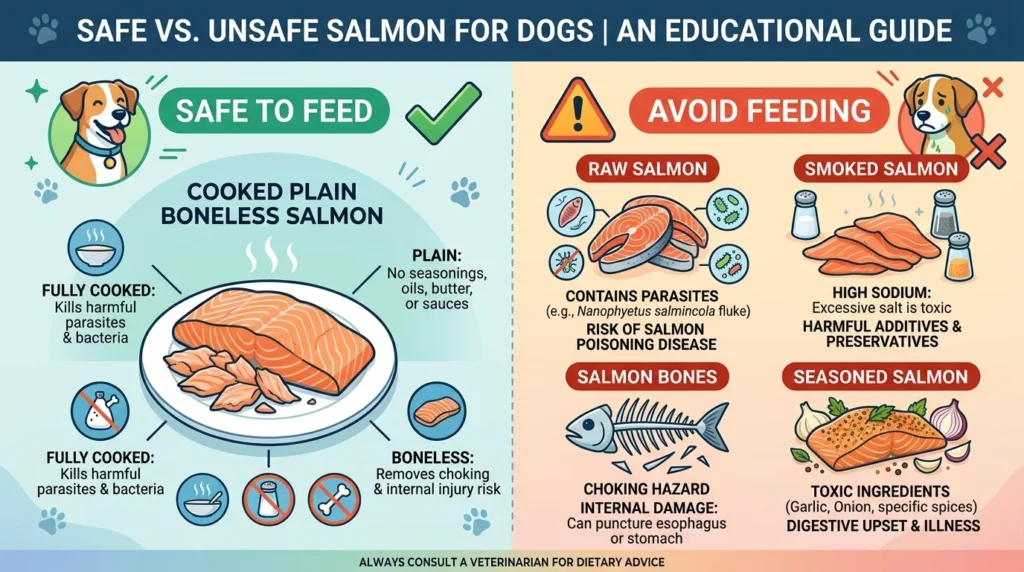
Salmon is unsafe for dogs when it is raw, undercooked, smoked, heavily salted, seasoned, spoiled, or served with bones. It is also unsafe when cooked with garlic, onion, butter, sauces, or spicy marinades.
You should also avoid salmon if your dog has a known fish allergy or a medical condition that requires a low-fat or controlled diet. Warning signs after eating unsafe salmon include vomiting, diarrhea, fever, weakness, shaking, and loss of appetite.
Can Dogs Eat Red / Pink Salmon?
Yes, dogs can eat red salmon or pink salmon if it is cooked plain, deboned, and served in small amounts. Both types can be safe as long as they are not raw, smoked, canned with too much salt, or prepared with seasoning.
If using canned pink salmon, choose water-packed, low-sodium salmon when possible and remove any bones. Fresh cooked salmon is usually the cleaner option because you can control the ingredients and avoid extra salt.
How Many Salmon Can Your Dog Eat?
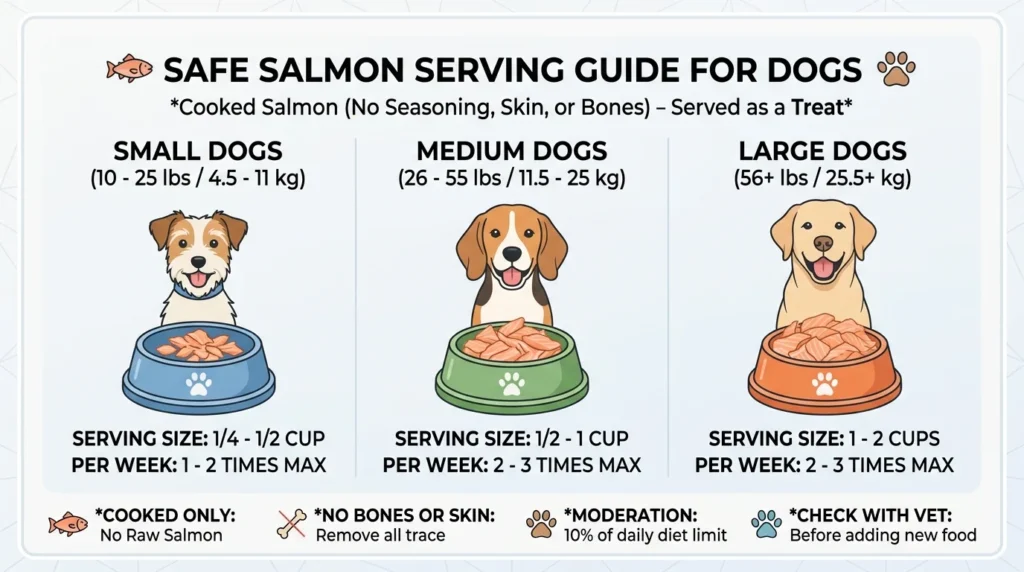
The right salmon amount depends on your dog’s size, weight, activity level, and regular diet. Salmon should usually be treated like an extra food, so keep portions small and avoid turning it into the main meal without veterinary guidance.
Use this table as a simple starting point for plain cooked salmon. If your dog is overweight, sensitive, elderly, or on a medical diet, reduce the amount or ask your vet first.
| Dog Size | Dog Weight | Safe Cooked Salmon Portion | How Often |
|---|---|---|---|
| Extra small dog | Under 10 lb | 1 teaspoon to 1 tablespoon | 1 time per week |
| Small dog | 10–20 lb | 1–2 tablespoons | 1–2 times per week |
| Medium dog | 21–50 lb | 2–4 tablespoons | 1–2 times per week |
| Large dog | 51–90 lb | ¼ cup to ½ cup | 1–2 times per week |
| Extra large dog | 90+ lb | ½ cup, if tolerated | 1–2 times per week |
Frequently Asked Questions
Can dogs eat canned salmon?
Yes, dogs can eat canned salmon if it is packed in water, low in sodium, fully cooked, and free from added seasoning. Remove visible bones and serve only a small amount. Avoid canned salmon with oil, spices, garlic, onion, or heavy salt.
Can dogs eat salmon with rice?
Yes, dogs can eat plain cooked salmon with plain cooked rice in small amounts. This can be gentle for some dogs, but it should not replace a complete dog food long term. Avoid butter, salt, sauces, and spices.
Can dogs be allergic to salmon?
Yes, some dogs can be allergic or sensitive to salmon. Signs may include itching, ear issues, vomiting, diarrhea, licking paws, or skin redness. If symptoms appear after feeding salmon, stop giving it and speak with your vet.
What should I do if my dog ate raw salmon?
If your dog ate raw salmon, contact your vet for advice, especially if you live near areas where salmon poisoning disease is known. Watch for vomiting, diarrhea, fever, weakness, swollen lymph nodes, or loss of appetite.
Is salmon better than chicken for dogs?
Salmon is not always better than chicken. It depends on your dog’s needs. Salmon may suit dogs that need omega-3 support or cannot tolerate chicken, but chicken can still be a healthy protein for many dogs.
Conclusion
So, can dogs eat salmon? Yes, they can, but only when it is cooked, plain, boneless, and served in moderation. Cooked salmon can be a nutritious treat, while raw salmon, smoked salmon, bones, and seasoned salmon should be avoided.
For safe dog food answers, feeding guides, and simple pet care tips, keep visiting our site. We help dog owners understand what is safe, what is risky, and how to feed their pets with more confidence.
Also Read: Can Dogs Eat Sweet Potatoes? Benefits, Risks & Safe Feeding Guide