

Can Dogs Eat Fish? Benefits, Risks & Safe Feeding Guide
Fish is a popular source of protein and healthy fats for humans, and many dog owners wonder if they can share it with their pets. The good news is that many types of fish can be a healthy addition to a dog’s diet when prepared properly. Fish contains important nutrients such as omega-3 fatty acids, protein, vitamins, and minerals that may support overall health.
However, not every type of fish is safe for dogs. Raw fish, fish bones, high-mercury fish, and fish prepared with harmful ingredients can create health risks. Understanding which fish dogs can eat and how to prepare it safely can help your dog enjoy the benefits without unnecessary problems.
Can Dogs Eat Fish?
Yes, dogs can eat fish when it is properly cooked and served without harmful ingredients. Fish is a lean protein source that provides essential nutrients, including omega-3 fatty acids, which may support healthy skin, a shiny coat, brain function, and joint health.
The safest way to feed fish to dogs is by choosing low-mercury fish, removing all bones, and cooking it thoroughly without salt, spices, butter, garlic, or onions. Fish should be offered as an occasional treat or added to a balanced diet rather than replacing regular dog food.
How Much Fish Can Dogs Eat? Can Your Dog Eat?
The amount of fish your dog can eat depends on their size, age, weight, and overall health. While fish can provide valuable nutrients, too much fish may lead to digestive problems or an unbalanced diet. Treats and extra foods should generally make up only a small portion of a dog’s daily calories.
When introducing fish for the first time, start with a small amount and watch your dog for any signs of allergies or stomach problems. Dogs with specific health conditions should only eat fish after consulting a veterinarian.
| Dog Size | Recommended Fish Amount | Frequency |
|---|---|---|
| Small Dogs | 1–2 small pieces | Occasionally |
| Medium Dogs | Several small pieces | Occasionally |
| Large Dogs | A small serving | Occasionally |
| Puppies | Small amount only | Introduce slowly |
Can Dogs Eat Cooked Fish?
Yes, cooked fish is the safest option for dogs. Cooking removes harmful bacteria and parasites that may be present in raw fish. Fish should always be served plain without seasonings, oils, butter, garlic, onions, or sauces that can be harmful to dogs.
Before feeding cooked fish, remove all bones carefully because even small bones can become choking hazards or cause injuries inside the digestive tract. Simple boiled, baked, or steamed fish is usually the healthiest choice for dogs.
Can Dogs Eat Raw Fish?
Dogs should generally avoid raw fish. Raw fish may contain harmful bacteria, parasites, and pathogens that can cause digestive problems or infections. Some raw fish can also contain parasites that carry bacteria harmful to both pets and humans.
Although some raw diets include fish, they should only be prepared under professional guidance. For most dogs, properly cooked fish is a safer and easier option that still provides important nutrients.
Can Dogs Eat Salmon?
Yes, dogs can eat cooked salmon when it is prepared safely. Salmon is rich in omega-3 fatty acids, protein, and nutrients that may support healthy skin, a shiny coat, and immune function. Many commercial dog foods include salmon as a protein source.
Never feed raw salmon to dogs because it may contain parasites that can cause salmon poisoning disease. Always cook salmon thoroughly, remove all bones, and avoid smoked salmon because it often contains high amounts of salt.
Can Dogs Eat Tuna?
Dogs can eat small amounts of tuna, but it should not be a regular food. Tuna contains protein and omega-3 fatty acids, but it is also a larger fish that may contain higher levels of mercury compared to smaller fish.
If giving tuna to your dog, choose plain tuna packed in water without added salt or seasonings. Avoid feeding large amounts because excessive mercury exposure can create health risks over time.
Can Dogs Eat Sardines?
Yes, sardines can be a healthy fish option for dogs. They are small fish that are lower on the food chain, which usually means they contain fewer contaminants compared to larger fish. Sardines provide omega-3 fatty acids, calcium, and protein.
Choose sardines packed in water without salt, sauces, or added ingredients. Remove any large bones if necessary and serve only small portions to avoid digestive issues.
Can Dogs Eat Fish Skin?
Dogs can eat fish skin when it is properly cooked and prepared. Fish skin contains omega-3 fatty acids and nutrients that may support healthy skin and coat. However, raw fish skin or heavily seasoned fish skin should be avoided.
Make sure the fish skin is free from bones, salt, oils, and spices before serving. Because fish skin can be high in fat, it should only be offered occasionally as a treat.
Can Dogs Eat Fish Bones?
No, dogs should not eat fish bones. Fish bones are small, sharp, and brittle, which means they can easily get stuck in a dog’s throat or cause injuries inside the mouth, stomach, or intestines. Even tiny bones can create serious problems if swallowed.
Always remove all bones before feeding fish to your dog. Boneless fish fillets are usually the safest option because they reduce the risk of choking and internal injuries while still providing the nutritional benefits of fish.
Can Dogs Eat Fried Fish?
No, dogs should avoid fried fish. Fried fish is usually cooked with oils, batter, salt, spices, and seasonings that can upset a dog’s digestive system. High-fat foods may also increase the risk of pancreatitis, especially in dogs that are sensitive to fatty meals.
Plain cooked fish prepared by baking, boiling, or steaming is a much healthier option. Avoid sharing human fried fish meals with your dog because they often contain ingredients that are unsafe for pets.
Can Dogs Eat Fish Sticks?
No, fish sticks are not recommended for dogs. Although they contain fish, they are usually processed with breading, oils, salt, preservatives, and artificial ingredients that do not provide healthy nutrition for dogs.
Eating a small accidental piece may not always cause serious problems, but regular feeding can contribute to weight gain and digestive issues. Plain cooked fish is always a better choice.
Can Dogs Eat Fish Everyday?
Dogs should not eat fish every day unless it is part of a properly balanced diet designed by a veterinarian or pet nutrition expert. While fish provides beneficial nutrients, feeding too much of one food can create nutritional imbalances.
See Also: Can Dogs Eat Chocolate? Poisoning Signs & Safety Guide
Fish should generally be used as an occasional treat or protein addition. A complete dog food should remain the main source of nutrition to ensure your dog receives all essential nutrients.
Can Puppies Eat Fish?
Yes, puppies can eat small amounts of properly cooked fish. Fish can provide protein and omega-3 fatty acids that support growth, brain development, and healthy skin. However, puppies require a balanced diet specifically designed for their growing bodies.
Introduce fish slowly and choose boneless, low-mercury options. Avoid raw fish, seasoned fish, and fish products made for humans because they may contain harmful ingredients.
Is Fish Good for Dogs to Eat?
Yes, fish can be a healthy food choice for dogs when prepared correctly. Fish provides high-quality protein, omega-3 fatty acids, vitamins, and minerals that may support healthy joints, skin, coat, and immune function.
However, fish should not replace a complete and balanced dog diet. Choosing safe fish varieties and serving appropriate portions allows dogs to enjoy the benefits without unnecessary risks.
How to Safely Share Fish With Your Dog

The safest way to feed fish is to choose fresh, low-mercury fish and cook it thoroughly without adding salt, spices, oils, garlic, or onions. Remove all bones carefully before giving fish to your dog.
See Also: Can Dogs Eat Cat Food? Benefits, Risks & Safety Guide
Start with a small portion and observe your dog’s reaction. If your dog develops vomiting, diarrhea, itching, or other unusual symptoms, stop feeding fish and consult your veterinarian.
Does Fish Have Benefits For Dogs?
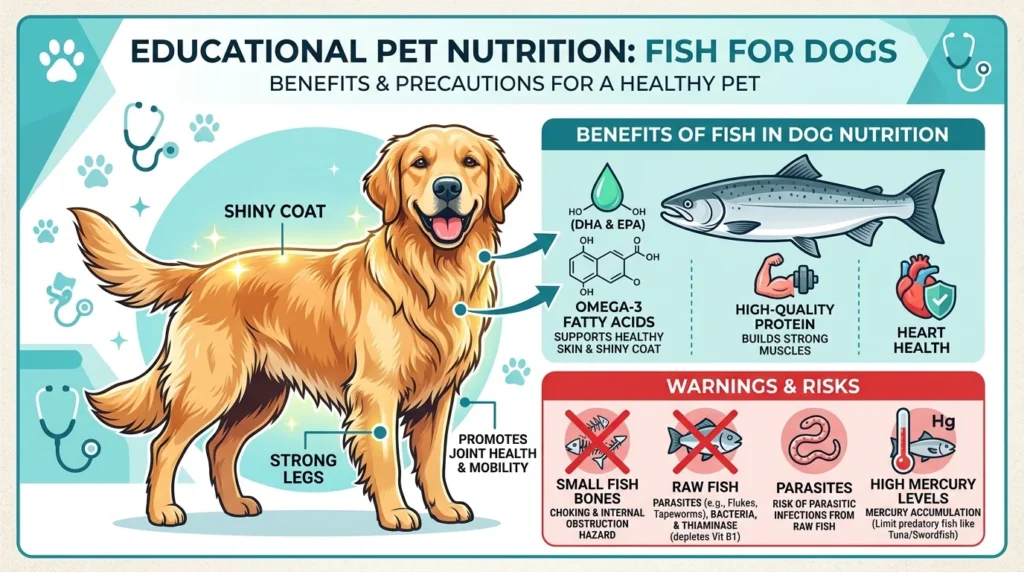
Fish offers several nutritional benefits for dogs. It contains omega-3 fatty acids that may support brain health, joint function, healthy skin, and a shiny coat. Fish is also a good source of easily digestible protein for many dogs.
Some dogs with food sensitivities may tolerate certain fish-based diets better than other protein sources. This is why salmon, whitefish, and other fish ingredients are often included in specialized dog foods.
Does Fish Have Any Risks For Dogs?
Although fish can be healthy, it also has some risks. Raw fish may contain harmful bacteria and parasites, while fish bones can cause choking or internal injuries. Some large fish species may also contain higher levels of mercury.
Fish prepared with salt, spices, garlic, onions, butter, or oils can be harmful to dogs. Proper preparation, portion control, and choosing safe fish types are important for keeping your dog healthy.
Frequently Asked Questions
Can dogs eat fish safely?
Yes, dogs can eat properly cooked fish that is free from bones, seasoning, and harmful ingredients.
What fish are safe for dogs?
Salmon, sardines, whitefish, cod, and other low-mercury fish are generally safer choices when cooked properly.
Can dogs eat raw salmon?
No, raw salmon can contain parasites that may cause serious illness. Always cook salmon thoroughly before feeding it to dogs.
Can dogs eat canned fish?
Dogs can eat some canned fish in small amounts if it is plain, packed in water, and free from added salt or seasonings.
How often can dogs eat fish?
Fish should usually be given occasionally or as part of a balanced diet rather than fed as the main daily food.
Conclusion
Dogs can eat fish when it is properly prepared and served in moderation. Cooked fish provides valuable nutrients such as protein and omega-3 fatty acids that may support healthy skin, coat, joints, and overall wellness.
However, raw fish, fish bones, fried fish, and heavily seasoned fish should be avoided because they can create serious health risks. By choosing safe fish varieties, removing bones, and serving appropriate portions, fish can be a healthy occasional treat for your dog.


