

Can Dogs Eat Tuna Safely? What Every Dog Owner Should Know
Yes, dogs can have tuna, but only as an occasional, small treat.
Many dog owners wonder, can dogs eat tuna? The short answer is yes, dogs can eat tuna in small amounts, but it should not become a regular part of their diet. Tuna contains protein, vitamins, and healthy fats that can benefit dogs. However, it also contains higher levels of mercury than many other fish, which can pose health risks if consumed frequently.
When offering tuna to your dog, it is important to choose plain tuna without added seasonings, oils, or sauces. Moderation is key because excessive tuna consumption can lead to mercury buildup over time. Understanding the benefits, risks, and proper serving sizes will help you decide whether tuna is a suitable occasional treat for your furry companion.
Can Dogs Eat Tuna Fish?
Dogs can eat tuna fish as an occasional snack when it is cooked and served plain. Tuna is rich in high-quality protein that helps support muscle development and overall health. It also contains omega-3 fatty acids, which may contribute to healthy skin, a shiny coat, and proper brain function.
Although tuna fish offers nutritional benefits, it should not replace balanced dog food. Larger tuna species tend to contain more mercury, which can accumulate in a dog’s body over time. Feeding tuna sparingly helps your dog enjoy the nutritional advantages while minimizing the risks associated with mercury exposure.
Is Tuna Good for Dogs?
Tuna can be good for dogs because it contains essential nutrients that support overall health. The fish is packed with protein, vitamin B12, selenium, potassium, and omega-3 fatty acids. These nutrients help maintain healthy muscles, support the immune system, and contribute to cardiovascular health.
Despite these benefits, tuna is not considered the best fish option for regular feeding. Fish such as salmon, sardines, and whitefish generally contain lower mercury levels and may be safer for routine consumption. Tuna works best as an occasional treat rather than a dietary staple for most dogs.
Can Dogs Eat Canned or Raw Tuna?
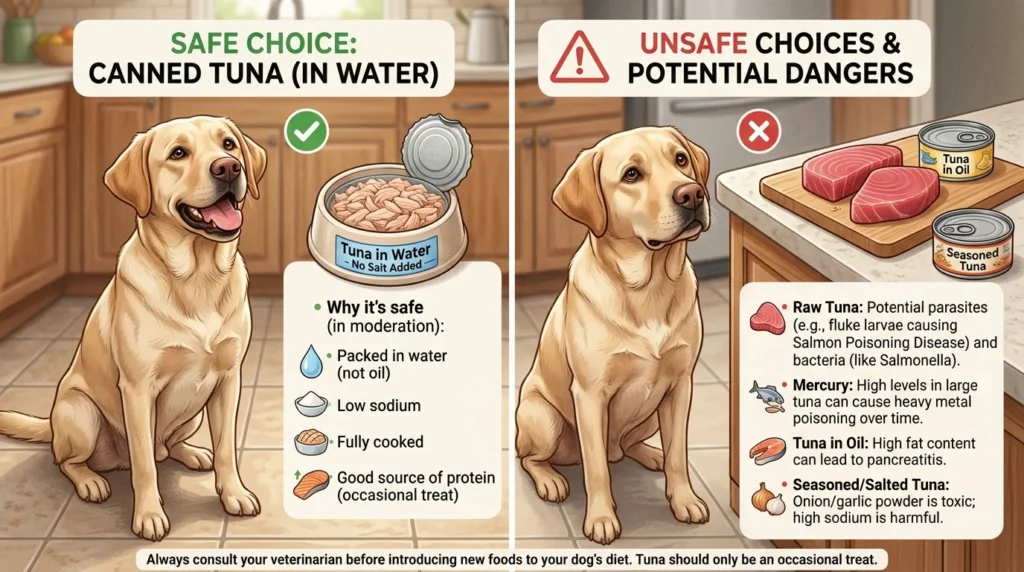
Dogs can eat canned tuna if it is packed in water and contains no added salt, spices, or flavorings. Plain canned tuna can be a convenient treat, but it should only be offered occasionally because mercury levels remain a concern regardless of the preparation method.
Raw tuna is generally not recommended for dogs. Raw fish may contain parasites, bacteria, or pathogens that can lead to digestive issues and illness. Cooking tuna thoroughly reduces these risks and makes the fish safer for canine consumption. If you choose to feed tuna, cooked and unseasoned varieties are usually the safest option.
How Many Tuna Can Your Dog Eat?
The amount of tuna a dog can safely eat depends on its size and should be limited to occasional treats.
| Dog Size | Weight Range | Recommended Tuna Amount | Frequency |
|---|---|---|---|
| Small Dogs | Up to 20 lbs (9 kg) | 1-2 teaspoons | Once every 2-3 weeks |
| Medium Dogs | 21-50 lbs (10-23 kg) | 1-2 tablespoons | Once every 2-3 weeks |
| Large Dogs | 51-90 lbs (24-40 kg) | 2-3 tablespoons | Once every 2-3 weeks |
| Giant Dogs | Over 90 lbs (40 kg) | Up to 1/4 cup | Once every 2-3 weeks |
These serving sizes are guidelines and should be adjusted based on your dog’s overall diet and health condition. Consult your veterinarian if your dog has special dietary needs or existing medical concerns.
Can Puppies Have Tuna?
Puppies can technically eat small amounts of tuna, but it is generally not recommended as a regular food choice. Their developing bodies are more sensitive to contaminants such as mercury, making excessive tuna consumption a greater concern compared to adult dogs.
If you want to introduce fish to your puppy’s diet, safer alternatives like salmon or sardines are often preferred. Should you decide to offer tuna, provide only a tiny portion of cooked, plain tuna and monitor for any signs of digestive upset or allergic reactions.
Also Read: Can Dogs Eat Rice Every Day? Complete Guide to Rice for Dogs
Can Dogs Eat Tuna Fish with Mayo?
Tuna mixed with mayonnaise is not an ideal choice for dogs. While plain tuna may be safe in moderation, mayonnaise contains high levels of fat and calories. Excessive fat intake can contribute to weight gain and digestive discomfort in some dogs.
Additionally, some flavored mayonnaise products contain ingredients that are not suitable for dogs. If your dog accidentally eats a small amount of tuna with mayo, it is usually not a major concern. However, regularly feeding tuna with mayonnaise is not recommended and should be avoided whenever possible.
Can Dogs Eat Tuna Salad?
Tuna salad is generally not safe for dogs because it often contains ingredients such as onions, garlic, seasonings, and mayonnaise. Onions and garlic are particularly dangerous because they can damage a dog’s red blood cells and lead to serious health complications.
Even if the salad does not contain toxic ingredients, the added fats and seasonings may upset your dog’s stomach. If you want to share tuna with your pet, offer plain cooked tuna without any salad ingredients mixed in.
Can Dogs Eat Tuna Steak?
Cooked tuna steak can be safe for dogs when served plain and in small amounts. It provides protein and healthy fats that can support overall wellness. Grilled, baked, or steamed tuna steak without added seasonings is the safest option.
However, tuna steak often comes from larger fish species that may contain higher mercury concentrations. Because of this, tuna steak should remain an occasional treat rather than a frequent meal. Always remove any bones and allow the fish to cool before serving.
Can Dogs Eat Tuna Sashimi?
Tuna sashimi is raw fish and is generally not recommended for dogs. Raw seafood can contain bacteria, parasites, and pathogens that may cause illness. Dogs may tolerate some raw foods better than humans, but the risks still exist.
Another concern is that raw tuna provides no significant advantage over cooked tuna while exposing your dog to additional health hazards. If you want your dog to enjoy tuna safely, cooking the fish thoroughly is the better option.
Also Read: Can Dogs Eat Asparagus? Safe Serving, Benefits & Risks 2026
Can Dogs Eat Tuna Sandwich?
A tuna sandwich is not the best food for dogs because it often contains bread, mayonnaise, seasonings, and other ingredients that offer little nutritional value. Some sandwich ingredients may also cause digestive discomfort.
A small bite of plain tuna from a sandwich is unlikely to harm most healthy dogs. However, feeding an entire tuna sandwich is not recommended due to its added calories, fats, and potentially harmful ingredients.
Can Dogs Eat Tuna Sweetcorn Mayo?
Tuna sweetcorn mayo combines several ingredients that are not ideal for dogs. While plain sweetcorn is generally safe in moderation, the mayonnaise adds unnecessary fats and calories. These ingredients together can increase the risk of digestive upset.
If your dog accidentally eats a small amount, there is usually no need to panic. However, tuna sweetcorn mayo should not be intentionally offered as a treat. Plain cooked tuna remains a much safer choice.
Can Dogs Eat Tuna Skin?
Tuna skin can be safe if it is thoroughly cooked and served plain. Fish skin contains beneficial nutrients and omega-3 fatty acids that may support skin and coat health. Many dogs enjoy its texture and flavor.
The preparation method matters significantly. Fried or heavily seasoned tuna skin may contain oils, salt, and spices that are unhealthy for dogs. Always serve cooked, unseasoned skin in small quantities and monitor your pet for any digestive issues.
When Is Tuna Unsafe for Dogs?
Tuna becomes unsafe when it is fed too frequently or prepared with harmful ingredients. High mercury levels are the primary concern, especially for dogs that consume tuna regularly over long periods. Mercury toxicity can cause neurological and health problems.
Tuna is also unsafe when it contains seasonings, excessive salt, onions, garlic, or rich sauces. Raw tuna presents additional risks due to parasites and bacteria. Following proper preparation and moderation guidelines helps reduce these potential dangers.
Can Tuna Make Dogs Sick?
Yes, tuna can make dogs sick under certain circumstances. Consuming too much tuna may lead to mercury accumulation, which can cause symptoms such as loss of coordination, tremors, vision problems, and weakness in severe cases.
Digestive upset is another possibility, especially if the tuna contains oils, spices, or other additives. Some dogs may also experience allergic reactions. If your dog develops unusual symptoms after eating tuna, contact your veterinarian promptly for guidance.
Can Dogs Eat Tuna Pasta?
Tuna pasta is not the healthiest choice for dogs because it often contains ingredients like sauces, cheese, garlic, onions, and excessive salt. These additions can make the dish unsuitable and potentially harmful for canine consumption.
A small amount of plain pasta mixed with plain tuna may not be dangerous for most healthy dogs. However, tuna pasta dishes prepared for humans should generally be avoided due to their added ingredients and higher calorie content.
Frequently Asked Questions
Can dogs eat tuna every day?
No, dogs should not eat tuna daily. Regular consumption may increase the risk of mercury buildup. Tuna is best served occasionally as a treat.
Which type of tuna is safest for dogs?
Light tuna generally contains less mercury than larger species such as albacore tuna. Plain, cooked tuna without seasonings is the safest choice.
What should I do if my dog eats too much tuna?
Monitor your dog for signs of digestive upset or unusual behavior. Contact your veterinarian if a large amount was consumed or if concerning symptoms develop.
Is canned tuna in oil safe for dogs?
Canned tuna in oil is not recommended because the extra fat may cause digestive problems and contribute to weight gain.
Can senior dogs eat tuna?
Senior dogs can eat small amounts of plain tuna occasionally, but moderation is especially important due to potential mercury exposure and age-related health concerns.
Conclusion
So, can dogs eat tuna? Yes, dogs can safely eat small amounts of plain, cooked tuna as an occasional treat. Tuna provides protein, omega-3 fatty acids, and several important nutrients. However, its mercury content means it should not become a regular part of your dog’s diet.
For the safest approach, choose plain cooked tuna, avoid raw preparations and heavily seasoned dishes, and stick to small serving sizes. If you are unsure whether tuna is appropriate for your dog’s specific health needs, consult your veterinarian before adding it to their diet.
Also Read: Can Dogs Eat Cashews? Benefits, Risks & Safe Feeding Guide for Dogs


