

Can Dogs Eat Cashews? Benefits, Risks & Safe Feeding Guide for Dogs
Yes, dogs can eat cashews in moderation. These nuts are not toxic to dogs and can provide beneficial nutrients such as healthy fats, protein, magnesium, and antioxidants. However, cashews should only be offered as an occasional treat because they are high in calories and fat.
Feeding too many cashews can lead to digestive upset, weight gain, or even pancreatitis in sensitive dogs. Always choose plain, unsalted cashews and avoid flavored varieties that may contain ingredients harmful to dogs.
How Many Cashews Can Your Dog Eat?
The amount of cashews a dog can safely eat depends on its size and overall health. Cashews should be considered a treat and should not make up more than 10% of your dog’s daily calorie intake.
| Dog Size | Recommended Cashews |
|---|---|
| Extra Small (Under 10 lbs) | 1 cashew |
| Small (10–20 lbs) | 1–2 cashews |
| Medium (20–50 lbs) | 2–4 cashews |
| Large (50–80 lbs) | 4–6 cashews |
| Giant (80+ lbs) | 5–8 cashews |
Always introduce cashews gradually and monitor your dog for any adverse reactions.
Health Benefits of Cashews for Dogs

Cashews contain several nutrients that can support your dog’s overall health when given in moderation. They provide protein that helps maintain muscles and tissues, while healthy fats contribute to skin and coat health. Cashews are also rich in magnesium, which supports bone development and nerve function.
Additionally, antioxidants found in cashews help protect cells from damage caused by free radicals. Despite these benefits, cashews should complement a balanced diet rather than replace nutritionally complete dog food.
Can Dogs Eat Cashews and Almonds?
While cashews are generally safe for dogs, almonds are not recommended. Almonds are harder for dogs to digest and can cause stomach discomfort, vomiting, or intestinal blockages, especially in smaller breeds.
Cashews are softer and easier to chew, making them a safer choice. However, both nuts are high in fat and should only be given occasionally.
If you’re choosing between cashews and almonds for your pet, plain cashews are the better option, but moderation remains essential for maintaining your dog’s health.
Can Dogs Eat Cashews Nuts?
Yes, dogs can eat cashew nuts as long as they are plain and free from harmful seasonings. Cashew nuts contain beneficial nutrients such as protein, healthy fats, and minerals that may support overall well-being.
However, because they are calorie-dense, feeding large quantities can contribute to obesity and digestive issues. Cashew nuts should be offered as an occasional reward rather than a regular snack.
Always break larger pieces into smaller portions to reduce the risk of choking, particularly for small dogs and puppies.
Can Dogs Eat Salted Cashews?
No, salted cashews are not a good choice for dogs. Excessive sodium can lead to dehydration, increased thirst, and other health complications, especially in dogs with heart or kidney conditions.
Even a small handful of salted cashews may contain more sodium than your dog needs. Regular consumption can place unnecessary stress on your pet’s body.
If you want to share cashews with your dog, choose plain, unsalted varieties without added seasonings, flavorings, or preservatives to ensure maximum safety.
See Also: Can Dogs Eat Asparagus? Safe Serving, Benefits & Risks 2026
Can Dogs Eat Cashews Safely?
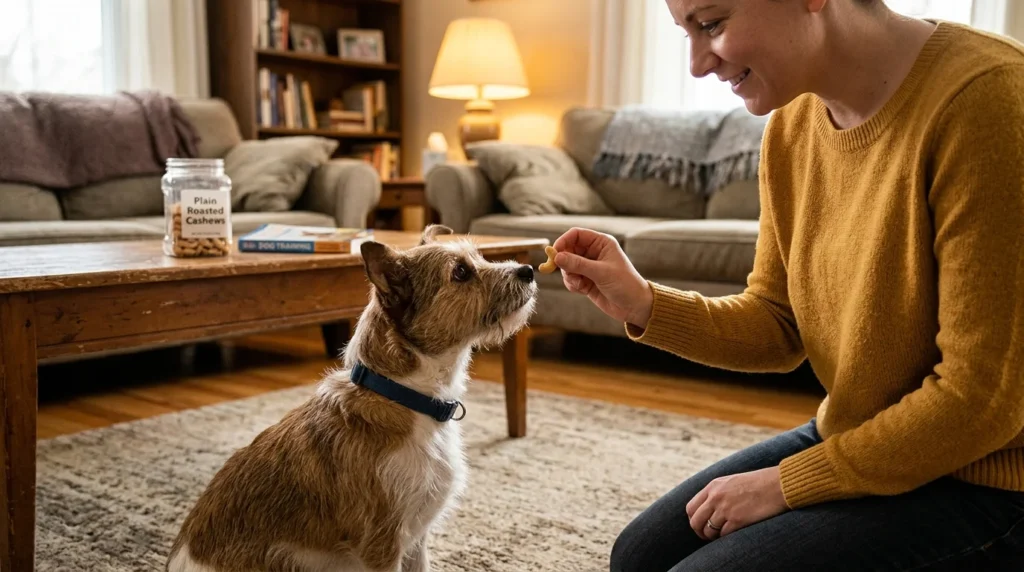
Dogs can eat cashews safely when certain precautions are followed. Always serve plain, unsalted, and unflavored cashews in small portions. Avoid feeding cashews daily because their high fat content can contribute to obesity and pancreatitis.
Introduce cashews slowly to determine whether your dog tolerates them well. Observe for signs of digestive upset, such as vomiting or diarrhea.
If your dog has a history of food sensitivities or pancreatitis, consult your veterinarian before offering cashews as a treat.
Can Dogs Eat Honey Roasted Cashews?
Honey roasted cashews are not recommended for dogs. These products often contain added sugar, honey coatings, artificial flavorings, and preservatives that provide no nutritional benefit to your pet.
Excess sugar can contribute to weight gain, dental issues, and blood sugar fluctuations. Some commercially prepared honey roasted cashews may also contain ingredients that are unsafe for dogs.
Plain, unsalted cashews are always the safer option. If you want to give your dog a sweet treat, choose fruits that are safe for canine consumption instead.
Can Dogs Eat Raw Cashews?
Yes, dogs can eat raw cashews in moderation. Raw cashews retain their natural nutrients and do not contain added salt or flavorings. However, ensure the cashews come from a reputable source and are intended for consumption. Some raw nuts may carry contaminants if improperly handled.
Offer only small amounts and watch for any digestive discomfort. Although raw cashews are generally safe, they should still be considered an occasional treat due to their fat and calorie content.
Can Dogs Eat Roasted Cashews?
Roasted cashews can be safe for dogs if they are plain and unsalted. Roasting does not significantly reduce the nutritional value of cashews, making them a suitable occasional snack.
However, many commercially roasted cashews contain added oils, salt, and seasonings that may be harmful. Always check the ingredient list before sharing them with your dog.
Plain roasted cashews are easier for some dogs to chew and digest, but portion control remains important to avoid excessive fat intake.
Can Dogs Eat Cashew Seeds?
Cashew seeds are generally safe for dogs when they are properly processed and served plain. In everyday use, what people call cashew nuts are technically seeds from the cashew fruit.
These seeds contain healthy fats, protein, and minerals that may benefit dogs when consumed occasionally. However, excessive amounts can still cause digestive upset and weight gain.
Always serve small portions and avoid any products that contain seasonings, sweeteners, or additives that could negatively affect your dog’s health.
See Also: Can Dogs Eat Honey? Benefits, Risks & Safe Amounts For 2026
Can Dogs Eat Cashew Shells?
No, dogs should never eat cashew shells. Cashew shells contain substances that can irritate the skin and digestive system. They are also difficult to digest and may present a choking hazard or cause intestinal blockage. Commercial cashews sold for human consumption have already had the shells removed.
If your dog accidentally eats a cashew shell, monitor for symptoms such as vomiting, abdominal discomfort, or difficulty passing stool. Contact your veterinarian if any concerning signs develop.
Can Dogs Eat Cashew Sauce?
It depends on the ingredients used in the sauce. Plain cashew-based sauces without harmful additives may be safe in small quantities.
However, many cashew sauces contain garlic, onions, spices, excessive salt, or artificial ingredients that are toxic or unhealthy for dogs.
Before offering any cashew sauce, carefully review all ingredients. Homemade versions made specifically with dog-safe ingredients are generally safer. When in doubt, stick to plain cashews rather than processed sauces to reduce potential health risks.
Are Cashews Bad for Dogs?
Cashews are not inherently bad for dogs, but they can become problematic when fed excessively. Their high fat and calorie content may contribute to obesity and digestive issues.
Dogs with pancreatitis, diabetes, or sensitive stomachs may be particularly vulnerable to adverse effects. Flavored, salted, or sweetened cashew products can pose additional health risks.
Cashews should always be treated as an occasional snack rather than a dietary staple. Responsible portion control helps minimize risks while allowing dogs to enjoy them safely.
Can Dogs Eat Cashew Butter?
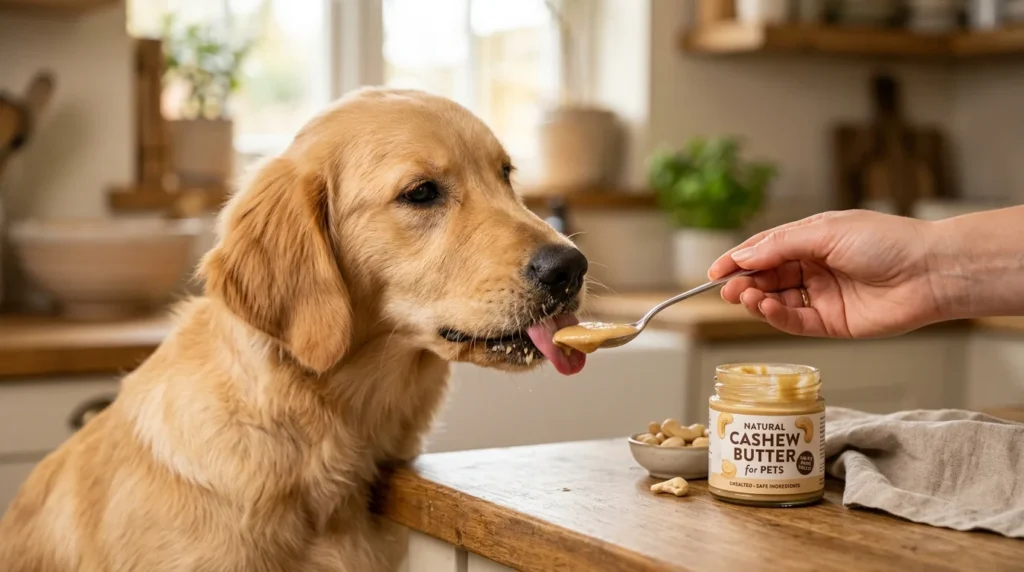
Yes, dogs can eat cashew butter if it is made from plain cashews without added sugar, salt, xylitol, or other harmful ingredients. Cashew butter can be used as an occasional treat or spread inside enrichment toys.
However, because it is highly concentrated, it contains even more calories per serving than whole cashews. Feed only small amounts and carefully check ingredient labels before purchasing commercial products. Homemade cashew butter made from pure cashews is often the safest choice for dogs.
Can Dogs Be Allergic to Cashews?
Although uncommon, dogs can be allergic to cashews. Symptoms may include itching, skin irritation, swelling, vomiting, diarrhea, or difficulty breathing in severe cases.
If your dog has never eaten cashews before, introduce a very small amount and monitor for any unusual reactions. Food allergies can vary significantly between individual dogs.
If you notice signs of an allergic response, discontinue feeding cashews immediately and consult your veterinarian for guidance and treatment options if necessary.
How to Feed Cashews to Dogs
When feeding cashews to dogs, start with one or two plain, unsalted nuts. Break them into smaller pieces to reduce choking risks, especially for smaller breeds.
Cashews can be given as training rewards, mixed into meals occasionally, or hidden inside puzzle toys for enrichment. Always avoid flavored, salted, chocolate-coated, or sugar-coated varieties.
Fresh water should be available whenever treats are offered. Moderation is key to ensuring your dog enjoys the benefits without experiencing digestive problems.
Can Puppies Eat Cashews?
Puppies can eat small amounts of plain cashews, but caution is necessary. Their digestive systems are still developing, making them more sensitive to rich or fatty foods.
Too many cashews may cause stomach upset or diarrhea. If you decide to offer cashews, start with a tiny piece and monitor your puppy’s reaction.
Most of a puppy’s nutrition should come from a complete and balanced puppy food. Cashews should only be an occasional treat rather than a regular part of their diet.
See Also: Can Dogs Eat Peanuts and Peanut Butter? Full Safety Guide 2026
My Dog Ate One Cashew—What Should I Do?
If your dog ate one plain cashew, there is usually no cause for concern. Most healthy dogs tolerate a single cashew without any issues. Simply observe your pet for signs of digestive upset such as vomiting, diarrhea, or unusual behavior.
Ensure fresh water is available and continue normal feeding routines. If the cashew was flavored, salted, chocolate-covered, or part of a mixed nut product, monitor more closely and contact your veterinarian if symptoms develop.
Can Dogs Eat Mixed Nuts?
Mixed nuts are generally not recommended for dogs. While some nuts, including cashews, may be safe in moderation, mixed nut products often contain harmful ingredients such as macadamia nuts, excessive salt, spices, or artificial flavorings.
Macadamia nuts are particularly toxic to dogs and can cause serious health problems. Because it is difficult to know exactly what is included in a mixed nut blend, it is safer to avoid them altogether and offer dog-friendly treats instead.
Healthy Alternatives to Cashews for Dogs
There are many healthier treats that dogs can enjoy. Carrots, green beans, blueberries, apples without seeds, and plain pumpkin provide nutrients with fewer calories than cashews.
Lean cooked chicken and small pieces of turkey can also serve as excellent training rewards. These alternatives are often easier to digest and less likely to contribute to weight gain.
Rotating healthy snacks helps provide variety while supporting your dog’s overall nutritional needs and maintaining a balanced diet.
Risks of Feeding Cashews to Dogs
The primary risks associated with cashews include obesity, digestive upset, and pancreatitis due to their high fat content. Overfeeding can lead to excessive calorie intake and weight gain over time. Some dogs may experience allergic reactions or gastrointestinal discomfort.
Salted, flavored, or sweetened cashews introduce additional dangers, including sodium overload and harmful additives.
Choking hazards can also occur if large pieces are fed to small dogs. Careful portion control and proper preparation significantly reduce these potential risks.
Frequently Asked Questions
Can dogs eat cashews every day?
No, cashews should only be offered occasionally. Daily feeding can contribute to excessive calorie intake and increase the risk of obesity or digestive issues.
Are raw or roasted cashews better for dogs?
Both plain raw and plain roasted cashews can be safe. The most important factor is avoiding added salt, oils, and seasonings.
What nuts are toxic to dogs?
Macadamia nuts are considered toxic to dogs and should never be fed. Always check nut products carefully before sharing them.
Can diabetic dogs eat cashews?
Diabetic dogs may be able to eat small amounts of plain cashews, but owners should consult their veterinarian first because of the fat and calorie content.
What happens if a dog eats too many cashews?
Eating too many cashews can cause vomiting, diarrhea, stomach discomfort, weight gain, and in severe cases, pancreatitis.
Conclusion
So, can dogs eat cashews? Yes, dogs can safely enjoy plain, unsalted cashews in moderation. These nuts offer valuable nutrients and can make a tasty occasional treat.
However, their high fat and calorie content means they should never become a regular part of your dog’s diet. Always avoid salted, flavored, honey-roasted, or mixed nut products.
By practicing proper portion control and choosing dog-safe varieties, you can share cashews responsibly while supporting your pet’s overall health and well-being.
Also Read: Can Dogs Eat Peaches? Benefits, Pit Danger & Feeding Guide 2026


