

Can Dogs Eat Pickles? Safety, Risks, Benefits & Feeding Guide
Many dog owners wonder, can dogs eat pickles safely? While pickles are not usually toxic to dogs, they are not considered a healthy treat. Pickles are cucumbers that have been preserved in vinegar, salt, and various seasonings.
The high sodium content and added ingredients can make them unsuitable for regular consumption. A small bite of a plain pickle may not harm most healthy dogs, but feeding pickles frequently can lead to digestive upset and other health concerns. Understanding the ingredients in pickles is essential before sharing them with your furry companion.
How Many Pickles Can Your Dog Eat?
| Dog Size | Recommended Amount | Frequency |
|---|---|---|
| Small Dogs (Under 20 lbs) | 1-2 small bites | Rarely |
| Medium Dogs (20-50 lbs) | 2-3 small bites | Rarely |
| Large Dogs (50+ lbs) | 3-4 small bites | Rarely |
| Puppies | Not Recommended | Avoid |
Note: Pickles should only be offered as an occasional treat. Excessive consumption may cause stomach upset, dehydration, or excessive sodium intake.
Can Dogs Eat Pickles?
The answer is yes, dogs can eat pickles in very small amounts, but they are not an ideal snack. The main concern is the high level of salt used during the pickling process. Too much sodium can contribute to dehydration and other health issues in dogs. Additionally, some pickles contain spices, garlic, or onions, which can be harmful. If your dog accidentally eats a small piece of plain pickle, there is usually no reason to worry. However, healthier alternatives like fresh cucumber are generally a better choice.
Can Dogs Eat Pickles Dill?
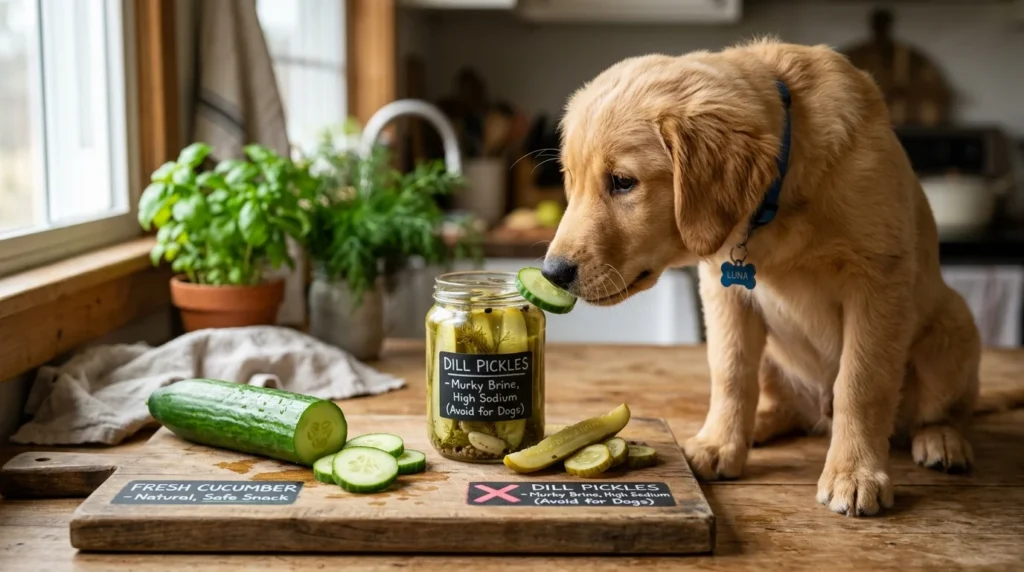
Dogs can eat dill pickles in tiny quantities, but they are not recommended as a regular treat. Dill itself is not toxic to dogs and may even provide minor health benefits. The problem lies in the pickling ingredients, especially salt and vinegar. Dill pickles often contain large amounts of sodium that can be difficult for dogs to process. A small taste is unlikely to cause serious issues, but frequent consumption may lead to digestive discomfort. Fresh cucumbers seasoned lightly with dog-safe herbs are a much healthier option.
Can Dogs Eat Pickles Juice?
Pickle juice is not suitable for dogs. It contains concentrated amounts of salt, vinegar, and sometimes additional spices. Drinking pickle juice can upset your dog’s stomach and may cause excessive thirst, vomiting, or diarrhea. In some cases, the sodium content can be dangerous, particularly for smaller dogs or dogs with underlying health conditions. If your dog accidentally licks a small amount of pickle juice, monitor them for any signs of discomfort. Fresh water should always be available to help prevent dehydration.
Can Dogs Eat Pickles Onions?
Dogs should never eat pickles that contain onions. Onions are toxic to dogs and can damage their red blood cells, potentially leading to anemia. Even small amounts may cause health problems depending on the dog’s size and sensitivity. Some homemade or specialty pickles include onions as part of the recipe, making them particularly dangerous. If your dog consumes onion-containing pickles, watch for symptoms such as weakness, lethargy, vomiting, or pale gums and contact your veterinarian immediately for guidance.
Also Read: Can Dogs Eat Onions? Toxicity, Symptoms & Safety Guide 2026
Can Dogs Eat Pickles Safely?
Dogs can eat pickles safely only when they are plain and given in very small amounts. The safest approach is to check the ingredient list carefully before offering any pickle. Avoid varieties containing onions, garlic, spicy peppers, or excessive seasoning. Even safe pickles should remain an occasional treat rather than a routine snack. Since pickles provide little nutritional value compared to healthier options, most veterinarians recommend choosing fresh vegetables like cucumbers, carrots, or green beans instead.
Can Dogs Eat Pickled Sausage?
Pickled sausage is not recommended for dogs. In addition to the pickling ingredients, sausage often contains high levels of fat, sodium, preservatives, and spices. These ingredients can upset a dog’s digestive system and contribute to obesity or pancreatitis. Some sausages may also contain garlic or onion powder, which are toxic to dogs. While a small accidental bite may not always cause severe problems, regular consumption should be avoided. Lean, unseasoned meats are a safer protein source for dogs.
Can Dogs Eat Pickle Slices?
A plain pickle slice is generally safe for most healthy dogs when given occasionally. Since pickle slices are small, they may seem harmless, but they still contain significant amounts of sodium. Dog owners should avoid feeding multiple slices or making pickles a regular snack. If you decide to offer a pickle slice, ensure it does not contain harmful ingredients such as onions or garlic. Always monitor your dog afterward to ensure they do not experience digestive upset or excessive thirst.
Can Dogs Eat Pickle Spears?
Pickle spears are larger portions of pickles and contain the same concerns regarding sodium and seasonings. While a small piece of a pickle spear is unlikely to harm a healthy dog, feeding an entire spear is not recommended. Large amounts can contribute to stomach upset and increased sodium intake. Dogs may enjoy the crunchy texture, but fresh cucumber spears provide a similar experience without the unnecessary salt and preservatives found in pickled products.
Can Dogs Eat Pickled Sushi Ginger?
Pickled sushi ginger should not be given to dogs. Although ginger itself can be beneficial for dogs in moderation, pickled sushi ginger often contains sugar, vinegar, salt, and other additives. These ingredients may cause digestive upset or unnecessary calorie intake. Some commercial varieties may include preservatives or flavor enhancers that are unsuitable for pets. If you want your dog to enjoy ginger’s benefits, offer a small amount of fresh ginger under veterinary guidance rather than pickled versions.
Can Dogs Eat Pickle Spread?
Pickle spread is usually not safe for dogs because it often contains mayonnaise, seasonings, onions, garlic, and other ingredients that may be harmful. The combination of fats and sodium can be particularly problematic for dogs with sensitive stomachs. Even if the spread contains actual pickles, the added ingredients increase the health risks. Before sharing any spread with your dog, carefully review the ingredients. In most cases, it is best to avoid feeding pickle spread altogether.
Also Read: Can Dogs Eat Green Beans? Benefits, Risks, Serving Size & Safety Guide
Can Dogs Eat Pickled Stuff?
Many pickled foods besides cucumbers are not ideal for dogs. Pickled vegetables often contain large amounts of salt, vinegar, and seasonings that can irritate a dog’s digestive system. Some pickled items may include ingredients that are toxic to dogs, such as onions or garlic. While a tiny taste of a plain pickled vegetable may not cause harm, regular feeding is not recommended. Fresh vegetables are generally a much safer and healthier option.
Can Dogs Eat Pickle Skin?
Pickle skin itself is not toxic to dogs. However, since it is part of the pickle, it contains the same salt and vinegar exposure as the rest of the product. A small piece of pickle skin is unlikely to cause harm, but feeding larger quantities may contribute to digestive upset. Dogs that enjoy crunchy vegetables are better off eating fresh cucumber skin, which provides hydration and nutrients without the added sodium commonly found in pickled foods.
Can Dogs Eat Pickle Salt?
Dogs should avoid consuming pickle salt. Excessive sodium intake can cause dehydration, increased thirst, vomiting, and, in severe cases, sodium poisoning. Pickle brine and seasoning mixtures often contain much more salt than dogs need in their diet. Even though a tiny amount may not cause immediate problems, repeated exposure can negatively affect a dog’s health. Always choose low-sodium treats and ensure your dog has access to fresh drinking water at all times.
Can Dogs Have Ketchup or Mustard?
Ketchup and mustard are generally not recommended for dogs. Ketchup may contain excessive sugar, salt, and artificial ingredients, while mustard seeds can be harmful to dogs and may cause digestive irritation. Even small amounts can lead to stomach upset in sensitive pets. If your dog accidentally licks a little ketchup, it is usually not a major concern, but mustard should be avoided whenever possible. Plain dog-friendly foods are always the safer option.
Can Dogs Have Mayonnaise?
Mayonnaise is not toxic to dogs, but it is high in fat and calories. Feeding mayonnaise regularly can contribute to weight gain and digestive issues. Some flavored mayonnaise products may also contain garlic, onion powder, or other ingredients that are unsafe for dogs. A tiny taste is unlikely to cause harm, but there are healthier treat options available. Dog owners should focus on nutritious snacks that provide vitamins and minerals without unnecessary fats.
Also Read: Can Dogs Eat Almonds? Complete Safety Guide for Dog Owners
Can Dogs Have Salsa or Guacamole?
Dogs should not eat salsa or guacamole. Salsa often contains onions, garlic, and spicy peppers, all of which can be harmful. Guacamole typically contains avocado and seasonings that may upset a dog’s stomach. While small amounts may not always result in severe reactions, these foods present unnecessary risks. If your dog accidentally consumes salsa or guacamole, monitor them closely and contact your veterinarian if symptoms such as vomiting or diarrhea develop.
Can Dogs Have Fruit Salad?
Dogs can enjoy certain fruit salads if they contain dog-safe fruits such as apples, blueberries, strawberries, and watermelon. However, fruit salads often include grapes, raisins, or added sweeteners, which can be dangerous. Before sharing fruit salad, carefully inspect all ingredients. Fresh fruit can be a healthy occasional treat when served in moderation. Avoid fruit salads with syrups, artificial sweeteners, or excessive sugar to protect your dog’s health.
Are Pickles Bad for Dogs?
Pickles are not necessarily toxic to dogs, but they are not considered a healthy snack. Their high sodium content and potential inclusion of harmful ingredients make them less than ideal. Occasional small bites of plain pickles may be tolerated by many dogs, but regular feeding should be avoided. Over time, excessive sodium consumption can contribute to health problems. Fresh cucumbers provide similar texture and hydration benefits without the drawbacks associated with pickled products.
Is Dill Bad for Dogs?
Dill is generally safe for dogs when consumed in moderation. In fact, some pet owners use small amounts of dill as a natural herb in homemade dog treats. Dill may provide antioxidants and support digestive health. However, the presence of dill in pickles does not make pickles healthy for dogs because the salt and vinegar remain the primary concern. Fresh dill used sparingly is usually safe, but always introduce new foods gradually.
Frequently Asked Questions
Can dogs eat pickles every day?
No, pickles should not be part of a dog’s daily diet because they contain too much sodium and offer limited nutritional benefits.
What happens if my dog eats too many pickles?
Eating too many pickles may cause dehydration, stomach upset, vomiting, diarrhea, or excessive thirst due to high sodium levels.
Are homemade pickles safer for dogs?
Homemade pickles can be safer if they contain no onions, garlic, or excessive salt, but they should still be fed sparingly.
Can puppies eat pickles?
Puppies should avoid pickles because their digestive systems are more sensitive to sodium and acidic foods.
What is a healthier alternative to pickles for dogs?
Fresh cucumber slices are an excellent alternative because they provide hydration and nutrients without excess salt.
Conclusion
So, can dogs eat pickles? While a small piece of a plain pickle is unlikely to harm most healthy dogs, pickles are not a recommended treat due to their high sodium content and potentially harmful ingredients.
Fresh cucumbers are a much safer and healthier option. Always read ingredient labels carefully and avoid pickles containing onions, garlic, or spicy seasonings. When introducing any new food to your dog’s diet, moderation is key.
Also Read: Can Dogs Eat Blackberries? Top Antioxidant Berry — Full Guide 2026


