

Can Dogs Eat Raw Bacon? Risks, Symptoms & Safety Guide 2026
No, dogs should not eat raw bacon. Raw bacon is high in fat and salt, and it may contain harmful bacteria or parasites that can make dogs sick. While a tiny accidental bite may not always cause a serious problem, intentionally feeding raw bacon is not a safe choice for dogs.
The risks can become greater when a dog eats a large amount. Raw bacon can cause digestive upset and may contribute to pancreatitis because of its high fat content. It can also expose dogs to excessive sodium and potentially harmful microorganisms. If your dog has eaten raw bacon, the amount consumed, your dog’s size, and any existing health conditions are important factors to consider.
Can Dogs Eat Raw Bacon?
Dogs should not eat raw bacon. Bacon is a processed pork product that is typically high in fat and sodium, and the raw form can carry foodborne pathogens. Dogs may tolerate some human foods that contain pork, but raw bacon is not a recommended treat.
A small accidental piece may not necessarily cause illness, but larger quantities can be much more concerning. If your dog has eaten raw bacon, remove the remaining food and monitor them closely for digestive or other unusual symptoms.
Is Raw Bacon Safe for Dogs?
Raw bacon is not considered a safe food for dogs. Uncooked meat products can contain bacteria that may cause gastrointestinal illness, while bacon also contains significant amounts of fat and salt.
Even when raw bacon does not immediately cause symptoms, the high-fat content can create problems later. For dogs, plain, properly cooked lean meat is generally a better option than processed bacon.
Can Dogs Eat Raw Bacon Fat?
Dogs should not be intentionally fed raw bacon fat. Fat is extremely calorie-dense, and large amounts can cause vomiting, diarrhea, abdominal discomfort, or more serious digestive complications in susceptible dogs.
High-fat foods can also increase the risk of pancreatitis, a potentially serious inflammation of the pancreas. Avoid giving dogs bacon grease, bacon fat, or large pieces of fatty bacon.
Can Dogs Eat Raw Bacon Grease?
No. Bacon grease is particularly high in fat and provides little nutritional value for dogs. Giving a dog bacon grease can cause digestive upset and may contribute to pancreatitis, especially when consumed in a significant quantity.
Never intentionally pour bacon grease over your dog’s food. If your dog accidentally consumes a small amount, monitor them closely. A larger ingestion warrants contacting your veterinarian for guidance.
Can Dogs Eat Raw Pork Bacon?
Raw pork bacon should not be given to dogs. Besides its high fat and sodium content, uncooked pork products can carry microorganisms that may cause illness.
Cooking meat thoroughly reduces many food-safety risks. If you want to give your dog pork, plain, thoroughly cooked lean pork without seasoning or excess fat is generally a more appropriate option.
Can Dogs Eat Uncooked Bacon?
No, uncooked bacon is not recommended for dogs. The combination of raw meat, high fat, and high sodium makes it a poor choice for canine diets.
If your dog steals a small piece of uncooked bacon, do not automatically assume an emergency will occur. Determine how much was eaten and monitor for symptoms. Contact your veterinarian if a large amount was consumed or your dog becomes unwell.
Can Dogs Eat Raw Bacon Slices?
Dogs should not be given raw bacon slices as a treat. Bacon slices can contain substantial amounts of fat and sodium, and the raw product may also carry bacteria.
Large or thick slices may be especially problematic because they provide more fat and calories. Keep raw bacon away from your dog and dispose of food scraps securely.
Can Dogs Eat Raw Turkey Bacon?
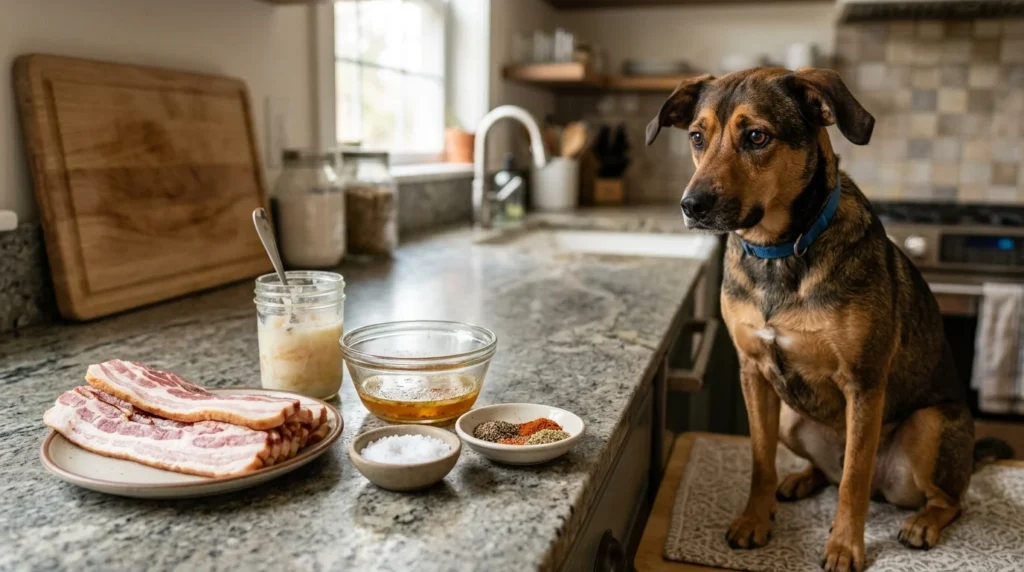
Raw turkey bacon should also be avoided. Although turkey bacon may contain less fat than some traditional pork bacon products, it can still be highly processed and salty, and the uncooked product can carry food-safety risks.
Turkey itself can be a suitable protein for dogs when thoroughly cooked and served plain. However, processed turkey bacon is different from plain cooked turkey and should not be treated as a regular dog food.
Can Dogs Eat Raw Canadian Bacon?
Canadian bacon is generally a processed meat product and should not be fed raw to dogs. It can contain salt, preservatives, and other ingredients that provide little nutritional benefit for dogs.
If your dog accidentally eats a small piece, monitor them and check the product’s ingredients. Plain, thoroughly cooked lean meat is a better choice when offering an occasional human-food treat.
Can Dogs Eat Raw Bacon Bits?
Raw bacon bits are not recommended for dogs. Packaged bacon bits may contain significant amounts of salt, fat, preservatives, flavorings, and other ingredients, while raw meat products can carry harmful microorganisms.
Do not use bacon bits as a food topper for your dog’s regular meals. If you want to add a protein-based treat, choose a plain, dog-safe food instead.
Can Dogs Eat Raw Bacon Rind?
Dogs should not eat raw bacon rind. It can be tough, fatty, and difficult to digest, while raw pork products may carry foodborne pathogens.
Fatty pieces can also contribute to digestive upset and pancreatitis. Keep bacon rind and other fatty scraps away from dogs, especially those with a history of digestive or pancreatic problems.
Can Dogs Eat Raw Bacon Skin?
Raw bacon skin is not a suitable food for dogs. It is generally high in fat and can be difficult to digest. Because it comes from an uncooked pork product, there may also be food-safety concerns.
There is no nutritional reason to give dogs bacon skin. Remove fatty skin and scraps before serving meat and choose plain, thoroughly cooked lean protein instead.
Can Dogs Eat Raw Bacon With Salt?
Raw bacon already tends to contain a considerable amount of sodium, so adding additional salt makes it even less appropriate for dogs. Excessive sodium intake can cause increased thirst and other problems when enough is consumed.
Dogs need sodium as part of a balanced diet, but salty processed meats are not a healthy way to provide it. Avoid adding salt to any food intended for your dog.
Can Dogs Eat Raw Bacon With Seasoning?
Raw bacon with seasoning should be avoided. Seasoning blends can contain salt, garlic, onion, chili, or other ingredients that may be harmful or irritating to dogs.
Even if the seasoning itself is not toxic, it can make a high-fat processed meat even less suitable. If you are preparing food for your dog, keep it plain and thoroughly cooked.
Can Dogs Eat Raw Bacon With Garlic?
No. Dogs should not be given raw bacon containing garlic. Garlic can damage red blood cells in dogs when sufficient amounts are consumed, and garlic powder can be particularly concentrated.
Garlic-seasoned bacon can therefore present more concerns than plain bacon. If your dog eats bacon containing garlic, check the amount consumed and contact your veterinarian if a significant quantity was eaten.
Can Dogs Eat Raw Bacon With Onion?
No. Raw bacon containing onion should not be intentionally fed to dogs. Onions contain compounds that can damage red blood cells and potentially lead to anemia.
Onion powder can also be present in seasoned bacon or flavoring blends. Check ingredient labels carefully and contact a veterinarian if your dog consumes a significant amount.
Can Dogs Eat Raw Bacon With Black Pepper?
Raw bacon seasoned with black pepper is not recommended for dogs. Black pepper can irritate the digestive system in larger quantities, while bacon itself already has a high fat and sodium content.
There is no benefit to adding pepper to food for dogs. Plain, thoroughly cooked lean meat is a safer alternative to seasoned bacon.
Can Dogs Eat Raw Bacon With Maple Syrup?
Maple-flavored bacon should not be given to dogs, particularly in its raw form. Maple syrup adds sugar and calories, while the bacon remains high in fat and salt.
If the product contains artificial sweeteners, check the ingredient list carefully. Xylitol, for example, is highly toxic to dogs. Keep flavored bacon products away from your pet.
Can Dogs Eat Raw Bacon Every Day?
No. Raw bacon should never become part of a dog’s daily diet. It is high in fat and sodium and does not provide the balanced nutrition dogs need.
Daily bacon consumption can contribute to excess calorie intake and may increase the risk of digestive problems. A complete and balanced dog food should provide the foundation of your dog’s diet.
Can Puppies Eat Raw Bacon?
Puppies should not eat raw bacon. Their developing bodies require carefully balanced nutrition, while raw bacon provides excessive fat and salt without supplying the appropriate nutritional balance for growth.
Puppies can also be vulnerable to foodborne illness. Keep raw bacon away from young dogs and provide puppy-appropriate treats instead.
Can Senior Dogs Eat Raw Bacon?
Senior dogs should not be given raw bacon. Older dogs may have individual dietary needs, and high-fat processed foods can be particularly inappropriate for dogs requiring controlled nutrition.
If your senior dog accidentally eats raw bacon, consider the amount consumed and monitor them carefully. Contact your veterinarian if they have existing dietary restrictions or develop concerning symptoms.
Can Dogs With Sensitive Stomachs Eat Raw Bacon?
No. Raw bacon is particularly unsuitable for dogs with sensitive stomachs because its high fat and salt content can trigger digestive upset. The raw form also introduces additional food-safety concerns.
Dogs with sensitive digestion generally benefit from simple, consistent foods. Avoid introducing greasy processed meats and follow any diet recommended by your veterinarian.
Can Dogs With Pancreatitis Eat Raw Bacon?
Dogs with pancreatitis should not eat raw bacon. Bacon is high in fat, and high-fat foods can be particularly inappropriate for dogs with pancreatitis or a history of pancreatic problems.
Do not use bacon as a treat for a dog on a veterinary-directed low-fat diet. If a dog with pancreatitis accidentally eats bacon, contact your veterinarian for advice based on the amount consumed and the dog’s condition.
Can Dogs With Diabetes Eat Raw Bacon?
Raw bacon is not a good choice for dogs with diabetes. It does not provide balanced nutrition and can contribute unnecessary fat, calories, and sodium to the diet.
Dogs with diabetes often need consistent meals and carefully controlled nutrition. Follow your veterinarian’s feeding plan rather than using processed meats as treats.
Can Dogs Eat Raw Bacon If They Are Overweight?
Raw bacon is a poor choice for overweight dogs because it is calorie-dense and high in fat. Frequent high-calorie treats can make weight management more difficult.
If your dog needs to lose weight, choose veterinarian-approved low-calorie treats and keep portions controlled. Bacon should not be used as part of a weight-loss plan.
What Happens If a Dog Eats Raw Bacon?
The effects depend on how much bacon was consumed and the dog’s size and health. A small accidental piece may cause no noticeable symptoms, but larger amounts can lead to vomiting, diarrhea, abdominal discomfort, excessive thirst, or other digestive problems.
Because bacon is high in fat, consuming a large quantity can also increase the risk of pancreatitis. Raw bacon additionally carries food-safety concerns. Monitor your dog closely and contact your veterinarian if a large amount was eaten or symptoms appear.
How Much Raw Bacon Can a Dog Eat?
There is no recommended serving size of raw bacon for dogs because raw bacon is not considered a suitable treat. Even a small amount can add unnecessary fat and sodium, while larger amounts increase the chance of digestive problems and other complications.
If your dog accidentally eats a small piece, the situation may not necessarily become serious, but you should monitor them. The risk is greater when a dog eats several slices, a large amount of bacon fat, or seasoned bacon containing ingredients such as garlic or onion.
What Should You Do If Your Dog Eats Raw Bacon?
First, determine approximately how much raw bacon your dog consumed and check the package for additional ingredients. Remove any remaining bacon so your dog cannot eat more. Do not make your dog vomit unless a veterinarian specifically instructs you to do so.
Monitor your dog for vomiting, diarrhea, abdominal discomfort, weakness, excessive thirst, or changes in behavior. If your dog ate a large quantity, consumed bacon containing potentially harmful seasonings, or develops concerning symptoms, contact your veterinarian promptly.
See Also: Can Dogs Eat Bananas? Everything You Need to Know Before Feeding
How Long After Eating Raw Bacon Can Symptoms Appear?
Digestive symptoms can appear within hours after a dog eats raw bacon, although the timing can vary depending on the amount consumed and the dog’s individual health. Vomiting, diarrhea, stomach discomfort, or excessive thirst may be among the first signs.
Problems related to a high-fat meal can sometimes become apparent later rather than immediately. Continue monitoring your dog after the initial few hours, particularly if they consumed a large quantity of bacon or have previously experienced digestive problems.
Can Raw Bacon Cause Pancreatitis in Dogs?
Raw bacon is high in fat, and consuming a large amount of fatty food can increase the risk of pancreatitis in susceptible dogs. Pancreatitis involves inflammation of the pancreas and can cause significant gastrointestinal illness.
Possible warning signs include repeated vomiting, abdominal pain, loss of appetite, lethargy, diarrhea, or a hunched posture. If these symptoms develop after your dog eats a large amount of bacon, veterinary evaluation is important.
Can Raw Bacon Cause Diarrhea in Dogs?
Yes, raw bacon can cause diarrhea in some dogs. Its high fat and sodium content can upset the digestive system, especially when a dog eats more than a small amount. Raw meat may also introduce bacteria that can contribute to gastrointestinal illness.
If diarrhea is mild and your dog otherwise seems normal, continue monitoring them and provide access to fresh water. Persistent diarrhea, blood in the stool, vomiting, weakness, or other concerning symptoms should be discussed with a veterinarian.
Can Raw Bacon Cause Vomiting in Dogs?
Yes. Eating raw bacon can cause vomiting because of its high fat content, richness, or potential bacterial contamination. The likelihood of digestive upset generally increases as the amount consumed increases.
If your dog vomits repeatedly, cannot keep water down, appears painful or weak, or develops other concerning symptoms, contact a veterinarian. Avoid giving additional fatty foods while monitoring your dog’s condition.
Can Raw Bacon Cause Excessive Thirst in Dogs?
Raw bacon can cause increased thirst because processed bacon commonly contains significant sodium. After consuming salty food, a dog may drink more water than usual as the body attempts to maintain its normal fluid balance.
Make sure your dog has access to fresh, clean water. If excessive thirst continues or occurs alongside vomiting, diarrhea, weakness, or other unusual symptoms, seek veterinary advice.
Can Raw Bacon Make Dogs Sick?
Yes, raw bacon can make dogs sick, particularly when they consume a large amount. The combination of high fat, sodium, and the potential presence of harmful microorganisms makes raw bacon an unsuitable food for dogs.
Some dogs may experience only mild digestive upset, while others can develop more serious problems. Dogs with existing health conditions may be at greater risk from rich or fatty foods.
Can Raw Bacon Cause Food Poisoning in Dogs?
Raw meat products can carry bacteria that may cause foodborne illness. Raw bacon therefore presents a food-safety concern in addition to its high fat and sodium content.
Signs of foodborne illness can include vomiting, diarrhea, loss of appetite, lethargy, and abdominal discomfort. If symptoms are severe, persistent, or accompanied by weakness or dehydration, contact your veterinarian.
Can Raw Bacon Cause Worms in Dogs?
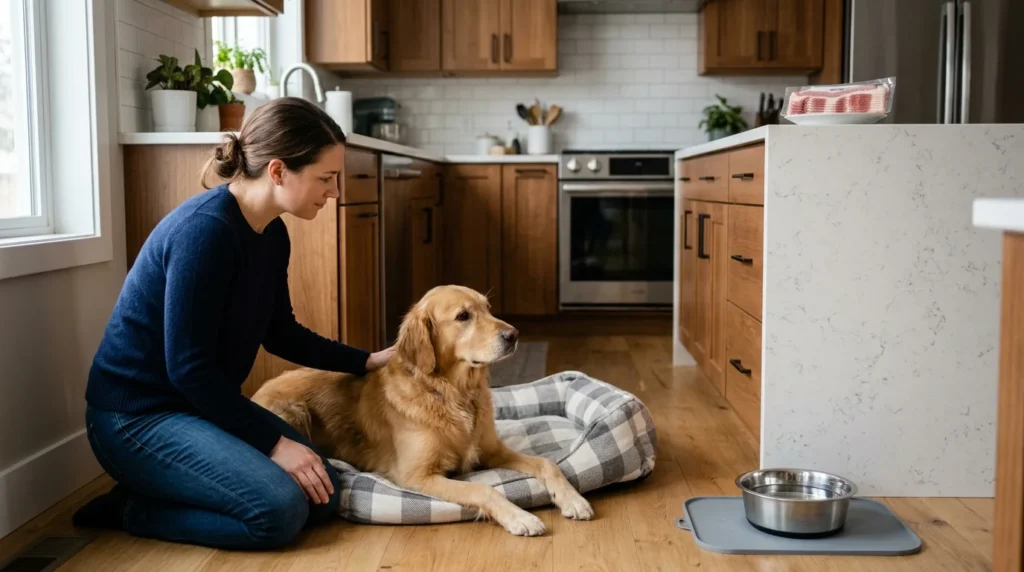
Raw pork products can carry parasites, although the actual risk depends on the source and handling of the meat. This is another reason raw pork products should not be intentionally fed to dogs.
Proper cooking helps reduce many food-safety risks associated with raw meat. If your dog has consumed raw pork or bacon and you are concerned about parasite exposure, discuss the situation with your veterinarian.
Can Dogs Eat Cooked Bacon?
Cooked bacon is safer from a raw-meat perspective, but it is still not a healthy treat for dogs. Bacon remains high in fat and sodium after cooking, and frequent or large servings can contribute to digestive problems and excessive calorie intake.
If your dog accidentally eats a small piece of cooked bacon, it may not cause a serious problem. However, plain, lean, thoroughly cooked meats without added salt or seasoning are a better choice.
Is Cooked Bacon Better Than Raw Bacon for Dogs?
Cooked bacon eliminates some of the food-safety concerns associated with raw meat, but it does not remove the high fat and sodium content that makes bacon an unsuitable regular food for dogs.
Therefore, cooked bacon may be less risky than raw bacon in some respects, but neither should be a regular part of a dog’s diet. Plain cooked lean meat is a healthier alternative.
Can Dogs Eat Bacon Grease?
Dogs should not be given bacon grease. Bacon grease is almost entirely a concentrated source of fat and can cause significant digestive upset when consumed in larger amounts.
Large amounts of dietary fat may also increase the risk of pancreatitis in susceptible dogs. Keep bacon grease away from your dog’s food and dispose of it where your pet cannot access it.
Can Dogs Eat Bacon Fat?
Bacon fat is not recommended for dogs. It contains a high concentration of fat and calories without providing the balanced nutrition a dog needs. Large amounts can cause stomach upset and may contribute to pancreatitis.
Trim fatty bacon scraps before handling food around your dog and avoid using bacon fat as a food topper. Dogs generally do better with appropriately portioned, nutritionally balanced meals.
Can Dogs Eat Bacon Bits?
Many commercial bacon bits are highly processed and can contain significant amounts of sodium, fat, preservatives, and flavorings. They are therefore not a good everyday treat for dogs.
Some products may also contain seasonings such as onion or garlic. Always check the ingredient list and avoid giving dogs processed bacon toppings when safer treat options are available.
See Also: Can Dogs Eat Strawberries? Here’s Everything You Need to Know
Can Dogs Eat Bacon Strips?
Dogs should not be intentionally fed bacon strips as a regular treat. Whether raw or cooked, bacon strips can contain substantial amounts of fat and sodium.
A small accidental bite is different from regularly feeding several strips. If your dog eats multiple slices, especially if they are small or have health conditions, monitor closely and contact your veterinarian if you have concerns.
Can Dogs Eat Raw Bacon With Garlic and Onion?
No. Raw bacon containing garlic or onion should not be given to dogs. Both garlic and onion belong to the Allium family and can damage red blood cells when enough is consumed.
Seasoned bacon can contain concentrated garlic or onion powder, making it important to check the ingredients. If your dog eats a significant amount of bacon containing these ingredients, contact your veterinarian.
Can Dogs Eat Raw Bacon With Maple?
Maple-flavored raw bacon is not a suitable food for dogs. Besides the concerns associated with raw bacon, flavored products can contain added sugar, salt, and other ingredients that dogs do not need.
Some flavored products may also contain artificial sweeteners. If a product contains xylitol, it can be highly dangerous to dogs and requires immediate veterinary attention.
Can Dogs Eat Raw Bacon From Breakfast?
Dogs should not be given raw bacon while breakfast is being prepared. Raw bacon scraps can contain bacteria and provide excessive amounts of fat and sodium.
Keep uncooked bacon on a secure counter or in the refrigerator where your dog cannot reach it. If you want to share breakfast foods, choose a small amount of a plain, dog-appropriate food instead.
Can Dogs Eat Raw Bacon Leftovers?
Raw bacon leftovers should not be offered to dogs. Uncooked bacon can spoil if it is not stored correctly, and even fresh raw bacon has concerns related to bacteria, fat, and sodium.
Store raw meat securely and dispose of scraps properly. Do not allow your dog to access food waste containing raw bacon, bacon fat, packaging, or other meat scraps.
How to Keep Dogs Safe Around Raw Bacon
Store raw bacon in a sealed container or securely wrapped package inside the refrigerator. Keep it away from the edge of counters and tables where curious dogs can reach it. Clean surfaces and utensils that come into contact with raw meat.
Dispose of bacon packaging and scraps in a secure trash can. These simple precautions can reduce the chance of accidental ingestion and help protect both your dog and your household from foodborne contamination.
Frequently Asked Questions
Can dogs eat raw bacon?
No. Raw bacon is not recommended for dogs because it is high in fat and sodium and may carry harmful bacteria or parasites. A small accidental bite may not cause serious problems, but intentionally feeding raw bacon is not advisable.
What happens if a dog eats raw bacon?
A dog may develop vomiting, diarrhea, stomach discomfort, increased thirst, or other digestive symptoms. Eating a large amount can increase the risk of more serious problems, including pancreatitis.
Can dogs eat cooked bacon?
Cooked bacon is less concerning than raw bacon from a food-safety perspective, but it is still high in fat and sodium. It is better not to make bacon a regular treat, even when cooked.
Can raw bacon cause pancreatitis in dogs?
Yes, eating a large amount of high-fat food such as bacon can increase the risk of pancreatitis in susceptible dogs. Repeated vomiting, abdominal pain, lethargy, or loss of appetite requires prompt veterinary attention.
What should I do if my dog eats raw bacon?
Determine how much was eaten, check the ingredients, and monitor your dog for unusual symptoms. Do not induce vomiting unless instructed by a veterinarian. Contact your veterinarian if a large amount was consumed or symptoms develop.
Conclusion
So, can dogs eat raw bacon? No, raw bacon is not a recommended food for dogs. It is high in fat and sodium and can carry foodborne pathogens. Large amounts may cause significant digestive upset and can increase the risk of pancreatitis in susceptible dogs.
If your dog accidentally eats a small piece, monitor them carefully and provide access to fresh water. If they consume a large amount, eat seasoned bacon containing ingredients such as garlic or onion, or develop vomiting, diarrhea, abdominal pain, weakness, or other concerning symptoms, contact your veterinarian.
The safest approach is to keep raw bacon away from dogs altogether. If you want to offer meat as an occasional treat, plain, thoroughly cooked lean meat without excessive fat, salt, or seasoning is a much better option.
See Also: Can Dogs Eat Green Beans? Benefits, Risks, Serving Size & Safety Guide


