Can Dogs Eat Peanuts and Peanut Butter? Full Safety Guide 2026
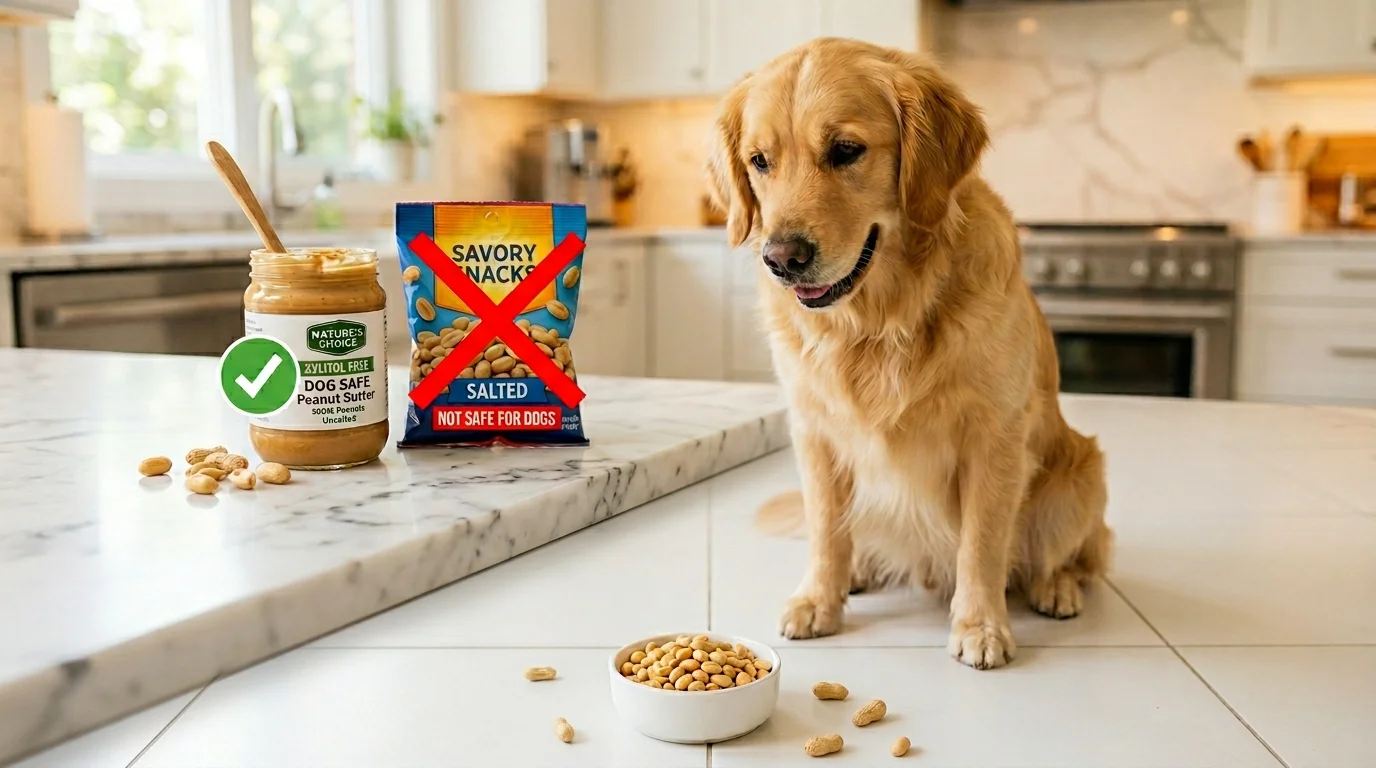
Yes, dogs can eat peanuts, but only in one narrow form: plain, shelled and unsalted, in small amounts, as an occasional treat. That short answer hides the part that matters most, because most peanuts sold for people are salted, sweetened, coated or still in the shell, and none of those versions should be shared with a dog.
Peanuts are legumes, not true tree nuts, which is one reason they sit apart from the nuts that are genuinely toxic to dogs. For the full picture across nuts, see the nuts dogs can and cannot eat guide, and for the wider food list, see what dogs can eat. This guide stays on whole peanuts only. Peanut butter has its own rules, covered briefly near the end and in full in the peanut butter guide.
Last updated: 3 November 2026
Which peanuts can dogs eat: the form by form decision
Plain, shelled, unsalted peanuts are the only whole peanuts worth offering a dog, because the nut itself is not toxic while salt, sugar, spice coatings and shells add risk without adding nutrition. Dry roasted unsalted and raw unsalted both pass that test, while salted, flavoured, coated and in shell forms fail it for clear, separate reasons.
| Form | Verdict | Why |
|---|---|---|
| Raw, shelled, unsalted | Yes, small amounts | Plain nut, no added salt or coating. Buy human quality, in date and stored dry. |
| Dry roasted, shelled, unsalted | Yes, small amounts | Often the easiest safe choice. Check the label says unsalted and unflavoured. |
| Oil roasted, unsalted | Only if plain | Acceptable only with no salt, sugar or flavouring. Dry roasted is the simpler pick. |
| Salted | No, do not offer | Extra sodium adds thirst, stomach upset and, in larger amounts, sodium related illness. |
| Honey roasted, sweetened or candy coated | No, do not offer | Added sugar and salt, and coatings may hide other ingredients a dog should not have. |
| Spicy, Cajun or seasoned | No, do not offer | Spice coatings irritate the mouth and gut, and seasonings may include garlic or onion powder. |
| Japanese peanuts and other coated peanuts | No, do not offer | Flour coating, soy sauce seasoning and frying add salt, fat and flavourings. |
| In the shell | No, do not offer | Shells are fibrous, hard to digest and a choking and blockage risk. Always shell first. |
| Boiled, shop bought | No, do not offer | Usually boiled in salty or seasoned water and often still in the shell. |
| Boiled at home in plain water, shelled | Yes, small amounts | Only if boiled in plain water with no salt or seasoning, cooled and fully shelled. |
| Peanut butter | Separate decision | See the section below. The label check for xylitol comes before anything else. |
The American Kennel Club advises that dry roasted or raw, unsalted peanuts are the only peanuts safe for dogs to eat, and PetMD gives the same plain, shelled, unsalted rule. If a bag does not say unsalted and unflavoured in plain words, do not guess. Put it back and use a bag that does.
What about the thin papery skin?
The thin reddish skin on the nut is not the shell. It is soft and thin, and leaving it on is generally fine. If your dog reacts to skin on peanuts, try skin off next time and note what changed, so you can tell your vet exactly what happened.
Why fat, not toxicity, is the main limit
Peanuts are dense in fat and calories, so a small handful can use up a large share of a dog’s treat allowance and leave little room for other treats. That density is why large servings raise the risk of weight gain and stomach upset, and why dogs with a history of pancreatitis should skip peanuts unless their vet says otherwise.
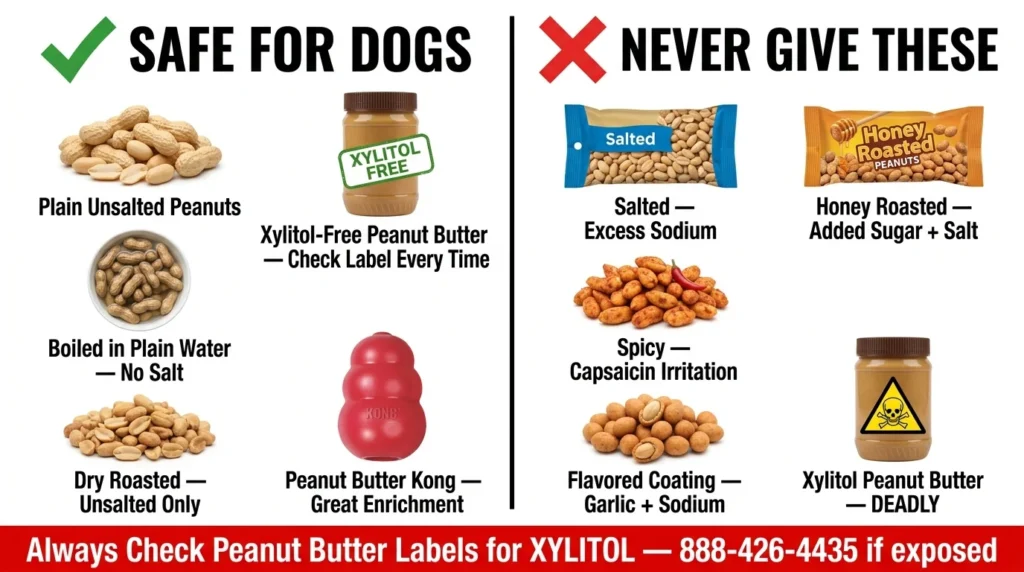
Peanuts are not toxic to dogs in the way macadamia nuts are, but that fact alone does not make them a free treat. The American Kennel Club links regular or large high fat feeding, including peanuts, to digestive upset and pancreatitis, and PetMD links unshelled peanuts to choking and intestinal blockage, and high fat intake to pancreatitis and obesity. Treats, including peanuts, should stay within the usual 10 percent treat share of daily calories, with balanced dog food providing the rest.
That fat limit also explains why peanuts are a poor choice for dogs that are overweight, on a low fat diet, or on a prescription diet. PetMD warns that dogs on prescription diets should not be fed food or treats outside the diet. If your dog is in any of those groups, ask your vet before offering peanuts at all, rather than trimming the portion and hoping it is enough.
How to serve peanuts safely
Serve peanuts shelled, plain and unsalted, in a few pieces, and count them inside the treat allowance for that day rather than on top of it. Crush or halve them for small dogs and for dogs that gulp food, offer one peanut first when trying them, and watch for any reaction over the next day before offering more.
- Shell every peanut completely, then check no shell pieces remain in the bowl.
- Choose a bag labelled dry roasted unsalted or raw unsalted, with no flavouring listed.
- Break peanuts into pieces for small dogs, older dogs, and dogs that swallow without chewing.
- Start with one peanut the first time, then wait a day and watch for itching, swelling, vomiting or loose stools.
- Keep peanuts occasional, not daily, and count them with every other treat given that day.
- Store peanuts dry, in date and in a sealed container. Discard peanuts that smell stale or look damp or mouldy.
Raw peanuts need one extra check. PetMD notes that peanuts grown in hot, humid conditions can carry a mould related toxin called aflatoxin, and recommends human quality peanuts and checking the expiry date, with plain, shelled, dry roasted peanuts as the safest product choice. That is a practical reason to prefer a fresh, sealed, human quality bag over loose or long stored raw peanuts.
For a smaller, lower fat crunchy alternative in the same plain, shelled, unsalted spirit, see sunflower seeds for dogs. For the contrast with nuts that need far more caution, see almonds for dogs and cashews for dogs, both of which are high in fat and easy to overfeed.
How many peanuts can a dog have
Portions should stay small because peanuts are a treat, not a food group, and every peanut counts toward the share of calories that should come from treats rather than dog food. Use the size guide below as a ceiling, not a target, give less on days when your dog has other treats, and skip peanuts when weight is a concern.
| Dog size | Plain, shelled, unsalted peanuts per occasion | How often |
|---|---|---|
| Extra small, under 10 lb | 1 to 2 | Occasionally, not daily |
| Small, 10 to 30 lb | 2 to 3 | Occasionally, not daily |
| Medium, 31 to 50 lb | Up to 5 | Occasionally, not daily |
| Large, 51 to 90 lb | A few, no more than a small handful | Occasionally, not daily |
| Extra large, over 90 lb | A small handful at most | Occasionally, not daily |
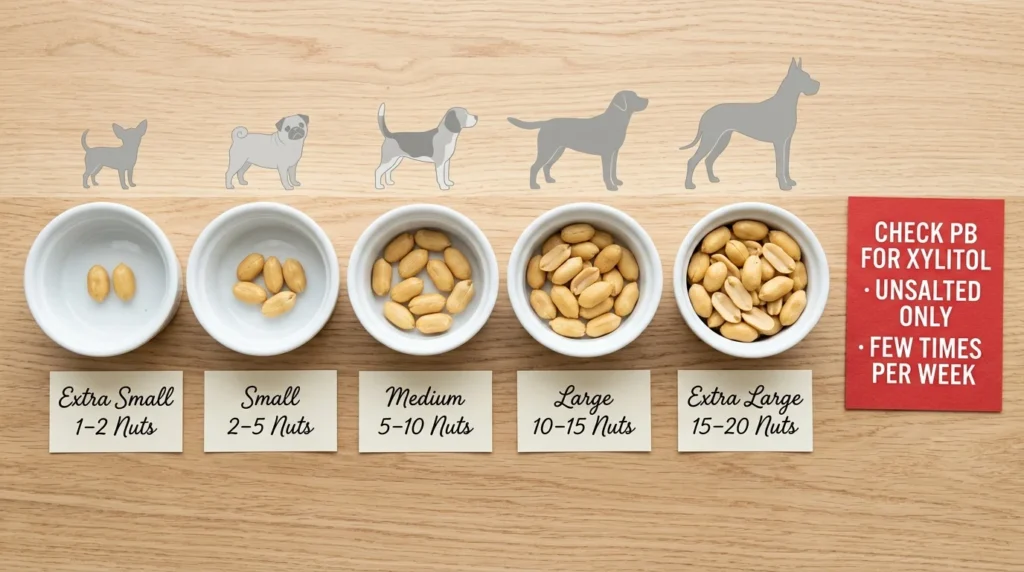
These figures are a conservative ceiling, not a vet prescribed dose for your dog. PetMD gives 1 to 2 peanuts for extra small dogs, 2 to 3 for small dogs and 5 to 6 for medium dogs, and a handful for large dogs, while the American Kennel Club simply advises a few peanuts and not every day. Rover, quoting a board certified veterinary nutritionist, puts the same idea in calories: about 10 grams of peanuts is about 57 calories, so even a small serving matters for a dog on a managed calorie allowance. If your dog is small, the difference between a few peanuts and a handful is large, so stay at the low end.
One dropped salted peanut is not the same as a bowl of salted peanuts. The American Kennel Club notes that a dog will probably be fine after one or two salted peanuts from the floor, while regular salted feeding is the problem. Watch for extra thirst, vomiting or loose stools after any accidental salty snack, and call your vet if symptoms persist or if a large amount was eaten.
Whole peanuts are not the same as peanut butter
Whole peanuts and peanut butter are not the same decision, because peanut butter is ground, easier to hide in food, and far more likely to carry added salt, sugar or sweeteners. Whole peanuts need shelling and portion counting piece by piece, while peanut butter needs a label check first, and the xylitol check matters more than any other single step.
Xylitol, also listed as birch sugar, is toxic to dogs and can cause a rapid fall in blood sugar and liver damage. PetMD and the American Kennel Club both stress checking the ingredients label every time, because recipes change. For the full label checklist, amounts and safe uses, read the peanut butter guide before spreading any jar on a lick mat or hiding a tablet in it. Peanut butter and jelly is a separate no: jelly adds sugar, and grape jelly adds a toxic ingredient, so keep sandwiches away from dogs entirely.
When to call your vet
Call your vet promptly if your dog eats a large amount of salted, flavoured or coated peanuts, shows repeated vomiting or diarrhoea, seems in pain, or stops eating and drinking. Seek urgent help at once for breathing difficulty, facial swelling, collapse, or any food that may contain xylitol, because those signs need assessment without delay.
- Choking, gagging, pawing at the mouth, or a shell stuck in the throat: seek help at once.
- Repeated vomiting, diarrhoea, hunched posture, lethargy or abdominal pain after a fatty snack: call your vet the same day.
- Itching, hives, facial swelling or sneezing after peanuts: stop peanuts and call your vet, and seek urgent care for breathing difficulty.
- Any peanut butter or snack that may contain xylitol: treat as an emergency and call your vet or poison control without waiting for symptoms.
- Shells swallowed in quantity, or no bowel movement, straining or pain after eating shells: call your vet and describe exactly what was eaten.
Peanut allergy in dogs appears uncommon. PetMD notes that a confirmed peanut reaction in dogs has rarely been reported, and Rover lists itching, hot spots and sneezing among the signs to watch for. Rarity is not a reason to skip the one peanut first test, because an individual dog can still react.
Frequently asked questions
The answers below repeat the same rule in different situations, so you can check one form at a time without rereading the whole guide. In each case, plain, shelled and unsalted is the only version to offer, portions stay small and occasional, and anything salted, sweetened, coated or served in the shell stays off the menu.
Can dogs eat peanuts in the shell?
No. Shells are a choking hazard and are hard to digest, and swallowed shell pieces can irritate the gut or contribute to a blockage. Always remove the shell completely first, even for large dogs that chew well.
Can dogs eat salted peanuts?
No, do not offer salted peanuts. One or two dropped peanuts are unlikely to cause an emergency, but salted peanuts as a treat add sodium a dog does not need. Choose unsalted every time.
Can dogs eat honey roasted peanuts?
No. Honey roasting adds sugar and salt, and flavoured coatings may contain other ingredients that are unsuitable for dogs. Plain unsalted peanuts are the only roasted version to offer.
Can dogs eat boiled peanuts?
Shop bought boiled peanuts are usually a no, because they are boiled in salty or seasoned water and often served in the shell. Home boiled peanuts are acceptable only if boiled in plain water with no salt or seasoning, cooled completely and fully shelled.
Raw or dry roasted: which is better for dogs?
Both pass if they are plain, shelled and unsalted. Dry roasted unsalted is often the simpler safe buy, because it is softer to chew and easier to find in a plain version. Raw unsalted is also fine, provided the peanuts are fresh, dry and in date.
Can dogs eat peanut skin?
Yes, the thin papery skin on the nut is generally fine and is not the same as the hard outer shell. Remove the shell, leave or remove the skin as your dog tolerates it, and stop if you notice a reaction.
Can puppies eat peanuts?
Do not assume a puppy portion from an adult guide. Puppies are small, still developing and more easily upset by fatty treats, and no firm puppy age rule was found in the vet sources opened for this guide. Ask your vet first, and if peanuts are approved, start with a single small piece and watch for a reaction.
Sources
- American Kennel Club, Can Dogs Eat Peanuts
- PetMD, Can Dogs Eat Peanuts
- Rover, Can Dogs Eat Peanuts, Safety, Benefits and Risks
- Dogsbread, Can Dogs Eat Peanuts, current live post, read to preserve existing coverage


2 Comments