

Can Dogs Eat Almonds? Complete Safety Guide for Dog Owners
Dogs should not be intentionally fed almonds. Almonds are not considered as toxic as macadamia nuts, but they are still not a safe or useful snack for dogs. Many dogs do not digest almonds well, and whole almonds can become a choking risk, especially for small dogs or dogs that swallow food quickly. Almonds are also high in fat, which may upset the stomach or increase the risk of pancreatitis in sensitive dogs.
How Many Almonds Should I Feed My Dog?
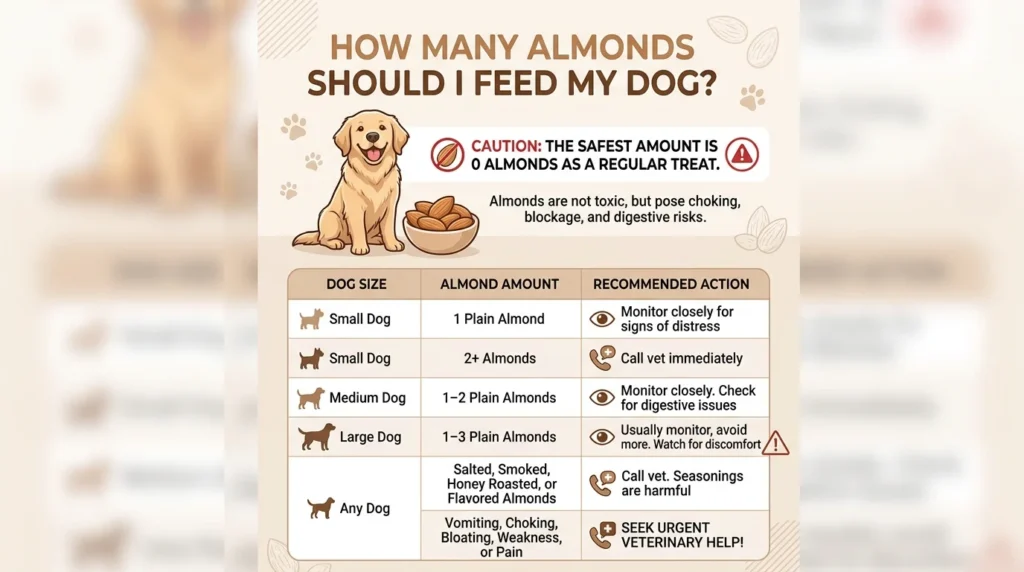
The safest answer is zero almonds as a planned treat. If your dog accidentally eats one plain almond, it may not always cause serious harm, but you should still watch closely. The risk depends on your dog’s size, health, the number of almonds eaten, and whether the almonds were salted, smoked, chocolate-covered, moldy, or mixed with raisins or xylitol.
| Dog Size / Situation | Almond Amount | What You Should Do |
|---|---|---|
| Small dog | 1 plain almond | Monitor for vomiting, diarrhea, coughing, or discomfort |
| Small dog | 2+ almonds | Call your vet for advice |
| Medium dog | 1–2 plain almonds | Monitor closely |
| Large dog | 1–3 plain almonds | Usually monitor, but avoid feeding more |
| Any dog | Salted, smoked, honey roasted, chocolate, xylitol, raisins, moldy nuts | Contact your vet or poison control |
| Any dog | Choking, repeated vomiting, bloating, weakness, pain | Seek urgent veterinary help |
Can Dogs Eat Cashews and Almonds?
Dogs can usually eat plain cashews in very small amounts, but almonds are not recommended. Cashews are not toxic to dogs like macadamia nuts, but they are still high in fat, so they should only be an occasional treat. Almonds are harder for dogs to digest and create more concern for choking or stomach upset. If choosing between the two, plain unsalted cashews are generally the safer option, but neither should become a regular part of your dog’s diet.
Can Dogs Eat Raw Almonds?
Raw almonds are still not a good choice for dogs. Even without salt, sugar, oil, or seasoning, raw almonds can be difficult for dogs to digest. They can cause stomach discomfort, gas, vomiting, or diarrhea in some dogs. Whole raw almonds may also lodge in the throat or digestive tract, especially if the dog gulps food. If your dog accidentally eats a raw almond, monitor them, but do not make raw almonds a routine treat.
Can Dogs Eat Almonds Nuts?
Dogs should generally avoid almond nuts. Almonds may look like a healthy human snack, but dogs have different digestive needs. Their bodies do not benefit from almonds the same way humans do, and the risks are not worth it. Almond nuts are high in fat and can be hard, dry, and awkward for dogs to chew. For safer rewards, choose dog-safe treats, small carrot pieces, plain cooked chicken, or vet-approved snacks instead.
Also Read: Can Dogs Eat Blackberries? Top Antioxidant Berry — Full Guide 2026
Can Dogs Eat Walnuts and Almonds?
Dogs should avoid both walnuts and almonds. Almonds are not recommended because of choking, digestion, and fat-related risks. Walnuts can be even more concerning because they may become moldy, and moldy nuts can cause serious illness in dogs. Black walnuts and spoiled walnuts are especially risky. Even store-bought walnuts are high in fat and may cause digestive upset. It is safer to keep mixed nuts away from dogs completely.
Can Dogs Eat Cashews or Almonds?
If you are comparing cashews or almonds, cashews are usually the better option, but only when plain, unsalted, and given in tiny amounts. Almonds should not be fed on purpose because they are harder to digest and can create choking or blockage risks. Never give your dog nuts from a mixed nut bowl because it may include macadamia nuts, walnuts, seasonings, salt, or other unsafe ingredients. When in doubt, skip the nuts.
Can Dogs Eat Roasted Almonds?
Roasted almonds are not recommended for dogs. Plain roasted almonds still carry the same basic almond risks: high fat, difficult digestion, and possible choking. Many roasted almonds also contain added oil, salt, garlic, onion powder, smoke flavor, or other seasonings that are not good for dogs. If your dog eats one plain roasted almond, monitor them. If they eat a handful, flavored almonds, or show symptoms, contact your veterinarian.
Can Dogs Eat Almonds Butter?
Dogs should only have almond butter if it is plain, unsalted, xylitol-free, and given in a very tiny amount, but it is still not the best treat. Almond butter removes the choking risk of whole almonds, but it remains high in fat and calories. Some nut butters contain xylitol, also called birch sugar, which is extremely toxic to dogs and can cause severe low blood sugar, seizures, liver failure, or death.
Can Dogs Eat Almonds Safely?
Dogs cannot eat almonds safely as a regular snack. A single plain almond may not poison most dogs, but “not toxic” does not mean “safe.” The main concerns are choking, intestinal blockage, stomach upset, high fat content, salt, flavorings, and dangerous ingredients in almond products. Puppies, small breeds, senior dogs, overweight dogs, and dogs with pancreatitis history should be kept away from almonds completely. Safer treats are easier on the stomach.
Can Dogs Eat Honey Roasted Almonds?
Dogs should not eat honey roasted almonds. These almonds are usually coated with sugar, honey, salt, oil, and sometimes extra flavorings. That combination can upset your dog’s stomach and adds unnecessary calories. Sweetened nuts are also more likely to encourage begging and overeating. If your dog eats one honey roasted almond, monitor them. If they eat several or the product contains chocolate, raisins, xylitol, garlic, or onion, call your vet.
Also Read: Can Dogs Eat Peanuts and Peanut Butter? Full Safety Guide 2026
Can Dogs Eat Granola With Almonds?
Dogs should avoid granola with almonds. Granola often contains several risky ingredients for dogs, including raisins, chocolate, high sugar, artificial sweeteners, oils, and large amounts of fat. Even if the granola looks healthy for humans, it may not be safe for dogs. Raisins are especially dangerous, and xylitol is highly toxic. If your dog eats granola, check the ingredient list quickly and contact your vet if it contains any unsafe ingredient.
Can Dogs Eat Salted Almonds?
Salted almonds are not safe for dogs. Dogs do not need salty snacks, and too much sodium can create health problems, especially for dogs with heart, kidney, or blood pressure issues. Salted almonds also make dogs thirsty and may lead to stomach upset. The almond itself is already not recommended, and the added salt makes it worse. Keep salted nuts on high shelves or in sealed containers away from curious dogs.
Can Dogs Eat Marcona Almonds?
Dogs should not eat Marcona almonds. Marcona almonds are still almonds, even though they are softer, sweeter, and often used in premium snacks. Many Marcona almonds are fried or roasted in oil and seasoned with salt, herbs, or spices. That makes them a poor choice for dogs. If your dog eats a plain small piece, monitor them. If the almonds are salted, oily, seasoned, or eaten in quantity, call your vet.
Can Dogs Eat Unsalted Almonds?
Unsalted almonds are safer than salted almonds, but they are still not recommended for dogs. Removing salt does not remove the main almond risks. Unsalted almonds can still be hard to digest, high in fat, and a choking concern. If your dog accidentally eats one unsalted almond, they may be fine, but you should watch for vomiting, diarrhea, loss of appetite, coughing, or abdominal discomfort. Do not use them as training treats.
Can Dogs Eat Almonds Milk?
Dogs can sometimes tolerate a small amount of plain, unsweetened almond milk, but it is not necessary for their diet. Many almond milks contain sugar, flavoring, chocolate, vanilla additives, or artificial sweeteners. Always check the label for xylitol or “birch sugar,” which is dangerous for dogs. Almond milk also offers little nutritional value compared with clean water and balanced dog food. Do not give almond milk to dogs with sensitive stomachs.
Can Dogs Eat Almonds Sliced?
Sliced almonds may reduce the choking risk compared with whole almonds, but they are still not a recommended food for dogs. They remain high in fat and can still cause stomach upset, especially if eaten in larger amounts. Sliced almonds are also commonly used in desserts, cereal, granola, cakes, and salads that may contain other unsafe ingredients. If a few plain slices fall on the floor, monitor your dog, but avoid feeding them.
Can Dogs Eat Almonds Seeds?
Almonds are technically seeds, but for dog safety, the answer is the same: dogs should not be intentionally fed almonds. Whether you call them almonds, almond nuts, or almond seeds, they can be difficult for dogs to digest and may cause choking or digestive problems. Dogs do not need almond seeds for nutrition. A complete dog food already provides the nutrients they need in safer, balanced amounts.
Can Dogs Eat Almonds Slivers?
Almond slivers are not the best choice for dogs. They are smaller than whole almonds, so choking may be less likely, but they can still irritate the stomach and add unnecessary fat. Almond slivers are also often added to baked goods, cereal, trail mix, or desserts, which may include sugar, chocolate, raisins, or xylitol. If your dog eats a few plain slivers by accident, monitor them. Avoid giving slivers as treats.
Can Dogs Eat Soaked Almonds?
Soaked almonds are still almonds, so dogs should not eat them as a planned snack. Soaking may make almonds softer for humans, but it does not remove the fat content or guarantee easy digestion for dogs. A soaked almond can still upset the stomach or create problems if your dog eats too many. If your dog has already eaten soaked almonds, count how many, check for symptoms, and contact your vet if concerned.
Can Dogs Eat Smoked Almonds?
Dogs should not eat smoked almonds. Smoked almonds usually contain salt, oil, smoke flavoring, and seasonings. Some may include onion powder, garlic powder, or spicy flavor blends, which are not suitable for dogs. These almonds can trigger thirst, vomiting, diarrhea, or abdominal discomfort. Because smoked almonds are highly flavored, dogs may also try to eat many at once. Keep them away from pets and offer a safer dog treat instead.
Also Read: Can Dogs Eat Raspberries? Antioxidants, Portions & Safety Tips 2026
Frequently Asked Questions
Are Almonds Bad for Dogs?
Yes, almonds are generally bad for dogs as a treat. They are not considered one of the most toxic nuts, but they are still risky. Almonds can be difficult to digest, high in fat, and dangerous if swallowed whole. ASPCA also warns that nuts, including almonds and walnuts, contain high oils and fats that can cause vomiting, diarrhea, and possibly pancreatitis in some pets.
What To Do if Your Dog Eats Almonds
First, stay calm and check what kind of almonds your dog ate. Plain almonds are less concerning than salted, smoked, chocolate-covered, moldy, or xylitol-containing products. Count the amount eaten and watch for vomiting, diarrhea, choking, coughing, bloating, weakness, or pain. Do not induce vomiting unless a vet tells you to. If your dog ate many almonds or unsafe ingredients, contact your veterinarian or pet poison control immediately.
Can Dogs Eat Chestnuts?
Dogs can eat small amounts of plain cooked chestnuts more safely than almonds, but they should still be given carefully. Chestnuts should be roasted or boiled, unsalted, unseasoned, and cut into small pieces. Avoid horse chestnuts, candied chestnuts, seasoned chestnuts, or chestnut desserts. Like other rich foods, too many chestnuts can upset your dog’s stomach. They should be occasional treats only, not a regular part of your dog’s meals.
Can Dogs Eat Macadamia Nuts?
No, dogs must not eat macadamia nuts. Macadamia nuts are toxic to dogs and can cause vomiting, weakness, tremors, fever, depression, and trouble walking. Signs often appear within 12 hours after eating them. Even a small number can make a dog sick, so treat macadamia exposure seriously. If your dog eats macadamia nuts, call your veterinarian or poison control right away.
Can Dogs Eat Almond Flour?
Dogs may tolerate a tiny amount of plain almond flour in a baked item, but almond flour is not something dogs need. It is still made from almonds, so it can be high in fat and may upset sensitive stomachs. The bigger concern is what the almond flour is mixed with. Avoid baked goods containing chocolate, raisins, xylitol, excess sugar, or spices. Plain dog-safe recipes are better.
Are Almonds Toxic to Dogs?
Almonds are not usually classified as toxic to dogs in the same way macadamia nuts are, but they are still not safe to feed regularly. The danger comes from digestion problems, choking, intestinal blockage, fat content, salt, flavoring, and harmful ingredients added to almond products. So the better answer is: almonds are not highly poisonous, but they are unsafe and not recommended for dogs.
Can Dogs Eat Cashews?
Yes, dogs can eat plain cashews in small amounts, but only occasionally. Cashews should be unsalted, unseasoned, and not mixed with other nuts. They are high in fat and calories, so too many can cause weight gain or stomach upset. Never feed cashews from a mixed nut bag because it may contain macadamia nuts or other unsafe ingredients. Start with a very small amount and monitor your dog.
Tips for Safely Feeding Your Dog Nuts
The safest rule is to avoid most nuts and only offer dog-safe options in tiny amounts. Choose plain, unsalted, unseasoned nuts only, and never feed macadamia nuts, moldy nuts, chocolate-covered nuts, or trail mix. Cut larger pieces small to reduce choking risk. Always check labels for xylitol, garlic, onion, raisins, and high salt. Treats should stay limited, and dogs with pancreatitis, obesity, or sensitive stomachs should avoid nuts.
Conclusion
So, can dogs eat almonds? The safest answer is no. Almonds are not the most toxic nut, but they are still not a smart treat for dogs. They can cause choking, digestive upset, and fat-related problems, especially when salted, smoked, sweetened, or mixed into granola and desserts.


