

Can Dogs Eat Nuts? Safe Nuts, Toxic Nuts & Risks
Last updated: 15 October 2026
Can dogs eat nuts? Most dogs can have a tiny amount of a few safe ones, but nuts are a poor treat choice overall. Macadamia nuts and black walnuts are toxic to dogs, most other nuts are too fatty or risky to feed on purpose, and any nut butter sweetened with xylitol is dangerous. If your dog just ate a toxic nut, skip to the emergency section below.
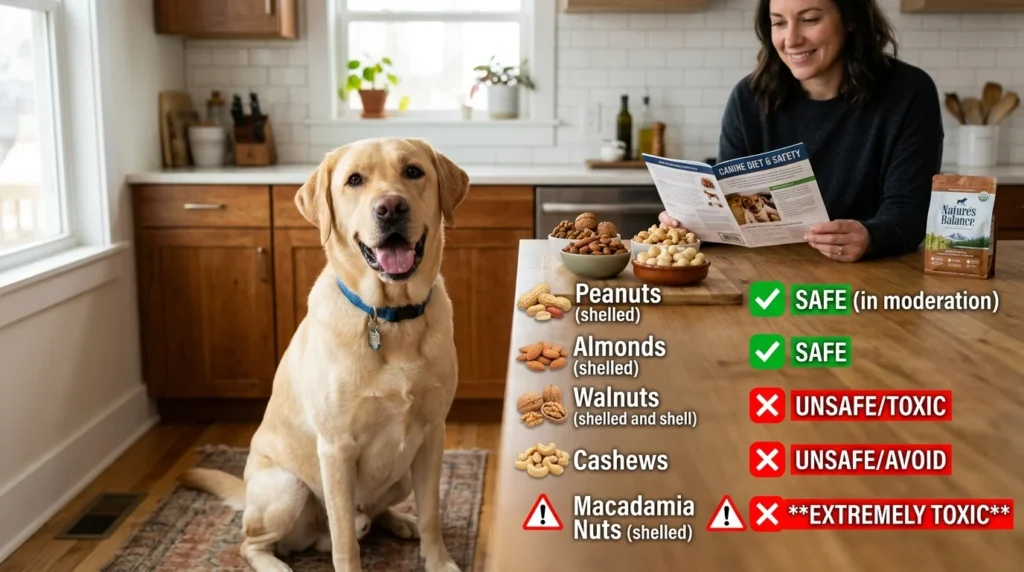 A dog sitting beside a table set with bowls of nuts while an owner reads a canine diet guide, with on-image labels sorting the nuts into safe, unsafe, and extremely toxic.
Nut-by-Nut Status Chart
Start here. One line per nut, and every nut on this page gets more detail below.
| Nut | Status | Why |
|---|---|---|
| Peanuts (plain, unsalted) | Safe in small amounts | Not toxic; high in fat, so keep portions tiny |
| Cashews (plain, unsalted) | Safe in small amounts | Not toxic per PetMD; high in fat |
| Cooked sweet chestnuts (plain, peeled) | Safe in small amounts | Fine cooked and plain; raw or seasoned ones are not |
| Sesame seeds (a sprinkle) | Safe in small amounts | Plain kernels only, in tiny amounts |
| Pine nuts | Safe in small amounts | High in fat; a few at most |
| Hazelnuts | Not recommended | Not toxic, but hard shells choke and block |
| Almonds | Not recommended | Not toxic, but hard to digest and a choking risk |
| Brazil nuts | Not recommended | Not toxic, but extremely high in fat and calories |
| Walnuts (English) | Not recommended | Fatty, choking risk, and they grow mold fast |
| Pecans | Not recommended | High fat; mold on pecans makes dangerous toxins |
| Pistachios | Not recommended | Choking hazard, high fat, prone to mold |
| Macadamia nuts | Toxic, never | Poisonous: weakness, tremors, vomiting, fever |
| Black walnuts | Toxic, never | Contain toxic compounds; mold on hulls adds tremors and seizures |
| Acorns and horse chestnuts | Toxic, avoid | Tree nuts dogs find under trees in autumn; both can poison dogs |
| Any moldy nut | Toxic, emergency | Mold toxins can cause tremors and seizures within hours |
Toxic Nuts: What to Do Right Now
If your dog just ate macadamia nuts, black walnuts, or any moldy nuts, do this now: 1. Take the nuts away. Check your dog’s mouth and remove what you can. 2. Call your vet or the Pet Poison Helpline at (855) 764-7661. The ASPCA Animal Poison Control Center at (888) 426-4435 is another option. 3. Tell them four facts: what your dog ate, how much, when it happened, and your dog’s weight. 4. Do not make your dog vomit unless a vet tells you to.
Macadamia nuts are the one nut vets warn about most. The AKC lists them among the most poisonous human foods for dogs: even a small amount can bring on vomiting, weakness, a wobbly walk, tremors, fever, and lethargy, usually within a few hours. VCA Animal Hospitals notes that early signs are vomiting, fever, and lethargy, and that the high fat content can also trigger pancreatitis. Nobody has identified the exact toxic compound, but the effect is real and dogs can be hit by just a few nuts, so keep macadamias, macadamia cookies, and chocolate-covered macadamias out of reach.
Black walnuts are the other named toxin. PetMD says they should never be fed to dogs, and moldy walnut hulls are an extra danger: the ASPCA warns that moldy nuts and hulls can cause tremors and seizures. English walnuts are not toxic when fresh, but they go moldy fast, so a moldy walnut is an emergency, not a snack. If your dog eats nuts lying under a walnut tree, call your vet.
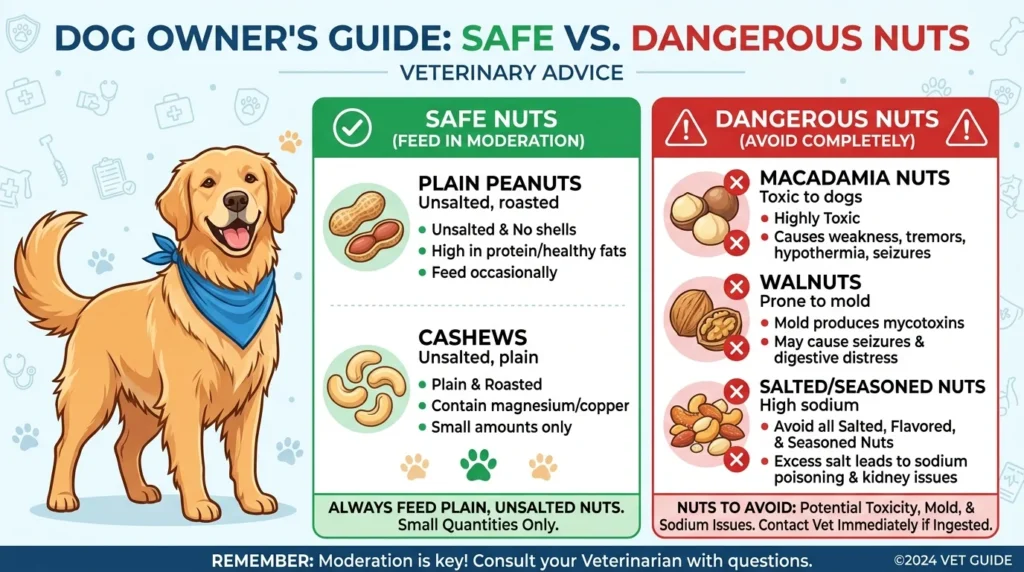 An infographic sorting nuts for dogs: plain peanuts and cashews are shown as the safer nuts, while macadamia nuts, walnuts, and salted or seasoned nuts are shown as dangerous.
Moldy Nuts: The Hidden Emergency
Mold is what turns a questionable nut into a dangerous one. The Merck Veterinary Manual names moldy walnuts and peanuts among the sources of toxins that can bring on vomiting, tremors, and seizures within one to two hours. Other molds produce aflatoxin, which damages the liver. If a nut smells musty, looks fuzzy, or is past its prime, it goes in the bin, not the bowl. This is also why trail mix and open snack bowls left out during autumn are a real risk for foraging dogs.
Why Even Safe Nuts Are Limited
The AKC puts it plainly: not all nuts are toxic, but almost all are high in fat, and that makes them an unhealthy choice for most dogs. Four problems come up again and again.
- Fat and pancreatitis. PetMD warns that the high fat in nuts can trigger vomiting, diarrhea, and life-threatening pancreatitis. Dogs with a history of pancreatitis, obese dogs, and some breeds should get no nuts at all.
- Choking and blockages. Almonds, hazelnuts, and whole pecans are the wrong size and shape for a dog’s throat. Small dogs are at the greatest risk, and shells make every nut worse.
- Salt and seasonings. Salted nuts bring excess sodium, and flavored nuts often hide garlic, onion powder, or spices that are toxic to dogs on their own.
- Xylitol in nut butters. Check the label on any peanut or almond butter before you share it. Xylitol is extremely toxic to dogs even in tiny amounts. If the jar lists xylitol, birch sugar, or wood sugar, it is not dog-safe.
For more on sugar-free sweeteners, see our guide on can dogs eat xylitol.
The Two Safe-ish Nuts: Peanuts and Cashews
Peanuts are technically legumes, not nuts, and plain unsalted peanuts are the most dog-friendly option on this page. The AKC allows small quantities of plain peanuts and plain cashews, and PetMD’s cashew guide lays out portion thinking clearly: one or two cashews for extra-small dogs (2-20 lb), a few more as size increases, and treats of any kind making up no more than 10 percent of the daily diet. Apply that same restraint to peanuts. Skip roasted-in-shell peanuts for small dogs, since the shells are a choking hazard, and skip honey-roasted or dry-seasoned peanuts entirely.
Cooked sweet chestnuts deserve a mention because they confuse people. Plain, peeled, fully cooked chestnuts are the one tree nut that is genuinely fine in small amounts. Horse chestnuts and raw chestnuts are not the same thing and are not safe, so know which one you have before you share.
Portion Thinking by Dog Size
There is no universal ‘nuts per day’ number, because even safe nuts should be rare treats, not daily food. Use PetMD’s cashew portions as the practical ceiling for any safe nut, and treat all snacks, nuts included, as no more than 10 percent of your dog’s daily food.
| Dog size | Ceiling for safe nuts | How often |
|---|---|---|
| Extra-small (2-20 lb) | One or two cashews or peanuts | Occasionally, not daily |
| Small (21-30 lb) | Two or three | Occasionally |
| Medium (31-50 lb) | A small handful at most | Occasionally |
| Large (51-90 lb) | A small handful | Occasionally |
| Puppies, seniors, or dogs with health issues | Skip nuts | Ask your vet first |
Safe Serving Checklist
If you decide to share a safe nut, run through this checklist first.
- Plain only. Unsalted, unseasoned, no chocolate, no sugar, no coatings, no xylitol.
- Out of the shell. Shells choke and can splinter.
- Cut or crush large nuts for small dogs.
- Skip mixed nuts entirely. One stray macadamia in the bowl turns a treat into a vet visit.
- Tiny amount, rare occasions. Nuts are not a training treat and not a daily habit.
- Watch your dog afterward. Vomiting, diarrhea, or lethargy means a vet call.
Nut Products That Trip Owners Up
The nut itself is only half the story. Trail mix often contains raisins and chocolate alongside macadamias, which stacks three emergencies in one bag. Chocolate-covered nuts double the danger, since chocolate is toxic to dogs on its own. Nutella and similar chocolate-hazelnut spreads combine chocolate, sugar, and hazelnuts, so they are firmly off limits. And any nut butter, however premium the label looks, must be checked for xylitol before it goes near a dog. See our chocolate guide if your dog got into chocolate-covered nuts.
What to Tell Your Vet
Speed matters with toxic nuts, because vets can only help if they know what they are dealing with. Before you call, gather these details: which nut (macadamia, black walnut, moldy, or unknown), roughly how many, when it happened, your dog’s weight, and any symptoms so far. VCA notes that macadamia signs can appear within a few hours and progress from vomiting and fever to tremors and trouble standing, so do not wait to see if your dog ‘sleeps it off.’
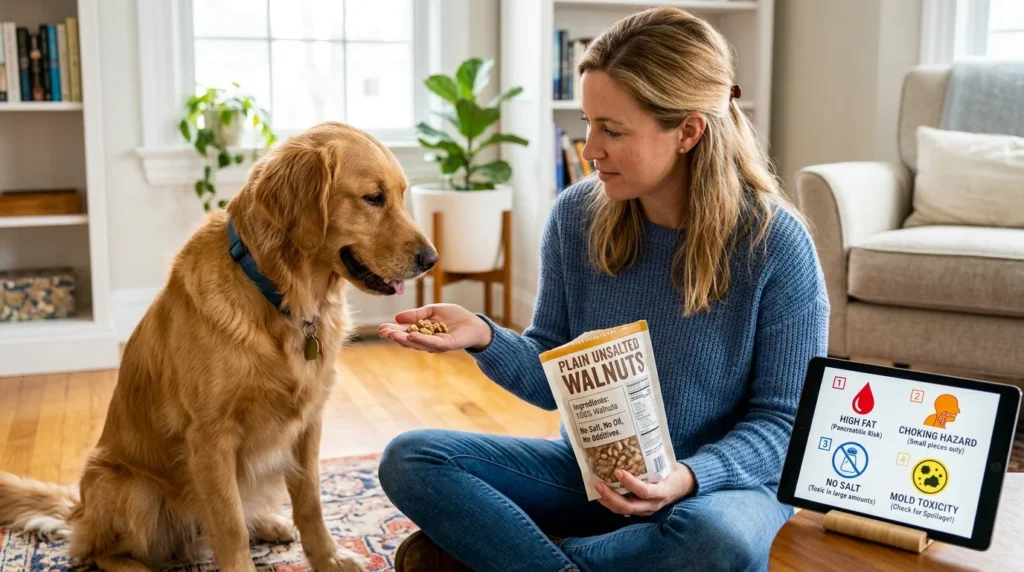 A golden retriever being offered walnuts from a plain unsalted bag, while a tablet lists the main nut risks for dogs: high fat, choking hazard, salt, and mold toxicity.
Frequently Asked Questions
Can dogs eat any nuts safely?
Yes, a few. Plain unsalted peanuts and cashews are safe in tiny amounts, and plain cooked sweet chestnuts are fine too. But ‘safe’ does not mean healthy: the fat and calories make nuts a poor everyday treat, so keep them rare and small.
What happens if my dog eats macadamia nuts?
Expect vomiting, weakness, tremors, and fever within a few hours, sometimes with an unsteady walk or an inability to stand. Call your vet or the Pet Poison Helpline at (855) 764-7661 right away. Do not induce vomiting unless a vet tells you to.
Can dogs eat peanut butter?
Yes, as long as it is plain and xylitol-free. Check the ingredient list on every jar, because xylitol sometimes appears as birch sugar or wood sugar. A spoonful is a treat, not a meal.
Can dogs eat trail mix?
No. Trail mix is one of the riskiest snack bowls for dogs because it often combines macadamias, raisins, and chocolate, each of which is dangerous on its own. Keep it away from dogs completely.
Are pistachio shells dangerous for dogs?
Yes. The shells are a choking hazard and can cause intestinal blockages, and salted pistachios add sodium on top of the fat. Pistachios offer dogs little benefit, so skipping them is the better choice.
Can dogs eat almond butter or cashew butter?
Almond and cashew butters follow the same rules as peanut butter: plain, unsalted, no xylitol, no added sugar, and only in small amounts. Whole almonds and large amounts of cashews are still best avoided.
Sources
Sources actually opened for this article:
- AKC: Can Dogs Eat Acorns and Other Tree Nuts?
- AKC: Can Dogs Eat Macadamia Nuts?
- PetMD: Can Dogs Eat Nuts?
- PetMD: Can Dogs Eat Cashews?
- VCA Animal Hospitals: Macadamia Nut Poisoning
Nuts were never meant to be a dog’s daily snack. For a full map of what belongs in the bowl, start at our what dogs can eat guide.
This article is for information only and is not a substitute for veterinary advice. If your dog has eaten a toxic nut, call your veterinarian or the Pet Poison Helpline at (855) 764-7661.


6 Comments