

Can Dogs Eat Walnuts? Risks, Symptoms & Safety Guide
Walnuts are a nutritious snack for humans because they contain healthy fats, protein, vitamins, minerals, and antioxidants. However, when it comes to dogs, walnuts are not considered a safe treat. Although plain English walnuts are not highly toxic, they can still create several health risks, including digestive upset, choking hazards, and dangerous mold poisoning.
Many dog owners wonder whether sharing a small piece of walnut is harmless. While a tiny amount of fresh walnut may not seriously harm a healthy dog, veterinarians generally recommend avoiding walnuts altogether. Understanding the risks, symptoms, and safer alternatives can help protect your dog’s health.
Can Dogs Eat Walnuts?
No, dogs should not eat walnuts. While plain English walnuts are not as toxic as some other nuts, they are high in fat and difficult for many dogs to digest. Eating walnuts may lead to stomach upset, vomiting, diarrhea, or even pancreatitis in sensitive dogs.
Another major concern is mold. Walnuts that have been stored improperly may develop mold containing tremorgenic mycotoxins, which can cause tremors, seizures, and serious neurological problems in dogs. Because of these risks, it is safest to keep walnuts away from your pet.
How Many Walnuts Can Dogs Eat? Can Your Dog Eat?
The safest amount of walnuts for dogs is none. Unlike some fruits and vegetables that can be enjoyed in moderation, walnuts provide very little benefit while carrying several potential health risks. Even a small number of walnuts may cause digestive problems in some dogs.
If your dog accidentally eats one fresh English walnut, they may be fine, but they should be monitored closely for any unusual symptoms. Larger amounts or moldy walnuts require immediate veterinary attention.
| Dog Size | Recommended Amount | Recommendation |
|---|---|---|
| Small Dogs | 0 walnuts | Do not feed |
| Medium Dogs | 0 walnuts | Do not feed |
| Large Dogs | 0 walnuts | Do not feed |
| Puppies | 0 walnuts | Never feed |
Can Dogs Eat English Walnuts?
English walnuts are the most common walnuts sold in grocery stores. Although they are less toxic than black walnuts, they are still not recommended for dogs. Their high fat content may upset your dog’s stomach and increase the risk of pancreatitis, particularly in dogs that are prone to digestive problems.
Fresh English walnuts may not cause severe poisoning in every dog, but they offer little nutritional value that cannot be obtained from safer foods. For this reason, most veterinarians advise avoiding them completely.
Can Dogs Eat Black Walnuts?
No, dogs should never eat black walnuts. Black walnuts are much more dangerous than English walnuts because they are more likely to become contaminated with toxic mold. Moldy black walnuts can contain tremorgenic mycotoxins that affect the nervous system.
Dogs that eat black walnuts may develop vomiting, tremors, seizures, fever, weakness, or difficulty walking. Black walnuts should always be treated as an emergency if consumed, and veterinary care should be sought immediately.
Can Dogs Eat Walnut Shells?
No, walnut shells are not safe for dogs. They are hard, sharp, and difficult to digest. Swallowing walnut shells may damage the mouth, throat, stomach, or intestines, and they can also create dangerous intestinal blockages.
Small dogs are especially at risk because walnut shell fragments can easily become lodged in their digestive tract. If your dog swallows walnut shells, contact your veterinarian for advice, especially if they begin vomiting or show signs of abdominal pain.
Can Dogs Eat Raw Walnuts?
Raw walnuts are not recommended for dogs. Although they may appear natural and healthy, raw walnuts still contain high levels of fat that may lead to digestive upset. They also carry a greater risk of mold contamination if they have not been stored correctly.
If mold is present, even a small amount can become dangerous. Since there are many safer treats available, raw walnuts should not be included in your dog’s diet.
Can Dogs Eat Roasted Walnuts?
Roasted walnuts are also unsuitable for dogs. Roasting does not remove the high fat content, and many roasted walnuts are seasoned with salt, spices, garlic, onion powder, or other ingredients that may be harmful to pets.
Even plain roasted walnuts can contribute to stomach upset or pancreatitis when eaten in large amounts. Choosing healthier dog-safe treats is always the better option.
Can Dogs Eat Walnuts Every Day?
No, dogs should never eat walnuts every day. Walnuts are high in fat and calories, making them unsuitable as a regular snack. Frequent consumption can increase the risk of obesity, digestive problems, and pancreatitis, which is a painful inflammation of the pancreas that may require emergency veterinary treatment.
Dogs receive all the nutrients they need from a complete and balanced diet. Instead of walnuts, choose healthier dog-safe treats such as carrots, blueberries, apples without seeds, or plain cooked pumpkin that provide nutrition with fewer health risks.
Can Puppies Eat Walnuts?
No, puppies should not eat walnuts. Their digestive systems are still developing, making them more sensitive to fatty foods and potential toxins. Even a small walnut may cause vomiting, diarrhea, or stomach discomfort in young dogs.
Puppies are also at greater risk of choking because walnuts are relatively large and hard. If your puppy accidentally eats a walnut, monitor them closely and contact your veterinarian if you notice any unusual symptoms.
What Happens If a Dog Eats Walnuts?
If a dog eats one fresh English walnut, they may only experience mild digestive upset or no symptoms at all. However, eating several walnuts, moldy walnuts, or black walnuts can lead to more serious health problems, including vomiting, diarrhea, weakness, tremors, seizures, and pancreatitis.
If your dog has eaten moldy walnuts or begins showing neurological symptoms such as shaking, difficulty walking, or seizures, seek emergency veterinary care immediately. Quick treatment can significantly improve the outcome.
Can Dogs Eat Walnut Butter?
Walnut butter is not recommended for dogs. Like whole walnuts, walnut butter is high in fat and calories. Some commercial walnut butters may also contain added sugar, salt, chocolate, or the artificial sweetener xylitol, which is extremely toxic to dogs.
If you want to give your dog a nut butter, plain xylitol-free peanut butter in moderation is generally a much safer choice than walnut butter. Always read the ingredient label before offering any nut butter to your pet.
Is Walnut Good for Dogs to Eat?
No, walnuts are not considered a good food for dogs. While walnuts contain healthy fats, protein, vitamin E, magnesium, and antioxidants for humans, dogs do not need walnuts to meet their nutritional requirements. The potential health risks outweigh any possible benefits.
There are many safer foods that provide similar nutrients without exposing dogs to excessive fat or mold-related toxins. Fresh vegetables and dog-safe fruits are much better choices for healthy treats.
How to Safely Handle Walnuts Around Your Dog
Store walnuts in sealed containers where your dog cannot reach them. Mold can develop on walnuts that are stored in warm or damp conditions, increasing the risk of toxic exposure. Cleaning up dropped walnuts quickly helps prevent accidental ingestion.
If your dog accidentally eats walnuts, note how many were eaten and whether they were fresh, roasted, black walnuts, or moldy. Contact your veterinarian immediately if you are unsure about the type or if your dog develops any unusual symptoms.
Does Walnuts Have Benefits For Dogs?

Walnuts contain healthy fats, protein, omega fatty acids, antioxidants, vitamin E, copper, and magnesium. While these nutrients are beneficial for humans, dogs can easily obtain them from balanced commercial dog food and safer dog-friendly treats.
See Also: Can Dogs Eat Ham? Benefits, Risks & Safe Feeding Guide
Because walnuts are high in fat and carry the risk of mold toxicity, veterinarians do not recommend feeding them for nutritional purposes. Safer alternatives provide similar nutrients without the associated dangers.
Does Walnuts Have Any Risks For Dogs?
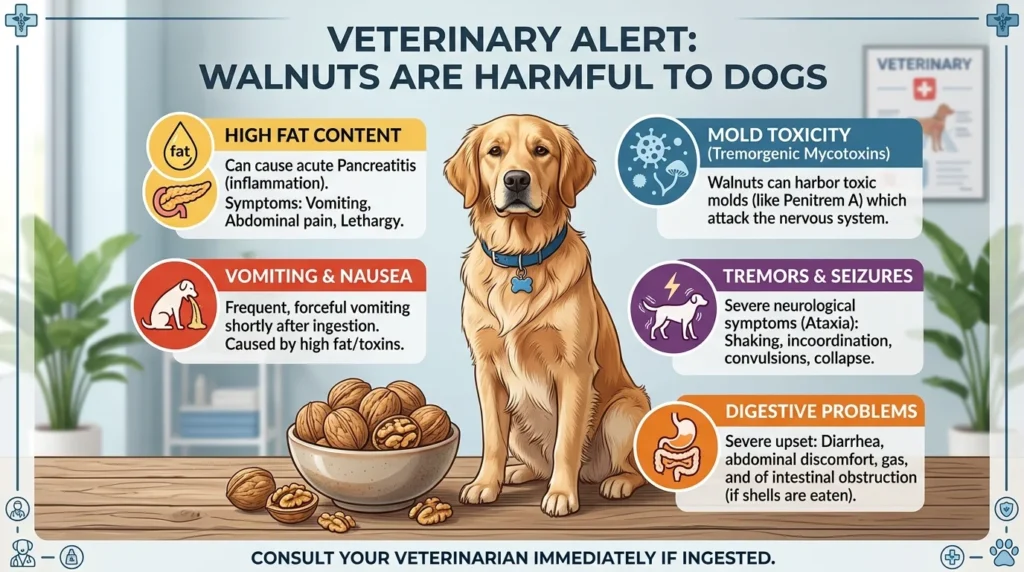
Yes, walnuts present several important health risks for dogs. They are high in fat, which may contribute to digestive upset, obesity, and pancreatitis. Walnut shells may also cause choking or intestinal blockages if swallowed.
See Also: Can Dogs Eat Pecans? Risks, Symptoms & Safety Guide
The greatest danger comes from moldy walnuts, especially black walnuts, which may contain tremorgenic mycotoxins. These toxins can cause vomiting, tremors, seizures, fever, weakness, and potentially life-threatening neurological problems that require immediate veterinary treatment.
Frequently Asked Questions
Can dogs safely eat walnuts?
No. Veterinarians generally recommend avoiding walnuts because they are high in fat and may become contaminated with dangerous mold.
Are English walnuts toxic to dogs?
English walnuts are not highly toxic like black walnuts, but they can still cause digestive upset and pancreatitis, so they should not be fed.
Why are black walnuts dangerous for dogs?
Black walnuts are more likely to contain toxic mold that produces tremorgenic mycotoxins, which can lead to tremors, seizures, and neurological illness.
What should I do if my dog eats walnuts?
Monitor your dog closely for vomiting, diarrhea, weakness, tremors, or seizures. Contact your veterinarian immediately if multiple walnuts, black walnuts, or moldy walnuts were eaten.
What nuts are safer for dogs?
Most nuts should be limited or avoided. If you want to offer a nut-based treat, plain xylitol-free peanut butter in moderation is generally a safer option than walnuts.
Conclusion
Walnuts are not a recommended food for dogs because their high fat content, choking hazards, and risk of toxic mold outweigh any potential nutritional benefits. While a single fresh English walnut may not always cause serious harm, black walnuts and moldy walnuts can be extremely dangerous and require immediate veterinary attention.
To keep your dog healthy, avoid feeding walnuts altogether and choose safer treats such as apples without seeds, blueberries, carrots, or plain cooked pumpkin. If your dog accidentally eats walnuts and develops unusual symptoms, contact your veterinarian without delay.
See Also: What Fruits Can Dogs Eat? Safe Fruits, Benefits & Risks


