

What Fruits Can Dogs Eat? Safe Fruits, Benefits & Risks
Many fruits are safe and healthy for dogs when served in moderation. Fruits contain natural vitamins, minerals, antioxidants, and fiber that may support your dog’s overall health. They can be an excellent alternative to processed treats, especially for dogs that enjoy sweet flavors. However, not every fruit is safe, and some fruits contain pits, seeds, or natural compounds that may be harmful to dogs.
Knowing which fruits are safe and how to prepare them correctly is important before sharing them with your pet. Washing fruits thoroughly, removing seeds or pits, and serving small portions can help your dog enjoy fruit safely while reducing the risk of digestive problems.
What Fruits Can Dogs Eat?
Dogs can safely eat many fruits, including apples, bananas, blueberries, strawberries, watermelon, mangoes, pears, pineapples, peaches, raspberries, cranberries, cantaloupe, and oranges. These fruits provide valuable nutrients and can be healthy treats when served properly.
Although these fruits are generally safe, they should only be offered in moderation because they contain natural sugars. Always remove pits, seeds, stems, and tough peels whenever necessary. Fresh fruit should complement your dog’s balanced diet rather than replace regular dog food.
How Much Fruit Can Dogs Eat? Can Your Dog Eat?
The amount of fruit your dog can safely eat depends on their size, age, activity level, and overall health. Fruits should only be used as occasional treats and should make up no more than 10% of your dog’s daily calorie intake. Feeding excessive amounts of fruit may cause stomach upset or unnecessary sugar intake.
Introduce one fruit at a time so you can monitor your dog’s reaction. If digestive issues occur, stop feeding that fruit and consult your veterinarian if symptoms continue.
| Dog Size | Recommended Fruit Amount | Frequency |
|---|---|---|
| Small Dogs | 1–2 small pieces | Occasionally |
| Medium Dogs | 3–5 small pieces | Occasionally |
| Large Dogs | A small handful | Occasionally |
| Puppies | Very small amount | Introduce gradually |
Can Dogs Eat Apples?
Yes, dogs can eat apples as long as the seeds and core are removed. Apples provide vitamin C, vitamin A, fiber, and antioxidants that may support immune function and digestion. Their crunchy texture can also help freshen your dog’s breath.
Always slice apples into bite-sized pieces before serving. Apple seeds contain small amounts of cyanide, making it important to remove them completely. Plain fresh apples without added sugar or caramel are the safest option.
Can Dogs Eat Bananas?
Yes, bananas are safe for dogs in moderation. They are rich in potassium, vitamin B6, vitamin C, and dietary fiber. Many dogs enjoy bananas because of their naturally sweet taste and soft texture.
Because bananas contain natural sugar, they should only be offered occasionally. Peel the banana before serving and cut it into small pieces to make it easier for your dog to eat.
Can Dogs Eat Blueberries?
Yes, blueberries are one of the healthiest fruits for dogs. They contain antioxidants, vitamin C, vitamin K, and fiber that may support immune health and help protect body cells from damage.
Blueberries are naturally small, making them convenient training treats for many dogs. Serve them fresh or frozen without added sugar or syrup. Like all treats, they should only be offered in moderation.
Can Dogs Eat Strawberries?
Yes, dogs can safely eat strawberries. They contain vitamin C, fiber, antioxidants, and natural compounds that support overall health. Their sweet flavor makes them a popular fruit treat for many dogs.
Wash strawberries thoroughly before serving and remove the leafy tops. Fresh strawberries are healthier than canned or sweetened strawberries because processed versions often contain added sugar.
Can Dogs Eat Watermelon?
Yes, dogs can eat watermelon as long as the seeds and rind are removed. Watermelon contains plenty of water, making it a refreshing snack during warm weather. It also provides vitamins A, B6, and C.
Always remove the seeds and thick rind because they may create choking hazards or digestive problems. Serve plain seedless watermelon in small bite-sized cubes for the safest experience.
Can Dogs Eat Mango?
Yes, dogs can eat ripe mango in moderation. Mango contains vitamins A, C, E, and B6, along with fiber and antioxidants that may support your dog’s immune system and overall health. Many dogs enjoy its naturally sweet taste and soft texture.
Always remove the large pit before serving because it can become a choking hazard and may cause an intestinal blockage if swallowed. Peel the mango and cut it into small bite-sized pieces before giving it to your dog.
Can Dogs Eat Pineapple?
Yes, dogs can eat fresh pineapple in small amounts. Pineapple contains vitamin C, manganese, fiber, and natural enzymes that may support digestion. Its juicy texture also makes it a refreshing treat during warmer months.
Only feed the soft fruit and avoid the tough outer skin and hard core because they are difficult to digest. Fresh pineapple is a better choice than canned pineapple, which often contains added sugar and syrup.
Can Dogs Eat Pears?
Yes, pears are safe for dogs when served properly. They contain fiber, vitamin C, copper, and potassium that may support overall health. Pears are naturally sweet and can be a healthy occasional snack.
Always remove the seeds and core before serving because pear seeds contain small amounts of cyanide. Slice the fruit into small pieces to reduce choking risks and make it easier for your dog to eat.
Can Dogs Eat Oranges?
Yes, dogs can eat oranges in moderation. Oranges provide vitamin C, potassium, and fiber, although most healthy dogs naturally produce enough vitamin C on their own. Some dogs enjoy oranges, while others may not like their citrus flavor.
Remove the peel, seeds, and white pith before serving because these parts can be difficult to digest. Offer only small segments occasionally since oranges contain natural sugar.
Can Dogs Eat Raspberries?
Yes, dogs can eat raspberries in small amounts. Raspberries contain antioxidants, fiber, and vitamins that may support healthy aging and immune function. They are relatively low in sugar compared to many other fruits.
Because raspberries naturally contain tiny amounts of xylitol, they should only be offered in moderation. Feeding a few berries occasionally is generally considered safe for healthy adult dogs.
What Fruits Should Dogs Avoid?
Not all fruits are safe for dogs. Grapes and raisins are highly toxic and can cause sudden kidney failure even in small amounts. Cherries contain pits, stems, and leaves that contain cyanide, while avocados contain persin, which may cause digestive problems in dogs.
Dogs should also avoid fruit products with added sugar, chocolate, artificial sweeteners, or alcohol. Always research a fruit before offering it to your dog, especially if it contains pits, seeds, or unfamiliar ingredients.
Is Fruit Good for Dogs to Eat?
Yes, many fruits are good for dogs because they provide natural vitamins, minerals, antioxidants, and fiber. These nutrients may support digestion, immune health, hydration, and healthy skin. Fruits can also be a lower-calorie alternative to many commercial dog treats.
However, fruit should never replace balanced dog food. Dogs receive most of their nutritional requirements from complete commercial diets, while fruit should only be offered as an occasional healthy snack.
How to Safely Share Fruit With Your Dog

Wash all fruit thoroughly before serving to remove dirt, pesticides, and chemicals. Remove pits, seeds, stems, thick peels, and hard cores whenever necessary because these parts may cause choking or digestive problems.
See Also: Can Dogs Eat Watermelon Rind or Seeds? Full Safety Guide
Cut fruit into small bite-sized pieces and introduce one new fruit at a time. Watch your dog for signs of allergies or digestive upset. Fresh fruit is always a healthier option than canned fruit, dried fruit, or fruit packed in syrup.
Does Fruit Have Benefits For Dogs?
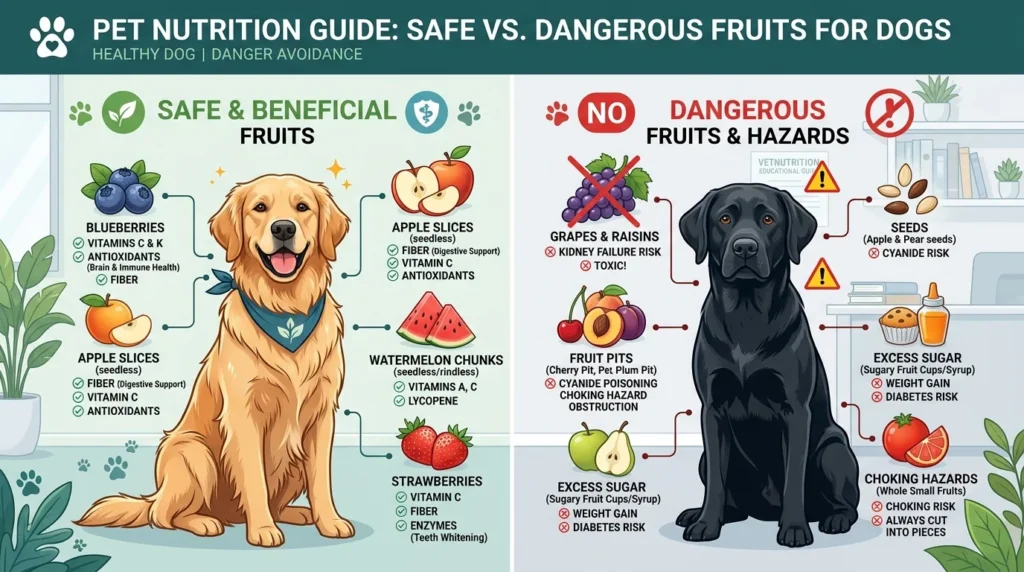
Many fruits provide valuable nutrients that support your dog’s overall health. Vitamins, antioxidants, fiber, and water content can contribute to healthy digestion, improved hydration, immune support, and healthy skin. Low-calorie fruits can also be excellent training rewards for many dogs.
See Also: Can Dogs Eat Bananas? Everything You Need to Know Before Feeding
Offering different dog-safe fruits occasionally can add variety to your dog’s diet while providing natural nutrition. When served correctly, fruits are a healthy alternative to many processed treats.
Does Fruit Have Any Risks For Dogs?
Yes, fruit can present risks if it is fed incorrectly. Some fruits contain pits, seeds, or natural toxins that may be harmful, while others are high in natural sugar that may contribute to weight gain if overfed. Too much fruit may also cause diarrhea or stomach upset.
Unsafe fruits such as grapes and raisins should never be given to dogs under any circumstances. Proper preparation and portion control are essential for keeping fruit safe for your pet.
Frequently Asked Questions
What fruits are safest for dogs?
Apples, bananas, blueberries, strawberries, watermelon, pears, mangoes, and pineapples are among the safest fruits when prepared properly.
Can dogs eat fruit every day?
Fruit should only be given in moderation as an occasional treat and should not replace a balanced dog food diet.
Which fruits are toxic to dogs?
Grapes and raisins are highly toxic to dogs and should never be fed. Cherries and avocados should also be avoided because of their potential risks.
Is frozen fruit safe for dogs?
Yes, plain frozen fruits like blueberries or watermelon can be refreshing treats as long as they contain no added sugar or artificial sweeteners.
Can puppies eat fruit?
Yes, puppies can eat small amounts of dog-safe fruits, but they should be introduced slowly and should never replace a balanced puppy diet.
Conclusion
Many fruits can be healthy treats for dogs when served correctly. Apples, bananas, blueberries, strawberries, watermelon, mangoes, pears, pineapples, and several other fruits provide vitamins, fiber, antioxidants, and hydration that support overall health. However, fruits should always be given in moderation because they contain natural sugars.
Always remove seeds, pits, cores, and thick peels before feeding fruit to your dog, and avoid toxic fruits such as grapes and raisins completely. By choosing safe fruits and serving them in appropriate portions, you can add healthy variety to your dog’s diet while keeping them happy and healthy.
See Also: Can Dogs Eat Pickles? Safety, Risks, Benefits & Feeding Guide


