

Can Dogs Eat Orange Peels? Risks, Symptoms & Safe Tips
Oranges can be a refreshing fruit, but the peel is very different from the juicy flesh inside. If your dog has picked up an orange peel or you are wondering whether orange skin is safe to share, it is important to understand the potential risks. Orange peels are tough, difficult to digest, and contain concentrated citrus oils and plant compounds.
Dogs should not eat orange peels. While a small accidental piece may not cause serious problems in every dog, the peel can cause stomach irritation, choking, or digestive obstruction, especially when a larger amount is consumed. If you want to give your dog orange, it is safer to remove the peel, seeds, and white pith and offer only a small amount of the flesh.
Can Dogs Eat Orange Peels?
No, dogs should not intentionally eat orange peels. The peel is much harder to digest than the fruit’s flesh and contains concentrated citrus oils that may irritate a dog’s digestive system.
Orange peel can also be difficult to chew and may create a choking hazard. Large pieces may potentially become lodged in the digestive tract, particularly in smaller dogs.
How Much Orange Peel Can Dogs Eat?
There is no recommended serving size for orange peel because it is best avoided. If your dog accidentally eats a tiny piece, monitor them rather than intentionally offering more.
The risk is greater when a dog consumes a large amount of peel or swallows thick pieces. Contact your veterinarian if your dog develops persistent vomiting, diarrhea, abdominal pain, weakness, or difficulty passing stool.
| Dog Size | Recommended Orange Peel Amount | Safer Option |
|---|---|---|
| Small Dogs | None | A tiny piece of peeled orange flesh |
| Medium Dogs | None | A few small pieces of peeled orange |
| Large Dogs | None | A small amount of peeled orange |
| Puppies | None | Age-appropriate treats |
Can Dogs Eat Orange Skin?
Orange skin and orange peel refer to the outer layer of the fruit, and dogs should generally avoid both. The skin is tough and contains citrus oils and other concentrated compounds that are not necessary in a dog’s diet.
If you are sharing orange with your dog, remove the entire peel first. Also remove seeds and offer only a small amount of the juicy flesh.
Can Dogs Eat Orange Peel Raw?
No, raw orange peel should not be given to dogs. Its tough texture can make it difficult to chew and digest, while the concentrated citrus oils may irritate the mouth and stomach.
Cooking or processing orange peel does not make it a necessary or appropriate dog treat. Plain peeled orange flesh is a much safer option when offered in moderation.
See Also: Can Dogs Eat Jalapenos? Risks, Symptoms & Safe Alternatives
Can Dogs Eat Orange Peel Zest?
Orange zest is made from the outer layer of the orange, so it can contain concentrated citrus oils. It is therefore best not to intentionally add orange zest to your dog’s food.
Small accidental exposure may not cause a serious reaction, but repeated or larger amounts can increase the chance of digestive irritation. Keep recipes containing citrus zest away from your dog’s meals.
Can Dogs Eat Orange Pith?
The white pith underneath the orange peel is not generally considered poisonous to dogs, but it can be bitter, fibrous, and difficult for some dogs to digest.
When sharing orange, removing most of the peel and excess pith is a simple way to make the fruit easier for your dog to eat. Serve only a small portion of the flesh.
Can Dogs Eat Orange Peels With Pesticides?
Orange peels may contain residues from pesticides or other substances used during growing, harvesting, or handling. Washing produce can reduce surface residues, but it does not make orange peel an appropriate food for dogs.
Because the peel already presents digestive and choking concerns, there is little reason to feed it. Removing the peel before sharing orange is the safer approach.
Can Puppies Eat Orange Peels?
Puppies should not eat orange peels. Their digestive systems are still developing, and tough citrus peel can be especially difficult for a young dog to chew and digest.
If your puppy is old enough for occasional treats, ask your veterinarian about suitable options and introduce new foods gradually. Never use orange peel as a puppy treat.
Can Dogs Eat Orange Peels Every Day?
No. Dogs should not eat orange peels every day or intentionally as an occasional treat. Orange peel does not provide any nutritional benefit that dogs need from their diet.
If you want to offer orange as a treat, remove the peel and seeds and give only a small amount of fresh orange flesh. Treats should remain a limited part of your dog’s overall diet.
What Happens If a Dog Eats Orange Peels?
A dog that eats orange peel may develop stomach upset, vomiting, diarrhea, excessive drooling, or abdominal discomfort. Some dogs may also have difficulty passing the tough material through their digestive system.
If your dog eats a large amount of peel, swallows a large piece, or develops repeated vomiting, severe abdominal pain, lethargy, loss of appetite, or difficulty passing stool, contact a veterinarian promptly.
Is Orange Peel Good for Dogs to Eat?
Orange peel is not a good food for dogs. Although oranges contain nutrients such as vitamin C and fiber, dogs can get what they need from a complete and balanced diet and safer foods.
The peel is tough, fibrous, and contains concentrated citrus oils, making it more likely to cause digestive irritation than provide meaningful nutritional benefits. If you want to share orange with your dog, peeled orange flesh is a better option in moderation.
See Also: Can Dogs Eat Grapefruit? Risks, Symptoms & Safe Fruits
How to Safely Share Oranges With Your Dog
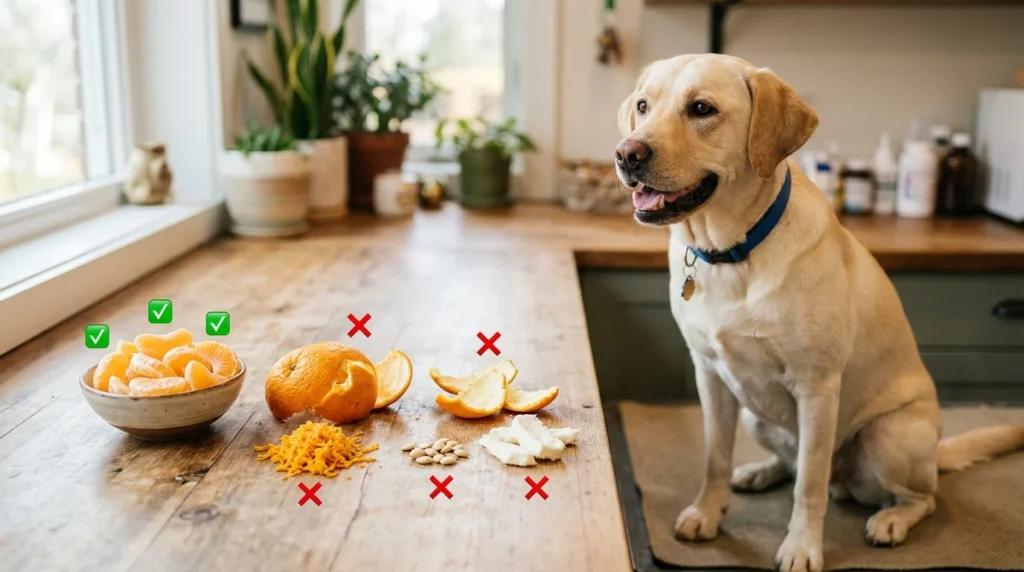
Choose a fresh orange, wash it, and remove the entire peel, seeds, and as much of the thick white pith as practical. Separate the fruit into small pieces that are easy for your dog to chew.
Start with a small amount, especially if your dog has never eaten orange before. Avoid orange juice, candied orange peel, desserts, and other orange products containing added sugar or potentially harmful ingredients.
Does Orange Peel Have Benefits For Dogs?
Orange peel contains fiber and various plant compounds, but these potential benefits do not make it a suitable treat for dogs. The tough texture and concentrated citrus oils can create more concerns than nutritional value.
Dogs do not need orange peel to obtain essential nutrients. If fruit is offered as an occasional treat, small pieces of peeled orange flesh are a simpler and safer choice.
Does Orange Peel Have Any Risks For Dogs?
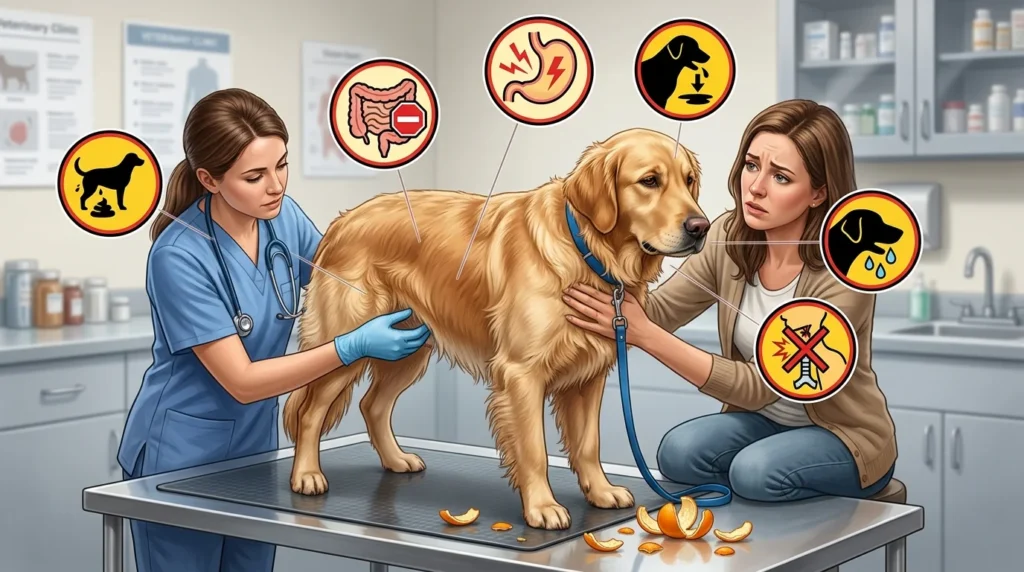
Yes. Orange peel can be difficult for dogs to chew and digest. It may cause vomiting, diarrhea, excessive drooling, stomach discomfort, or other digestive problems. Large pieces can also create a choking or intestinal blockage risk.
The peel contains concentrated citrus oils and plant compounds that can irritate some dogs. Orange peel may also carry surface residues from agricultural treatments, providing another reason to remove it before sharing the fruit.
What Should You Do If Your Dog Eats Orange Peel?
If your dog eats a tiny piece of orange peel, monitor them closely and make sure fresh water is available. A small accidental amount may only cause temporary digestive upset or no noticeable symptoms.
If your dog eats a large quantity, swallows a large piece, or develops repeated vomiting, severe abdominal discomfort, lethargy, loss of appetite, or difficulty passing stool, contact your veterinarian promptly.
Frequently Asked Questions
Can dogs eat orange peels?
No. Orange peels are tough, difficult to digest, and contain concentrated citrus oils. It is safer to remove the peel before giving a small amount of orange to your dog.
Can dogs eat orange skin?
Dogs should generally avoid orange skin. The outer skin is essentially the orange peel and can cause digestive irritation or create a choking or blockage risk.
Can dogs eat orange peel zest?
It is best not to give dogs orange zest because it comes from the outer peel and contains concentrated citrus oils. Small accidental amounts are usually monitored rather than intentionally fed.
Can puppies eat orange peels?
No. Puppies should not eat orange peels because the tough material can be difficult to chew and digest. Their main nutrition should come from complete and balanced puppy food.
What should I do if my dog ate a lot of orange peel?
Monitor your dog closely and contact your veterinarian for advice, particularly if a large amount was consumed or your dog develops vomiting, abdominal pain, lethargy, loss of appetite, or difficulty passing stool.
Conclusion
Dogs should not eat orange peels. The peel is tough, contains concentrated citrus oils, and can cause digestive irritation, choking, or potentially contribute to an intestinal blockage when larger pieces are swallowed.
If you want to share orange with your dog, remove the peel and seeds and offer only a small amount of fresh flesh. Keeping portions modest and avoiding processed orange products is the safest approach.
See Also: Can Dogs Eat Pinto Beans? Benefits, Risks & Safe Guide


