

Can Dogs Eat Imitation Crab? Safety & Risks
Dogs can eat a small amount of imitation crab occasionally, but it is not an ideal food for regular feeding. Imitation crab is usually made from processed white fish, starch, salt, sugar, and other ingredients that make it taste and look like real crab. While plain cooked fish can provide useful protein, imitation crab is more processed and can contain much more sodium than a dog needs.
A tiny piece is unlikely to cause a problem for most healthy dogs, but larger amounts may lead to digestive upset because of the salt, starches, seasonings, or other additives. Some imitation crab products may also contain ingredients that are unsuitable for dogs. If you want to give your dog seafood, plain, fully cooked fish or plain cooked real crab meat is generally a better choice.
Can Dogs Eat Imitation Crab Safely?
Imitation crab is not considered toxic to dogs in the same way that foods such as onions, garlic, chocolate, or grapes can be. However, that does not mean it is a healthy treat. Most imitation crab is highly processed and formulated for human taste rather than canine nutrition.
If your dog eats a small piece of imitation crab, there is usually no reason to panic. You can monitor your dog for signs of stomach upset and make sure fresh water is available. Problems are more likely when a dog eats a large quantity or regularly receives processed seafood.
What Is Imitation Crab Made Of?
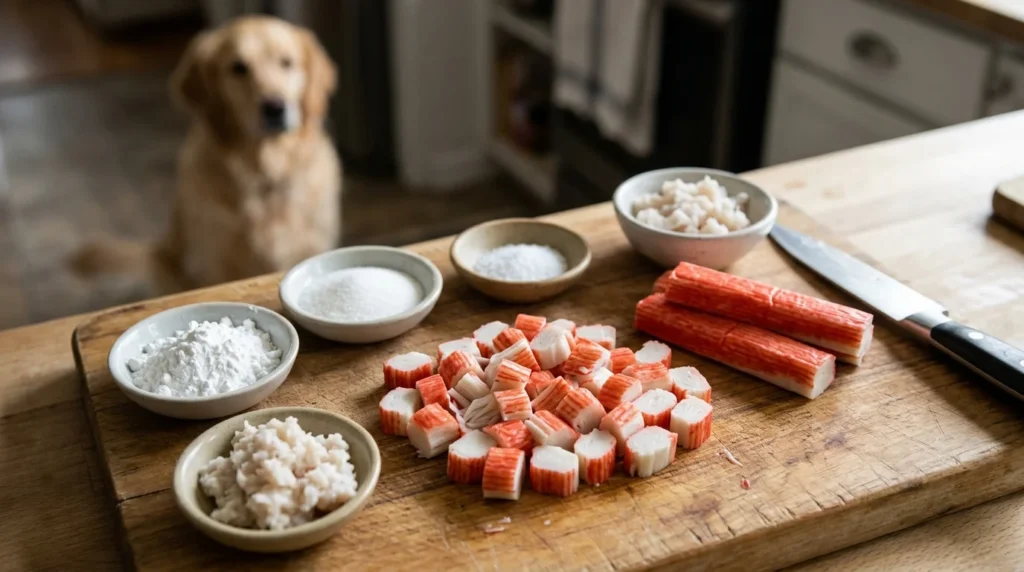
Imitation crab, also called surimi, is usually made from processed white fish. Common ingredients can include pollock or other mild fish, water, starch, salt, sugar, vegetable oils, flavorings, and coloring agents. Some products also contain egg, wheat, soy, or other ingredients used to improve texture and flavor.
The exact recipe varies between brands, so it is important to check the ingredient label before sharing imitation crab with your dog. A product with a long ingredient list, very high sodium content, spicy seasoning, onion, garlic, or rich sauces is best kept away from dogs.
Can Puppies Eat Imitation Crab?
Puppies should generally not be given imitation crab as a regular treat. Growing puppies need a balanced puppy diet that provides the right amounts of protein, fat, vitamins, minerals, and calories. Processed human foods can take up space in their diet without providing the nutrition they need for healthy growth.
If a puppy accidentally eats a tiny piece, it will usually be more appropriate to monitor than to panic. However, puppies have smaller bodies and can be more sensitive to excessive salt and digestive changes. Avoid intentionally feeding imitation crab to young puppies, especially in large pieces or portions.
Can Small Dogs Eat Imitation Crab?
Small dogs can technically eat a very small piece of imitation crab, but portion size matters. Because a small dog needs fewer calories and less sodium than a large dog, even a few pieces can represent a relatively large amount of a treat.
If you decide to offer a tiny amount, choose plain imitation crab without sauces or spicy ingredients and cut it into very small pieces. It should be an occasional treat rather than something added to your dog’s regular meals.
Can Large Dogs Eat Imitation Crab?
Large dogs may tolerate a small amount of imitation crab better because they have larger bodies, but size does not make processed food healthy. A large dog can still experience stomach upset after eating too much salty or heavily processed food.
If your large dog enjoys seafood, plain cooked fish is usually a more nutritious option. Remove bones and avoid butter, garlic, onion, heavy seasoning, and sauces when preparing seafood for your dog.
Can Dogs Eat Imitation Crab Every Day?
Imitation crab should not be a daily food for dogs. Regular feeding can add unnecessary sodium, starch, sugar, and other ingredients to your dog’s diet. Treats and human foods should remain a small part of a balanced canine diet.
There is also little nutritional advantage to choosing imitation crab over healthier options. If you want to use seafood as an occasional protein-rich treat, plain cooked fish or plain cooked crab meat can be a better choice when prepared safely.
Can Dogs Eat Imitation Crab Sticks?
Imitation crab sticks are essentially the same type of processed surimi product and should be treated the same way. A small piece may be tolerated by a healthy dog, but the product can contain considerable sodium and other additives.
Always check the package before sharing it. If the crab sticks contain onion, garlic, spicy sauces, or other potentially harmful ingredients, do not give them to your dog. Even when the ingredients are not directly toxic, the high salt content makes large portions inappropriate.
Can Dogs Eat Imitation Crab Raw?
Most imitation crab is already cooked during processing, even though it is often sold refrigerated and eaten without additional cooking. However, you should still follow the package storage and handling instructions carefully.
Do not assume that every seafood product is safe to eat straight from the package. If the product has been left unrefrigerated for too long, smells unusual, looks spoiled, or has passed its recommended storage period, do not feed it to your dog.
Can Dogs Eat Imitation Crab With Mayonnaise?
It is better not to give dogs imitation crab mixed with mayonnaise. Mayonnaise is high in fat and calories, and creamy seafood salads may also contain salt, seasonings, onion, garlic, or other ingredients that are unsuitable for dogs.
A tiny accidental lick is unlikely to cause serious problems in most healthy dogs, but a large serving can contribute to vomiting, diarrhea, or other digestive upset. Plain imitation crab is a safer choice than imitation crab mixed into rich human foods, although plain cooked fish is still preferable.
Can Dogs Eat Imitation Crab With Soy Sauce?
Dogs should not be given imitation crab covered in soy sauce. Soy sauce is extremely salty, and adding it to already processed imitation crab can significantly increase the amount of sodium your dog consumes.
Too much salt can cause excessive thirst, increased urination, vomiting, diarrhea, weakness, or more serious problems when consumed in large quantities. If your dog has eaten a large amount of salty food, contact your veterinarian for advice rather than trying to treat the situation at home.
Can Dogs Eat Imitation Crab With Rice?
Plain cooked rice itself can be suitable for many dogs when served in an appropriate amount. However, combining rice with imitation crab does not automatically make the meal healthy. The imitation crab can still contain substantial salt and additives.
If you want to prepare a simple seafood meal for your dog, plain cooked rice with a small amount of plain, fully cooked fish is generally a better option. Keep the meal free from soy sauce, onion, garlic, chili, butter, and other heavy seasonings.
Can Dogs Eat Imitation Crab With Sushi?
Imitation crab is commonly used in sushi rolls, but sushi is generally not a good food to share with dogs. Sushi may contain soy sauce, spicy mayonnaise, cream cheese, avocado, pickled ingredients, excessive salt, or other foods that are not appropriate for dogs.
Even a sushi roll that appears simple can contain several ingredients that are difficult to evaluate. Instead of sharing a prepared sushi roll, offer your dog a small piece of plain cooked fish without sauces, seasoning, rice vinegar, or other toppings.
How Much Imitation Crab Can Dogs Eat?
If your dog tolerates imitation crab, only a small amount should be offered as an occasional treat. The right portion depends on your dog’s size, overall diet, and individual tolerance. For a small dog, one or two tiny pieces may be enough, while a larger dog can have a few small pieces at most.
Keep in mind that imitation crab should not replace a balanced dog food or a nutritious protein source. When introducing it for the first time, start with a very small piece and watch for digestive problems. If your dog develops vomiting, diarrhea, unusual thirst, or other concerning symptoms, stop giving the food and contact your veterinarian if symptoms are significant or persistent.
Can Imitation Crab Cause Diarrhea in Dogs?
Yes, imitation crab can cause diarrhea in some dogs, particularly if they eat too much. Its salt, starch, additives, and other processed ingredients can upset a sensitive stomach. Dogs that are not accustomed to human foods may be more likely to experience digestive changes.
A single episode of mild diarrhea may resolve after the food is removed, but repeated or severe diarrhea deserves veterinary attention. Make sure your dog has access to fresh water, especially after eating salty foods. Avoid giving additional rich treats until your dog’s stomach has settled.
Can Imitation Crab Cause Gas in Dogs?
Imitation crab may cause gas or bloating in some dogs. Starches and other ingredients used in processed surimi can be harder for certain dogs to digest. Eating a large amount quickly can also increase the chance of stomach discomfort.
If your dog becomes gassy after eating a small amount, avoid giving imitation crab again and monitor your dog. Mild gas without other symptoms is usually less concerning than repeated vomiting, severe abdominal discomfort, weakness, or significant bloating. Those symptoms should be discussed with a veterinarian.
See Also: Can Dogs Eat Carrots Raw? Safety & Benefits
Is Imitation Crab High in Sodium for Dogs?
One of the biggest concerns with imitation crab is its sodium content. Dogs need sodium as part of a balanced diet, but they do not need the highly salted foods commonly prepared for people. Processed seafood can contain considerably more salt than plain, unseasoned fish.
Because of this, imitation crab is not a good choice for frequent feeding. Dogs with conditions requiring sodium restriction should not be given salty human foods unless their veterinarian specifically approves them. Always check the nutrition label if you are considering sharing a small amount.
Can Dogs Eat Imitation Crab With Garlic?
No. Dogs should not be intentionally fed imitation crab prepared with garlic. Garlic belongs to the Allium family and can be harmful to dogs, particularly when enough is consumed. Seafood salads, sauces, dips, and seasoned crab products may contain garlic even when it is not obvious from the appearance.
If your dog accidentally eats a small amount of a food containing garlic, the risk depends on the amount consumed and your dog’s size. Do not give additional seasoned food. If a significant amount of garlic-containing food was eaten, contact your veterinarian promptly for individualized advice.
Can Dogs Eat Imitation Crab With Onion?
Imitation crab dishes containing onion should be avoided. Onions are toxic to dogs and can cause problems when enough is consumed. Onion may be present in seafood salads, sauces, dips, sushi fillings, and prepared dishes without being immediately visible.
If your dog eats imitation crab containing onion, do not wait for symptoms before seeking advice if you believe a meaningful amount was consumed. Contact your veterinarian and provide the product name, ingredient list, approximate amount eaten, and your dog’s size.
Can Dogs Eat Fried Imitation Crab?
Fried imitation crab is not a good choice for dogs. Frying adds extra fat and calories, while restaurant or packaged fried seafood may also contain salt, spices, sauces, and other ingredients that can upset a dog’s stomach.
A small accidental bite is unlikely to cause a serious problem in most healthy dogs, but intentionally feeding fried imitation crab is unnecessary. If you want to offer seafood, plain cooked fish without breading, oil, butter, or seasoning is a much simpler option.
Can Dogs Eat Imitation Crab Salad?
It is better to avoid giving dogs imitation crab salad. These salads commonly combine imitation crab with mayonnaise, salt, mustard, seasonings, onion, or other ingredients. The finished dish can therefore be much less suitable for dogs than plain imitation crab.
If your dog has eaten a small bite, check the ingredients rather than assuming the salad contains only crab and mayonnaise. If it contains onion, garlic, large amounts of seasoning, or another concerning ingredient, contact your veterinarian if your dog consumed more than a tiny amount.
Can Dogs Eat Imitation Crab Cakes?
Imitation crab cakes are generally not suitable for dogs. They may contain breadcrumbs, eggs, mayonnaise, salt, spices, butter, oil, onion, garlic, and other ingredients. They are also commonly fried or served with rich sauces.
For a dog-friendly seafood treat, it is better to skip the prepared crab cake and offer a small amount of plain cooked seafood instead. This makes it much easier to control the ingredients and avoid unnecessary salt, fat, and seasonings.
What Happens If a Dog Eats a Lot of Imitation Crab?
Eating a large amount of imitation crab can cause digestive upset and excessive sodium intake. Possible signs include vomiting, diarrhea, increased thirst, increased urination, abdominal discomfort, lethargy, or weakness. The risk depends on how much was eaten, the product’s ingredients, and the dog’s size.
If your dog has eaten a large quantity, especially a very salty product, check the package and contact your veterinarian. Do not induce vomiting or give home remedies unless a veterinary professional specifically instructs you to do so.
See Also: Can Dogs Eat Snap Peas? Safety, Benefits & Risks
What Should You Do If Your Dog Eats Imitation Crab?
If your dog eats a small piece of plain imitation crab, remove the remaining food and monitor them. Provide access to fresh water and avoid giving more imitation crab. Watch for vomiting, diarrhea, excessive thirst, unusual weakness, or other changes in behavior.
If your dog ate a large quantity or the product contained onion, garlic, spicy ingredients, or an unusually high amount of salt, contact a veterinarian for guidance. Keep the package or ingredient label available so you can provide accurate information about what your dog consumed.
Imitation Crab vs. Real Crab for Dogs
| Food | Generally Safe? | Main Concern | Better Choice? |
|---|---|---|---|
| Plain cooked real crab | Yes, in moderation | Shells, allergies, and seasoning | Yes |
| Plain imitation crab | Small amounts | Sodium and processing | Less ideal |
| Fried imitation crab | Not recommended | Fat, oil, salt, and breading | No |
| Imitation crab salad | Not recommended | Mayonnaise, salt, onion, and seasonings | No |
How to Prepare Seafood for Dogs
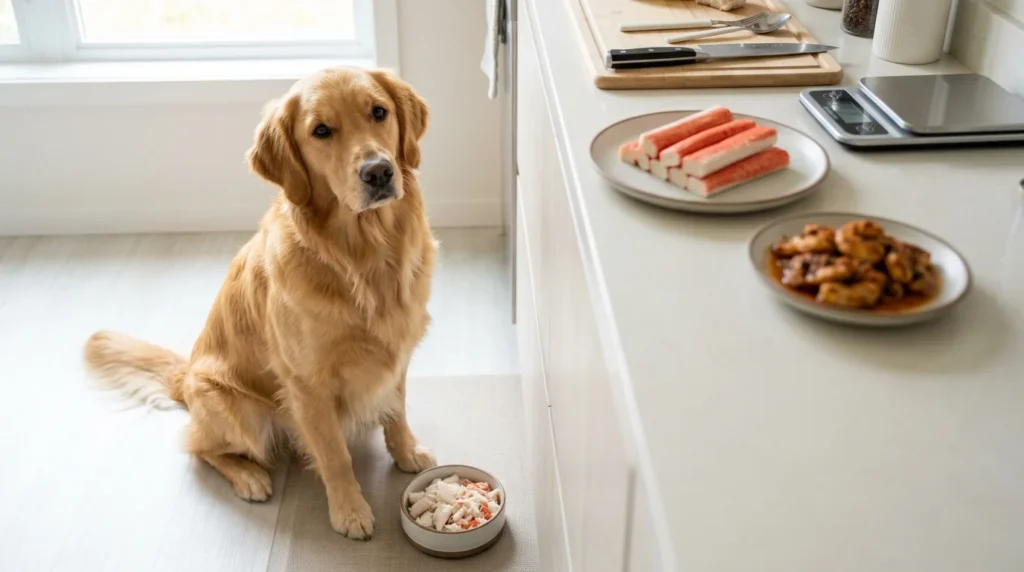
If you want to give your dog seafood, simple preparation is best. Cook the seafood thoroughly and serve it plain. Remove bones, shells, and other hard pieces that could cause choking or digestive problems. Cut the food into small, manageable pieces appropriate for your dog’s size.
Avoid salt, garlic, onion, chili, heavy spices, butter, rich sauces, and excessive oil. Plain cooked fish is often a more straightforward treat than processed imitation seafood. Introduce any new food gradually and only give a small amount.
When Should Dogs Avoid Imitation Crab?
Dogs should avoid imitation crab when the product contains onion, garlic, spicy seasonings, or other ingredients that may be harmful to them. It is also best avoided when the product is heavily salted, heavily seasoned, fried, or mixed into rich sauces.
Dogs that have previously reacted badly to seafood or a particular ingredient should not be given imitation crab without veterinary guidance. When there is uncertainty about an ingredient or your dog’s reaction, choosing a simpler food is usually the safer approach.
Frequently Asked Questions
Is imitation crab toxic to dogs?
Plain imitation crab is not generally considered directly toxic to dogs, but it is processed and can be high in sodium. Small amounts may be tolerated by many healthy dogs, while large amounts or products containing harmful ingredients can cause problems.
Can dogs eat imitation crab sticks?
Dogs can have a very small piece of plain imitation crab stick occasionally, but it is not an ideal regular treat. Check the ingredients and avoid products containing onion, garlic, spicy seasonings, or excessive salt.
Can dogs eat imitation crab every day?
No. Imitation crab should not be part of a dog’s daily diet. Its processed ingredients and sodium content make plain cooked fish or another dog-appropriate protein a better choice.
Can dogs eat imitation crab sushi?
It is best to avoid giving dogs imitation crab sushi because sushi rolls can contain soy sauce, spicy mayonnaise, onion, garlic, excess salt, and other ingredients that are unsuitable for dogs. Plain cooked seafood is a safer option.
What should I do if my dog ate imitation crab?
If your dog ate a small piece of plain imitation crab, monitor them and provide fresh water. If they ate a large amount or the product contained onion, garlic, or excessive salt, contact your veterinarian for advice.
Conclusion
Dogs can eat a small amount of plain imitation crab occasionally, but it should not be considered a healthy everyday treat. The main concerns are its sodium content, processing, starches, additives, and the possibility of additional ingredients such as onion, garlic, sauces, and spicy seasonings.
If you want to share seafood with your dog, plain, fully cooked, boneless fish or plain cooked real crab meat is generally a better option. Keep portions small, avoid harmful seasonings, and monitor your dog whenever introducing a new food. When a dog eats a large amount of imitation crab or develops concerning symptoms, veterinary advice is the safest next step.
See Also: Can Dogs Eat Oysters? Safety, Risks & Feeding Tips


