

Can Dogs Eat Pineapple? Safety, Benefits & Risks
Yes, dogs can eat fresh pineapple in small amounts as an occasional treat. Pineapple flesh is not considered toxic to dogs and contains nutrients such as vitamin C, manganese, and fiber. However, pineapple is naturally high in sugar and can cause digestive upset if a dog eats too much. It should be treated as a small addition to a balanced diet rather than a regular replacement for dog food.
The way pineapple is prepared also matters. Fresh pineapple should be peeled and cut into small, bite-sized pieces before being offered to a dog. The tough outer skin, crown, and hard central core should not be given because they can be difficult to chew and digest. Dogs should also avoid pineapple products containing added sugar, syrup, or other ingredients that may be unsuitable for them.
Can Dogs Eat Fresh Pineapple?
Fresh pineapple is generally the best form of pineapple for dogs when served properly. The soft inner flesh can be given in a small portion after the tough skin and hard core have been removed. Because pineapple has a naturally sweet and slightly acidic flavor, some dogs enjoy it while others may not be interested.
Start with only one or two small pieces when introducing pineapple for the first time. Watch your dog for signs of digestive upset before offering more on another occasion. A sudden large serving of any unfamiliar fruit can cause loose stool, gas, or stomach discomfort.
Can Dogs Eat Pineapple Flesh?
Yes, the soft flesh of a ripe pineapple can be eaten by dogs in moderation. This is the part of the fruit that should be offered after removing the skin, leafy crown, and hard center. Cut the flesh into appropriately sized pieces so your dog can chew it easily.
Pineapple flesh provides carbohydrates, natural sugars, fiber, and several vitamins and minerals. However, dogs do not need pineapple to meet their nutritional requirements if they are already eating a complete and balanced diet. Think of pineapple as an occasional treat rather than an essential food.
Can Dogs Eat Pineapple Skin?
No, pineapple skin should not be given to dogs. The outer rind is tough, fibrous, and difficult to chew and digest. A dog that tries to swallow large pieces of pineapple skin may also have difficulty passing them through the digestive tract.
Always remove the entire outer skin before cutting pineapple for your dog. Do not assume that a dog will safely peel the fruit itself. Dogs may swallow pieces quickly without properly chewing them, which is another reason to prepare the fruit before serving it.
Can Dogs Eat Pineapple Core?
The hard central core of a pineapple is best removed before giving pineapple to a dog. Although the core is part of the fruit, it is much tougher and more fibrous than the softer flesh surrounding it. It can be difficult for a dog to chew properly.
When preparing pineapple, cut away the core and offer only the soft flesh. Removing the core also makes it easier to cut the fruit into small pieces that are more appropriate for your dog’s size.
Can Puppies Eat Pineapple?
Puppies can have a small amount of fresh pineapple if they are already eating solid food and tolerate new foods well. However, puppies have specific nutritional needs for growth, so pineapple should never replace their complete puppy food. Treats and fruit should remain a small part of their overall diet.
If you want to introduce pineapple to a puppy, begin with a tiny piece of peeled, core-free flesh. Monitor for diarrhea, vomiting, gas, or other digestive changes. Puppies can be more sensitive to sudden dietary changes, so introducing new foods gradually is important.
Can Dogs Eat Pineapple Every Day?
It is better to think of pineapple as an occasional treat rather than something a dog needs every day. Pineapple contains natural sugar, and feeding fruit frequently or in large portions can add unnecessary calories to a dog’s diet. A dog’s primary nutrition should come from a complete and balanced food appropriate for its life stage.
If your dog enjoys pineapple and tolerates it well, a few small pieces may occasionally fit into its diet. Keep the serving size appropriate for the dog’s body size and account for other treats given during the same day.
Can Small Dogs Eat Pineapple?
Small dogs can eat pineapple, but portion size is especially important. A few bite-sized pieces can represent a much larger amount of food relative to a small dog’s body size than they would for a large dog. Cut the fruit into tiny pieces and begin with a very small serving.
Small dogs may also swallow food quickly, so avoid giving large chunks of pineapple. Removing the tough skin and core and cutting the soft flesh into manageable pieces makes the fruit easier to eat.
Can Large Dogs Eat Pineapple?
Large dogs can also enjoy small portions of fresh pineapple. Their larger body size may allow for a somewhat larger treat portion than a small dog, but that does not mean they should eat unlimited pineapple. The fruit is still relatively sweet and should remain an occasional addition to their normal diet.
Even a large dog should receive peeled, core-free pineapple rather than whole pieces containing tough rind or the hard center. Introduce it gradually if pineapple is new to the dog’s diet.
Can Dogs Eat Canned Pineapple?
Canned pineapple is generally less desirable than fresh pineapple for dogs because many canned products are packed in syrup or contain added sugar. Dogs do not need the extra sugar, and heavily sweetened fruit can add unnecessary calories and may contribute to digestive upset.
If canned pineapple is the only option, check the ingredient label carefully and avoid products packed in heavy syrup or containing additional sweeteners. Fresh pineapple without added ingredients is usually the simpler choice. Rinse-and-drain preparation may reduce some surface syrup, but it does not turn heavily sweetened pineapple into an ideal regular treat.
Can Dogs Eat Pineapple Juice?
Pineapple juice is not a good substitute for fresh pineapple. Juice can contain concentrated natural sugar, and commercial versions may contain added sugar or other ingredients. It also provides less of the whole-fruit structure and fiber that comes from eating a small portion of pineapple flesh.
Dogs generally do not need fruit juice. If you want to share pineapple with your dog, small pieces of fresh peeled fruit are a more straightforward option. Avoid giving large quantities of juice, especially sweetened pineapple drinks.
Can Dogs Eat Frozen Pineapple?
Plain frozen pineapple can be offered to some dogs in small pieces, provided the fruit contains no added sugar or other ingredients. Frozen fruit can be refreshing, but the pieces should be appropriately sized for the dog rather than given as large, hard chunks.
Allowing pineapple to soften slightly before serving can make it easier to chew. Always remove the skin and core before freezing or serving the fruit. Dogs that tend to swallow treats quickly should receive particularly small pieces.
Can Dogs Eat Dried Pineapple?
Dried pineapple is generally not the best choice for dogs. Removing water concentrates the fruit’s natural sugars, and many commercial dried pineapple products also contain added sugar or sweeteners. A small amount may not cause a problem in an otherwise healthy dog, but it is easy to give more sugar and calories than intended.
Fresh pineapple is usually a better option because you can provide a small portion of the whole fruit without the concentrated sweetness of dried pieces. Always check the label if considering any packaged dried fruit, and avoid products containing ingredients that are unsafe for dogs.
Can Dogs Eat Pineapple With Yogurt?
A small amount of plain pineapple can be combined with plain, unsweetened yogurt for some dogs that tolerate dairy. However, yogurt is not necessary for dogs to enjoy pineapple, and many dogs have difficulty digesting dairy products.
If you combine the two, choose plain yogurt without added sugar, artificial sweeteners, or flavorings and use only a small amount. Never use a yogurt product containing xylitol, which can be extremely dangerous to dogs. Keep the overall serving small and introduce each food separately if your dog has not eaten them before.
How Much Pineapple Can Dogs Eat?

The amount of pineapple a dog can safely enjoy depends on its size, overall diet, activity level, and individual tolerance. Because pineapple contains natural sugar and fiber, it is best offered in small portions rather than as a large bowl of fruit. If your dog is trying pineapple for the first time, start with just one or two small pieces.
| Dog Size | General Starting Portion |
|---|---|
| Small dogs | 1–2 small pieces |
| Medium dogs | 2–4 small pieces |
| Large dogs | 4–6 small pieces |
| Very large dogs | A small handful of pieces |
These are general serving suggestions, not exact nutritional requirements. A dog that is overweight, diabetic, has a sensitive stomach, or follows a veterinarian-prescribed diet may need a different approach. Treats and fruit should fit within the dog’s overall daily calorie intake.
Can Pineapple Cause Diarrhea in Dogs?
Yes, eating too much pineapple can cause diarrhea in some dogs. Pineapple contains fiber and natural sugars, and a sudden large serving can upset the digestive system. Dogs that are not accustomed to fruit may be more likely to develop loose stool after eating too much.
If your dog has mild diarrhea after eating pineapple, stop offering the fruit and monitor your dog. Provide access to fresh water and avoid adding more unfamiliar foods. Persistent diarrhea, repeated vomiting, blood in the stool, weakness, or other concerning symptoms should be discussed with a veterinarian.
See Also: Can Dogs Eat Clementines? Safety & Feeding Guide
Can Pineapple Upset a Dog’s Stomach?
Pineapple can cause stomach upset when a dog eats too much or is particularly sensitive to acidic fruits. Signs may include gas, loose stool, vomiting, or temporary discomfort. These problems are more likely when a dog suddenly consumes a large quantity.
To reduce the chance of digestive upset, introduce pineapple slowly. Give a very small portion of plain fresh flesh first and wait to see how your dog responds. If pineapple consistently causes digestive problems, there is no need to continue feeding it.
Can Dogs Eat Sweetened Pineapple?
It is better to avoid sweetened pineapple. Dogs do not need added sugar, and sweetened fruit can contain considerably more sugar and calories than plain pineapple. Some packaged products may also contain syrups, artificial sweeteners, preservatives, or other ingredients.
Fresh pineapple is a simpler option because you can control exactly what your dog is eating. When buying packaged pineapple, read the ingredient label carefully. Avoid products containing xylitol or other ingredients that are unsafe for dogs.
Can Dogs Eat Pineapple in Syrup?
Pineapple packed in heavy syrup is not an ideal treat for dogs. The syrup adds unnecessary sugar and calories to an already naturally sweet fruit. Regularly feeding sweetened fruit can make it harder to maintain a balanced diet and appropriate calorie intake.
If you have canned pineapple at home, choose a product packed in water or natural juice without added sugar when possible. Drain it thoroughly before giving a small amount to your dog. Fresh pineapple remains an easy choice when available.
Can Dogs Eat Pineapple With Coconut?
Plain pineapple and plain coconut can both be suitable for some dogs in small amounts, but combining them is not necessary. Coconut products can be relatively high in fat, while pineapple contains natural sugar and fiber. Large portions of either food may cause digestive upset.
If you want to offer both, use small amounts of plain foods without added sugar, syrup, chocolate, or artificial sweeteners. Avoid commercial desserts or snack mixes containing pineapple and coconut because they may contain additional ingredients that are not appropriate for dogs.
Can Dogs Eat Pineapple Pizza?
Dogs should not be given pineapple pizza as a treat. Although plain pineapple flesh can be safe in moderation, pizza usually contains cheese, high amounts of salt, fatty toppings, sauces, and seasonings. Some pizza sauces and toppings may also contain onion or garlic.
If your dog wants a taste of pineapple, offer a small piece of fresh pineapple instead. This provides the fruit without the extra salt, fat, cheese, and potentially harmful ingredients found in many human pizza recipes.
Can Dogs Eat Pineapple Cake?
Pineapple cake is not a good choice for dogs. The pineapple itself may be safe, but cakes commonly contain large amounts of sugar, butter, cream, frosting, and other ingredients that are not suitable as regular dog treats.
Some cakes and desserts can also contain ingredients that are particularly dangerous to dogs. Instead of sharing dessert, give your dog a small piece of plain fresh pineapple if it tolerates the fruit well.
Can Dogs Eat Pineapple Ice Cream?
Pineapple ice cream is best avoided. Ice cream can contain significant amounts of sugar and fat, and dairy may cause digestive problems in dogs that do not tolerate lactose well. Some frozen desserts may also contain artificial sweeteners or other ingredients that can be dangerous.
Plain frozen pineapple pieces can be a simpler alternative for dogs that tolerate pineapple. Remove the peel and core before freezing the fruit, and serve small pieces that are easy for your dog to handle.
Can Dogs Eat Pineapple Leaves?
No, pineapple leaves should not be given to dogs. The leafy crown is tough, fibrous, and difficult to chew and digest. Large pieces can also create a choking or gastrointestinal obstruction concern.
When preparing pineapple for your dog, remove the entire leafy top along with the outer skin and hard central core. Only the soft inner flesh should be used as the dog’s treat.
Can Dogs Eat Pineapple With the Core?
It is best to remove the pineapple core before serving the fruit to your dog. The central core is considerably tougher and more fibrous than the surrounding flesh. Dogs may have difficulty chewing it, especially if they swallow food quickly.
Cut the pineapple into small pieces after removing the core. This gives your dog the softer portion of the fruit and makes portion control easier.
What Should You Do If Your Dog Eats Pineapple Skin?
If your dog eats a small piece of pineapple skin, monitor it closely and determine approximately how much was swallowed. A small accidental piece does not automatically mean that a serious problem will occur, but the tough rind is not a suitable part of the fruit for dogs.
If your dog swallowed a large amount of skin or develops repeated vomiting, severe abdominal discomfort, inability to pass stool, weakness, loss of appetite, or other unusual symptoms, contact a veterinarian promptly. Do not try to induce vomiting unless a veterinary professional specifically instructs you to do so.
What Happens If a Dog Eats Too Much Pineapple?
Eating too much pineapple can result in digestive upset. A dog may develop diarrhea, gas, vomiting, stomach discomfort, or increased thirst. The high amount of fruit at once can be more difficult for the digestive system to handle than a small occasional portion.
Remove any remaining pineapple and monitor your dog. Make sure fresh water is available and avoid giving additional treats until the stomach settles. If symptoms are severe, persistent, or accompanied by weakness, blood, repeated vomiting, or significant pain, seek veterinary advice.
See Also: Can Dogs Eat Shrimp Tails? Risks & Safety Guide
How Should You Prepare Pineapple for Dogs?
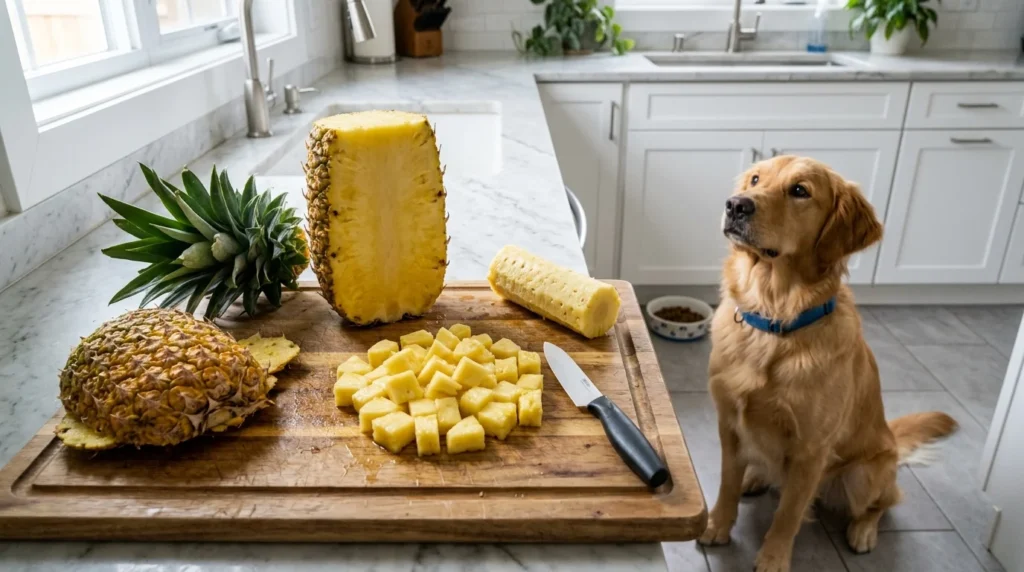
Start with a ripe, fresh pineapple and remove the leafy crown and tough outer skin. Cut away the hard central core, then cut the soft flesh into small pieces appropriate for your dog’s size. Wash the fruit and serve it plain without sugar, syrup, salt, spices, or sauces.
Fresh pineapple can be offered on its own or mixed into a small amount of your dog’s normal food. Keep the serving modest, especially the first time. If your dog tolerates it well, pineapple can remain an occasional treat rather than becoming a major part of the daily diet.
Frequently Asked Questions
Is pineapple safe for dogs?
Yes, fresh pineapple flesh can generally be safe for dogs when the tough skin, leafy crown, and hard core are removed. It should be served in small portions because it contains natural sugar and fiber.
Can dogs eat pineapple every day?
Dogs do not need pineapple every day. Small occasional portions are generally more appropriate than making pineapple a daily staple, especially because excessive fruit can add sugar and calories to the diet.
Can dogs eat pineapple skin and core?
No. Pineapple skin and the hard central core are tough and fibrous and are best removed before serving. Give your dog only the soft inner flesh.
Can puppies eat pineapple?
Puppies that are eating solid food can have a very small amount of plain fresh pineapple, but it should not replace their complete puppy food. Introduce it gradually and monitor for digestive upset.
What should I do if my dog eats too much pineapple?
Stop giving pineapple, provide access to fresh water, and monitor your dog for vomiting, diarrhea, gas, or other symptoms. If the dog ate a very large amount or develops severe or persistent symptoms, contact your veterinarian.
Conclusion
Dogs can eat fresh pineapple in moderation when it is properly prepared. The soft flesh contains useful nutrients and can make a refreshing occasional treat, but pineapple is naturally sweet and should not replace a dog’s complete and balanced food. Start with a small serving and watch how your dog responds.
Always remove the pineapple skin, leafy crown, and hard core before serving. Fresh plain pineapple is preferable to canned pineapple in syrup, dried pineapple, juice, cakes, ice cream, or other sweetened pineapple products. If your dog eats a large amount or develops significant digestive symptoms, contact your veterinarian for appropriate advice.