
Can Dogs Eat Baked Beans? Safety, Risks & Alternatives
Regular canned or homemade baked beans are generally not recommended for dogs. The beans themselves are not necessarily the main problem; it is the combination of ingredients used to make baked beans that creates concerns. Many recipes contain tomato sauce, sugar, salt, spices, and fatty ingredients.
The ASPCA advises against baked beans for dogs: commercial baked beans are high in sugar and salt and often contain onion or garlic, both of which are toxic to dogs.
Can dogs eat baked beans? It is best not to feed dogs regular baked beans made for people. Although beans themselves can provide protein and fiber, baked beans are usually prepared with ingredients such as added sugar, salt, sauces, spices, and sometimes onion or garlic. These ingredients can make a simple bean dish unsuitable for dogs.
A small accidental taste of baked beans may not cause serious problems in an otherwise healthy dog, depending on the ingredients and amount eaten. However, baked beans should not be used as a regular dog treat. Plain, fully cooked beans without added salt, sauces, onion, or garlic are a much better option if you want to offer beans to your dog.
Are Baked Beans Safe for Dogs?
Some baked bean recipes may also contain onion or garlic, which dogs should avoid. Because recipes and canned products vary, always check the ingredient list before deciding whether a particular baked bean product is appropriate for your dog.
Can Dogs Eat Canned Baked Beans?
Canned baked beans are best avoided. Many canned varieties contain significant amounts of sodium and added sugar, along with sauces and seasonings. Some products may also contain onion, garlic, or other ingredients that are not suitable for dogs.
If your dog accidentally eats a small spoonful, do not panic. Check the label to see what ingredients were present and monitor your dog for vomiting, diarrhea, excessive thirst, gas, or other unusual symptoms. A large amount or a product containing potentially harmful ingredients may require veterinary advice.
Can Dogs Eat Homemade Baked Beans?
Homemade baked beans can still be unsuitable for dogs even though you control the ingredients. Traditional recipes often include brown sugar, molasses, ketchup, bacon, salt, onion, garlic, and other seasonings. These additions can make the dish too rich or potentially harmful for dogs.
If you want to prepare beans specifically for your dog, skip the traditional baked-bean ingredients. Plain beans that are thoroughly cooked and served without onion, garlic, heavy seasoning, or excessive salt are a safer choice.
Can Dogs Eat Baked Beans With Tomato Sauce?
Baked beans commonly contain tomato sauce, but the sauce can contain more than tomatoes. Commercial sauces may include sugar, salt, onion powder, garlic powder, spices, and other ingredients that dogs do not need.
Plain ripe tomatoes can sometimes be offered to dogs in appropriate amounts, but that does not make every tomato-based baked bean product safe. Always consider the entire recipe rather than focusing only on the beans or tomato ingredient.
Can Dogs Eat Baked Beans With Sugar?
Dogs should not be given foods with large amounts of added sugar. Traditional baked beans may contain brown sugar, molasses, sweet sauces, or other sweeteners to create their characteristic flavor.
A small accidental amount of sugary baked beans may only cause temporary digestive upset, but regularly feeding sweet foods can contribute unnecessary calories to your dog’s diet. Plain cooked beans are a better alternative when beans are being used as an occasional treat.
Can Dogs Eat Baked Beans With Salt?
Regular baked beans can contain considerable amounts of added salt. Dogs need sodium in their diet, but excessive salt is unnecessary and can cause problems when consumed in large quantities.
Salt is particularly worth considering when your dog eats a large portion of canned baked beans or other salty human foods at the same time. Keep fresh water available and contact your veterinarian if your dog consumes a large amount of very salty food or develops concerning symptoms.
Can Dogs Eat Baked Beans With Onion?
Dogs should not eat baked beans containing onion. Onion can be harmful to dogs, including when it is cooked into a dish. Onion powder and dried onion can also be found in prepared sauces and seasonings.
If a baked bean product lists onion or onion powder among its ingredients, it should not be intentionally given to your dog. If your dog has eaten a significant amount of a product containing onion, contact your veterinarian for advice about the amount consumed and your dog’s size.
Can Dogs Eat Baked Beans With Garlic?
Baked beans containing garlic should not be given to dogs. Garlic can be harmful to dogs, and concentrated forms such as garlic powder may be present in sauces or seasoning blends without being obvious from the taste.
If you are making beans specifically for your dog, leave garlic and garlic-based seasonings out. Plain cooked beans are a much simpler option and allow you to control exactly what your dog is eating.
Can Puppies Eat Baked Beans?
Puppies should not be given regular baked beans. Their diets need to provide appropriate nutrition for growth, while baked beans can contain unnecessary sugar, salt, fat, and seasonings.
If you want to introduce beans to a puppy, plain, thoroughly cooked beans without added salt, onion, garlic, or sauces are a more appropriate choice. Start with a very small amount and introduce new foods gradually to reduce the chance of digestive upset.
Can Small Dogs Eat Baked Beans?
Small dogs should generally avoid baked beans made for people. A relatively small serving can represent a significant amount of extra food for a small dog, particularly when the beans are high in salt, sugar, or fat.
If a small dog accidentally eats a little baked beans, monitor them and check the product ingredients. Larger amounts, especially products containing onion or garlic, should be discussed with a veterinarian.
Can Large Dogs Eat Baked Beans?
Large dogs should also not be intentionally fed regular baked beans. Their larger size does not remove the concerns associated with excess salt, sugar, fat, onion, garlic, or heavily seasoned sauces.
A large dog may tolerate a small accidental amount without significant problems, but baked beans still offer little reason to become part of the regular diet. Plain cooked beans are a better choice if you want to share this type of food with your dog.
Can Dogs Eat Baked Beans Every Day?
No, baked beans should not be a daily food for dogs. Regular baked beans are designed as a human food and often contain ingredients that can add unnecessary calories, sodium, sugar, and fat to a dog’s diet.
Dogs should receive most of their nutrition from a complete and balanced food appropriate for their age and size. If beans are offered as an occasional treat, choose plain cooked beans and keep the portion small.
Can Baked Beans Cause Gas in Dogs?
Yes, beans can cause gas in dogs, especially when a dog eats a large amount or is not accustomed to them. The fiber and carbohydrates in beans can be fermented during digestion, which may lead to increased gas or bloating.
Baked beans can be even more likely to cause digestive discomfort because they may contain sugar, sauces, fats, and other ingredients. If your dog is trying beans for the first time, a small amount of plain cooked beans is preferable to a serving of traditional baked beans.
Can Baked Beans Cause Diarrhea in Dogs?
Yes, baked beans can cause diarrhea in dogs, especially when a dog eats a large amount or is not accustomed to beans. The combination of beans, sugar, sauce, salt, and other ingredients can be difficult for some dogs to digest.
If your dog develops mild diarrhea after eating a small amount of baked beans, make sure fresh water is available and monitor them. Persistent, severe, or bloody diarrhea, especially when accompanied by vomiting, weakness, or abdominal pain, requires veterinary attention.
Can Baked Beans Cause Vomiting in Dogs?
Vomiting can occur after a dog eats baked beans, particularly if the food was rich, heavily seasoned, or eaten in a large quantity. Dogs with sensitive stomachs may react even to a smaller portion.
If your dog vomits once after eating a small amount and otherwise seems normal, monitor them closely. Repeated vomiting, weakness, abdominal discomfort, or other concerning symptoms should be discussed with a veterinarian.
Can Dogs Eat Baked Beans With Bacon?
It is best not to give dogs baked beans containing bacon. Bacon is high in fat and salt, while baked beans may already contain sugar, sodium, and other rich ingredients. Together, these can make the meal particularly unsuitable for dogs.
Fatty foods can cause digestive upset and may be especially inappropriate for dogs with certain health conditions. If you want to give your dog beans, plain cooked beans are a much safer choice than baked beans prepared with bacon.
See Also: Can Dogs Eat Cooked Mushrooms? Safety & Risks
Can Dogs Eat Baked Beans With Ketchup?
Baked beans with ketchup are not recommended for dogs. Ketchup can contain added sugar, salt, onion powder, garlic powder, and other seasonings. These ingredients add little nutritional value for dogs.
A small accidental amount may not cause serious problems in many healthy dogs, but larger amounts should be taken more seriously. Check the ketchup and baked bean ingredients, and contact your veterinarian if your dog consumed a significant quantity or the product contained potentially harmful ingredients.
Can Dogs Eat Baked Beans With Brown Sugar?
Dogs should not be given baked beans loaded with brown sugar. Brown sugar itself is not a necessary part of a dog’s diet and provides mostly additional calories without meaningful nutritional benefits.
Sweet baked beans can also contain other ingredients such as molasses, sauces, and high levels of salt. If your dog accidentally eats a small amount, monitor for digestive upset, but avoid making sweetened baked beans a regular treat.
Can Dogs Eat Baked Beans With Molasses?
Molasses is commonly used to give baked beans their sweet, rich flavor, but dogs do not need it in their diet. Baked beans containing molasses are also likely to contain other ingredients such as sugar and salt.
A small accidental taste is generally different from eating a large serving. If your dog consumes a substantial amount of sweetened baked beans, monitor them closely and contact your veterinarian if vomiting, diarrhea, unusual thirst, weakness, or other concerning symptoms develop.
Can Dogs Eat Baked Beans in Tomato Sauce?
Baked beans in tomato sauce are best avoided because the sauce can contain sugar, salt, onion, garlic, spices, and other ingredients. The presence of tomatoes does not make the entire product appropriate for dogs.
If you want to offer beans to your dog, choose plain, fully cooked beans instead. You can serve a small portion alongside their regular food without adding sauces or seasonings.
Can Dogs Eat Baked Beans on Toast?
Baked beans on toast are not a suitable meal for dogs. In addition to the seasoned baked beans, the toast may contain butter, spreads, salt, or other ingredients. The combined meal can be much higher in calories and sodium than a dog needs.
If your dog accidentally eats a small piece of toast with a little baked beans, monitor them for digestive upset. A large serving or a meal containing onion, garlic, or other potentially harmful ingredients may require veterinary advice.
Can Dogs Eat Baked Beans and Sausages?
Dogs should not be given a meal of baked beans and sausages. Sausages can be high in fat and salt and may contain onion, garlic, spices, or preservatives. Adding them to baked beans creates an even richer human meal.
If your dog accidentally eats some, check the ingredients of the sausage and baked beans. Contact your veterinarian if a large amount was consumed, particularly if onion or garlic was present or your dog develops vomiting, diarrhea, weakness, or other unusual symptoms.
What Happens If a Dog Eats Baked Beans?
The effects depend on the amount eaten and the ingredients in the baked beans. A small taste of plain baked beans may cause no noticeable reaction, while a larger portion can cause gas, diarrhea, vomiting, increased thirst, or stomach discomfort.
Products containing onion, garlic, very high amounts of salt, or other problematic ingredients deserve additional attention. Keep the packaging or ingredient list available if you need to speak with your veterinarian about what your dog consumed.
What Should You Do If Your Dog Eats Baked Beans?
First, determine approximately how much your dog ate and check the ingredient list. Look specifically for onion, garlic, large amounts of salt, and other ingredients that may be harmful or inappropriate for dogs.
If your dog only ate a small amount and appears normal, monitor them and provide fresh water. If they ate a large amount, consumed a product containing onion or garlic, or develop repeated vomiting, severe diarrhea, weakness, unusual behavior, or other concerning symptoms, contact your veterinarian promptly.
See Also: Can Dogs Eat Limes? Safety, Risks & What to Do
How to Prepare Beans Safely for Dogs
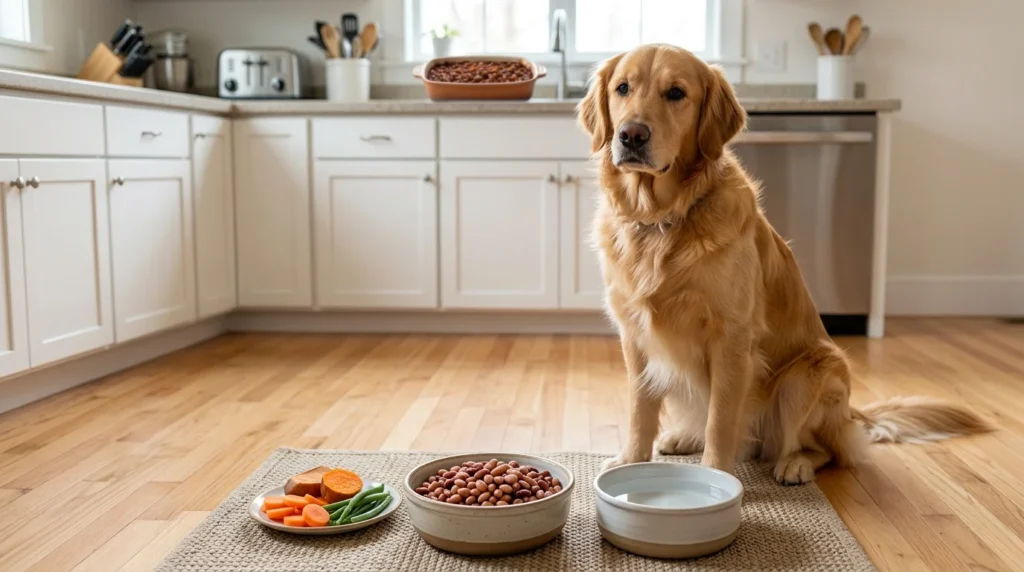
If you want to give your dog beans, choose plain beans that are fully cooked and soft. Rinse canned beans thoroughly if you use them, preferably choosing a low-sodium or no-salt-added variety. Remove any seasoning, sauce, onion, garlic, or other ingredients.
Start with a small portion and cut or mash the beans if necessary for your dog’s size. Introduce them gradually because a sudden increase in beans or fiber can cause gas and digestive upset.
Baked Beans vs. Plain Cooked Beans for Dogs
| Bean Food | Suitable for Dogs? | Main Concern |
|---|---|---|
| Plain cooked beans | Generally yes, in small amounts | Portion size and digestive tolerance |
| Regular baked beans | Best avoided | Sugar, salt, sauces, and seasonings |
| Canned baked beans | Best avoided | Sodium, sugar, and added ingredients |
| Baked beans with onion | No | Onion can be harmful to dogs |
| Baked beans with garlic | No | Garlic can be harmful to dogs |
| Baked beans with bacon | Best avoided | High fat and salt |
| Sweetened baked beans | Best avoided | Added sugar and calories |
| Baked beans with spicy sauce | Best avoided | Spices, salt, and sauces |
When Should Dogs Avoid Baked Beans Completely?
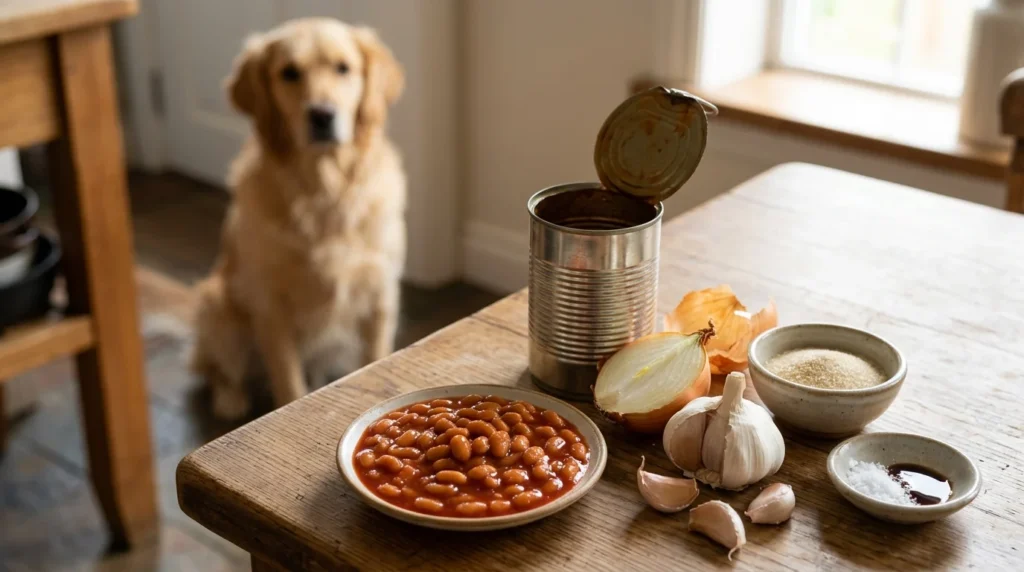
Dogs should completely avoid baked beans containing onion, garlic, large amounts of seasoning, or other known harmful ingredients. They should also avoid baked beans if they have previously developed digestive problems after eating them.
Dogs with special dietary requirements or certain health conditions may also need to avoid additional human foods. When in doubt, ask your veterinarian before introducing beans or other table foods.
Frequently Asked Questions
Can dogs eat baked beans from a can?
It is best to avoid canned baked beans because they commonly contain added sugar, salt, sauces, and seasonings. Check the ingredients if your dog accidentally eats some.
Can dogs eat baked beans with tomato sauce?
Baked beans with tomato sauce are not recommended because the sauce may contain sugar, salt, onion, garlic, or other seasonings. Plain cooked beans are a safer option.
Can dogs eat baked beans every day?
No. Regular baked beans are not an appropriate everyday food for dogs. If beans are offered, plain cooked beans should be given only in small, occasional portions.
What happens if my dog eats a lot of baked beans?
A large amount may cause gas, diarrhea, vomiting, stomach discomfort, or excessive thirst. Check the ingredients and contact your veterinarian if a large amount was consumed or concerning symptoms appear.
What beans are safer for dogs?
Plain, fully cooked beans such as pinto beans, black beans, kidney beans, and green beans can generally be offered in appropriate small portions when prepared without harmful seasonings. Introduce them gradually.
Conclusion
So, can dogs eat baked beans? It is best to avoid regular baked beans because they are usually made with added sugar, salt, sauces, spices, and sometimes onion or garlic. These ingredients can cause digestive upset and, in some cases, more serious health concerns.
If you want to give your dog beans, choose plain, fully cooked beans without added salt, onion, garlic, or sauces. Start with a small amount and monitor your dog for gas, diarrhea, vomiting, or other unusual symptoms. For accidental ingestion of a large amount or a product containing potentially harmful ingredients, contact your veterinarian for guidance.


