

Can Dogs Eat Dandelions? Safety, Benefits & Risks
Yes, dogs can generally eat small amounts of dandelions, including their leaves and flowers, when the plants are correctly identified and have not been treated with pesticides or other harmful chemicals. Dandelions are common wild plants that grow in lawns, gardens, parks, and fields. Although people sometimes use them in herbal products and traditional remedies, their safety for dogs depends on the plant’s condition, the amount consumed, and how it is prepared.
Eating a few clean dandelion leaves or flowers is unlikely to cause problems for most healthy dogs. However, eating large amounts of wild plants can upset a dog’s stomach, and plants collected from roadsides or chemically treated lawns may carry additional risks. Dandelions should not replace your dog’s regular food or be used as a treatment for a health condition without veterinary guidance.
Are Dandelions Safe for Dogs?
True dandelions, commonly identified as plants in the genus Taraxacum, are generally considered low-risk for dogs in small quantities. The leaves, flowers, and roots are used in some food and herbal preparations. However, that does not mean every wild plant that resembles a dandelion is safe to eat.
Dogs that nibble a few clean dandelion leaves while exploring the garden will often be fine. Still, you should discourage them from eating unknown plants, particularly when you cannot confirm their identity or determine whether chemicals have been applied. If your dog eats a large amount of vegetation or develops vomiting, diarrhea, weakness, or other unusual symptoms, contact your veterinarian.
Can Dogs Eat Dandelion Leaves?
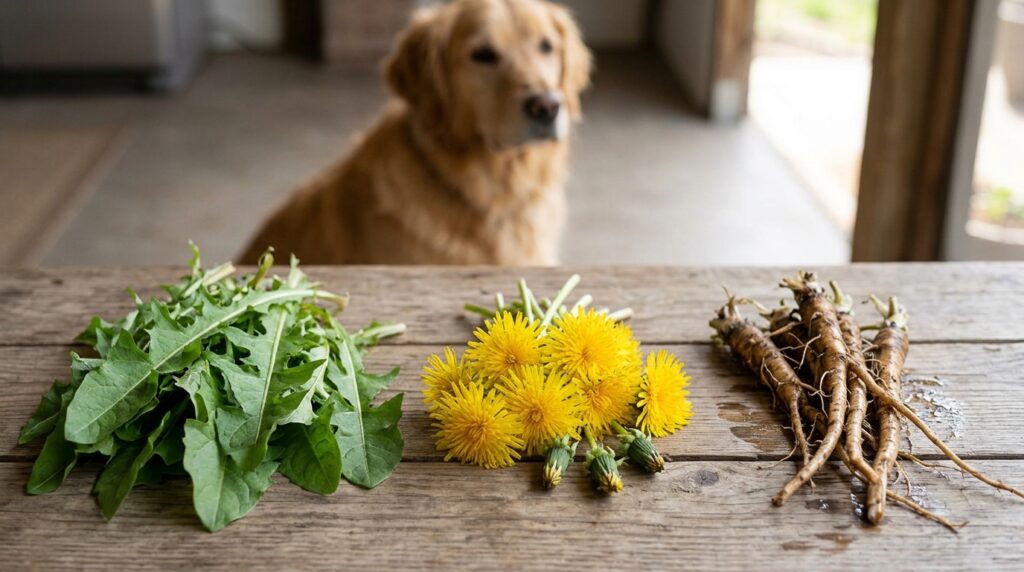
Dogs can generally eat a small amount of fresh dandelion leaves if they come from a correctly identified plant and have not been exposed to pesticides, herbicides, contaminated soil, or animal waste. Dandelion greens contain fiber and naturally occurring nutrients, but a dog’s complete and balanced food should remain the main source of daily nutrition.
Wash the leaves thoroughly before offering a small piece, and introduce them gradually. Some dogs may dislike their naturally bitter taste, while others may experience digestive upset after eating too much. If your dog has a sensitive stomach or follows a special veterinary diet, ask your veterinarian before adding wild greens to their meals.
Can Dogs Eat Dandelion Flowers?
True dandelion flowers are generally considered low-risk for dogs when eaten in small amounts. Their bright yellow petals may attract curious dogs that enjoy sniffing or tasting plants outdoors. A small amount of a clean, untreated flower is unlikely to cause a problem for most healthy dogs.
However, avoid flowers collected from public lawns, roadsides, parks, or gardens where pesticide use may be unknown. Dandelion flowers can also carry dirt, insects, and other contaminants. Do not let your dog eat large quantities of flowers, and avoid feeding them flowers from plants you cannot confidently identify.
Can Dogs Eat Dandelion Roots?
Dandelion roots are used in some herbal products and food preparations, but they are not necessary for a dog’s normal diet. A dog that digs up a dandelion may chew or swallow part of its root along with soil. A small accidental amount of a correctly identified, untreated dandelion root may not cause harm, but larger amounts can upset the digestive system.
Before offering any root intentionally, speak with your veterinarian, particularly if your dog takes medication or has an existing health condition. Herbal supplements made from dandelion root can vary in concentration and ingredients. Products intended for people may contain additional herbs, sweeteners, or other substances that are not suitable for dogs.
Can Puppies Eat Dandelions?
It is best not to encourage puppies to eat wild dandelions. Puppies explore the world by sniffing, chewing, and swallowing objects, so it can be difficult to know how much plant material they have consumed. Their smaller bodies also mean that an unknown quantity of a contaminated plant may be more concerning than a tiny nibble by a larger dog.
If a puppy accidentally eats one or two leaves from a correctly identified, untreated dandelion, serious problems are not expected in most cases. Nevertheless, watch for vomiting, diarrhea, unusual tiredness, or changes in appetite. Keep puppies away from unknown plants and treated lawns, and contact a veterinarian if symptoms develop or you suspect chemical exposure.
Can Small Dogs Eat Dandelions?
Small dogs may be able to tolerate a tiny amount of clean dandelion leaf or flower, but portions should remain especially modest. Even a small handful of plant material can be a substantial amount relative to a small dog’s body size. Large quantities of unfamiliar greens may lead to stomach discomfort or loose stools.
If you choose to offer a small piece, wash it thoroughly and make sure the plant is correctly identified and untreated. Do not allow your dog to graze freely on wild plants. If your small dog eats a large amount or develops concerning symptoms, contact your veterinarian for advice.
Can Large Dogs Eat Dandelions?
Large dogs can generally tolerate small amounts of clean, correctly identified dandelion leaves or flowers, but their size does not make unlimited plant consumption safe. Large dogs may eat more vegetation while playing outside, and it can be difficult to determine whether they have swallowed other plants or contaminants at the same time.
Offer only a small quantity if your veterinarian agrees that it is appropriate for your dog. Dandelions should be an occasional addition rather than a major part of a meal. Prevent your dog from eating plants growing in treated areas or places where chemical exposure and contamination cannot be ruled out.
Can Dogs Eat Dandelions Every Day?
Dandelions should not be added to your dog’s daily diet without considering the dog’s individual needs. Small amounts of clean leaves may be tolerated by many healthy dogs, but there is no need to feed them every day to maintain good health. A complete and balanced dog food already provides the nutrients your pet needs.
Frequent feeding of wild plants also makes it harder to control the amount your dog consumes and increases the chance of exposure to contaminated material. If you want to use dandelion as a regular dietary ingredient or supplement, consult your veterinarian first, especially if your dog has a medical condition or takes medication.
Are Dandelions Good for Dogs?
Dandelion leaves contain fiber and naturally occurring nutrients, including vitamins and minerals. These nutrients contribute to the plant’s value as a food for people, but the presence of nutrients does not automatically make dandelions a necessary or superior food for dogs. The benefits of giving dogs small quantities of wild dandelions have not been established well enough to justify treating them as a nutritional requirement.
For most dogs, a balanced commercial diet or a properly formulated home-prepared diet provides more reliable nutrition. If your dog enjoys tasting a small piece of a clean, untreated dandelion, it may be tolerated as an occasional nibble. Do not rely on dandelions to correct a nutritional deficiency or treat a health problem.
Can Dandelions Help a Dog’s Digestion?
Dandelion leaves contain fiber, which can influence digestion, but feeding more fiber does not always improve a dog’s stomach or bowel movements. Too much unfamiliar plant material may instead cause gas, loose stools, or abdominal discomfort. Dogs with ongoing digestive symptoms need an appropriate assessment rather than an untested herbal remedy.
If your dog experiences frequent diarrhea, constipation, vomiting, or appetite changes, consult a veterinarian to identify the underlying cause. Do not use dandelion leaves or roots as a substitute for prescribed treatment. Your veterinarian can recommend a suitable diet or fiber source based on your dog’s age, health, and specific digestive needs.
Can Dogs Eat Dandelions From the Lawn?
Dogs may encounter dandelions growing naturally in lawns, but not every lawn is a safe place for them to eat plants. Grass and dandelions can be exposed to weed killers, pesticides, fertilizers, or other garden chemicals. Public areas may also be contaminated by animal waste, vehicle pollution, or other environmental hazards.
Do not let your dog eat dandelions from a lawn unless you know the plants are correctly identified and the area has not been treated with harmful products. Follow the instructions and veterinary precautions associated with any lawn chemicals used near your pet. If you suspect your dog has swallowed a chemically treated plant, contact a veterinarian promptly and keep the product packaging available if possible.
Can Dandelions Be Toxic to Dogs?
True dandelions are generally considered low-risk for dogs when eaten in small amounts, but the biggest concerns often involve contamination, misidentification, or excessive consumption. A plant that looks like a dandelion may be a different species, and wild plants can grow in areas treated with herbicides or pesticides. These factors can make an otherwise low-risk nibble more concerning.
If your dog eats an unknown plant and develops vomiting, diarrhea, excessive drooling, weakness, tremors, or unusual behavior, contact your veterinarian promptly. If you suspect chemical exposure, do not wait for symptoms to appear before seeking advice. Keep a photo or sample of the plant, if you can collect it safely, to help your veterinarian identify what was eaten.
Can Dogs Eat Dandelions With Pesticides on Them?
No. Do not allow your dog to eat dandelions that may have been sprayed with pesticides, herbicides, or other garden chemicals. Some lawn treatments can be harmful if swallowed, and the risk depends on the specific product, its concentration, and the amount consumed. Washing a plant does not reliably remove every chemical residue.
If your dog has eaten a plant from a recently treated area, check the product label and contact your veterinarian for advice. Provide the product name, active ingredients, approximate time of exposure, and your dog’s weight if known. Do not induce vomiting or give home remedies unless a veterinary professional specifically instructs you to do so.
See Also: Can Dogs Eat Crab Meat? Safety, Benefits & Risks
Can Dogs Eat Dandelions From the Roadside?
It is best to avoid letting dogs eat roadside dandelions. Plants near roads may be exposed to vehicle pollution, dust, waste, and other environmental contaminants. You may also have no way to know whether nearby properties or public maintenance crews have applied weed killers or other chemicals.
Choose not to feed plants collected from roadsides or unfamiliar public spaces. If you want to offer your dog a small amount of dandelion, use a correctly identified plant from a location known to be free from chemical treatments and contamination. Wash it thoroughly and offer only a small piece.
Can Dogs Eat Dried Dandelion Leaves?
Dried dandelion leaves are used in some herbal products, but they should not automatically be treated as safe just because they are dried. Drying removes moisture and can make the plant material more concentrated by weight. Commercial products may also contain other herbs, additives, or ingredients that are not appropriate for dogs.
Do not give your dog dried dandelion supplements without checking with your veterinarian. This is particularly important if your dog takes medication, has kidney or liver problems, or follows a special diet. If your veterinarian approves a product, use only the recommended amount and choose a product with clearly listed ingredients.
Can Dogs Drink Dandelion Tea?
Dandelion tea is not necessary for dogs, and you should not offer it as a home remedy without veterinary advice. Herbal teas vary in strength, and some products contain additional plants, flavorings, sweeteners, or other ingredients. A tea prepared for people may not be appropriate for a dog.
Fresh, clean drinking water is the best everyday beverage for dogs. If you are considering dandelion tea for a specific health concern, speak with your veterinarian before giving it to your pet. Do not use herbal tea to treat digestive problems, urinary symptoms, or other medical conditions without professional guidance.
Can Dogs Eat Dandelion Supplements?
Dandelion supplements should only be given to dogs after veterinary guidance. Products may contain leaves, roots, concentrated extracts, or mixtures of several herbs. The strength and composition can vary significantly, so a product that is marketed for people may not be suitable for canine use.
Herbal supplements can also interact with medications or be inappropriate for certain health conditions. Before using a supplement, show your veterinarian the complete ingredient list and product label. Avoid products with unclear ingredients or claims that they can cure diseases, detoxify the body, or replace prescribed veterinary treatment.
Can Dandelions Cause Diarrhea in Dogs?
Yes, eating too many dandelion leaves or flowers may cause digestive upset, including loose stools or diarrhea. Dogs that are not accustomed to eating leafy plants may be more sensitive to a sudden change in their diet. Contaminated plants or other materials swallowed along with the dandelions can create additional risks.
If your dog develops mild diarrhea after eating a small amount of dandelion, prevent further access to the plant and monitor your pet. Contact your veterinarian if the diarrhea is severe, persistent, bloody, or accompanied by vomiting, weakness, pain, or loss of appetite. Puppies and dogs with existing medical conditions may need earlier veterinary attention.
Can Dandelions Make Dogs Vomit?
Eating a large quantity of unfamiliar plant material can irritate a dog’s digestive system and may lead to vomiting. Vomiting after eating dandelions does not necessarily mean the plant itself is poisonous. The dog may have consumed too much vegetation, another plant, contaminated material, or a chemical residue.
If your dog vomits repeatedly, cannot keep water down, appears weak, has a painful or swollen abdomen, or shows other worrying symptoms, seek veterinary care. Do not give more dandelions or herbal remedies to settle the stomach. If chemical exposure or ingestion of an unidentified plant is possible, contact your veterinarian promptly.
What Should You Do If Your Dog Eats Dandelions?
If your dog eats a few leaves or flowers from a correctly identified, untreated dandelion and appears normal, remove access to the plant and monitor your pet. Make sure fresh water is available, and watch for vomiting, diarrhea, changes in appetite, unusual tiredness, or other changes in behavior.
If your dog eats a large amount, consumes an unidentified plant, or may have been exposed to lawn chemicals, contact your veterinarian for advice. Do not induce vomiting unless instructed by a veterinary professional. If possible, take a clear photograph of the plant and keep any relevant chemical packaging so the veterinarian can assess the risk more accurately.
See Also: Can Dogs Eat Imitation Crab? Safety & Risks
How to Offer Dandelions to Dogs More Safely
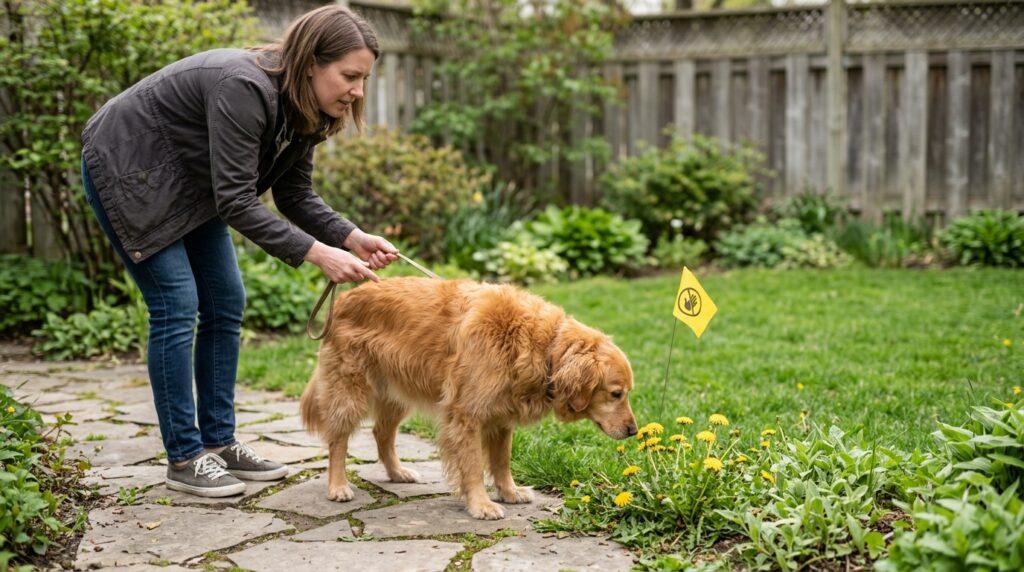
Before offering any dandelion, make sure it is a true dandelion and comes from an area that has not been treated with pesticides, herbicides, or other harmful chemicals. Avoid plants growing beside roads, in polluted areas, or where animal waste may be present. Wash the plant thoroughly with clean water to remove dirt and debris.
Offer only a small amount and do not make dandelions a regular substitute for your dog’s normal food. Avoid concentrated extracts, teas, tinctures, and supplements unless your veterinarian approves them. If you are unsure about the plant’s identity, source, or suitability for your dog, it is safer not to feed it.
Dandelion Leaves vs. Flowers vs. Roots for Dogs
| Plant Part | General Safety | Main Concern | Recommendation |
|---|---|---|---|
| Dandelion leaves | Generally low-risk in small amounts | Digestive upset and contamination | Offer only a small amount if the plant is correctly identified and untreated |
| Dandelion flowers | Generally low-risk in small amounts | Contaminants and misidentification | Avoid flowers from treated or unfamiliar areas |
| Dandelion roots | Not necessary as a dog food | Large amounts and concentrated preparations | Ask a veterinarian before offering roots or root products |
| Dandelion supplements | Depends on the product | Concentration, additives, and medication interactions | Use only with veterinary guidance |
When Should You Contact a Veterinarian?
Contact your veterinarian if your dog eats a large quantity of dandelions, consumes an unidentified plant, or may have eaten vegetation exposed to pesticides or herbicides. You should also seek advice if your dog has an existing medical condition or takes medication and you are considering giving dandelion products intentionally.
Seek prompt veterinary attention if your dog develops repeated vomiting, severe diarrhea, excessive drooling, tremors, weakness, breathing difficulty, collapse, or other serious symptoms. Do not assume that symptoms are harmless simply because the plant looked like a dandelion. Accurate plant identification and details about possible chemical exposure can help your veterinarian determine the next steps.
Frequently Asked Questions
Are dandelions poisonous to dogs?
True dandelions are generally considered low-risk in small amounts. However, contamination, excessive consumption, or confusion with another plant can create risks. Avoid feeding unknown or chemically treated plants.
Can dogs eat dandelion leaves and flowers?
Dogs can generally eat small amounts of correctly identified, untreated dandelion leaves and flowers. Wash them thoroughly, offer only a little, and monitor your dog for digestive upset.
Can dogs eat dandelion roots?
A small accidental amount of a true dandelion root may not cause a problem, but roots and concentrated root products are not necessary for dogs. Ask your veterinarian before using them intentionally.
Can dandelions help dogs with health problems?
Dandelions should not be used to treat a dog’s health condition without veterinary guidance. Evidence supporting many herbal claims is limited, and supplements may interact with medication or be unsuitable for some dogs.
What should I do if my dog eats a dandelion?
If your dog eats a small amount of a clean, correctly identified dandelion and remains well, monitor them. Contact your veterinarian if your dog eats a large amount, may have consumed a treated plant, or develops concerning symptoms.
Conclusion
Dogs can generally eat small amounts of true dandelion leaves and flowers when the plants are correctly identified, clean, and free from harmful chemical treatments. A few bites are unlikely to cause problems for most healthy dogs, but large amounts of plant material may upset the stomach. Wild plants can also carry contaminants or be mistaken for other species.
Dandelions are not essential to a dog’s diet and should not replace balanced dog food or veterinary treatment. Avoid roadside plants, chemically treated lawns, and unverified herbal supplements. If your dog eats a large quantity, may have been exposed to pesticides, or develops vomiting, diarrhea, weakness, or other unusual symptoms, contact your veterinarian for guidance.
See Also: Can Dogs Eat Baked Beans? Safety, Risks & Alternatives


