

Top 10 Human Foods Dogs Can Eat Safely
Many dogs enjoy small portions of certain human foods, and some can make healthy occasional treats when they are prepared properly. However, not every food that is safe for people is safe for dogs. Ingredients such as onion, garlic, chocolate, xylitol, excessive salt, and certain seasonings can be dangerous for dogs, so human food should always be offered carefully.
The safest choices are usually simple, plain foods without added salt, sugar, butter, sauces, spices, or other processed ingredients. Portion size also matters. Even a food that is safe for dogs can cause stomach upset or contribute too many calories when given in large amounts.
1. Chicken
Plain, fully cooked chicken is one of the human foods dogs can generally eat. Chicken provides protein and can be used as an occasional treat or mixed with a dog’s regular food. It should always be cooked thoroughly and served plain, without onion, garlic, spicy seasoning, heavy sauces, or excessive salt.
Remove all bones before giving chicken to your dog. Cooked bones can become brittle and may splinter, creating serious risks if swallowed. You should also remove very fatty skin and avoid fried chicken because the breading, oil, salt, and seasoning can cause digestive problems.
2. Carrots
Carrots are another dog-friendly human food that can be served raw or cooked. They contain fiber and several nutrients, and many dogs enjoy the crunchy texture of raw carrot pieces. Carrots are also relatively low in calories compared with many processed human snacks.
Wash carrots thoroughly and cut them into pieces appropriate for your dog’s size. Large, hard pieces can be difficult for some dogs to chew, especially small dogs or dogs that swallow food quickly. Cooked carrots should be plain, without butter, salt, sugar, or seasoning.
3. Apples
Dogs can generally eat apples when they are properly prepared. Apples provide fiber and can be a refreshing occasional treat. You can offer small pieces of apple flesh with the skin after washing the fruit thoroughly.
The important part is removing the core, stem, and seeds. Apple seeds should not be intentionally fed to dogs, and the hard core can be difficult to digest and may present a choking or obstruction risk. Cut the remaining apple into small pieces before serving it.
4. Pumpkin
Plain pumpkin can be a useful human food for dogs when served in appropriate amounts. Pumpkin contains fiber and is often used as an occasional addition to a dog’s diet. It can be served cooked and plain or as plain canned pumpkin without added sugar, spices, or other ingredients.
Do not confuse plain pumpkin with pumpkin pie filling. Pie filling may contain sugar, spices, fats, or other ingredients that are not suitable for dogs. When buying canned pumpkin, check the ingredient label and choose a simple product containing pumpkin without unnecessary additives.
5. Eggs
Fully cooked eggs can generally be eaten by dogs in small portions. Eggs provide protein and other nutrients, making them a convenient occasional treat. Scrambled, boiled, or otherwise fully cooked plain eggs can work well when prepared without unnecessary ingredients.
Avoid adding salt, butter, heavy oil, cheese, onion, garlic, or spicy seasonings. Raw eggs are not the best choice because uncooked animal products can carry harmful bacteria, and feeding raw eggs regularly can create additional nutritional concerns. For a simple treat, a fully cooked plain egg is the safer approach.
6. Green Beans
Plain green beans can be a healthy occasional food for many dogs. They contain fiber and can provide some vitamins and minerals while adding variety to a dog’s treats. Fresh, frozen, or cooked green beans can be suitable as long as they are plain and prepared appropriately.
Always check canned green beans carefully because many canned products contain added salt. If using canned beans, a low-sodium or no-salt-added option is preferable, and rinsing them can help remove some surface salt. Never serve green beans cooked with bacon, onion, garlic, or heavily seasoned sauces.
7. Sweet Potatoes
Plain cooked sweet potato can be eaten by dogs in moderate portions. Sweet potatoes contain carbohydrates, fiber, and several nutrients, making them a popular ingredient in some dog foods and homemade dog treats.
Cook sweet potato thoroughly and serve it plain. Remove the tough outer skin if needed and cut or mash the soft flesh into manageable portions. Avoid sweet potato fries, casseroles, candied sweet potatoes, and dishes containing butter, sugar, salt, spices, onion, or garlic.
8. Blueberries
Blueberries are generally safe for dogs when given in small amounts. These small fruits provide fiber and naturally occurring plant compounds, and many dogs enjoy them as an occasional treat. They can be offered fresh after being washed thoroughly.
Because blueberries are small, they may be easier for many dogs to eat than larger fruits. However, portion size still matters. Too many blueberries can contribute excess sugar and fiber and may cause digestive upset. For small dogs, you may want to cut larger berries or offer only a few at a time.
9. Plain Cooked Rice
Plain cooked rice is another human food that dogs can generally eat in moderate portions. White or brown rice can be served plain without sauces, spices, salt, or other additions. Rice is primarily a source of carbohydrates, so it should complement a balanced diet rather than replace nutritionally complete dog food.
When preparing rice for your dog, keep it simple. Avoid fried rice and restaurant rice dishes because they may contain high levels of salt, oil, onion, garlic, sauces, or spices. Plain cooked rice mixed with an appropriate amount of plain cooked chicken can be a simple occasional meal addition, but regular meals should still provide complete canine nutrition.
10. Cucumber
Plain cucumber is generally safe for dogs and can be a refreshing, water-rich treat. Dogs can usually eat cucumber with or without the skin as long as it has been washed thoroughly and cut into suitable pieces.
Avoid pickles and seasoned cucumber because these products may contain excessive salt, garlic, onion, spices, or other ingredients that are not appropriate for dogs. Fresh cucumber is the better option. Introduce it gradually, particularly if your dog has a sensitive stomach, because eating too much can cause gas or loose stool.
See Also: Can Dogs Eat Sushi? Safety, Risks & Safe Alternatives
How Much Human Food Can Dogs Eat?
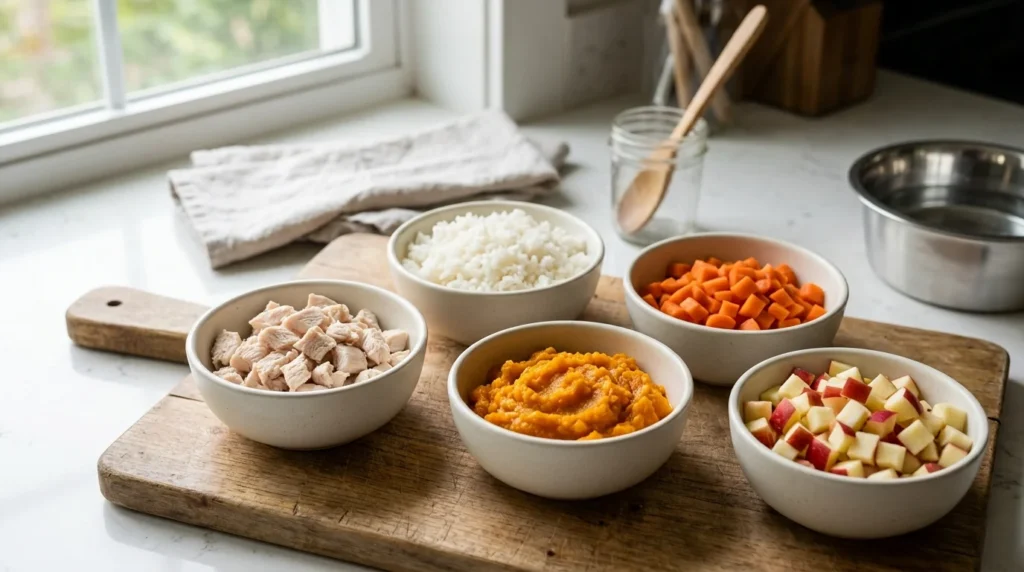
Even safe human foods should usually remain occasional treats or small additions to a dog’s normal diet. The appropriate amount depends on your dog’s size, age, activity level, health, and existing diet. A large serving that seems harmless for a large dog may be excessive for a small dog.
As a practical approach, introduce one new food at a time and begin with a small portion. Watch for vomiting, diarrhea, excessive gas, itching, or other unusual reactions. If your dog tolerates the food, you can continue offering small amounts occasionally rather than making human food a major part of the diet.
Why Plain Human Foods Are Safer for Dogs
When sharing human food with a dog, simple preparation is usually the safest approach. Plain cooked chicken is different from fried chicken, and plain pumpkin is different from pumpkin pie filling. The main ingredient may be safe while the additional ingredients make the finished dish unsuitable for dogs.
For this reason, avoid automatically sharing food from your plate. Set aside a small dog-safe portion before adding salt, sauces, spices, butter, onion, garlic, or other seasonings. This gives your dog an occasional treat without exposing them to unnecessary ingredients.
Human Foods Dogs Should Eat Only in Small Amounts
Even foods that are safe for dogs should not make up most of their daily calories. Human foods are best used as occasional treats or small additions to a complete and balanced dog food. Giving too many treats can contribute to weight gain and may make it harder to maintain a nutritionally balanced diet.
Start with small portions, especially when introducing a food for the first time. Your dog’s size, age, activity level, digestive sensitivity, and overall health can all affect how much is appropriate. If a particular food causes repeated digestive problems, stop offering it and speak with your veterinarian.
Can Dogs Eat Human Food Every Day?
Some plain human foods can be offered regularly in very small portions, but dogs do not need a variety of human foods every day to stay healthy. Their main meals should come from a nutritionally complete diet formulated for dogs. Human food should generally remain an occasional treat or supplement to that diet.
If you give human food every day, rotate small portions rather than relying heavily on one ingredient. Keep track of treats and extras so they do not become a significant portion of your dog’s daily calories. A veterinarian can also help determine appropriate portions for dogs with special dietary needs.
Can Puppies Eat These Human Foods?
Puppies can eat some plain human foods, but they have different nutritional requirements from adult dogs. Growing puppies need a diet formulated to provide appropriate amounts of protein, fat, calcium, phosphorus, and other essential nutrients. Human foods should therefore be occasional extras rather than replacements for puppy food.
When introducing a new food to a puppy, start with a very small amount and introduce only one new ingredient at a time. Plain cooked chicken, carrot, pumpkin, or other appropriate foods may be suitable, but preparation and portion size are important. If your puppy develops vomiting, diarrhea, or another concerning symptom, contact your veterinarian.
Can Small Dogs Eat Human Foods?
Small dogs can eat many of the same dog-safe human foods as larger dogs, but their portions need to be much smaller. A few extra bites can represent a significant amount of calories for a small dog. Small dogs may also have difficulty chewing large pieces of hard vegetables or fruit.
Cut foods such as carrots, apples, cucumber, and sweet potatoes into appropriately sized pieces. Start with tiny portions and observe your dog’s reaction. Avoid giving large chunks simply because the food itself is considered safe.
Can Large Dogs Eat More Human Food?
Large dogs generally require more calories than small dogs, but that does not mean they can eat unlimited human food. Safe foods can still cause digestive upset when consumed in excessive amounts, and too many treats can contribute to weight gain.
Portion size should be based on the individual dog’s complete diet and nutritional needs. A large dog may be able to handle more than a small dog, but plain human foods should still remain a relatively small part of the overall diet.
See Also: Can Dogs Eat Collard Greens? Safety & Feeding Guide
What Human Foods Should Dogs Never Eat?
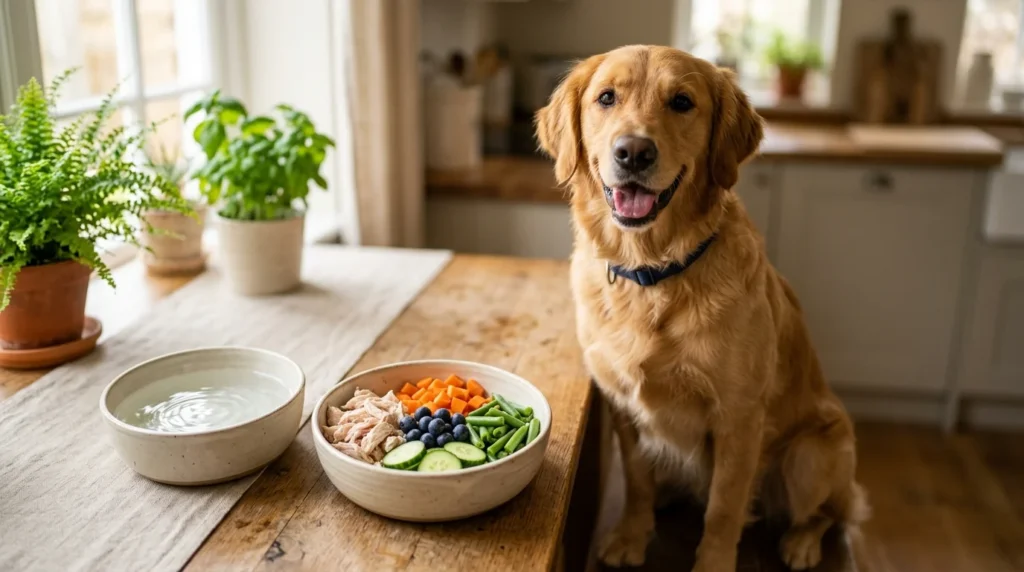
There are many human foods and ingredients that dogs should not eat. Important examples include chocolate, grapes and raisins, onions, garlic, foods containing xylitol, alcohol, macadamia nuts, and heavily caffeinated products. Some foods can be dangerous even when consumed in relatively small amounts.
Preparation also matters. A plain potato or plain meat may be suitable in certain circumstances, while a human dish containing the same ingredient may contain unsafe amounts of salt, fat, onion, garlic, sauces, or spices. If your dog eats a potentially toxic food, contact a veterinarian or animal poison service promptly rather than waiting for symptoms.
Human Foods Dogs Can Eat Raw vs. Cooked
| Food | Suitable Form | Important Preparation |
|---|---|---|
| Chicken | Cooked | Plain, fully cooked, boneless, and unseasoned |
| Carrots | Raw or cooked | Wash and cut into appropriate pieces |
| Apples | Raw | Remove seeds, stem, and core |
| Pumpkin | Cooked or plain canned | Avoid pie filling, sugar, and spices |
| Eggs | Cooked | Serve plain and fully cooked |
| Green beans | Raw or cooked | Avoid salty sauces and seasonings |
| Sweet potatoes | Cooked | Serve plain and soft; avoid seasoned dishes |
| Blueberries | Raw | Wash thoroughly and offer small portions |
| Rice | Cooked | Plain with no sauces, salt, onion, or garlic |
| Cucumber | Raw | Wash and cut into small pieces |
How to Safely Share Human Food With Your Dog
The easiest way to share human food safely is to prepare a separate portion for your dog before adding seasonings or sauces. For example, if you are cooking chicken for your family, set aside a small piece before adding salt, spices, onion, garlic, or sauce. The same approach works with vegetables, rice, eggs, and sweet potatoes.
Wash fruits and vegetables before serving them, remove unsafe parts such as apple cores and seeds, and cut food into manageable pieces. Avoid giving dogs food directly from a heavily seasoned plate because it can be difficult to know exactly how much salt, fat, or potentially harmful ingredients they have consumed.
What If My Dog Eats Too Much Human Food?
If your dog eats a large amount of an otherwise safe food, the most common concern may be digestive upset. Depending on what was eaten and how much, your dog may develop gas, loose stool, diarrhea, vomiting, or temporary stomach discomfort.
Monitor your dog and make sure fresh water is available. Do not give additional treats or rich foods while the stomach settles. If your dog ate a potentially toxic ingredient, a large amount of fatty food, bones, or a food containing onion, garlic, xylitol, chocolate, grapes, raisins, or another dangerous substance, contact your veterinarian promptly.
Human Food Treats vs. Regular Dog Food
| Feature | Human Food Treats | Complete Dog Food |
|---|---|---|
| Main purpose | Occasional treat or food topper | Primary source of daily nutrition |
| Portion | Small and controlled | Based on the dog’s nutritional needs |
| Preparation | Usually plain and unseasoned | Formulated specifically for dogs |
| Nutrition | Varies considerably by food | Designed to provide complete nutrition |
| Examples | Carrot, apple, cucumber, plain chicken | Complete and balanced commercial or appropriately formulated diet |
Signs Your Dog May Not Tolerate a Human Food
Not every dog responds to new foods in the same way. After introducing a new human food, watch for vomiting, diarrhea, excessive gas, abdominal discomfort, reduced appetite, itching, or other unusual changes. A mild reaction may resolve after the food is removed, but repeated or severe symptoms deserve veterinary attention.
Introducing one new food at a time makes it easier to identify the cause of a reaction. If your dog has an existing medical condition, food allergy, sensitive digestive system, or special dietary requirement, ask your veterinarian before regularly adding human foods to the diet.
Frequently Asked Questions
What are the top 10 human foods dogs can eat?
Ten generally dog-friendly choices include plain cooked chicken, carrots, apples without seeds and cores, plain pumpkin, fully cooked eggs, green beans, cooked sweet potatoes, blueberries, plain cooked rice, and cucumber. They should be served in appropriate portions and without unsafe seasonings or ingredients.
Can dogs eat human food every day?
Some plain human foods can be offered in small portions, but they should not replace a complete and balanced dog diet. Too many treats or extras can add unnecessary calories and may upset the nutritional balance of your dog’s meals.
What human foods are toxic to dogs?
Important foods and ingredients to avoid include chocolate, grapes, raisins, onions, garlic, xylitol, alcohol, macadamia nuts, and heavily caffeinated products. If a dog eats a potentially toxic food, contact a veterinarian or animal poison service promptly.
Can puppies eat human foods?
Puppies can eat small amounts of some dog-safe human foods, but their main diet should be formulated specifically for growth. Introduce new foods gradually and keep portions very small.
How much human food can I give my dog?
The appropriate amount depends on the dog’s size, age, activity level, health, and regular diet. Human foods should generally remain small treats or additions rather than making up a large part of daily calories.
Conclusion
Many simple human foods can be safe for dogs when they are prepared correctly and given in moderation. Plain cooked chicken, carrots, apples, pumpkin, eggs, green beans, sweet potatoes, blueberries, cooked rice, and cucumber are examples of foods that can work as occasional treats for many healthy dogs.
The key is to keep these foods plain, control portions, and remove unsafe parts or ingredients. Avoid seasoning with onion, garlic, excessive salt, sauces, or other potentially harmful ingredients. Human food should complement—not replace—a complete and balanced canine diet. When you are unsure about a particular food or your dog has a medical condition, checking with your veterinarian is the safest approach.
See Also: Can Dogs Eat Cucumber Skin? Safety & Feeding Guide


