
Can Dogs Eat Mustard? Risks, Symptoms & Safe Alternatives
Mustard is a popular condiment used on sandwiches, burgers, hot dogs, and many other foods. While it adds flavor to human meals, many dog owners wonder whether it is safe to let their pets taste a little mustard.
The short answer is no. Dogs should not eat mustard. Most prepared mustard contains mustard seeds along with ingredients such as salt, vinegar, spices, garlic, onion powder, and preservatives that can upset your dog’s stomach. Mustard seeds themselves may also be toxic to dogs in large amounts.
Can Dogs Eat Mustard?
No, dogs should not eat mustard. Yellow mustard, Dijon mustard, spicy mustard, honey mustard, and most other varieties are not considered safe for dogs.
Even small amounts may cause stomach irritation in sensitive dogs, while larger amounts can lead to vomiting, diarrhea, abdominal pain, and other digestive problems.
How Much Mustard Can Dogs Eat?
The safest amount of mustard for dogs is none. Unlike many fruits and vegetables, mustard offers no nutritional benefit that justifies feeding it to your pet.
If your dog accidentally licks a tiny amount, monitor them for signs of stomach upset. If a large quantity is eaten, contact your veterinarian promptly.
| Dog Size | Safe Amount | Recommendation |
|---|---|---|
| Small Dogs | None | Avoid completely |
| Medium Dogs | None | Avoid completely |
| Large Dogs | None | Avoid completely |
| Puppies | None | Never feed |
Can Dogs Eat Yellow Mustard?
No, yellow mustard is not safe for dogs. It contains mustard seeds and additional ingredients that may irritate the digestive system.
Even though a tiny accidental lick is unlikely to be life-threatening, it should never be intentionally offered.
Can Dogs Eat Dijon Mustard?
No, Dijon mustard should also be avoided. It often contains stronger spices, vinegar, and seasonings that can be even more irritating than regular yellow mustard.
Dogs should never consume Dijon mustard as a treat or food topping.
See Also: Can Dogs Eat Apples? Benefits, Risks & Safe Feeding Guide
Can Dogs Eat Honey Mustard?
No, honey mustard is not recommended. Besides mustard, it contains added sugar and other ingredients that provide no health benefits for dogs.
Some commercial products may also include garlic or onion powder, which are toxic to dogs.
Can Puppies Eat Mustard?
No, puppies should never eat mustard. Their digestive systems are more sensitive than those of adult dogs, making them more likely to experience vomiting or diarrhea.
If your puppy accidentally eats mustard, monitor them closely and contact your veterinarian if symptoms develop.
Can Dogs Eat Mustard Every Day?
No, dogs should never eat mustard daily—or at all. It is not a suitable food for dogs and offers no nutritional value.
Choose healthy, dog-safe treats instead of condiments like mustard.
Is Mustard Good for Dogs to Eat?
No, mustard is not good for dogs. Unlike many dog-safe fruits and vegetables, mustard provides no meaningful nutritional benefits and may irritate your dog’s digestive system.
Most mustard products contain mustard seeds, salt, vinegar, spices, preservatives, and sometimes garlic or onion powder, making them an unhealthy choice for dogs.
How to Keep Your Dog Safe Around Mustard
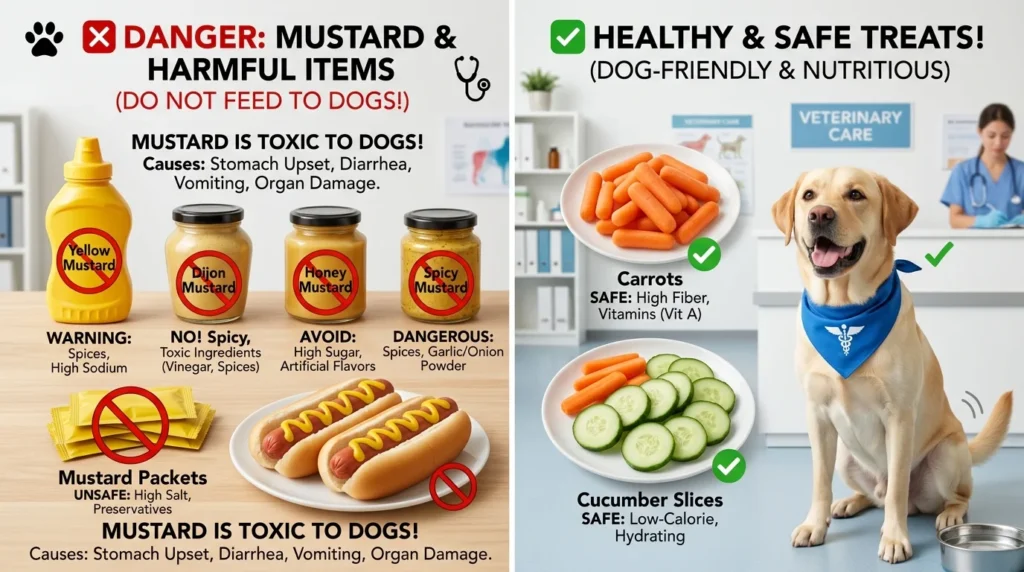
Store mustard bottles and packets out of your dog’s reach, especially during barbecues, picnics, or family meals. Avoid giving your dog sandwiches, burgers, hot dogs, or other foods that contain mustard.
If your dog accidentally consumes a large amount of mustard or develops vomiting, diarrhea, abdominal pain, weakness, or loss of appetite, contact your veterinarian immediately.
See Also: Can Dogs Eat Salami? Risks, Side Effects & Safe Alternatives
Does Mustard Have Any Benefits For Dogs?
No, mustard does not provide significant health benefits for dogs. Although mustard seeds contain certain nutrients for humans, the condiment itself is not an appropriate food for canine diets.
Dogs receive their nutritional needs from balanced dog food and safe treats rather than flavored condiments.
Does Mustard Have Any Risks For Dogs?
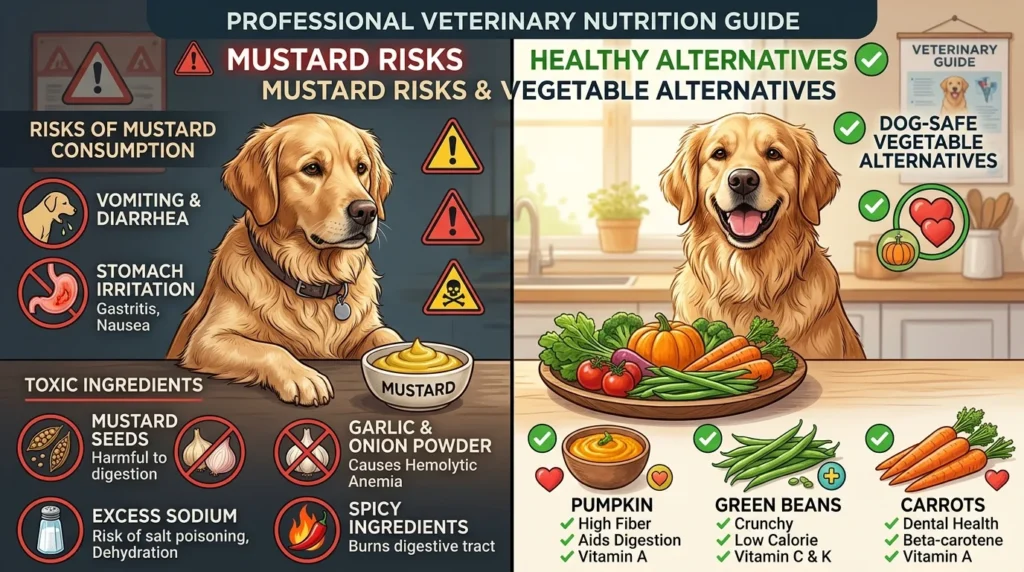
Yes, mustard poses several risks. It may cause vomiting, diarrhea, stomach irritation, abdominal pain, and digestive discomfort. Larger amounts can result in more severe gastrointestinal symptoms.
Many commercial mustard products also contain harmful ingredients such as garlic, onion powder, excessive sodium, sugar, preservatives, and spicy seasonings that make them even less suitable for dogs.
Frequently Asked Questions
Can dogs eat mustard?
No. Mustard is not considered safe for dogs and should be avoided.
Can dogs eat yellow mustard?
No. Yellow mustard contains mustard seeds and other ingredients that may upset your dog’s stomach.
Can dogs eat Dijon mustard?
No. Dijon mustard often contains stronger spices and seasonings that are unsuitable for dogs.
Can dogs eat honey mustard?
No. Honey mustard contains added sugar and may include garlic or onion powder, which are harmful to dogs.
What should I do if my dog eats mustard?
If your dog only licks a tiny amount, monitor them for stomach upset. If a larger amount is eaten or symptoms such as vomiting or diarrhea appear, contact your veterinarian promptly.
Conclusion
Dogs should not eat mustard. Whether it is yellow mustard, Dijon mustard, honey mustard, or spicy mustard, this condiment can irritate your dog’s digestive system and provides no nutritional value.
If your dog accidentally consumes mustard, monitor them closely for symptoms and seek veterinary advice if they eat a large quantity or show signs of illness. Choosing healthy dog-safe treats is always the safer option.
See Also: Can Dogs Eat Pretzels? Risks, Side Effects & Safe Guide


