

Can Dogs Eat Asparagus? Safe Serving, Benefits & Risks 2026
Yes, dogs can eat asparagus, but it should be cooked, plain, and cut into small pieces. Asparagus is not toxic to dogs, but raw asparagus can be tough, stringy, and hard to chew. It may also cause choking or stomach upset if your dog swallows large pieces.
The safest way is to serve soft cooked asparagus with no salt, butter, garlic, onion, oil, or seasoning. Even then, asparagus should only be an occasional treat. Some dogs digest it well, while others may get gas, vomiting, or diarrhea. Start with a tiny amount first.
Can Dogs Eat Raw Asparagus?
Dogs should not eat raw asparagus. Raw asparagus is hard, fibrous, and difficult for many dogs to chew properly. If a dog swallows a large raw piece, it may become a choking risk or cause stomach discomfort. Raw asparagus can also be harder for dogs to digest than cooked asparagus.
If your dog eats a small raw piece by accident, it may not cause serious harm, but you should watch for vomiting, diarrhea, gagging, or loss of appetite. For safety, always cook asparagus until soft before feeding it. Cut it into small bite-sized pieces to make it easier and safer for your dog.
Can Dogs Eat Asparagus Cooked?
Yes, dogs can eat cooked asparagus if it is plain and soft. Cooking asparagus makes it easier to chew and digest. Steaming or boiling is usually the best method because it softens the stalk without adding unhealthy ingredients. Avoid frying asparagus or cooking it with butter, oil, salt, garlic, or onion.
Cooked asparagus should still be given in small amounts. Too much can cause gas or loose stool because asparagus contains fiber. If your dog has never eaten asparagus before, start with one or two small pieces. If your dog handles it well, you can offer it occasionally as a treat.
Can Dogs Eat Cooked Asparagus?
Cooked asparagus is safer for dogs than raw asparagus, but it must be prepared correctly. It should be plain, soft, and chopped into small pieces. Dogs do not need seasoning, sauces, or butter. Human-style cooked asparagus often contains ingredients that are not good for dogs.
Before giving cooked asparagus, let it cool completely. Hot food can burn your dog’s mouth. Also, remove any tough ends because they can still be hard to chew. Cooked asparagus can be a light snack, but it should not replace your dog’s normal balanced food.
Can Dogs Eat Asparagus Stems?
Dogs can eat asparagus stems only if they are cooked until soft and cut into small pieces. The lower part of the stem is often tough and woody, so it is not the best part to feed. Tough stems may be hard for dogs to chew and may cause choking or digestive discomfort.
If you want to share asparagus, use the softer upper part instead of the thick bottom stem. Always cook it plain and avoid seasoning. If your dog has a sensitive stomach, it may be better to skip asparagus stems and choose easier vegetables like carrots, cucumber, or green beans.
Can Dogs Eat Canned Asparagus?
Canned asparagus is not the best choice for dogs. Many canned vegetables contain added salt or preservatives. Too much sodium is unhealthy for dogs and may cause thirst, stomach upset, or other health concerns. Even if the asparagus itself is safe, the added ingredients can make it a poor option.
If you only have canned asparagus, check the label carefully. Choose no-salt-added asparagus if available, rinse it well, and give only a tiny amount. Fresh plain cooked asparagus is a safer choice. Avoid canned asparagus with brine, seasoning, garlic, onion, or sauces.
Can Dogs Eat Asparagus Safely?
Dogs can eat asparagus safely when it is cooked, plain, soft, and served in small pieces. The biggest safety concerns are choking, digestive upset, and unsafe seasonings. Raw asparagus is too tough for many dogs, while seasoned asparagus may contain harmful ingredients like garlic or onion.
To feed asparagus safely, wash it well, trim the tough ends, steam or boil it, and cut it into small pieces. Give your dog a small amount first. If your dog gets vomiting, diarrhea, gas, or refuses food afterward, stop feeding asparagus and speak with your vet.
Can Dogs Eat Steamed Asparagus?
Yes, steamed asparagus is one of the better ways to prepare asparagus for dogs. Steaming softens the vegetable without needing oil, butter, salt, or spices. This makes it easier for dogs to chew and digest. Plain steamed asparagus is much safer than fried, roasted, or seasoned asparagus.
After steaming, let the asparagus cool and cut it into small pieces. Do not give long spears because they can be a choking risk. Serve only a small portion as an occasional treat. If your dog does not enjoy it, do not force it. There are many other dog-safe vegetables that are easier to feed.
See Also: Can Dogs Eat Honey? Benefits, Risks & Safe Amounts For 2026
Can Dogs Eat Pickled Asparagus?
No, dogs should not eat pickled asparagus. Pickled foods are usually high in salt, vinegar, spices, and sometimes garlic or onion. These ingredients can upset your dog’s stomach and may be unsafe, especially if eaten in larger amounts. Pickled asparagus is made for humans, not dogs.
Even if your dog seems interested, it is better to avoid it. The sour taste and strong seasonings can cause vomiting, diarrhea, or excessive thirst. If your dog eats a small piece by accident, monitor them closely. For a safe option, choose plain steamed asparagus instead.
Can Dogs Eat Asparagus Stalks?
Dogs can eat asparagus stalks if they are cooked and soft, but stalks can be tough. The bottom part of the stalk is usually woody and difficult to chew. This part may increase choking risk, especially for small dogs or dogs that swallow food quickly.
If you want to feed asparagus stalks, trim off the hard ends first. Then cook the softer parts until tender and cut them into very small pieces. Do not give full stalks or long strips. For many dogs, softer vegetables like green beans or zucchini may be easier to digest.
Can Dogs Eat Asparagus Spears?
Dogs can eat asparagus spears, but they should not be served whole. Whole spears can be long and stringy, which may create a choking risk. Dogs may also swallow pieces without chewing properly. This is why preparation matters more than the asparagus itself.
Cook the asparagus spears until soft, remove tough ends, and chop them into small bite-sized pieces. Serve them plain with no salt, butter, garlic, or onion. A few small pieces are enough for most dogs. If your dog gets gas or diarrhea, avoid feeding asparagus again.
Can Dogs Eat Asparagus Soup?
Dogs should usually avoid asparagus soup. Most soups made for humans contain salt, butter, cream, onion, garlic, broth, or seasonings. These ingredients may be unhealthy or unsafe for dogs. Even if asparagus is safe, the soup recipe can make it risky.
If you want to make a dog-safe version, it should only include plain cooked asparagus blended with water and no seasoning. However, most dogs do not need asparagus soup. A few small pieces of plain steamed asparagus are a safer and simpler option.
Can Dogs Eat Asparagus Seeds?
Dogs should not eat asparagus seeds or berries from asparagus plants. The edible asparagus stalk sold in grocery stores is different from ornamental asparagus fern. Asparagus fern berries are considered toxic to dogs and can cause vomiting, diarrhea, stomach pain, or skin irritation.
If you grow asparagus or have asparagus fern plants at home, keep dogs away from the berries and plant parts. If your dog eats berries or shows signs like vomiting, diarrhea, drooling, or weakness, contact your vet or pet poison helpline quickly.
The Benefits of Asparagus for Dogs
Asparagus can offer some benefits when served properly. It is low in fat and contains fiber, antioxidants, and nutrients such as vitamins A, C, K, potassium, and folate. These nutrients can support general health, but your dog should already get complete nutrition from their regular dog food.
The benefit of asparagus is limited because dogs only eat it in small amounts. It should be seen as an occasional vegetable treat, not a required part of the diet. If your dog likes vegetables, plain cooked carrots, green beans, or cucumber may be easier to prepare and digest.
The Risk of Asparagus for Dogs
The main risks of asparagus for dogs are choking, stomach upset, and unsafe preparation. Raw asparagus is tough and stringy, while long cooked pieces may still be difficult for some dogs to swallow. Too much asparagus can also cause gas, vomiting, or diarrhea.
Another risk comes from seasonings. Garlic, onion, salt, butter, oil, and sauces can make asparagus unsafe. Pickled, canned, creamy, or soup-based asparagus should usually be avoided. If your dog has a sensitive stomach, allergies, or health problems, ask your vet before offering asparagus.
See Also: Can Dogs Eat Bread? Safe Types, Risks & Feeding Guide For 2026
How Much Asparagus Can a Dog Eat?
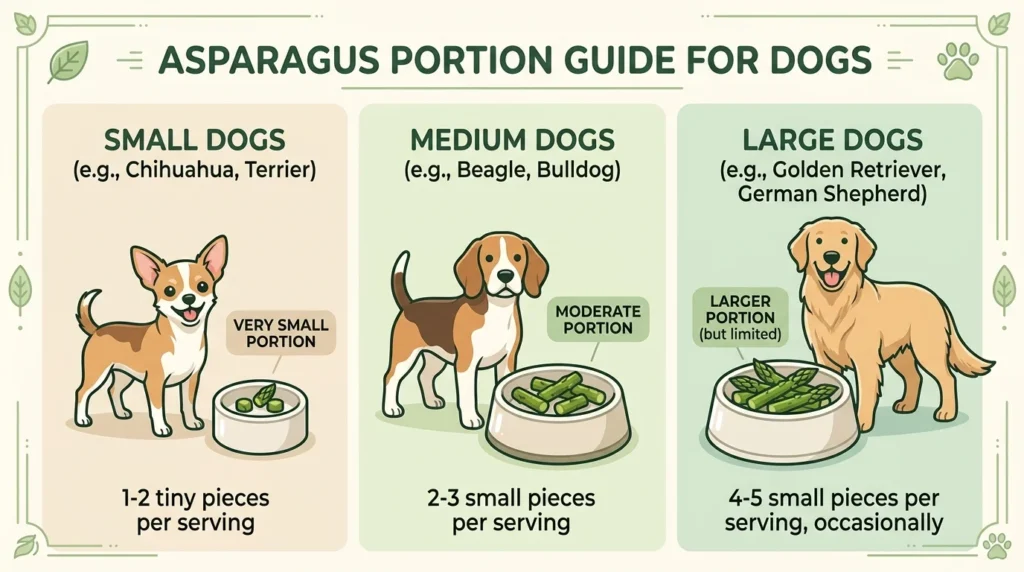
| Dog Size | Safe Serving Amount | How Often |
|---|---|---|
| Extra-small dogs | 1 very small piece | Occasionally |
| Small dogs | 1–2 small pieces | Occasionally |
| Medium dogs | 2–3 small pieces | Occasionally |
| Large dogs | 3–4 small pieces | Occasionally |
| Extra-large dogs | 4–5 small pieces | Occasionally |
These amounts are for plain cooked asparagus only. Start with less than the table suggests, especially if your dog has never eaten asparagus before. Watch for gas, vomiting, diarrhea, or changes in appetite.
Asparagus should not be a daily food. It is only a small treat. If your dog has diabetes, kidney disease, digestive problems, allergies, or is on a special diet, ask your vet before adding asparagus.
How to Prepare Asparagus for Dogs Safely

To prepare asparagus safely, wash it well and remove the tough woody ends. Steam or boil it until soft. Do not use butter, oil, salt, garlic, onion, spices, cheese, cream, or sauces. Plain preparation is the safest option for dogs.
After cooking, let the asparagus cool fully. Cut it into very small pieces before serving. This helps reduce choking risk and makes it easier to digest. Offer a small amount first and wait to see how your dog reacts before giving more another time.
Is Asparagus Good for Dogs?
Asparagus can be good for dogs in small amounts, but it is not one of the most useful vegetables for them. It has fiber and nutrients, but it can also be tough and difficult to digest if not cooked properly. This is why many experts suggest easier vegetables instead.
If your dog enjoys asparagus and digests it well, a few plain cooked pieces are fine occasionally. But your dog does not need asparagus to be healthy. A balanced dog food should remain the main source of nutrition.
Can Puppies Eat Asparagus?
Puppies should only eat asparagus if a vet says it is okay. Puppies have smaller mouths, sensitive stomachs, and developing digestive systems. Raw asparagus can be too tough, and even cooked asparagus may cause gas or diarrhea in some puppies.
If your vet approves it, give only a tiny soft cooked piece with no seasoning. Cut it very small to reduce choking risk. For puppies, it is usually better to stick with puppy food and vet-approved treats instead of experimenting with many human foods.
When Is Asparagus Unsafe for Dogs?
Asparagus is unsafe for dogs when it is raw, tough, seasoned, pickled, canned with salt, cooked with garlic or onion, or served in long pieces. It is also unsafe if your dog has a medical condition and your vet has advised against extra human foods.
Asparagus fern is also unsafe for dogs. This ornamental plant is not the same as plain edible asparagus spears. Its berries can cause stomach upset, and repeated skin contact may cause irritation. Keep dogs away from asparagus fern plants and berries.
Can Dogs Be Allergic to Asparagus?
Yes, dogs can be allergic or sensitive to asparagus, although it is not one of the most common dog allergens. A dog may react with itching, vomiting, diarrhea, gas, ear irritation, paw licking, or skin redness after eating a new food.
If your dog shows any reaction after eating asparagus, stop feeding it. Give only one new food at a time so you can identify the cause. If symptoms are severe, repeated, or include swelling, breathing trouble, or extreme weakness, contact your vet immediately.
Can Asparagus Make Dogs Sick?
Yes, asparagus can make dogs sick if they eat too much, eat it raw, swallow large pieces, or eat asparagus cooked with unsafe ingredients. Common signs may include gas, vomiting, diarrhea, drooling, stomach pain, or reduced appetite.
If symptoms are mild, stop feeding asparagus and monitor your dog. Make sure they have water. If your dog ate seasoned asparagus with garlic, onion, heavy salt, or pickled ingredients, call your vet for advice. Also contact a vet if symptoms last more than a day.
See Also: Can Dogs Eat Carrots? Benefits, Safety & Feeding Guide 2026
Frequently Asked Questions
Can dogs eat asparagus every day?
No, dogs should not eat asparagus every day. It is better as an occasional treat. Daily feeding may cause stomach upset or add unnecessary fiber to your dog’s diet.
Is cooked asparagus better than raw asparagus for dogs?
Yes, cooked asparagus is better because it is softer and easier to chew. Raw asparagus is tough and may cause choking or digestive discomfort.
Can dogs eat asparagus with butter?
No, dogs should not eat asparagus with butter. Butter adds extra fat and may upset your dog’s stomach. Plain steamed or boiled asparagus is safer.
Can dogs eat asparagus with garlic?
No, dogs should never eat asparagus with garlic. Garlic is toxic to dogs and can cause serious health problems.
Can dogs eat asparagus tips?
Yes, dogs can eat soft cooked asparagus tips in small amounts. Cut them into small pieces and serve them plain.
Conclusion
Dogs can eat asparagus, but only when it is cooked, plain, soft, and cut into small pieces. Raw asparagus, pickled asparagus, canned salty asparagus, asparagus soup, and seasoned asparagus are not good choices for dogs.
If your dog likes asparagus, give it occasionally and in small amounts. Watch for stomach upset or allergic reactions. For more dog food safety guides, visit Dogs Bread and help pet owners make safer feeding choices.


