
Can Dogs Eat Bread? Safe Types, Risks & Feeding Guide For 2026
Have you ever dropped a piece of toast and watched your dog run toward it like it was the best treat in the world? Bread is common in almost every kitchen, so it is natural to ask: can dogs eat bread, or is it something you should keep away from them?
The simple answer is yes, dogs can eat small amounts of plain bread, but it should not become a daily treat. Plain white or wheat bread is usually safe for dogs in moderation if they do not have allergies or stomach sensitivity. However, bread with raisins, garlic, onion, xylitol, chocolate, mold, or raw yeast dough can be dangerous.
Can Dogs Eat Sourdough Bread?
Dogs can eat a small piece of fully baked plain sourdough bread if it does not contain unsafe ingredients. The bread should be plain, unseasoned, and free from garlic, onion, raisins, chocolate, nuts, or artificial sweeteners. Even then, sourdough should only be an occasional bite, not a regular snack.
The bigger concern is raw sourdough dough. Unbaked yeast dough can continue to expand inside a dog’s stomach and may also produce alcohol during fermentation. This can cause bloating, discomfort, obstruction, or alcohol poisoning. If your dog eats raw sourdough dough, contact your vet immediately.
Can Dogs Eat Banana Bread?
Dogs should not eat banana bread regularly. Plain banana is usually dog-safe in small amounts, but banana bread often contains sugar, butter, oil, baking spices, nuts, chocolate chips, or raisins. These added ingredients can make it unsuitable or even dangerous for dogs.
A tiny bite of plain banana bread may not harm many dogs, but it is still not a healthy treat. If the recipe contains raisins, chocolate, macadamia nuts, xylitol, or nutmeg, treat it as risky and call your vet. For a safer option, give your dog a small slice of plain banana instead.
Can Dogs Eat Wheat Bread?
Dogs can usually eat a small amount of plain wheat bread if they are not allergic or sensitive to wheat. Wheat bread is not toxic by itself, but it does not offer much nutritional value for dogs. It is mostly extra calories and carbohydrates.
Some wheat breads contain seeds, honey, raisins, nuts, garlic, onion powder, or sweeteners. Always check the ingredient list before sharing. Dogs with weight issues, diabetes, allergies, or sensitive stomachs should avoid bread or only have it with veterinary guidance. Plain dog treats are usually a better choice.
Can Dogs Eat Garlic Bread?
No, dogs should not eat garlic bread. Garlic is toxic to dogs and can damage their red blood cells. Garlic bread may also contain butter, oil, salt, cheese, herbs, and onion powder, making it even more unsuitable for dogs.
Even if the bread part is safe, the garlic topping makes the food unsafe. Dogs may show vomiting, diarrhea, weakness, pale gums, or other signs depending on the amount eaten. Garlic and onion are both listed by ASPCA as foods to avoid feeding pets. If your dog eats garlic bread, contact your vet for advice.
Can Dogs Eat Rye Bread?
Dogs can eat a small piece of plain rye bread if it is fully baked and does not contain harmful ingredients. However, rye bread is not necessary for dogs and may be harder for some dogs to digest than plain white bread.
Many rye breads include caraway seeds, onion, garlic, molasses, salt, or other flavorings. Pumpernickel and dark rye recipes may also contain ingredients that are too rich for dogs. If your dog has a sensitive stomach, allergies, or digestive issues, avoid rye bread and choose a safer dog treat instead.
Can Dogs Eat White Bread?
Dogs can usually eat a small piece of plain white bread. It is one of the safer bread types when it has no toxic ingredients and is fully baked. Still, white bread is not a healthy daily treat because it is low in useful nutrients and high in simple carbohydrates.
Too much white bread can add unnecessary calories and may cause weight gain over time. It may also upset the stomach if your dog eats a large amount. Plain white bread should only be an occasional small bite, not a regular part of your dog’s diet.
Can Dogs Eat Bread Crust?
Dogs can eat plain bread crust in small amounts, as long as the bread does not contain unsafe ingredients. The crust is not more toxic than the soft middle of plain bread. However, it can be harder and drier, so small dogs or fast eaters may choke if given a large piece.
Do not give crust from garlic bread, raisin bread, moldy bread, heavily buttered toast, or sweet breads. Also avoid crusts with seeds, onion, seasoning, or cheese toppings. If you offer bread crust, keep the piece small and plain.
Can Dogs Eat Corn Bread?
Dogs can eat a tiny amount of plain cornbread, but it is not the best treat. Cornbread often contains sugar, butter, milk, salt, oil, and sometimes jalapeños, onions, cheese, or other add-ins. These ingredients can upset your dog’s stomach.
Plain corn is not usually toxic, but cornbread is a human baked food with extra calories. Dogs with weight problems, pancreatitis history, diabetes, or food sensitivities should avoid it. If your dog eats a small plain piece, monitor them. If it contains onions, garlic, or spicy ingredients, call your vet.
See Also: Can Dogs Eat Cinnamon? Safety, Risks & Feeding Guide 2026
Can Dogs Eat Toasted Bread?
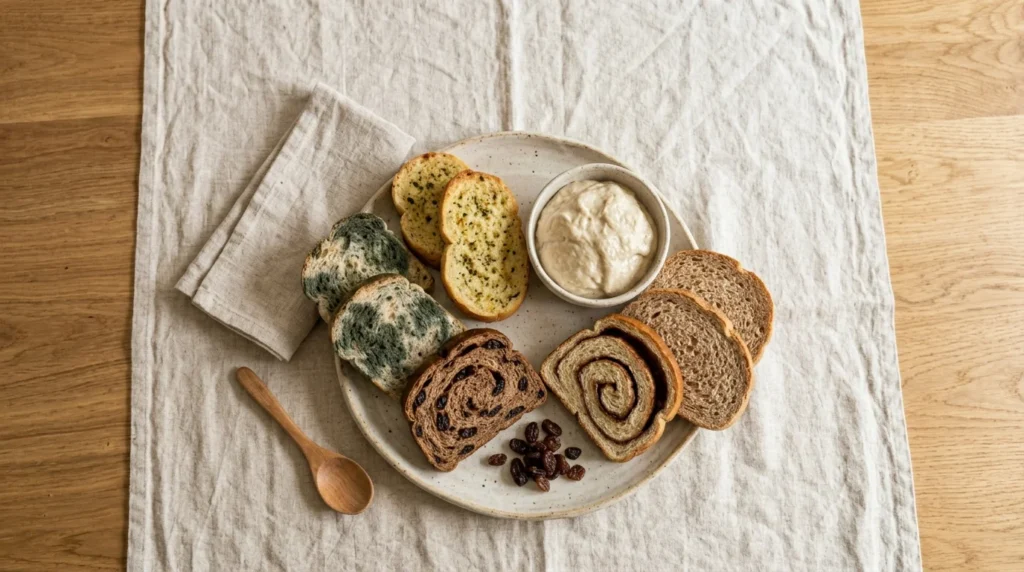
Dogs can eat a small piece of plain toasted bread if it has no butter, jam, chocolate spread, garlic, onion, raisins, or xylitol. Toasting bread does not make it dangerous by itself. The issue is usually what people put on the toast.
Plain toast may be easier for some dogs to chew, but it still has little nutritional value. Burnt toast should be avoided because heavily charred food is not a good choice for pets. If you share toast, keep it plain, small, and occasional.
Can Dogs Eat Pita Bread?
Dogs can eat a small amount of plain pita bread if it is fully baked and does not contain garlic, onion, herbs, or seasonings. Plain pita is similar to other plain breads: not toxic in small amounts, but not nutritionally important.
Avoid pita served with hummus, garlic sauce, spicy dips, falafel seasoning, onions, or salty fillings. Many Mediterranean-style foods include garlic and onion, which are unsafe for dogs. If your dog gets a small plain pita piece, monitor them, but do not make pita a regular treat.
Can Dogs Eat Pumpernickel Bread?
Dogs should only have a very small piece of plain pumpernickel bread, and only if the ingredients are safe. Pumpernickel is often dense and may contain rye, molasses, cocoa powder in some recipes, seeds, or seasonings. This makes it less straightforward than plain white bread.
Because pumpernickel is rich and heavy, it may upset some dogs’ stomachs. Avoid it if it contains onion, garlic, raisins, chocolate, or artificial sweeteners. If you are unsure about the ingredients, do not feed it. A safer option is a plain dog biscuit.
Can Dogs Eat Pumpkin Bread?
Dogs should not eat pumpkin bread regularly. Plain pumpkin can be safe for dogs in small amounts, but pumpkin bread is different. It often contains sugar, butter, oil, spices, nuts, chocolate chips, raisins, or artificial sweeteners.
A tiny bite of plain pumpkin bread may not harm every dog, but it is not a healthy treat. If the bread contains raisins, chocolate, xylitol, or nutmeg, it can become dangerous. For a safer choice, offer plain canned pumpkin with no sugar, spices, or pie filling ingredients.
Can Dogs Eat Multigrain Bread?
Dogs can sometimes eat a small piece of plain multigrain bread, but you must check the ingredients carefully. Multigrain bread may contain seeds, nuts, raisins, garlic, onion, or sweeteners. Some of these ingredients are unsafe for dogs.
Even when the ingredients are safe, multigrain bread can be harder to digest than plain white bread. Seeds may also irritate some dogs’ stomachs. If your dog has allergies, pancreatitis history, or digestive sensitivity, avoid multigrain bread. Plain, simple treats are usually safer.
Can Dogs Eat Potato Bread?
Dogs can eat a small amount of plain potato bread if it contains no harmful ingredients. Potato bread is usually soft and mild, but it still counts as extra carbohydrates and calories. It should not replace your dog’s balanced food.
Some potato breads contain butter, sugar, milk, onion powder, garlic powder, or preservatives. Always check the label. If your dog is overweight, diabetic, or has a sensitive stomach, skip potato bread. If you offer it, give only a small plain piece.
Can Dogs Eat Raisin Bread?
No, dogs should never eat raisin bread. Raisins are toxic to dogs and can cause sudden kidney failure. There is no reliable safe amount of raisins for dogs, so even a small piece of raisin bread should be taken seriously.
Raisin bread may also contain cinnamon, sugar, butter, and other rich ingredients, but raisins are the main danger. If your dog eats raisin bread, call your veterinarian or pet poison control right away. Do not wait for symptoms because early treatment is important. ASPCA lists grapes and raisins among foods to avoid for pets.
Can Dogs Eat Cinnamon Bread?
Dogs should not eat cinnamon bread regularly. A tiny amount of plain cinnamon is usually not the biggest issue, but cinnamon bread often contains sugar, butter, oil, icing, raisins, nuts, or artificial sweeteners. These extras can make it risky.
Raisin cinnamon bread is especially dangerous because raisins can harm dogs’ kidneys. Some sweet baked goods may also contain xylitol, which is toxic to dogs. If your dog eats cinnamon bread, check the ingredient list carefully. If it contains raisins or xylitol, call your vet immediately.
Can Dogs Eat Moldy Bread?
No, dogs should never eat moldy bread. Moldy bread can contain toxins that may make dogs seriously sick. Signs can include vomiting, diarrhea, tremors, weakness, seizures, or other neurological symptoms depending on the mold involved.
Never cut off the moldy part and feed the “clean” part to your dog. Mold can spread through bread even when it is not fully visible. Spoiled foods are included on pet food safety warning lists, and they should be kept away from dogs. Throw moldy bread away in a sealed trash bin.
See Also: Can Dogs Eat Onions? Toxicity, Symptoms & Safety Guide 2026
Can Dogs Eat Bread Stix?
Dogs should avoid most bread stix or breadsticks. Plain unsalted breadsticks may not be toxic in tiny amounts, but many breadsticks contain garlic, onion powder, cheese, butter, salt, herbs, or seasoning. These ingredients are not good for dogs.
Hard breadsticks can also be a choking risk, especially for small dogs or dogs that swallow quickly. If your dog eats one plain piece, monitor them. If the breadstick contains garlic, onion, heavy salt, or cheese seasoning, contact your vet for advice.
Can Dogs Eat Soda Bread?
Dogs can eat a small piece of plain soda bread if it does not contain raisins, currants, chocolate, onion, garlic, or xylitol. Traditional soda bread may seem simple, but many versions include dried fruit or sweet ingredients that are unsafe for dogs.
Plain soda bread is not toxic in small amounts, but it is still extra calories. It may cause stomach upset if your dog eats too much. Avoid sweet Irish soda bread with raisins or currants. If your dog eats dried fruit bread, contact your vet quickly.
Can Puppies Eat Bread?
Puppies can eat a tiny piece of plain bread, but it is better to avoid feeding bread to puppies. Puppies need balanced puppy food for growth, not extra human snacks. Their stomachs can be more sensitive than adult dogs.
Bread can fill a puppy’s stomach without giving the nutrients they need. It can also encourage begging and picky eating. Never give puppies raisin bread, garlic bread, moldy bread, or raw dough. If a puppy eats unsafe bread, contact your vet because puppies are more vulnerable.
Is Bread Good for Dogs?
Bread is not really good for dogs, even when it is safe. Plain bread can be tolerated in small amounts, but it does not provide important nutrition that dogs cannot get from their regular food. It is mostly carbohydrates and calories.
A dog’s main diet should come from complete and balanced dog food. Treats should stay limited and useful. If you want a healthier snack, choose small dog-safe foods like carrots, cucumber, green beans, plain pumpkin, or approved dog treats. Bread should be occasional only.
Is Bread Bad for Dogs?
Bread can be bad for dogs when it is given too often, fed in large amounts, or made with unsafe ingredients. Too much bread may cause weight gain, stomach upset, bloating, or poor diet balance. Dogs with wheat allergies may also react badly.
Some types of bread are clearly dangerous. Raisin bread, garlic bread, moldy bread, and raw yeast dough should never be given to dogs. Bread with xylitol, chocolate, onion, or heavy seasoning is also unsafe. The type of bread matters more than the word “bread” itself.
Is It Safe for Dogs to Eat Bread?
It is safe for many dogs to eat a small amount of plain, fully baked white or wheat bread. The bread must be free from toxic ingredients, mold, raw dough, and heavy toppings. Moderation is important because bread is not a necessary dog food.
Safety changes quickly when bread contains extras. Garlic, onion, raisins, chocolate, xylitol, macadamia nuts, mold, and raw yeast dough are serious concerns. AKC says plain white and wheat bread are generally safe in moderation, but bread dough and toxic add-ins are dangerous.
Risks of Feeding Bread to Dogs
The main risks of feeding bread to dogs are weight gain, digestive upset, allergies, choking, and unsafe ingredients. Bread is calorie-dense compared with many dog-safe vegetables, and too much can make your dog’s diet less balanced.
The more serious risks come from raisin bread, garlic bread, onion bread, moldy bread, and raw dough. Raw yeast dough can expand in the stomach and produce ethanol, creating a veterinary emergency. Dogs that eat raw dough need quick vet advice because bloat and alcohol poisoning can be life-threatening.
Can Dogs Have Bread?
Yes, dogs can have small pieces of plain bread occasionally, but bread should not become a common treat. It is safe only when fully baked, plain, fresh, and free from harmful ingredients. The simpler the bread, the safer it is.
Dogs should not have bread with raisins, garlic, onion, chocolate, xylitol, mold, heavy butter, cheese, or raw dough. If your dog has allergies, diabetes, pancreatitis, obesity, or a sensitive stomach, ask your vet before offering bread. Safer daily treats are usually better.
How Much Bread Can Dogs Eat?
Bread should be treated as an occasional extra, not a regular food. The safest amount depends on dog size, health, activity level, and the type of bread. Plain bread is different from sweet, buttery, garlic, raisin, or moldy bread.
Use this simple table for plain, fully baked bread only:
| Dog Size | Bread Amount | Frequency | Best Action |
|---|---|---|---|
| Toy dog | Tiny bite | Rarely | Monitor stomach |
| Small dog | ¼ small slice | Occasionally | Keep plain |
| Medium dog | ½ small slice | Occasionally | Avoid toppings |
| Large dog | 1 small slice | Occasionally | Do not overfeed |
| Any dog | Garlic, raisin, moldy, xylitol, or raw dough | Never | Call vet if eaten |
| Any dog with obesity, diabetes, pancreatitis, allergies | Avoid or ask vet | As advised | Use safer treats |
Frequently Asked Questions
Can dogs eat bread every day?
No, dogs should not eat bread every day. A small plain piece may be safe occasionally, but daily bread adds unnecessary calories and may lead to weight gain or poor diet balance. Choose healthier dog-safe treats for regular use.
What bread is safest for dogs?
The safest bread is plain, fully baked white or wheat bread with no raisins, garlic, onion, chocolate, xylitol, nuts, seeds, mold, or heavy toppings. Even safe bread should only be given in small amounts.
What should I do if my dog ate bread?
Check what type of bread your dog ate. Plain bread usually only needs monitoring. If your dog ate raisin bread, garlic bread, moldy bread, xylitol bread, or raw dough, call your veterinarian or pet poison control quickly.
Can bread help a dog’s upset stomach?
Do not use bread as a treatment unless your vet recommends it. Some dogs may tolerate plain bread, but it does not fix the cause of vomiting, diarrhea, or stomach pain. Call your vet if symptoms continue.
Can dogs eat bread with butter?
Dogs should avoid bread with butter. Butter adds fat and calories, and too much can cause stomach upset. Dogs with pancreatitis history should be especially careful with fatty foods. Plain bread is safer than buttered bread.
Can dogs eat bread dough?
No, dogs should never eat raw bread dough. Yeast dough can expand inside the stomach and produce alcohol as it ferments. This can cause bloating, obstruction, alcohol poisoning, and emergency symptoms. Contact a vet immediately.
Can dogs eat bread with peanut butter?
Dogs can eat a small amount of bread with peanut butter only if the peanut butter is xylitol-free, unsalted, and plain. Always check the label. Xylitol is highly toxic to dogs and requires urgent veterinary attention.
Conclusion
So, can dogs eat bread? Yes, dogs can eat small amounts of plain, fully baked bread, but it should not be a regular treat. Bread is not toxic by itself, but it is not especially healthy or necessary for dogs.
Also Read: Can Dogs Eat Raw Shrimp or Shrimp Shells? Full Safety Guide


