
Can Dogs Eat Olive Oil? Benefits, Risks & Safe Amount
Yes, dogs can generally consume small amounts of plain olive oil. Olive oil is not considered poisonous to dogs and contains monounsaturated fats along with compounds such as vitamin E and other antioxidants.
The AKC notes that olive oil is safe for dogs in small amounts and can benefit skin and coat health, but too much can cause diarrhea, so portions must stay small.
Olive oil is a common kitchen ingredient and is often promoted as a healthy source of fats for people. This may make dog owners wonder whether olive oil is safe for their pets. In small amounts, plain olive oil is generally not considered toxic to dogs, but that does not mean dogs need it added to their food.
Olive oil is high in calories and fat, so too much can cause digestive upset and contribute to excessive calorie intake. The right approach is moderation. Healthy dogs may tolerate a small amount, while dogs with certain medical or dietary conditions may need to avoid extra oils altogether.
Can Dogs Eat Olive Oil?
However, olive oil should be treated as an optional dietary addition rather than an essential food. Dogs eating a complete and balanced diet generally receive the fats and nutrients they need without additional oil.
How Much Olive Oil Can Dogs Eat?
The appropriate amount depends on your dog’s size, calorie requirements, health, and existing diet. If your dog has never had olive oil before, start with a very small amount and watch for digestive changes.
Because oil is calorie-dense, even seemingly small amounts can add significant calories. Too much olive oil may lead to loose stools, vomiting, or abdominal discomfort.
| Dog Size | Starting Amount | Frequency |
|---|---|---|
| Small Dogs | A few drops to 1/8 teaspoon | Occasionally |
| Medium Dogs | 1/8–1/4 teaspoon | Occasionally |
| Large Dogs | 1/4–1/2 teaspoon | Occasionally |
| Extra-Large Dogs | Up to about 1 teaspoon | Only when appropriate |
Can Dogs Eat Extra Virgin Olive Oil?
Extra virgin olive oil can generally be consumed by dogs in small amounts. It is a minimally processed form of olive oil and contains monounsaturated fats and naturally occurring antioxidant compounds.
There is no need to give a dog large amounts simply because extra virgin olive oil is considered a high-quality oil for people. A small portion is more appropriate, especially when your dog’s regular food already contains sufficient dietary fat.
Can Dogs Eat Olive Oil Every Day?
Some dogs may tolerate a very small amount of olive oil regularly, but daily supplementation is not necessary for most dogs. Adding oil without considering the dog’s complete diet can increase calorie intake unnecessarily.
If you are considering adding olive oil every day for a specific reason, discuss the amount with your veterinarian. This is particularly important for dogs that are overweight or have conditions requiring controlled fat intake.
Can Puppies Eat Olive Oil?
Puppies generally do not need added olive oil if they are eating a complete and balanced puppy food. Their food is formulated to provide the appropriate balance of calories, fats, protein, vitamins, and minerals needed for growth.
A tiny accidental amount is unlikely to cause serious problems in a healthy puppy, but intentionally supplementing a puppy’s meals with oil should be discussed with a veterinarian first.
Can Dogs Eat Olive Oil With Food?
A small amount of plain olive oil can be mixed into a dog’s regular food. Some owners use it as a way to make dry food more appealing, but it is important not to add enough to significantly increase the meal’s calorie or fat content.
If your dog already enjoys and tolerates their food, there is generally no nutritional need to add oil. Introduce any dietary change gradually and watch for loose stool or other digestive changes.
Can Dogs Eat Olive Oil With Chicken?
Dogs can generally eat plain cooked chicken with a small amount of olive oil, provided the chicken is fully cooked and free from bones, onion, garlic, excessive salt, and heavy seasonings.
Because both chicken and oil can contribute calories, the portion should remain appropriate for your dog’s overall diet. Plain cooked chicken without added oil is often sufficient as an occasional treat.
Can Dogs Eat Olive Oil With Vegetables?
A small amount of olive oil can be mixed with dog-safe cooked vegetables such as carrots, green beans, or plain pumpkin. The vegetables should be prepared without onion, garlic, spicy seasonings, excessive salt, or sauces.
Keep the amount of oil modest because vegetables are already a useful low-calorie addition for many dogs. Too much oil can turn a healthy vegetable snack into a high-calorie treat.
Can Dogs Eat Olive Oil for Constipation?
Some people use olive oil as a home remedy for constipation, but giving oil to a dog specifically to treat constipation is not recommended without veterinary guidance. Constipation can have many causes, and adding fat may not address the underlying problem.
See Also: What Fruit Can Dogs Eat? Safe & Unsafe Fruits Guide
If your dog is repeatedly straining to pass stool, has not passed stool, appears painful, vomits, or has a swollen abdomen, contact your veterinarian. These signs may require proper examination rather than a home remedy.
Can Dogs Eat Olive Oil for Their Skin and Coat?
Olive oil contains monounsaturated fats and antioxidants, but there is limited reason to assume that simply adding it to every dog’s diet will produce a noticeable improvement in their skin or coat.
A complete diet containing appropriate essential fatty acids is more important for healthy skin and fur. If your dog has persistent itching, dry skin, hair loss, or coat changes, speak with a veterinarian instead of relying on olive oil as a treatment.
What Happens If a Dog Eats Too Much Olive Oil?
Eating too much olive oil can cause digestive upset, including diarrhea, vomiting, gas, or abdominal discomfort. Because olive oil is very high in calories, repeated excessive amounts can also contribute to unwanted weight gain.
If your dog consumes a large quantity of olive oil and develops severe vomiting, persistent diarrhea, significant abdominal pain, weakness, or other concerning symptoms, contact your veterinarian for advice.
Is Olive Oil Good for Dogs to Eat?
Plain olive oil can provide monounsaturated fats and some antioxidant compounds, but dogs do not generally need extra olive oil when they are already eating a complete and balanced diet. Adding a small amount may be acceptable for some healthy dogs, but it should not be viewed as a necessary supplement.
Because olive oil is calorie-dense, excessive amounts can quickly add calories to your dog’s daily intake. If you decide to use it, keep the portion small and consider your dog’s overall diet, weight, and health.
How to Safely Share Olive Oil With Your Dog
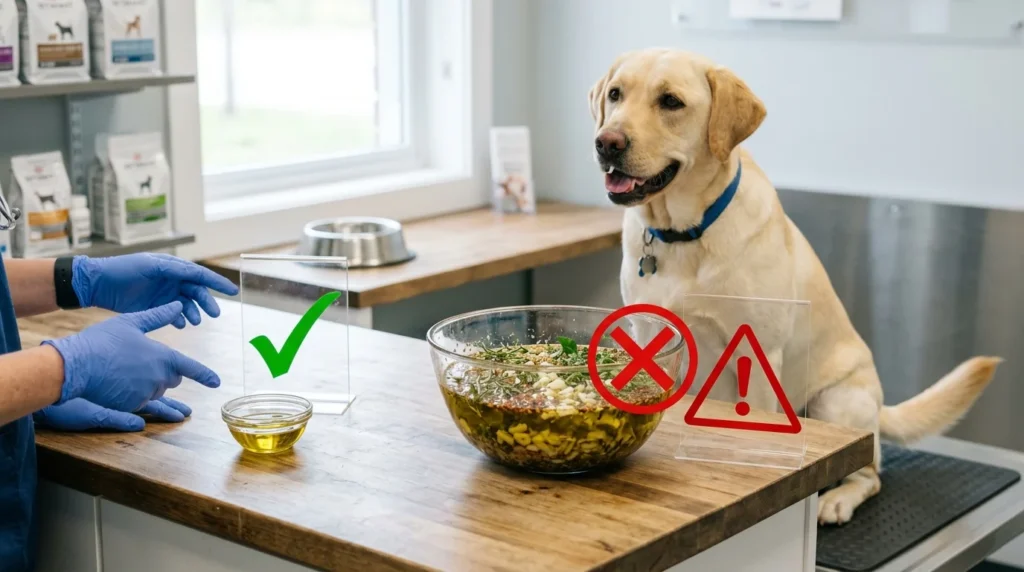
Use plain olive oil without added herbs, spices, garlic, onion, or other potentially harmful ingredients. Start with a very small amount mixed into your dog’s normal food and monitor how they respond.
Avoid pouring large amounts directly into your dog’s bowl. If your dog has a history of digestive problems, pancreatitis, obesity, or another condition requiring a controlled-fat diet, ask your veterinarian before adding olive oil.
Does Olive Oil Have Benefits for Dogs?
Olive oil contains monounsaturated fats and antioxidant compounds, including vitamin E. Dietary fat also provides energy and helps dogs absorb certain fat-soluble vitamins when consumed as part of an appropriately balanced diet.
However, these benefits do not mean that dogs need extra olive oil. A properly formulated dog food should already provide the appropriate amount and type of dietary fat for your dog’s nutritional requirements.
See Also: Can Dogs Eat Chia Seeds? Benefits, Risks & Safe Amounts
Does Olive Oil Have Any Risks for Dogs?
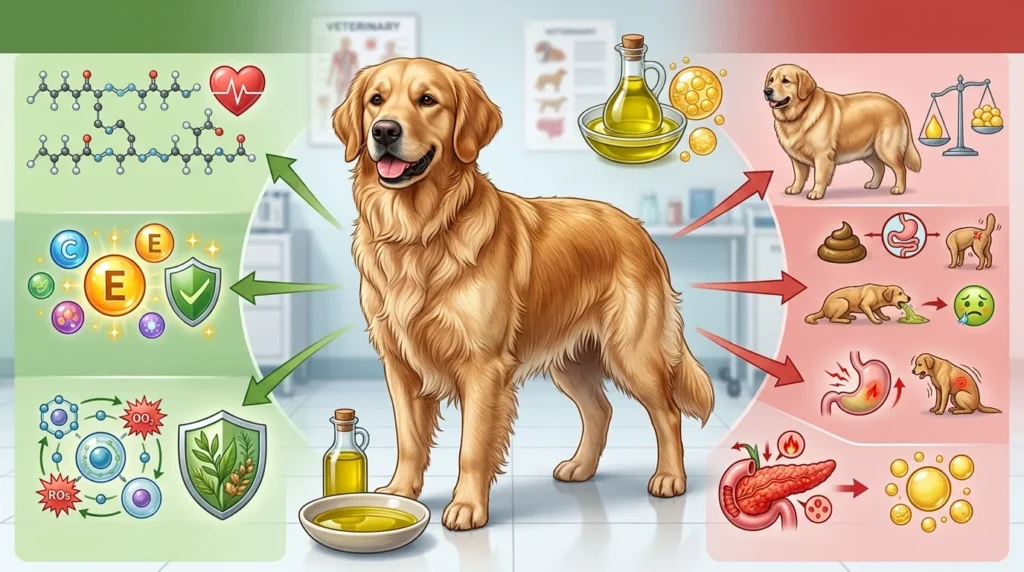
Yes. The most common concern is digestive upset after consuming too much. Dogs may develop loose stools, diarrhea, vomiting, gas, or abdominal discomfort after consuming excessive oil.
Olive oil is also very high in calories. Regularly adding too much can contribute to weight gain and may be inappropriate for dogs that need to restrict dietary fat. Flavored oils containing garlic, onion, or other unsafe ingredients should also be avoided.
What Should You Do If Your Dog Eats Olive Oil?
If your dog accidentally consumes a small amount of plain olive oil, monitor them for digestive upset and make sure fresh water is available. Most healthy dogs will tolerate a small quantity without serious problems.
If your dog consumes a large quantity or develops repeated vomiting, severe diarrhea, abdominal pain, weakness, or other concerning symptoms, contact your veterinarian promptly. Keep the olive oil bottle or ingredient information available if the oil contained additional ingredients.
Frequently Asked Questions
Can dogs eat olive oil?
Yes, dogs can generally have small amounts of plain olive oil. It is not toxic to dogs, but it is high in calories and is not necessary for most dogs.
Can dogs eat extra virgin olive oil?
Yes. Extra virgin olive oil can generally be given in small amounts. It contains monounsaturated fats and antioxidant compounds, but moderation is important.
Can dogs eat olive oil every day?
Some dogs may tolerate a small amount regularly, but daily supplementation is not necessary for most dogs. Discuss routine use with your veterinarian, especially if your dog has dietary or health concerns.
Can puppies eat olive oil?
Puppies generally do not need added olive oil when eating complete and balanced puppy food. Ask your veterinarian before intentionally adding oil to a puppy’s diet.
Can olive oil help a dog’s constipation?
Olive oil should not be used as a home treatment for constipation without veterinary guidance. Persistent constipation may have an underlying cause that requires proper treatment.
Conclusion
Dogs can generally eat small amounts of plain olive oil, but moderation is important. Olive oil contains healthy fats and antioxidant compounds, yet it is calorie-dense and is not an essential addition to a complete and balanced canine diet.
If you choose to share olive oil with your dog, use a small amount of plain oil and monitor for digestive upset. Avoid flavored oils containing ingredients such as garlic or onion, and consult your veterinarian before adding olive oil regularly if your dog has a health condition or special dietary needs.
See Also: Can Dogs Eat Blueberries? Benefits, Safety & Feeding Guide 2026