

Can Dogs Eat Vanilla Ice Cream? Safety, Risks & Tips
Vanilla ice cream may seem like a harmless treat to share with your dog, especially when they eagerly watch you eat it. However, dogs do not need ice cream as part of their diet, and many varieties contain ingredients that can cause problems. A tiny amount of plain vanilla ice cream may not cause serious issues in a healthy dog, but it is generally not a recommended treat.
The main concerns are sugar, fat, dairy, and potentially dangerous ingredients found in some ice creams. Sugar-free products can be especially risky if they contain xylitol, an artificial sweetener that can be highly toxic to dogs. Understanding the ingredients and portion size is important before deciding whether your dog should have any vanilla ice cream.
Can Dogs Eat Vanilla Ice Cream?
Dogs can technically eat a very small amount of plain vanilla ice cream, but it is better to avoid making it a regular treat. Traditional vanilla ice cream usually contains milk, cream, sugar, and other ingredients that are not particularly beneficial for dogs.
Many adult dogs also have difficulty digesting lactose, which can lead to gas, bloating, diarrhea, or stomach discomfort after eating dairy products. If your dog accidentally licks a small amount of plain vanilla ice cream, monitor them for any digestive changes.
How Much Vanilla Ice Cream Can Dogs Eat?
There is no recommended daily serving of vanilla ice cream for dogs because it is a human dessert rather than a necessary part of canine nutrition. If a healthy dog has a tiny accidental taste of plain vanilla ice cream, the amount should remain very small.
Small dogs should receive particularly limited portions because even a few spoonfuls can represent a significant amount of sugar and fat relative to their size. Dogs with health conditions may need to avoid ice cream altogether.
| Dog Size | Occasional Amount | Frequency |
|---|---|---|
| Small Dogs | A tiny lick or taste | Rarely |
| Medium Dogs | A small taste | Rarely |
| Large Dogs | A few small licks | Rarely |
| Puppies | Best avoided | Not recommended |
Can Dogs Eat Plain Vanilla Ice Cream?
Plain vanilla ice cream without chocolate, raisins, nuts, or other dangerous ingredients is less concerning than flavored varieties. However, it still contains sugar, fat, and dairy, which provide little nutritional benefit for dogs.
A small accidental amount is unlikely to cause serious problems in many healthy dogs, but larger portions may result in vomiting, diarrhea, gas, or abdominal discomfort. A dog-specific frozen treat is a better alternative.
Can Dogs Eat Vanilla Ice Cream With Sugar?
Regular vanilla ice cream contains added sugar, and dogs do not need added sugar in their diet. Eating a small amount occasionally is unlikely to cause poisoning, but frequent sugary treats can contribute to excess calorie intake and unhealthy weight gain.
Dogs that consume large amounts of sugary foods may also develop digestive upset. For regular treats, choose foods formulated for dogs rather than sweet human desserts.
Can Dogs Eat Sugar-Free Vanilla Ice Cream?
Extreme caution is needed with sugar-free vanilla ice cream. Some sugar-free products may contain xylitol, a sweetener that can cause a dangerous drop in blood sugar and potentially severe health problems in dogs.
Never give your dog a product containing xylitol. Always check the ingredient label before allowing your dog to eat any sugar-free dessert. If your dog has consumed a product containing xylitol, contact a veterinarian immediately.
Can Dogs Eat Vanilla Ice Cream With Milk?
Milk and cream are common ingredients in traditional vanilla ice cream. Many dogs have some degree of lactose intolerance, meaning dairy can cause digestive problems such as gas, bloating, loose stools, or diarrhea.
Some dogs tolerate small amounts of dairy better than others. However, there is no nutritional need to give dogs milk-based ice cream, so avoiding it is generally the simplest option.
Can Puppies Eat Vanilla Ice Cream?
Puppies should generally not be given vanilla ice cream. Their digestive systems are still developing, and their nutritional needs are best met by complete and balanced puppy food rather than sugary dairy desserts.
A small accidental lick is unlikely to be an emergency if the ice cream contains no toxic ingredients, but intentionally feeding ice cream to puppies is not recommended. Choose treats designed for puppies instead.
Can Dogs Eat Vanilla Ice Cream Every Day?
No. Vanilla ice cream should not be part of a dog’s daily diet. Regular consumption can provide excessive sugar, fat, calories, and dairy while offering little nutritional value.
Frequent high-calorie treats may contribute to weight gain and can be particularly problematic for dogs that are already overweight or have conditions requiring calorie or fat restriction.
See Also: Can Dogs Eat Oranges? Peel, Juice, Seeds & Every Form Covered
Can Dogs Eat Vanilla Ice Cream With Chocolate?
No. Vanilla ice cream containing chocolate, chocolate chips, chocolate syrup, or cocoa should not be given to dogs. Chocolate contains compounds that can be toxic to dogs, and the risk depends on the amount and type consumed.
If your dog eats chocolate-containing ice cream, especially a significant amount, contact your veterinarian promptly for advice. Do not wait for symptoms before seeking guidance after a potentially toxic exposure.
Can Dogs Eat Vanilla Ice Cream With Toppings?
Many ice cream toppings can make the dessert unsafe for dogs. Chocolate, raisins, macadamia nuts, certain sugar-free syrups, and other ingredients may pose serious health risks.
Even toppings that are not toxic can add significant sugar and fat. If your dog accidentally eats ice cream with toppings, check the ingredients and contact your veterinarian if you identify a potentially dangerous ingredient.
What Happens If a Dog Eats Vanilla Ice Cream?
If a healthy dog eats a small amount of plain vanilla ice cream, they may have no noticeable reaction. Some dogs, however, may develop gas, diarrhea, vomiting, or abdominal discomfort because of the dairy, sugar, or fat.
If your dog eats a large amount, consumes sugar-free ice cream containing xylitol, or develops severe or persistent symptoms, seek veterinary advice promptly. Keep the product packaging available so the ingredients can be identified.
Is Vanilla Ice Cream Good for Dogs to Eat?
Vanilla ice cream is not a healthy or necessary treat for dogs. Traditional ice cream can contain substantial amounts of added sugar and fat while providing little nutritional value for dogs. The dairy content may also cause digestive problems in dogs that do not tolerate lactose well.
A tiny amount of plain vanilla ice cream may be tolerated by some healthy dogs, but it is better to choose dog-safe treats instead. Frozen treats made specifically for dogs can provide a similar experience without as many unnecessary ingredients.
How to Safely Share Vanilla Ice Cream With Your Dog

If your dog occasionally gets a taste of vanilla ice cream, choose a plain product without chocolate, raisins, macadamia nuts, or artificial sweeteners. Give only a tiny amount and avoid making it a regular habit.
Always check the ingredient label, especially when using low-sugar or sugar-free products. Never give your dog ice cream containing xylitol. If your dog has diabetes, obesity, pancreatitis, or another condition requiring dietary restrictions, ask your veterinarian before offering high-fat or sugary treats.
Does Vanilla Ice Cream Have Benefits for Dogs?
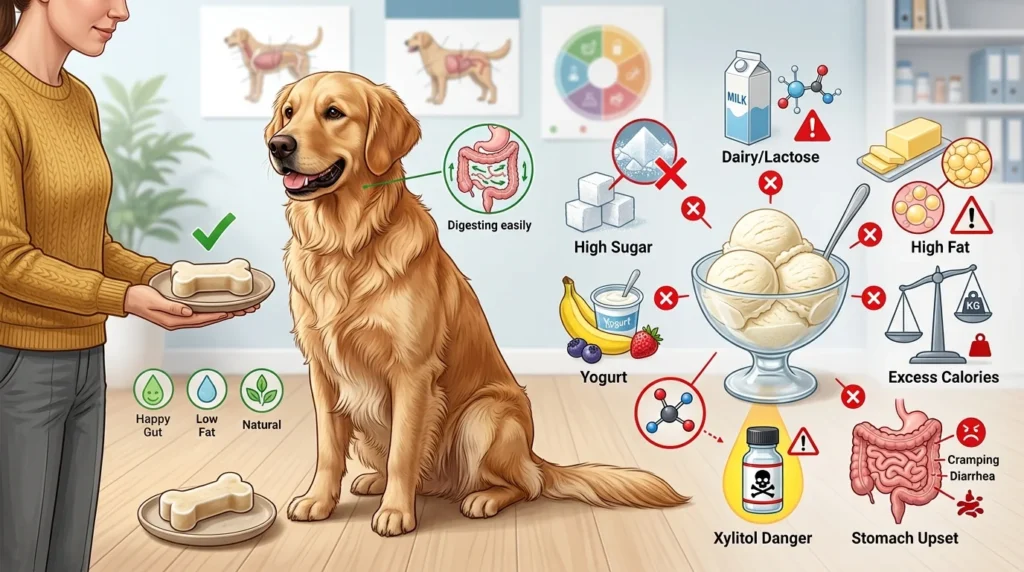
Vanilla ice cream does not provide meaningful health benefits that dogs need. Although milk-based ice cream may contain some calcium and protein, these nutrients are available from much more appropriate foods designed for canine nutrition.
The sugar and fat found in many ice creams outweigh any nutritional advantage for most dogs. A complete and balanced dog food should remain the primary source of nutrition, while treats should be limited and nutritionally appropriate.
Does Vanilla Ice Cream Have Any Risks for Dogs?
Yes. The sugar and fat in vanilla ice cream can contribute to excess calorie intake and digestive upset. Dairy may cause gas, bloating, loose stool, or diarrhea in dogs that are sensitive to lactose.
There can also be more serious risks when ice cream contains additional ingredients. Chocolate, raisins, macadamia nuts, and xylitol can be dangerous for dogs. Always inspect the ingredients before allowing your dog to eat any human dessert.
See Also: Can Dogs Eat Corn? Cobs, Chips, Candy Corn & Every Form Covered
What Should You Do If Your Dog Eats Vanilla Ice Cream?
If your dog eats a small amount of plain vanilla ice cream, monitor them for vomiting, diarrhea, gas, bloating, or changes in appetite. Make sure fresh water is available and avoid giving additional rich treats.
If the ice cream contained xylitol, chocolate, raisins, macadamia nuts, or another potentially toxic ingredient, contact a veterinarian promptly. You should also seek veterinary advice if your dog consumed a large quantity or develops severe or persistent symptoms.
Frequently Asked Questions
Can dogs eat vanilla ice cream?
A small amount of plain vanilla ice cream is unlikely to harm many healthy dogs, but it is not recommended as a regular treat because it contains sugar, fat, and dairy.
Can puppies eat vanilla ice cream?
It is best not to give puppies vanilla ice cream. Puppies need complete and balanced food formulated for growth, and sugary dairy desserts provide little nutritional value.
Can dogs eat sugar-free vanilla ice cream?
Extreme caution is necessary. Some sugar-free products contain xylitol, which is highly dangerous to dogs. Always check the ingredient label and never give your dog a product containing xylitol.
Can dogs eat vanilla ice cream every day?
No. Daily ice cream can add excessive sugar, fat, and calories to a dog’s diet and may contribute to digestive problems and unhealthy weight gain.
What happens if a dog eats vanilla ice cream?
A small amount of plain ice cream may cause no reaction, but some dogs can develop gas, diarrhea, vomiting, or stomach discomfort. Larger amounts or dangerous ingredients require prompt veterinary advice.
Conclusion
Dogs can technically tolerate a small amount of plain vanilla ice cream, but it is not a recommended regular treat. The sugar, fat, and dairy provide little benefit and may cause digestive problems, particularly in sensitive dogs.
Never give dogs sugar-free ice cream without checking the ingredients, and avoid any product containing xylitol, chocolate, raisins, or other harmful ingredients. For a safer frozen snack, choose a treat specifically formulated for dogs.
See Also: Can Dogs Eat Cheese? The Complete Safe-Feeding Guide (2026)


