

Can Dogs Eat Mango? Benefits, Risks & Safe Serving Tips
Yes, dogs can generally eat mango in moderation when it is prepared properly. Ripe mango flesh contains water, fiber, and several vitamins, making it a tasty occasional treat for many dogs. However, mango is naturally high in sugar, so it should not replace your dog’s regular balanced food.
The most important part is preparation. Never give your dog the mango pit, and remove the skin before serving if your dog has difficulty digesting it. Cut the soft flesh into small pieces to reduce choking risks, especially for small dogs and puppies.
Can Dogs Eat Mango?
Dogs can generally eat the flesh of ripe mango as an occasional treat. Mango provides fiber, water, and nutrients such as vitamins A, C, E, and several B vitamins. Its soft texture can also make it easy to cut into small bite-sized pieces.
Despite these benefits, mango contains natural sugar and should be given in limited quantities. Too much mango may cause stomach upset, loose stool, or unnecessary calorie intake.
How Much Mango Can Dogs Eat?
The appropriate amount depends on your dog’s size, overall diet, activity level, and individual tolerance. When introducing mango for the first time, begin with a small piece and watch for any digestive reaction.
As a general treat, mango should make up only a small portion of your dog’s daily food intake. Smaller dogs need much less than larger dogs, and treats overall should remain limited.
| Dog Size | Suggested Occasional Portion |
|---|---|
| Small Dogs | 1–2 small pieces |
| Medium Dogs | 2–4 small pieces |
| Large Dogs | A small handful of pieces |
| Puppies | 1 tiny piece when appropriate |
Can Dogs Eat Mango Skin?
It is better to remove mango skin before giving mango to your dog. Mango peel is tougher and more difficult to digest than the soft flesh, and some dogs may experience stomach discomfort after eating it.
Removing the skin also makes the mango easier to cut into small pieces. Serve only the clean, ripe flesh and discard the peel and pit safely where your dog cannot reach them.
Can Dogs Eat Mango Pit?
No. Dogs should never be allowed to eat or chew on a mango pit. The large pit can create a serious choking hazard and may cause an intestinal blockage if swallowed.
The pit also contains small amounts of compounds that can release cyanide when damaged. The main immediate concern, however, is the physical danger posed by the large, hard seed. Always remove it completely before giving mango to your dog.
Can Dogs Eat Dried Mango?
Dried mango is not the best choice for dogs because the drying process concentrates the fruit’s natural sugar. Some commercial dried mango products also contain added sugar, preservatives, or other ingredients that dogs do not need.
If you want to offer mango, fresh ripe mango is generally a better option. If you use dried mango occasionally, choose an unsweetened product with no unsafe additives and give only a very small piece.
Can Dogs Eat Frozen Mango?
Dogs can generally eat small pieces of plain frozen mango. Frozen mango can be a refreshing treat, particularly during warm weather, as long as it contains no added sugar or other ingredients.
Cut the mango into appropriately small pieces before freezing it. Avoid giving large frozen chunks because they can be difficult to chew and may increase the risk of choking, especially in smaller dogs.
Can Dogs Eat Mango Every Day?
It is better not to make mango an everyday treat. Although mango provides useful nutrients, it is relatively high in natural sugar and calories compared with many lower-calorie dog-safe treats.
A small piece occasionally is usually more appropriate. If your dog receives mango frequently, account for those calories as part of their overall diet and avoid giving large portions.
Can Puppies Eat Mango?
Puppies can generally eat a tiny amount of ripe mango once they are eating solid food, but their primary nutrition should come from complete and balanced puppy food. Puppies have specific nutritional requirements that fruit cannot fulfill.
Introduce mango slowly and in a very small portion. Remove the skin and pit completely and cut the flesh into tiny pieces that are easy for your puppy to manage.
Can Dogs Eat Mango With Yogurt?
A small amount of ripe mango can be mixed with plain, unsweetened yogurt if your dog tolerates dairy. This can make an occasional treat, but the yogurt should not contain xylitol, chocolate, artificial sweeteners, or excessive added sugar.
Because both mango and dairy can cause digestive upset in some dogs, start with a small portion. Plain mango by itself is a simpler option if you are unsure whether your dog tolerates yogurt.
See Also: Can Dogs Eat Sourdough Bread? Benefits, Risks & Safety
Can Dogs Eat Mango Smoothies?
Human mango smoothies are not recommended for dogs because they may contain added sugar, milk, artificial sweeteners, fruit concentrates, or other ingredients that are unsuitable for pets.
If you want to make a dog-friendly mango treat, keep the ingredients simple. A small amount of fresh mango blended with water or an appropriate dog-safe ingredient is a better option than a commercial smoothie.
Is Mango Good for Dogs to Eat?
Mango can provide fiber, water, and vitamins, so it can be a nutritious occasional treat for dogs when served correctly. The fruit’s soft flesh is also easy to portion into small pieces.
However, mango is not essential to a dog’s diet. Its natural sugar content means moderation is important, particularly for dogs that are overweight or need careful calorie management.
What Happens If a Dog Eats Too Much Mango?
Eating too much mango can provide excessive sugar and fiber and may lead to gas, stomach discomfort, vomiting, or diarrhea. Large amounts can also add unnecessary calories to your dog’s diet.
If your dog eats a large amount of mango, monitor them closely and provide access to fresh water. If they swallow the mango pit or develop severe or persistent symptoms, contact your veterinarian promptly.
How to Safely Share Mango With Your Dog

Wash a ripe mango thoroughly before preparing it for your dog. Remove the skin and large pit completely, then cut the flesh into small pieces that are appropriate for your dog’s size. This helps reduce choking and digestive risks.
Start with a small amount if your dog has never eaten mango before. Avoid mango desserts, canned mango in syrup, sweetened dried mango, and products containing artificial sweeteners or other unsafe ingredients.
Do Mangos Have Benefits for Dogs?
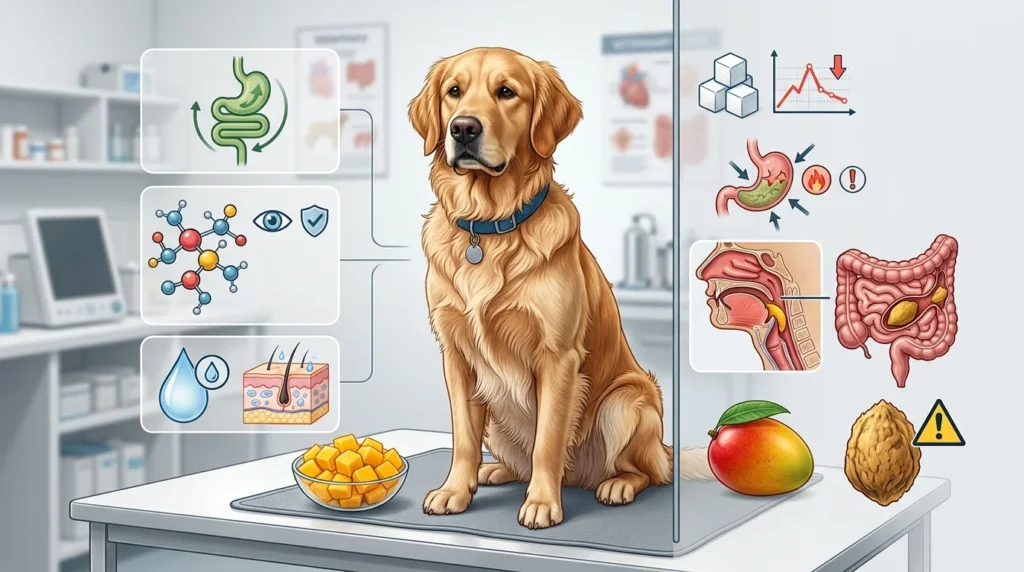
Mango contains fiber, water, and nutrients such as vitamins A, C, and E. In small portions, these nutrients can make ripe mango a pleasant occasional addition to a dog’s treats.
However, dogs do not need mango to maintain good health. Their primary nutrition should come from complete and balanced dog food. Mango should complement their diet rather than become a significant source of calories.
Do Mangos Have Any Risks for Dogs?
The biggest risks come from overfeeding and improper preparation. Mango contains natural sugar, and large amounts can contribute unnecessary calories or cause diarrhea, gas, vomiting, or stomach discomfort.
The mango pit is particularly dangerous because it can cause choking or an intestinal blockage if swallowed. Mango skin may also be difficult for some dogs to digest, so removing it is generally the safer choice.
Can Dogs Eat Mango Seeds?
Dogs should not eat mango seeds or the large mango pit. The hard pit can become lodged in the digestive tract and may cause a potentially serious intestinal obstruction.
Never allow your dog to chew on the mango pit. Remove it before serving the fruit and dispose of it somewhere your dog cannot access.
Can Dogs Eat Mango Peel?
It is best to remove mango peel before feeding mango to your dog. The peel is tougher than the flesh and may be difficult for some dogs to digest.
Although accidentally eating a small piece of peel may not cause a serious problem in every dog, it is unnecessary to take the risk. Plain, peeled mango flesh is easier to portion and serve.
Can Dogs Eat Mango Ice Cream?
Commercial mango ice cream is not recommended for dogs. It can contain high amounts of sugar and fat, dairy, artificial sweeteners, and other ingredients that are not appropriate for canine diets.
Some sugar-free desserts may contain xylitol, which is highly dangerous to dogs. If you want to give your dog a frozen mango treat, use a small amount of plain fresh mango instead.
Can Dogs Eat Mango Jam?
Mango jam is not a good treat for dogs because it typically contains large amounts of added sugar. Some commercial spreads may also contain preservatives or artificial sweeteners.
Plain fresh mango is a much better option. If your dog accidentally eats a small amount of ordinary mango jam, monitor them for digestive upset and check the ingredient list for potentially harmful ingredients.
Can Dogs Eat Mango Juice?
Mango juice is generally not recommended for dogs because commercial juices often contain concentrated fruit sugar and added sweeteners. Dogs do not need fruit juice to stay hydrated or healthy.
Fresh water should always be your dog’s primary drink. If you want to provide mango, a few small pieces of fresh mango flesh are preferable to juice.
See Also: Can Dogs Eat Lentils? Benefits, Risks & Safe Serving Tips
What Should You Do If Your Dog Eats a Mango Pit?
If your dog swallows a mango pit, contact your veterinarian promptly. The large pit can cause choking or an intestinal blockage, and it may not pass safely through the digestive tract.
Do not attempt to make your dog vomit unless a veterinarian specifically tells you to do so. Watch for vomiting, loss of appetite, abdominal pain, lethargy, difficulty passing stool, or other unusual symptoms.
What Should You Do If Your Dog Eats Too Much Mango?
If your dog eats more mango than intended, monitor them for diarrhea, vomiting, gas, bloating, or other signs of stomach upset. Make sure fresh water is available and avoid giving additional rich treats.
If your dog consumed a very large amount, swallowed the pit, or develops severe or persistent symptoms, contact your veterinarian for advice. Puppies and small dogs may require particular attention because a relatively small amount can represent a larger portion of their diet.
Frequently Asked Questions
Can dogs eat mango safely?
Yes. Dogs can generally eat small amounts of ripe, peeled mango flesh. Always remove the pit and serve the fruit in appropriately sized pieces.
Can dogs eat mango skin?
It is better to remove mango skin before serving. The peel is tough and may be difficult for some dogs to digest.
Can dogs eat mango pits?
No. Mango pits can cause choking or intestinal blockage and should never be given to dogs.
Can puppies eat mango?
Yes, puppies may be able to eat a tiny amount of ripe mango once they are eating solid food. Remove the peel and pit and keep the portion very small.
Can dogs eat mango every day?
Mango does not need to be given every day. Because it contains natural sugar, small occasional portions are a better choice for most dogs.
Conclusion
Dogs can generally eat ripe mango flesh as an occasional treat. Mango provides water, fiber, and several vitamins, but it should only make up a small part of your dog’s overall diet.
Always remove the mango peel and pit before serving, cut the fruit into small pieces, and avoid sweetened mango products. If your dog swallows the pit or develops severe digestive symptoms, contact a veterinarian promptly.
See Also: Can Dogs Eat Hard Boiled Eggs? Benefits, Risks & Tips


