

Can Dogs Eat Marshmallows? Risks, Xylitol & Safety Guide
Marshmallows are a soft, sweet treat enjoyed in desserts, hot chocolate, and snacks. While many people love them, dog owners often wonder whether it is safe to share marshmallows with their pets. Although a plain marshmallow may not always be toxic, it is far from a healthy snack for dogs.
Most marshmallows contain large amounts of sugar, corn syrup, and artificial ingredients that provide no nutritional value for dogs. Some sugar-free marshmallows are even more dangerous because they may contain xylitol, an artificial sweetener that is highly toxic to dogs. Understanding the risks can help you protect your pet from unnecessary health problems.
Can Dogs Eat Marshmallows?
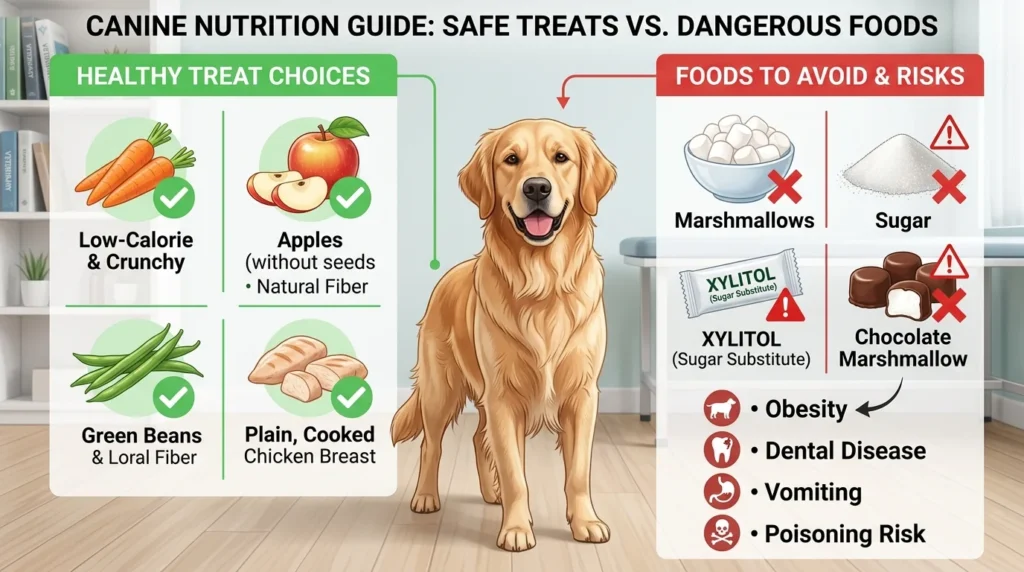
Dogs can eat a plain marshmallow occasionally, but it is not recommended. Marshmallows are high in sugar and calories, offering no real health benefits for dogs. Eating them regularly may contribute to weight gain, obesity, dental disease, and digestive upset.
Sugar-free marshmallows should never be given to dogs because they may contain xylitol. Even a small amount of xylitol can cause a rapid drop in blood sugar and severe liver damage, making it a veterinary emergency.
How Many Marshmallows Can Dogs Eat?
Ideally, dogs should not eat marshmallows at all. If your dog accidentally eats one plain marshmallow, it is unlikely to cause serious harm for most healthy dogs. However, larger amounts may upset the stomach because of the high sugar content.
If you choose to give your dog a marshmallow, it should only be a rare treat. Healthier snacks such as carrots, blueberries, or apple slices are much better choices.
| Dog Size | Recommended Amount | Frequency |
|---|---|---|
| Small Dogs | Avoid or tiny piece | Very rarely |
| Medium Dogs | One plain marshmallow maximum | Very rarely |
| Large Dogs | One or two plain marshmallows maximum | Very rarely |
| Puppies | Not recommended | Never intentionally |
Can Dogs Eat Mini Marshmallows?
Mini marshmallows are not healthier than regular marshmallows. They contain the same ingredients, including sugar and corn syrup, and should only be avoided or offered in extremely rare situations.
Although they are smaller in size, eating several mini marshmallows can quickly add a large amount of sugar to your dog’s diet.
Can Dogs Eat Sugar-Free Marshmallows?
No, dogs should never eat sugar-free marshmallows. Many sugar-free products contain xylitol, which is extremely poisonous to dogs. Xylitol can cause dangerously low blood sugar, seizures, liver failure, and even death.
If your dog eats a sugar-free marshmallow, check the ingredient label immediately and contact your veterinarian or an emergency animal hospital without delay.
Can Dogs Eat Marshmallow Fluff?
No, marshmallow fluff is not recommended for dogs. It contains high amounts of sugar and provides no nutritional value. Some flavored varieties may also contain additional ingredients that are unhealthy for pets.
Even small amounts can contribute to unnecessary calorie intake and digestive discomfort, especially in dogs with sensitive stomachs.
Can Dogs Eat Burnt Marshmallows?
No, burnt marshmallows are not a good choice for dogs. Burnt sugar can be difficult to digest, and roasted marshmallows still contain excessive sugar even if they are cooked over a fire.
Sticky burnt marshmallows may also become lodged in a dog’s teeth, increasing the risk of dental problems over time.
Can Puppies Eat Marshmallows?
Puppies should not eat marshmallows. Young dogs need balanced nutrition that supports healthy growth, and sugary treats provide no nutritional benefit.
Because puppies have sensitive digestive systems, marshmallows may increase the risk of stomach upset, diarrhea, or unhealthy eating habits.
Can Dogs Eat Marshmallows Every Day?
No, dogs should never eat marshmallows every day. Daily consumption of sugary treats can contribute to obesity, diabetes, dental disease, and other long-term health issues.
If you want to reward your dog regularly, choose healthy dog treats or veterinarian-approved fruits and vegetables instead.
What Happens If a Dog Eats Marshmallows?
If a dog eats one plain marshmallow, they will usually be fine, although some dogs may develop mild stomach upset because of the high sugar content. Eating a large number of marshmallows can lead to vomiting, diarrhea, bloating, or discomfort.
If the marshmallows are sugar-free and contain xylitol, the situation becomes an emergency. Symptoms such as weakness, vomiting, loss of coordination, seizures, or collapse require immediate veterinary care.
Can Dogs Eat Marshmallows With Chocolate?
No, dogs should never eat chocolate-covered marshmallows. Chocolate contains theobromine and caffeine, both of which are toxic to dogs and can cause serious poisoning.
The combination of chocolate and sugary marshmallows makes this treat especially dangerous. Contact your veterinarian immediately if your dog eats chocolate marshmallows.
Can Dogs Eat Homemade Marshmallows?
Homemade marshmallows are not a healthy option for dogs. Even if they do not contain xylitol, they are still made with large amounts of sugar that provide no nutritional value.
If homemade marshmallows include chocolate, flavorings, or artificial sweeteners, they become even more dangerous. Healthy dog treats are always a better choice.
Is Marshmallow Good for Dogs to Eat?
No, marshmallows are not good for dogs. They do not provide vitamins, minerals, fiber, or protein that benefit your dog’s health. Instead, they mainly contain sugar and empty calories.
Occasionally eating one plain marshmallow may not harm a healthy adult dog, but there are many healthier snacks that provide actual nutritional value.
How to Safely Share Treats With Your Dog

Instead of marshmallows, choose healthy treats that are naturally nutritious. Small pieces of carrots, blueberries, apples without seeds, pumpkin, green beans, or veterinarian-approved dog treats make much better rewards.
See Also: Can Dogs Eat Bell Peppers? Safe Feeding Guide for Dog Owners
Always check ingredient labels before sharing any human food. Avoid products containing xylitol, chocolate, raisins, macadamia nuts, or excessive sugar.
Do Marshmallows Have Benefits For Dogs?
No, marshmallows offer virtually no health benefits for dogs. They do not provide meaningful nutrients and are not necessary in a dog’s diet.
See Also: Can Dogs Eat Salmon? A Safe Feeding Guide for Dog Owners
Healthy treats made from fruits, vegetables, or lean proteins are far better choices because they contain vitamins, minerals, antioxidants, and fiber.
Do Marshmallows Have Any Risks For Dogs?
Yes, marshmallows have several risks. Their high sugar content may contribute to obesity, diabetes, dental disease, and digestive upset when fed regularly.
The greatest danger comes from sugar-free marshmallows containing xylitol, which is extremely toxic to dogs and requires emergency veterinary treatment.
Frequently Asked Questions
Can dogs eat one marshmallow?
One plain marshmallow is unlikely to seriously harm a healthy dog, but it is not recommended because it contains large amounts of sugar.
Are sugar-free marshmallows safe for dogs?
No. Sugar-free marshmallows may contain xylitol, which is highly toxic and can become life-threatening.
Can dogs eat marshmallow fluff?
No. Marshmallow fluff is high in sugar and provides no nutritional value for dogs.
What should I do if my dog eats xylitol marshmallows?
Contact your veterinarian or an emergency animal hospital immediately because xylitol poisoning requires urgent treatment.
What treats are healthier than marshmallows?
Carrots, blueberries, apple slices without seeds, pumpkin, green beans, and veterinarian-approved dog treats are much healthier alternatives.
Conclusion
Dogs should not eat marshmallows as part of their regular diet. While one plain marshmallow may not cause serious harm to most healthy dogs, it provides no nutritional value and contains excessive sugar.
Sugar-free marshmallows are especially dangerous because they may contain xylitol, which is highly toxic to dogs. Choosing healthy treats such as fruits, vegetables, or dog-specific snacks is always the safest and healthiest option for your pet.
See Also: Can Dogs Eat Apples? Benefits, Risks & Safe Serving Guide 2026


