

Can Dogs Eat Sour Cream? Safety & Feeding Guide
Dogs can eat a small amount of plain sour cream, but it is not an ideal food for them. Sour cream is made from fermented dairy cream and can be high in fat and calories. Some dogs can also have trouble digesting lactose, which may cause stomach upset after eating dairy products. A tiny lick is usually less concerning than giving your dog a large serving.
If you want to give your dog sour cream, choose plain sour cream without added flavors, spices, sweeteners, or other ingredients that may be unsafe for dogs. It should be treated as an occasional taste rather than a regular part of your dog’s diet.
Is Sour Cream Safe for Dogs?
Plain sour cream is generally not considered toxic to dogs, but that does not mean it is healthy for every dog. The main concerns are its fat content and lactose. Dogs that tolerate dairy may have a small amount without any obvious problem, while sensitive dogs may develop gas, loose stools, vomiting, or stomach discomfort.
The amount matters too. A small lick or teaspoon is very different from eating a bowl of sour cream. Feeding large amounts can add unnecessary fat and calories to your dog’s diet and may cause digestive problems. For most dogs, there are healthier treats that provide more nutritional value.
Can Dogs Eat Plain Sour Cream?
Plain sour cream is the simplest type to consider if your dog wants a taste. It does not contain the extra seasonings or ingredients found in flavored sour cream products. Even so, plain sour cream should only be offered in a small amount because it is a rich dairy food.
If your dog has never eaten sour cream before, start with a very small amount and watch for changes over the next several hours. Signs such as diarrhea, vomiting, excessive gas, or stomach discomfort may indicate that your dog does not tolerate it well.
Can Puppies Eat Sour Cream?
Puppies should generally not be given sour cream as a regular treat. Their digestive systems are still developing, and introducing rich or fatty foods can cause stomach upset more easily. A tiny accidental lick is usually not the same as intentionally feeding a serving of sour cream.
For puppies, it is better to stick with a complete puppy diet and treats specifically suitable for their age and size. If a puppy eats a large amount of sour cream or develops repeated vomiting or diarrhea afterward, contact a veterinarian for advice.
Can Dogs Eat Sour Cream Every Day?
Sour cream is not a good everyday food for dogs. Even when a dog seems to tolerate it, regular servings can add extra fat and calories without providing the balanced nutrition your dog needs. Frequent dairy treats can also cause digestive problems in dogs that are sensitive to lactose.
If your dog enjoys the taste, keep sour cream as an occasional tiny treat instead. Most of your dog’s calories should come from a complete and balanced dog food, while treats and human foods should make up only a small part of the overall diet.
Can Dogs Eat Low-Fat Sour Cream?
Low-fat sour cream may contain less fat than regular sour cream, but it is still a dairy product and may still contain lactose. It is therefore not automatically a better choice for every dog. Some low-fat products can also contain additional ingredients, so check the label before sharing any with your dog.
If you decide to offer low-fat sour cream, choose a plain variety and give only a small amount. Your dog should still be monitored for digestive symptoms, especially if dairy is new to their diet.
Can Dogs Eat Flavored Sour Cream?

Flavored sour cream is more concerning than plain sour cream because additional ingredients may be unsuitable for dogs. Onion, garlic, spicy seasonings, excessive salt, and other flavorings can create additional risks that are not present in simple plain sour cream.
For this reason, do not assume that a flavored sour cream dip is safe just because its main ingredient is sour cream. Always check the ingredient list, and avoid products containing onion, garlic, or other ingredients known to be unsafe for dogs.
Can Dogs Eat Sour Cream and Onion Dip?
Sour cream and onion dip should not be given to dogs. Onion is unsafe for dogs, and many commercial dips can also contain garlic, salt, spices, and other ingredients that may cause problems. The risk is not simply from the sour cream itself.
If your dog accidentally eats a small lick of dip, the level of concern depends on the ingredients and amount consumed. If the dip contains onion or garlic and your dog ate a significant amount, contact your veterinarian for specific guidance.
Can Dogs Eat Sour Cream with Garlic?
Sour cream mixed with garlic should be avoided. Garlic belongs to the allium family and can be harmful to dogs, particularly when consumed in larger amounts or repeatedly. Garlic powder and concentrated forms can also make it easier for a dog to consume more of the ingredient than expected.
Instead of giving garlic-flavored sour cream, offer your dog a small amount of plain sour cream if you choose to share it at all. Plain foods are easier to evaluate because they contain fewer potentially harmful ingredients.
Can Dogs Eat Sour Cream on Tacos?
A small amount of plain sour cream from a taco is not usually the biggest concern, but tacos themselves often contain ingredients that are not suitable for dogs. Seasoned meat, onions, garlic, chili peppers, salsa, salty cheese, and other toppings can cause digestive or other health problems.
If you want to let your dog have a taste, it is safer to set aside a small portion of plain, unseasoned food before adding taco toppings. This allows you to control exactly what your dog eats instead of sharing the finished taco.
Can Dogs Eat Sour Cream with Potatoes?
Plain cooked potatoes with a small amount of plain sour cream can be tolerated by many dogs, provided the potatoes are fully cooked and free from harmful seasonings. However, adding butter, salt, cheese, bacon, onion, garlic, or rich sauces can make the meal much less suitable for dogs.
If you share potatoes with your dog, keep the portion small and serve them plain. Sour cream should only be a tiny topping rather than the main part of the meal.
See Also: Foods Dogs Can Eat: Safe and Healthy Choices
How Much Sour Cream Can Dogs Eat?
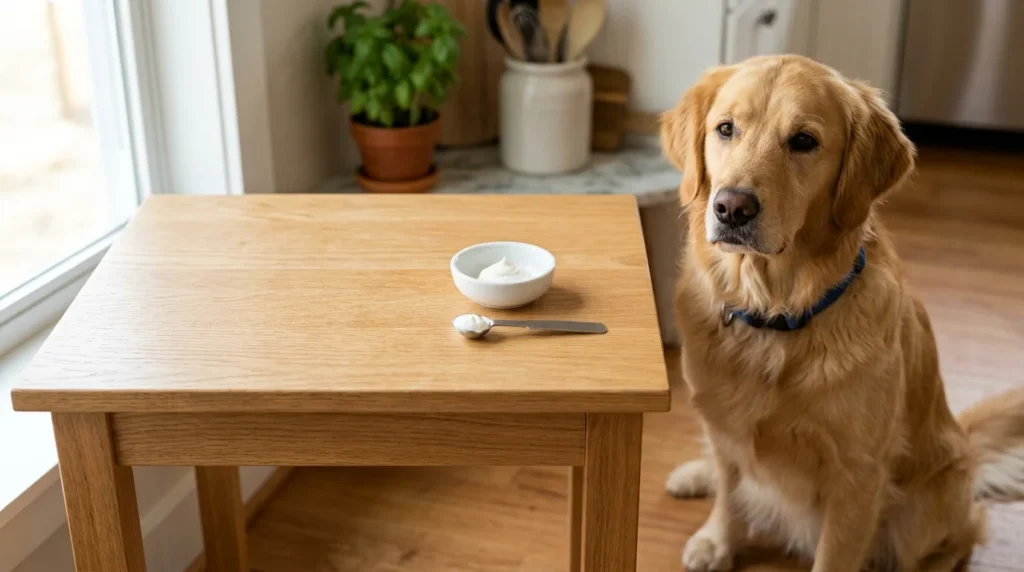
The amount of sour cream a dog can tolerate depends on its size, overall health, diet, and sensitivity to dairy. As a general guide, a tiny taste is more appropriate than a full serving. Small dogs may only need a teaspoon or less, while larger dogs may tolerate a little more occasionally. These amounts are treats, not nutritional requirements.
| Dog Size | Occasional Amount |
|---|---|
| Small dogs | Up to 1 teaspoon |
| Medium dogs | 1–2 teaspoons |
| Large dogs | 1–2 tablespoons |
These are conservative guidelines rather than a recommended daily serving. If your dog has a sensitive stomach, is overweight, or has a health condition affected by high-fat foods, even smaller amounts may be appropriate. When in doubt, ask your veterinarian about treats that fit your dog’s diet.
What Happens If a Dog Eats Too Much Sour Cream?
If a dog eats a large amount of sour cream, the most common problem is digestive upset. The combination of dairy and fat can lead to gas, loose stools, diarrhea, vomiting, or abdominal discomfort. Some dogs may react even after a relatively small amount if they do not tolerate dairy well.
Do not give your dog additional rich foods after it has eaten too much sour cream. Provide access to fresh water and monitor the dog for changes. If vomiting or diarrhea is severe, persistent, or accompanied by weakness or obvious pain, contact a veterinarian.
Can Sour Cream Cause Diarrhea in Dogs?
Yes, sour cream can cause diarrhea in some dogs. Lactose intolerance can make dairy products difficult to digest, while the high fat content of sour cream can also upset the digestive system. Dogs that rarely eat dairy may be more likely to experience loose stools after eating it.
If your dog develops mild diarrhea after a small amount of sour cream, stop offering the food and monitor them. Avoid giving additional dairy or fatty human foods while their stomach settles. Persistent diarrhea, blood in the stool, repeated vomiting, or signs of dehydration require veterinary attention.
Can Sour Cream Cause Vomiting in Dogs?
Sour cream may cause vomiting if a dog eats too much or does not tolerate dairy. Rich, fatty foods can be particularly difficult for some dogs to digest. A single episode of mild vomiting may occur after dietary indiscretion, but repeated vomiting should not be ignored.
Do not force your dog to eat sour cream or other food after vomiting. Keep fresh water available and watch closely for worsening symptoms. If your dog repeatedly vomits, becomes unusually weak, seems painful, or cannot keep water down, contact your veterinarian promptly.
Is Sour Cream High in Fat for Dogs?
Regular sour cream is a relatively rich food because it is made from cream. Fat provides calories, but dogs already receive the fat they need from a complete and balanced diet. Adding frequent servings of sour cream can therefore contribute unnecessary calories and may be unsuitable for dogs that need to manage their weight.
Large quantities of rich, fatty foods can also cause significant digestive upset. For this reason, sour cream should remain an occasional taste rather than something added to your dog’s meals regularly.
Can Dogs Eat Sour Cream with Cheese?
A tiny amount of plain sour cream and cheese may be tolerated by some dogs, but combining two dairy products increases the richness of the treat. Many cheeses are also high in fat and salt. Dogs that are sensitive to dairy may develop gas, diarrhea, or vomiting after eating either ingredient.
If you share cheese with your dog, choose a small amount of plain, low-salt cheese and avoid heavily seasoned varieties. There is no need to combine it with sour cream, especially if your dog already has digestive sensitivity.
Can Dogs Eat Sour Cream with Chicken?
Plain cooked chicken is generally a more useful treat for dogs than sour cream. If you want to add a tiny amount of plain sour cream to chicken, make sure the chicken contains no onion, garlic, spicy seasoning, excessive salt, or rich sauce.
A better approach is to serve plain, fully cooked, boneless chicken by itself. This gives your dog a simple source of protein without adding the extra fat and dairy found in sour cream.
What Should You Do If Your Dog Eats Sour Cream?
If your dog eats a small amount of plain sour cream, you usually only need to monitor them for digestive symptoms. Check the product label to make sure it did not contain onion, garlic, xylitol, or other potentially harmful ingredients. Keep track of approximately how much your dog consumed.
If your dog ate a large quantity, ate a flavored dip containing potentially harmful ingredients, or develops repeated vomiting, severe diarrhea, weakness, abdominal pain, or other concerning symptoms, contact your veterinarian. If the product contains a known toxic ingredient, seek professional veterinary advice promptly.
See Also: Can Dogs Eat Pumpkin Pie? Safety & Risks
Healthier Alternatives to Sour Cream for Dogs
There are several simple foods that can be used as occasional dog treats instead of sour cream. Small portions of plain cooked chicken, turkey, carrots, green beans, cucumber, pumpkin, or blueberries can be easier choices when prepared without salt, spices, sauces, or other unsafe ingredients.
For dogs that enjoy creamy textures, ask your veterinarian about suitable dog-specific treats or foods that fit their regular diet. The best option depends on your dog’s age, size, health, and existing food sensitivities.
Frequently Asked Questions
Can dogs eat sour cream safely?
Most healthy dogs can tolerate a small amount of plain sour cream, but it is not necessary for their diet. Its fat and lactose content can cause digestive problems in some dogs, so it should only be an occasional treat.
Can dogs eat sour cream every day?
No. Sour cream is better kept as an occasional food because it can add unnecessary fat and calories. Regularly feeding rich dairy foods may also cause digestive problems in sensitive dogs.
Can puppies eat sour cream?
Puppies generally do not need sour cream. A tiny accidental lick is usually less concerning than a large serving, but puppies should primarily eat a complete diet designed for their growth and development.
What if my dog eats a whole container of sour cream?
Eating a large amount can cause vomiting, diarrhea, gas, and other digestive problems. Contact your veterinarian for advice, particularly if your dog is small, has existing health concerns, or develops significant symptoms.
Is low-fat sour cream better for dogs?
Low-fat sour cream contains less fat, but it is still dairy and may contain lactose or other added ingredients. If you give your dog any sour cream, choose a plain variety and keep the portion very small.
Conclusion
Dogs can eat a small amount of plain sour cream, but it should not be a regular part of their diet. The main concerns are its fat content and lactose, which can cause digestive upset in some dogs. A tiny occasional serving is generally more appropriate than a large portion.
Always avoid sour cream products containing onion, garlic, xylitol, spicy seasonings, or other unsafe ingredients. If your dog eats a large amount or develops repeated vomiting, severe diarrhea, weakness, or signs of pain, contact your veterinarian for guidance. For everyday treats, simple dog-friendly foods are usually a better choice.


