

Foods Dogs Can Eat: Safe and Healthy Choices
Many everyday foods can be safe for dogs when they are plain, properly prepared, and given in appropriate portions. Dogs can enjoy certain meats, fruits, vegetables, grains, eggs, and other foods as occasional treats or additions to their regular diet. However, a food being safe does not mean a dog should eat unlimited amounts of it.
The safest approach is to introduce one new food at a time and watch how your dog reacts. Avoid foods prepared with onion, garlic, excessive salt, sugar, spicy seasonings, rich sauces, or other ingredients that may be harmful to dogs. A complete and balanced dog food should remain the main source of nutrition.
What Foods Can Dogs Eat?
Dogs can eat many simple foods, including plain cooked chicken, turkey, beef, eggs, carrots, green beans, pumpkin, apples without seeds or cores, blueberries, bananas, rice, oatmeal, and certain types of fish. These foods can provide variety when they are prepared without ingredients that are unsafe for dogs.
Portion size is important because treats and extra foods should not replace a balanced diet. Foods that are healthy in small amounts can still cause digestive problems or excessive calorie intake when a dog eats too much.
Can Dogs Eat Chicken?
Plain cooked chicken is one of the foods dogs can generally eat. Chicken provides protein and can be served boiled, baked, or otherwise fully cooked without seasoning. Remove the bones, skin if it is excessively fatty, and any sauces before giving chicken to your dog.
Do not give dogs chicken prepared with onion, garlic, spicy seasonings, excessive salt, or rich sauces. Raw chicken can also carry harmful bacteria, while cooked chicken bones can splinter and create serious risks, so plain boneless cooked chicken is the simpler option.
Can Dogs Eat Turkey?
Plain cooked turkey can be a suitable food for many dogs. Choose lean, fully cooked turkey without seasoning and remove all bones before serving. Small pieces can be offered as an occasional treat or mixed with a dog’s regular food.
Avoid turkey prepared with onion, garlic, gravy, heavy seasoning, or large amounts of butter and fat. Turkey skin can also be rich and fatty, so plain lean meat is generally a better choice than a heavily prepared holiday turkey.
Can Dogs Eat Beef?
Dogs can eat plain, fully cooked beef in moderation. Beef provides protein and can be included as an occasional food when it is prepared without harmful seasonings. Choose lean cuts when possible and cut the meat into manageable pieces.
Avoid giving dogs beef covered in sauces, excessive salt, onion, garlic, or spicy seasoning. Fatty beef dishes can also cause digestive upset. Raw beef should be handled carefully because uncooked meat can contain harmful bacteria.
Can Dogs Eat Eggs?
Dogs can generally eat fully cooked eggs in moderation. Eggs provide protein and other nutrients and can be served plain without salt, butter, oil, or seasoning. Scrambled, boiled, or cooked eggs can be offered in small portions.
Raw eggs are not the preferred option because uncooked eggs can carry bacteria and may create additional nutritional concerns when consumed regularly. Avoid eggs prepared with onion, garlic, heavy cheese, or other ingredients intended for human meals.
Can Dogs Eat Fish?
Several types of fish can be suitable for dogs when fully cooked, plain, and carefully prepared. Salmon, white fish, and other dog-safe fish can provide protein and beneficial fats. All bones should be removed before the fish is offered.
Do not give dogs raw fish as a routine food, and avoid fish prepared with garlic, onion, excessive salt, butter, or spicy sauces. Smoked, heavily salted, fried, and seasoned fish are also less suitable than plain cooked fish.
Can Dogs Eat Rice?
Plain cooked rice can generally be eaten by dogs in moderation. White or brown rice can provide carbohydrates and is often easy for dogs to digest when cooked thoroughly and served plain. Rice can be mixed with plain cooked meat or vegetables as an occasional meal addition.
Avoid fried rice and rice dishes containing soy sauce, onion, garlic, chili, excessive salt, or rich sauces. Plain rice is very different from heavily seasoned restaurant or takeout rice.
Can Dogs Eat Oatmeal?
Plain cooked oatmeal can be given to dogs in small amounts. Oatmeal contains carbohydrates and fiber and can provide variety when prepared simply. Cook it with water rather than adding sugar, chocolate, flavored syrups, or large amounts of dairy.
Allow oatmeal to cool before serving it to your dog and introduce it gradually. Flavored instant oatmeal can contain added sugar, artificial sweeteners, raisins, or other ingredients that are not appropriate for dogs.
Can Dogs Eat Carrots?
Carrots are generally safe for dogs and can make a crunchy, low-calorie occasional treat. Dogs can eat carrots raw or cooked, although cooking can make them softer and easier to chew for some dogs.
Wash carrots before serving and cut them into appropriately sized pieces. Avoid carrots covered in butter, sugar, salt, or seasoning. Large hard pieces can be difficult for small dogs and puppies to chew safely.
Can Dogs Eat Green Beans?
Plain green beans can be a healthy occasional addition to a dog’s diet. Fresh, frozen, or cooked green beans can be served as long as they are plain and free from added salt, onion, garlic, butter, and sauces.
Cut green beans into smaller pieces for small dogs. Canned green beans may contain added sodium, so plain fresh or frozen options are often easier to control. Introduce green beans gradually if your dog has never eaten them before.
Can Dogs Eat Pumpkin?
Plain cooked pumpkin can generally be given to dogs in moderation. Pumpkin contains fiber and can add variety to a dog’s diet. Plain canned pumpkin can also be used when it contains only pumpkin and does not include added sugar, spices, or pie-filling ingredients.
Pumpkin pie, sweetened pumpkin filling, and pumpkin desserts are different from plain pumpkin. These products can contain sugar, butter, dairy, spices, and other ingredients that dogs do not need. Plain pumpkin is the simpler choice.
See Also: Can Dogs Eat Pumpkin Pie? Safety & Risks
Can Dogs Eat Apples?
Dogs can generally eat fresh apple flesh in moderation. Apples provide a crunchy, naturally sweet treat, but the seeds, stem, and core should be removed before serving. Cut the fruit into small pieces that are appropriate for your dog’s size.
Do not give dogs apple products containing excessive sugar, artificial sweeteners, or added spices. Applesauce, apple pie, and other desserts are not equivalent to plain fresh apple. Always check ingredients before sharing processed apple foods.
Can Dogs Eat Blueberries?
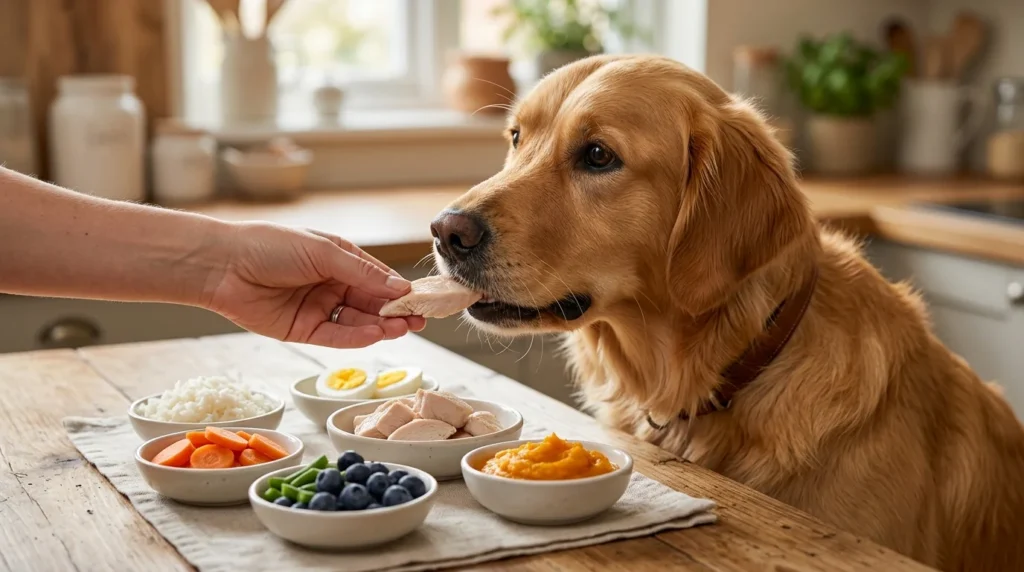
Blueberries can be a dog-friendly fruit when served in moderation. They are small and soft enough for many dogs to eat easily, although they should still be introduced gradually. Fresh or appropriately prepared frozen blueberries can be used as occasional treats.
Avoid blueberry muffins, pies, jams, syrups, and other sweetened blueberry products. These foods can contain large amounts of sugar, fat, or other ingredients that are not appropriate for dogs. Plain blueberries are the better option.
Can Dogs Eat Bananas?
Dogs can eat small amounts of plain banana. Bananas contain natural sugars and carbohydrates, so portion control is important. Peel the banana and cut the fruit into small pieces before offering it to your dog.
Banana bread and other banana desserts should not be treated as equivalent to plain banana. They may contain sugar, butter, chocolate, raisins, or artificial sweeteners. Plain banana is a much simpler occasional treat.
Can Dogs Eat Cucumbers?
Plain cucumber can be a refreshing, low-calorie food for dogs. It contains a high amount of water and can be served raw after being washed and cut into small pieces. It can be particularly useful as an occasional crunchy treat.
Avoid pickles because they can contain high levels of salt, vinegar, garlic, onion, and spices. Plain cucumber is a much safer choice than seasoned or pickled cucumber products.
Can Dogs Eat Sweet Potatoes?
Fully cooked sweet potato can generally be eaten by dogs in moderation. It provides carbohydrates and fiber and can be served plain after being cooked until soft. Remove any tough portions and cut the sweet potato into manageable pieces.
Do not give dogs sweet potato fries or sweet potato dishes covered in butter, sugar, salt, spicy seasoning, or sauces. Plain cooked sweet potato is the better option for an occasional food addition.
Can Dogs Eat Peas?
Plain peas can generally be eaten by dogs in moderation. Green peas, garden peas, and cooked peas can provide fiber and nutrients while adding variety to a dog’s regular meals. They can be served fresh, cooked, or appropriately thawed when plain.
Avoid peas prepared with butter, salt, onion, garlic, sauces, or heavy seasoning. Canned peas may also contain added sodium, so check the label carefully before serving them to your dog.
Can Dogs Eat Broccoli?
Dogs can eat small amounts of plain broccoli. Broccoli contains fiber and nutrients, but too much can cause gas or digestive discomfort in some dogs. Cut the florets and tender stems into small pieces before serving.
Lightly steaming broccoli can make it softer and easier to chew. Avoid broccoli covered in cheese sauce, butter, garlic, onion, salt, or spicy seasoning. Introduce it gradually if your dog has never eaten it before.
Can Dogs Eat Cauliflower?
Plain cauliflower can be given to dogs in moderation. It can be served raw in small pieces or lightly cooked until tender. Because cauliflower can cause gas in some dogs, start with a small amount.
Do not serve cauliflower fried or covered in rich sauces and seasonings. Plain cooked cauliflower is a much simpler option than human cauliflower dishes containing garlic, onion, cheese, or excessive salt.
Can Dogs Eat Zucchini?
Plain zucchini is generally safe for dogs when served in moderation. It contains a high amount of water and can be offered raw or cooked. Wash it thoroughly and cut it into pieces appropriate for your dog’s size.
Steamed or lightly cooked zucchini can be easier for some dogs to digest. Avoid zucchini prepared with garlic, onion, butter, excessive oil, salt, or spicy seasonings. Fried zucchini is also not a good choice.
Can Dogs Eat Celery?
Dogs can eat small amounts of plain celery. Celery contains plenty of water and can be used as an occasional crunchy snack. Wash it thoroughly and remove tough strings when necessary.
Long pieces can be difficult for some dogs to chew, so chopping celery into small pieces is safer. Avoid celery served with salty dips, sauces, or seasonings that contain onion or garlic.
Can Dogs Eat Lettuce?
Plain lettuce can generally be eaten by dogs in small amounts. Wash the leaves thoroughly and cut them into manageable pieces. Lettuce can add water and some fiber without providing a large number of calories.
Do not assume that a prepared salad is safe simply because it contains lettuce. Salad dressing, onion, garlic, cheese, salty toppings, and other ingredients can make a human salad unsuitable for dogs.
Can Dogs Eat Cabbage?
Dogs can eat small amounts of plain cabbage. It can be served raw in small pieces or lightly cooked until soft. Cabbage contains fiber, but eating too much may cause gas or digestive discomfort.
Start with a small serving and watch how your dog responds. Avoid cabbage prepared with onion, garlic, butter, salty sauces, or heavy seasoning.
Can Dogs Eat Green Peppers?
Plain green bell peppers can generally be eaten by dogs in moderation. Bell peppers are different from hot chili peppers and can provide variety when served plain. Remove the stem and seeds and cut the pepper into small pieces.
Dogs should not be given bell peppers cooked with onion, garlic, spicy sauces, excessive salt, or large amounts of oil. Start with a small amount because some dogs may develop digestive upset after eating new vegetables.
Can Dogs Eat Cheese?
Some dogs can eat small amounts of plain cheese, but dairy should be offered cautiously. Dogs vary in how well they tolerate lactose and fatty foods. Small pieces of a relatively plain cheese may be acceptable as an occasional treat for dogs that tolerate dairy.
Avoid cheeses containing garlic, onion, chili, excessive salt, or other unsafe ingredients. Rich and very fatty cheeses should also be limited because they can cause digestive problems and add unnecessary calories.
Can Dogs Eat Yogurt?
Plain yogurt can be suitable for some dogs in small amounts, particularly when it does not contain added sugar or artificial sweeteners. However, some dogs have difficulty digesting dairy and may develop gas or loose stool.
Always check the ingredient label and avoid yogurt containing xylitol or other unsafe sweeteners. Flavored yogurts can also contain significant amounts of sugar. Plain, unsweetened yogurt is the simpler option when dairy is tolerated.
Can Dogs Eat Peanut Butter?
Dogs can sometimes eat small amounts of plain peanut butter, but the ingredient list must be checked carefully. Choose a product without xylitol, excessive salt, chocolate, or other unsafe additions. Peanut butter is high in fat and calories, so only a small amount is appropriate.
Do not give dogs large spoonfuls of peanut butter as a regular treat. If your dog has a sensitive stomach or a history of problems with fatty foods, discuss suitable treats with your veterinarian.
See Also: Dogs Can Eat Vegetables: Safe and Healthy Choices
Can Dogs Eat Bread?
Plain, fully baked bread can generally be eaten by dogs in small amounts. It should be free from raisins, garlic, onion, chocolate, excessive seasoning, and other unsafe ingredients. Bread should be treated as an occasional food rather than a major part of a dog’s diet.
Never give a dog raw yeast dough. Yeast dough can expand inside the digestive tract and may also produce alcohol as it ferments. If a dog eats raw yeast dough, contact a veterinarian promptly.
Can Dogs Eat Pasta?
Plain, fully cooked pasta can generally be eaten by dogs in small amounts. Pasta itself is not usually toxic to dogs, but it provides carbohydrates and should not replace a nutritionally complete diet.
Avoid pasta covered in tomato sauce, cream sauce, cheese sauce, garlic, onion, chili, or excessive salt. Plain cooked pasta is very different from a heavily seasoned human pasta meal.
Can Dogs Eat Oatmeal Every Day?
Dogs can eat plain cooked oatmeal occasionally, but it does not need to be part of every daily meal. Oatmeal contains carbohydrates and calories, so feeding large portions regularly can contribute to an unbalanced diet or excess calorie intake.
If you regularly want to add oatmeal or another human food to your dog’s diet, keep the amount modest and make sure the dog’s primary food remains complete and balanced.
Can Dogs Eat Food Every Day?
Dogs can eat certain safe human foods regularly in small amounts, but their main diet should be nutritionally complete and balanced. Foods such as plain chicken, cooked vegetables, or small portions of certain fruits can be occasional additions rather than replacements for regular dog food.
Even safe foods can cause problems when fed in excessive amounts. A gradual introduction is especially important when trying a new food for the first time.
How Much Human Food Can Dogs Eat?
There is no single portion that works for every dog because calorie needs vary by size, age, activity level, health, and regular diet. Human foods should generally remain a small part of the overall diet rather than becoming the main source of calories.
| Dog Size | Example Starting Portion |
|---|---|
| Small dogs | 1–2 teaspoons or a few small pieces |
| Medium dogs | 1–2 tablespoons |
| Large dogs | 2–4 tablespoons |
These are general starting examples, not fixed daily requirements. Rich foods such as cheese and peanut butter should usually be given in smaller quantities than low-calorie foods such as cucumber or green beans.
What Human Foods Should Dogs Avoid?
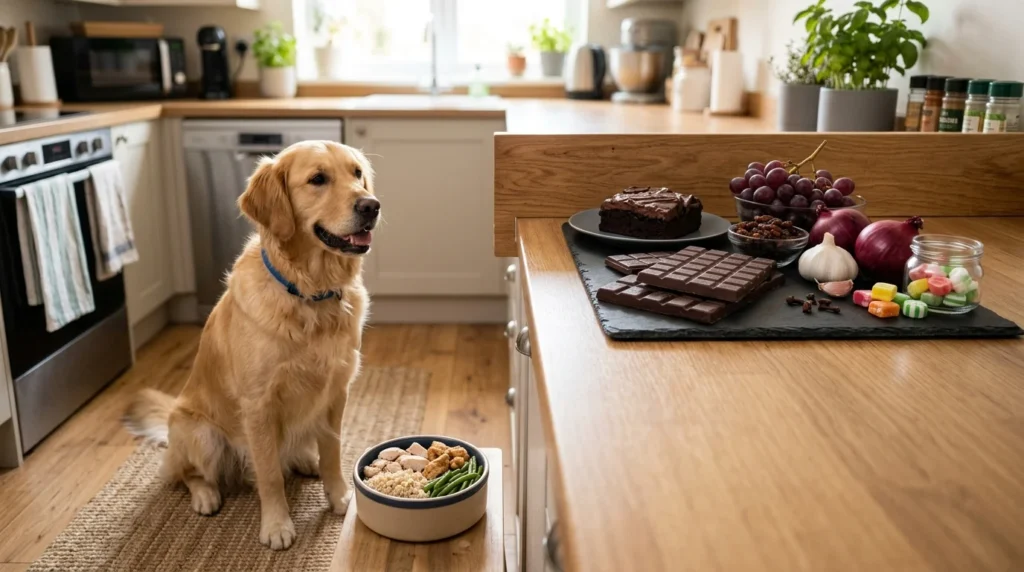
Not every human food is safe for dogs. Chocolate, grapes, raisins, onions, garlic, xylitol, alcohol, caffeine, macadamia nuts, and raw yeast dough are among the foods that should be kept away from dogs. Cooked bones can also be dangerous because they may splinter.
Dogs should also avoid foods that contain unsafe ingredients hidden inside sauces, desserts, seasonings, and processed products. If you are unsure about a food, check the ingredients before offering it rather than assuming it is safe.
What Should You Do If Your Dog Eats Unsafe Food?
If your dog eats something potentially dangerous, first identify what was eaten, approximately how much was consumed, and when it happened. Keep the package, ingredient list, or recipe available because this information can help a veterinarian assess the situation.
Do not induce vomiting unless a veterinarian or qualified animal poison professional specifically instructs you to do so. Contact a veterinarian promptly after suspected ingestion of a toxic food, especially if your dog has symptoms such as repeated vomiting, weakness, tremors, collapse, difficulty breathing, or unusual behavior.
Frequently Asked Questions
What human foods can dogs eat safely?
Dogs can eat many plain foods in moderation, including cooked chicken, turkey, lean beef, fully cooked eggs, certain fish, rice, oatmeal, carrots, green beans, pumpkin, apples without seeds and cores, blueberries, bananas, cucumber, and sweet potato.
What is the healthiest human food for dogs?
There is no single healthiest food for every dog. Plain lean protein and suitable vegetables can be useful occasional additions, but a complete and balanced dog food should provide the foundation of the diet.
Can dogs eat human food every day?
Some safe foods can be offered regularly in small amounts, but human food should not replace a complete and balanced dog diet. Portions should remain appropriate for the dog’s size and calorie needs.
What foods are toxic to dogs?
Important foods to keep away from dogs include chocolate, grapes, raisins, onions, garlic, xylitol, alcohol, caffeine, macadamia nuts, and raw yeast dough. Certain other foods can also be dangerous depending on preparation and quantity.
Can puppies eat the same foods as adult dogs?
Puppies can eat some of the same dog-safe foods as adults once they are eating solid food, but portions should be very small and appropriate for their age and size. A complete puppy diet should remain their main source of nutrition.
Conclusion
Many simple human foods can be safe for dogs when they are plain, properly prepared, and served in moderation. Cooked chicken, turkey, lean beef, eggs, certain fish, rice, oatmeal, carrots, green beans, pumpkin, apples, blueberries, bananas, cucumber, sweet potato, and other suitable foods can add variety to a dog’s diet.
The most important rule is to focus on simple ingredients and avoid harmful additions such as onion, garlic, xylitol, chocolate, excessive salt, spicy seasonings, and rich sauces. Introduce new foods gradually and keep a dog’s complete and balanced food as the foundation of their daily diet.
See Also: Can Dogs Eat Cooked Shrimp? Safety & Feeding Guide


