

Can Dogs Eat Pizza Crust? Full Safety Guide 2026
Dogs can eat a small amount of plain, fully baked pizza crust in some circumstances, but pizza crust is not an ideal regular treat. The crust itself may not be toxic when it is plain and thoroughly cooked, but pizza often contains ingredients that are unhealthy or dangerous for dogs. Salt, garlic, onion, cheese, fatty toppings, sauces, and seasonings can all create additional risks.
If your dog grabs a small piece of plain crust, it will usually not cause a serious problem in an otherwise healthy dog. However, larger amounts or crust covered with garlic butter, seasoning, sauce, cheese, or other toppings can be more concerning. Always consider what ingredients were used before deciding whether a piece is appropriate.
Can Dogs Eat Pizza Crust?
Dogs can generally eat a small amount of plain, fully cooked pizza crust, but it should only be an occasional treat. Pizza crust is mainly made from flour, water, yeast, salt, and sometimes oil or sugar, so it does not provide the balanced nutrition dogs need.
The biggest concern is that pizza crust is often served with ingredients such as garlic butter, onion seasoning, cheese, tomato sauce, and salty toppings. Plain crust is a safer option than seasoned or heavily topped crust, but dog-specific treats are a better choice for regular snacking.
Is Pizza Crust Safe for Dogs?
Plain, fully baked pizza crust is generally less concerning than many other parts of a pizza. A small amount may be tolerated by a healthy dog, provided it does not contain toxic seasonings or excessive amounts of salt and fat.
However, pizza crust recipes differ. Some contain garlic, onion powder, herbs, cheese, butter, or other flavorings. Before sharing crust, check what was added and avoid crust that contains ingredients known to be harmful to dogs.
Can Dogs Eat Plain Pizza Crust?
Plain pizza crust is generally the simplest type of pizza crust for dogs. If it is fully baked and free from garlic, onion, excessive salt, spicy seasoning, and rich toppings, a small piece may be tolerated by many healthy dogs.
Even plain crust should not become a regular part of the diet. It mainly provides carbohydrates and calories rather than the complete balance of nutrients found in quality dog food. Keep portions small and occasional.
Can Dogs Eat Cooked Pizza Crust?
Fully cooked pizza crust is generally safer than raw dough because baking changes the dough and removes the risks associated with active yeast fermentation. A small piece of plain baked crust may therefore be tolerated by many dogs.
Still, cooked crust can contain significant amounts of salt, oil, or seasoning. If it has garlic butter, onion, spicy ingredients, or rich toppings, it should not be intentionally fed to your dog.
Can Dogs Eat Raw Pizza Dough?
No. Dogs should not eat raw pizza dough. Raw yeast dough can continue to expand inside a dog’s stomach, potentially causing painful bloating and other serious complications. Fermenting yeast can also produce alcohol, which creates another health concern.
If your dog eats raw pizza dough, contact your veterinarian promptly, particularly if a significant amount was consumed. Do not wait for severe symptoms such as a swollen abdomen, repeated vomiting, weakness, or difficulty breathing.
Can Dogs Eat Homemade Pizza Crust?
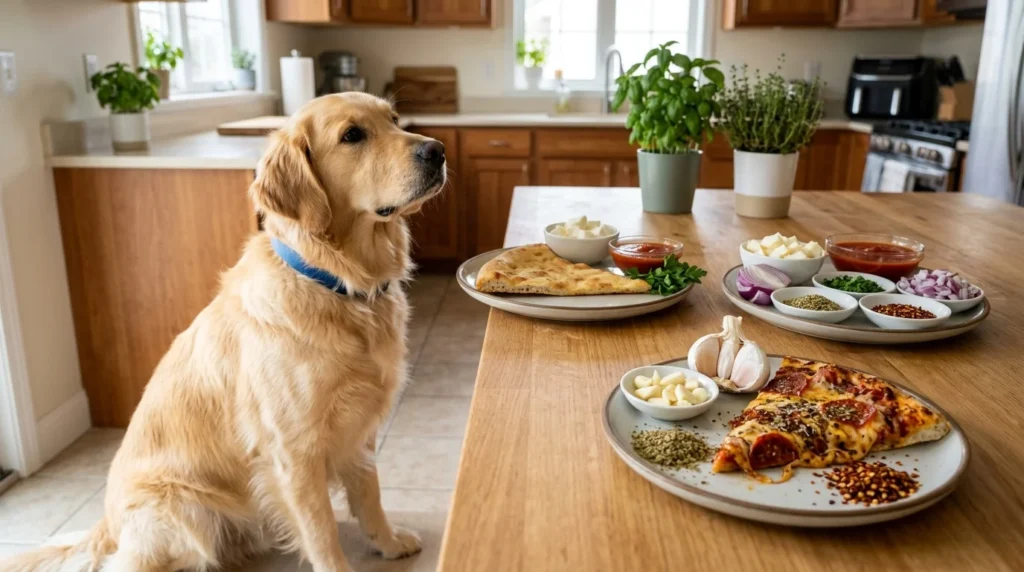
Homemade pizza crust can be easier to assess because you know exactly which ingredients were used. A small piece of plain, fully baked homemade crust without garlic, onion, excessive salt, or rich seasonings may be tolerated by a healthy dog.
However, homemade dough should still be cooked completely before being offered. Never give raw yeast dough, and avoid adding ingredients simply to make the crust more flavorful for your dog.
Can Dogs Eat Store-Bought Pizza Crust?
Store-bought pizza crust varies considerably between brands. Some products are plain, while others contain garlic, onion, cheese, herbs, preservatives, or high levels of sodium.
Read the ingredient label before giving any packaged crust to your dog. If the product contains garlic, onion, or other ingredients that are unsafe for dogs, choose a different treat instead.
Can Dogs Eat Frozen Pizza Crust?
Frozen pizza crust should only be considered after it has been fully cooked according to the package instructions. Raw or partially cooked dough can still present risks, particularly when yeast is active.
Once cooked, check the ingredients carefully. Frozen pizza products may contain significant amounts of sodium, cheese, sauces, oils, and seasonings, so they are generally not suitable as regular dog treats.
Can Dogs Eat Pizza Crust With Cheese?
A small amount of plain cheese may be tolerated by some dogs, but cheese-covered pizza crust is not an ideal treat. Pizza cheese can be high in fat and sodium, and some dogs have difficulty digesting dairy products.
If your dog accidentally eats a small piece of cheese-covered crust, monitor them for digestive upset. Avoid intentionally feeding large amounts, especially if your dog is overweight or sensitive to fatty foods.
Can Dogs Eat Pizza Crust With Tomato Sauce?
Pizza crust covered with tomato sauce is not the best choice for dogs. Commercial pizza sauce can contain high levels of salt, sugar, garlic, onion, and other seasonings that may be unsuitable for dogs.
A small accidental amount may not cause a serious problem, depending on the ingredients and quantity. However, plain cooked crust without sauce is a safer option when sharing a small treat.
Can Dogs Eat Pizza Crust With Garlic?
Dogs should not be intentionally given pizza crust containing garlic. Garlic belongs to the Allium family and contains compounds that can damage red blood cells when enough is consumed.
Garlic may be present as fresh garlic, garlic powder, garlic butter, or seasoning. Garlic powder can be particularly concentrated, so check the ingredients carefully before giving your dog pizza crust.
Can Dogs Eat Garlic Butter Pizza Crust?
Garlic butter pizza crust should not be given to dogs. Garlic can be harmful to dogs, while butter adds unnecessary fat and calories. Together, these ingredients make garlic-butter crust a poor choice.
If your dog accidentally eats a small piece, check how much was consumed and what type of garlic product was used. Contact your veterinarian if a significant amount was eaten or if your dog develops concerning symptoms.
Can Dogs Eat Pizza Crust With Onion?
No. Dogs should not intentionally eat pizza crust containing onion or onion powder. Onions contain compounds that can damage red blood cells and may cause anemia when sufficient amounts are consumed.
Pizza seasoning may contain onion powder even when visible pieces of onion are absent. Always check the ingredients if your dog has eaten seasoned crust, particularly if a large amount was consumed.
Can Dogs Eat Pepperoni Pizza Crust?
Pizza crust that has been in contact with pepperoni is not an ideal dog treat. Pepperoni is usually high in salt and fat and may contain spices such as garlic or onion powder.
The greasy toppings can also make the crust richer than plain bread. A small accidental bite is unlikely to be serious for many healthy dogs, but avoid intentionally feeding pepperoni pizza or its seasoned crust.
Can Dogs Eat Cheese Pizza Crust?
A small piece of cheese pizza crust may be tolerated by some dogs, but it is not a healthy regular snack. Cheese adds fat and sodium, while the crust itself provides mostly carbohydrates.
Some dogs may also experience gas, diarrhea, or stomach discomfort after eating dairy. Plain, unseasoned baked crust is a better option if you decide to share a tiny amount.
Can Dogs Eat Pizza Crust With Sausage?
Sausage pizza crust is best avoided. Sausage can contain high levels of fat and sodium and may also contain garlic, onion, spices, and preservatives.
If your dog accidentally eats a small piece, monitor them and check the ingredients. Do not intentionally give sausage-covered pizza crust, especially to dogs with sensitive digestive systems or dietary restrictions.
Can Dogs Eat Pizza Crust With Mushrooms?
Commercial pizza mushrooms are generally not the primary concern if they are ordinary edible mushrooms, but pizza crust may also contain sauces, garlic, onion, salt, and other ingredients that are unsuitable for dogs.
Wild mushrooms are a different matter and can be highly toxic. Never allow your dog to eat unknown mushrooms from outdoors, whether they are on pizza or found elsewhere.
Can Dogs Eat Pizza Crust With Olives?
Plain olives without pits are generally not considered toxic to dogs in small amounts, but olives on pizza are often combined with salty sauces, cheese, and other toppings. Their high sodium content makes them less suitable as a regular treat.
If your dog eats a small piece of pizza crust with an olive, monitor them. Make sure they do not swallow an olive pit because it can create a choking or intestinal obstruction risk.
Can Dogs Eat Pizza Crust With Jalapeños?
Jalapeño pizza crust is not recommended for dogs. Spicy peppers can irritate a dog’s mouth and digestive system and may cause drooling, stomach discomfort, vomiting, or diarrhea.
Spicy pizza also commonly contains high levels of salt, cheese, oils, and seasonings. Plain crust without spicy toppings is a much safer option.
Can Dogs Eat Pizza Crust With Ranch?
Pizza crust dipped in ranch dressing is not a good choice for dogs. Ranch dressing can contain high levels of fat and sodium, along with garlic, onion, herbs, and other seasonings.
If your dog accidentally licks or eats a small amount, monitor them and check the dressing ingredients. Avoid giving ranch-covered pizza crust intentionally.
Can Dogs Eat Pizza Crust Every Day?
No. Pizza crust should not be a daily food for dogs. Even plain crust provides calories without supplying the complete balance of protein, fats, vitamins, minerals, and other nutrients required for a healthy canine diet.
Frequent pizza crust can also contribute excess carbohydrates, salt, and calories. Keep it as an occasional small treat at most and rely on complete, balanced dog food for regular nutrition.
How Much Pizza Crust Can Dogs Eat?
There is no single portion that is appropriate for every dog. A small piece of plain, fully cooked crust is a reasonable upper limit for an occasional treat for many healthy dogs, but the amount should be adjusted according to the dog’s size and daily calorie needs.
| Dog Size | General Occasional Portion |
|---|---|
| Small Dogs | A small bite or 1–2 teaspoons |
| Medium Dogs | 1–2 small pieces |
| Large Dogs | A few small pieces |
| Puppies | A tiny bite, if appropriate |
These are general guidelines rather than exact nutritional prescriptions. Keep all treats and human foods limited and make sure the dog’s main diet remains complete and balanced.
Is Pizza Crust Good for Dogs?
Pizza crust is not considered a healthy food for dogs. Plain baked crust mainly provides carbohydrates and calories, while dogs need a balanced diet containing appropriate amounts of protein, fats, vitamins, and minerals. A small piece may be tolerated, but it offers little nutritional benefit.
The nutritional value becomes even less favorable when the crust contains butter, cheese, salt, garlic, onion, or other toppings. For regular treats, dog-safe foods with better nutritional value are a much better choice than pizza crust.
What Are the Risks of Pizza Crust for Dogs?
The risks depend heavily on the ingredients and the amount your dog eats. Plain baked crust is generally less concerning, while seasoned crust can contain garlic, onion, excessive salt, butter, or other ingredients that may cause problems.
Eating too much crust can also lead to stomach upset and unnecessary calorie intake. Fatty pizza ingredients may cause vomiting or diarrhea and can be particularly problematic for dogs that are sensitive to rich foods.
Can Pizza Crust Cause Stomach Upset in Dogs?
Yes. Pizza crust can cause stomach upset in some dogs, especially when it is greasy, heavily seasoned, or eaten in a large quantity. Dogs that are not accustomed to human foods may be more likely to develop digestive symptoms.
Possible signs include gas, vomiting, diarrhea, abdominal discomfort, or changes in appetite. If symptoms are severe, persistent, or accompanied by weakness or other unusual behavior, contact a veterinarian.
Can Pizza Crust Cause Pancreatitis in Dogs?
Pizza crust itself is not necessarily the direct cause of pancreatitis, but fatty pizza foods can contribute to the problem. Cheese, butter, oily toppings, and greasy meat can significantly increase the fat content of a pizza meal.
Dogs with a history of pancreatitis may be particularly sensitive to high-fat foods. Avoid giving these dogs pizza crust or other greasy leftovers unless your veterinarian specifically recommends them.
Can Dogs Eat Pizza Crust With Butter?
Pizza crust containing a small amount of plain butter may not be toxic, but it is not a healthy choice for dogs. Butter is high in fat and can contribute to digestive upset when consumed in larger quantities.
If the butter contains garlic, onion, or seasoning, the risk becomes greater. Plain, unseasoned crust is preferable to buttery crust, and even plain crust should only be an occasional treat.
Can Dogs Eat Pizza Crust With Herbs?
Some herbs commonly used in food are not toxic to dogs in tiny quantities, but seasoned pizza crust can contain mixtures that are difficult to assess. Italian seasoning may include garlic or onion powder, which are unsafe for dogs.
For this reason, plain crust is a safer choice than heavily herbed or seasoned crust. Always check the ingredients if you are unsure about a particular seasoning.
Can Dogs Eat Pizza Crust From Leftovers?
A leftover piece of plain pizza crust may be tolerated by a healthy dog if it contains no harmful seasonings or toppings. However, leftover pizza often has sauce, cheese, oils, meat, and spices attached to the crust.
Before giving leftovers, consider all the ingredients rather than looking only at the bread portion. When the crust is heavily coated or seasoned, it is better to keep it away from your dog.
Can Dogs Eat Pizza Crust From Delivery Pizza?
Delivery pizza crust should generally not be intentionally given to dogs because you may not know every ingredient used in the dough, seasoning, butter coating, sauce, or toppings. Many restaurant pizzas are also high in sodium and fat.
A tiny accidental piece is unlikely to cause serious problems in many healthy dogs, but larger quantities or heavily seasoned crust warrant closer attention. Check the restaurant’s ingredients when possible.
Can Dogs Eat Pizza Crust From Frozen Pizza?
Frozen pizza crust is not a good routine treat for dogs. Frozen pizzas commonly contain substantial amounts of sodium, cheese, processed meats, sauces, oils, and seasonings.
If your dog accidentally eats a small piece, check the ingredients and monitor them. Avoid offering frozen pizza intentionally because the overall nutritional profile is unsuitable for regular canine treats.
Can Dogs Eat Thin-Crust Pizza?
Thin-crust pizza is not automatically safer for dogs. Although the crust may contain fewer calories than a thick crust, the pizza can still contain salt, cheese, garlic, onion, sauces, and fatty toppings.
If a dog eats a small amount accidentally, the ingredients matter more than whether the crust is thin or thick. Plain, fully cooked crust without harmful seasonings remains the better option.
Can Dogs Eat Thick-Crust Pizza?
Thick pizza crust generally contains more bread and calories than thin crust. A small amount of plain, fully baked thick crust may be tolerated, but it should not become a regular part of a dog’s diet.
Thick crust may also be stuffed with cheese, butter, or other rich ingredients. Stuffed or heavily seasoned crust should be avoided because of the additional fat, salt, and potentially harmful ingredients.
Can Dogs Eat Stuffed Pizza Crust?
Stuffed pizza crust is not recommended for dogs. It may contain cheese, processed meat, butter, garlic, sauces, and other rich ingredients inside the crust.
The additional fat and salt can increase the chance of digestive upset, while certain seasonings can be harmful. If your dog accidentally eats stuffed crust, check exactly what was inside and monitor for symptoms.
Can Dogs Eat Pizza Crust With Cheese Filling?
Cheese-filled pizza crust is generally too rich to be a good dog treat. Dairy may cause digestive upset in dogs that are lactose intolerant, while the fat content of cheese can make the food particularly heavy.
A small accidental bite may not cause a serious reaction in a healthy dog, but avoid intentionally giving cheese-filled crust. Plain baked crust is a less problematic option.
Can Dogs Eat Pizza Crust With Bacon?
Pizza crust with bacon is not recommended for dogs. Bacon is high in fat and salt, and pizza may contain additional cheese, sauce, and seasonings. Together, these ingredients can make the meal very rich.
Large amounts of fatty foods can cause digestive upset and may increase the risk of pancreatitis in susceptible dogs. Keep bacon pizza and its greasy crust away from your pet.
Can Dogs Eat Pizza Crust With Chicken?
Plain cooked chicken itself can be a suitable dog food when prepared without harmful seasonings. However, chicken pizza crust can still contain cheese, sauce, salt, garlic, onion, and other ingredients that make it unsuitable.
If you want to give your dog chicken, plain cooked chicken without pizza ingredients is a much better choice. Avoid sharing seasoned chicken pizza crust.
Can Dogs Eat Pizza Crust With Ham?
Ham pizza crust is not an ideal dog treat. Ham is typically high in sodium and can also contain preservatives or seasonings. Pizza crust may add more salt, fat, cheese, and sauce to the meal.
A small accidental bite is unlikely to cause serious problems in many healthy dogs, but larger amounts should be avoided. Fresh plain food is preferable to processed pizza ingredients.
Can Dogs Eat Pizza Crust With Sausage?
Sausage pizza crust is best avoided because sausage can be high in fat and sodium and may contain garlic, onion, and spices. The surrounding pizza can add even more potentially problematic ingredients.
If your dog accidentally consumes a small amount, check the sausage and pizza ingredients. Contact your veterinarian if a large amount was consumed or if concerning symptoms develop.
Can Dogs Eat Pizza Crust With Pepperoni?
Pepperoni pizza crust is not a healthy choice for dogs. Pepperoni is a processed meat that is typically high in fat and sodium and may contain seasonings that are unsuitable for dogs.
Do not intentionally feed pepperoni or greasy pepperoni crust. If your dog steals a small piece, monitor for digestive upset and check whether the pizza contains garlic or onion seasoning.
Can Dogs Eat Pizza Crust With Ranch Dressing?
Pizza crust dipped in ranch dressing is not recommended for dogs. Ranch dressing can contain high amounts of fat and sodium, along with garlic, onion, herbs, and other seasonings.
If your dog only consumes a small lick, serious problems may not occur, but larger amounts should be avoided. Keep dips and sauces intended for people away from your dog’s food.
Can Dogs Eat Pizza Crust With Hot Sauce?
Hot sauce should not be given to dogs. Spicy ingredients can irritate the mouth and digestive system and may cause drooling, vomiting, diarrhea, or abdominal discomfort.
Hot sauce may also contain significant amounts of salt, garlic, onion, or other ingredients. Keep spicy pizza and its crust away from dogs and choose plain foods instead.
Can Dogs Eat Pizza Crust With BBQ Sauce?
BBQ sauce is not a suitable addition to a dog’s diet. Commercial BBQ sauces can contain high amounts of sugar and salt and may include garlic, onion, spices, or other ingredients that dogs should avoid.
If your dog eats a small amount of BBQ-coated crust, check the ingredients and monitor them. Plain, unseasoned baked foods are a better choice for occasional treats.
Can Dogs Eat Pizza Crust With Garlic Powder?
No. Pizza crust containing garlic powder should not be intentionally fed to dogs. Garlic powder is concentrated and can expose dogs to compounds that may damage red blood cells.
If your dog has eaten garlic-seasoned pizza crust, consider how much was consumed and what the product contained. Contact your veterinarian for guidance, particularly after a large ingestion.
Can Dogs Eat Pizza Crust With Onion Powder?
No. Onion powder should be avoided by dogs. Like fresh onion, concentrated onion powder contains compounds that can damage red blood cells and may lead to anemia after sufficient exposure.
Because onion powder can be difficult to spot, check ingredient lists on sauces, seasonings, and prepared pizza crust. If your dog consumes a significant amount, contact your veterinarian.
Can Dogs Eat Pizza Crust With Salt?
Dogs need some sodium, but salty human foods are not appropriate sources of it. Pizza crust can already contain salt, and additional salt from cheese, sauces, meats, and seasonings can make the overall meal high in sodium.
Choose plain foods instead of salty pizza leftovers. If your dog consumes an unusually large amount of salty food and develops excessive thirst, vomiting, weakness, or other concerning signs, contact a veterinarian.
What Should You Do If Your Dog Eats Pizza Crust?
First, determine how much pizza crust your dog ate and identify the ingredients. A small piece of plain, fully cooked crust is usually less concerning than crust containing garlic, onion, chocolate, raisins, or large amounts of fatty toppings.
Monitor your dog for vomiting, diarrhea, abdominal discomfort, weakness, unusual behavior, or other symptoms. If a large amount was eaten, raw dough was consumed, or potentially toxic ingredients were present, contact your veterinarian promptly.
When Should You Call a Veterinarian?
Contact a veterinarian if your dog eats raw pizza dough, a large quantity of pizza, heavily seasoned crust, or pizza containing potentially toxic ingredients such as garlic, onion, or chocolate. Veterinary advice is especially important when the amount consumed is unknown.
Seek urgent veterinary attention if your dog develops repeated vomiting, severe abdominal swelling or pain, tremors, seizures, difficulty breathing, extreme weakness, or collapse. Prompt professional guidance can help determine the appropriate next steps.Can Puppies Eat Pizza Crust?
Puppies should not be given pizza crust as a regular treat. Their growing bodies need a complete and balanced puppy diet, and pizza crust mainly provides carbohydrates and calories without supplying the nutrients required for healthy development.
A tiny piece of plain, fully cooked crust is unlikely to cause a serious problem in many puppies, but it is still better to choose puppy-appropriate treats. Never give puppies raw pizza dough or crust containing garlic, onion, spicy seasonings, or rich toppings.
Can Dogs Eat Pizza Crust With No Sauce?
Plain pizza crust without sauce is generally a less risky option than crust covered in pizza sauce. Without sauce, the dog avoids some of the salt, sugar, garlic, onion, and seasonings that can be present in commercial pizza products.
Even so, the crust should be fully cooked and given only in a small amount. Plain crust is an occasional treat rather than a nutritionally important food for dogs.
Can Dogs Eat Pizza Crust Without Cheese?
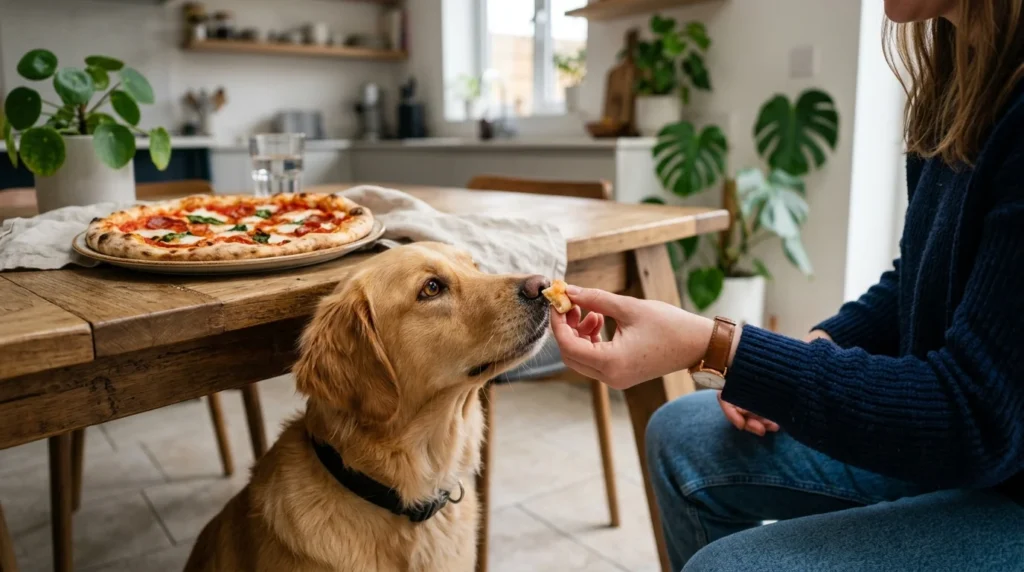
Pizza crust without cheese may be easier for some dogs to tolerate because it contains less fat than cheese-covered pizza. However, the crust can still contain salt, oil, garlic, onion, or other seasonings.
Check the ingredients before sharing it. If it is plain and fully baked, a small piece may be acceptable for an otherwise healthy dog, but it should not replace a balanced dog treat or meal.
Can Dogs Eat Pizza Crust Without Seasoning?
Plain, unseasoned pizza crust is one of the less concerning forms of pizza crust for dogs. If it is fully baked and contains no garlic, onion, excessive salt, or other harmful ingredients, a small piece may be tolerated.
However, dogs do not need pizza crust for nutrition. Keep the portion small and offer it only occasionally. Fresh dog-safe foods or treats are generally better choices.
Can Dogs Eat Pizza Crust With Olive Oil?
A small amount of olive oil itself is not generally toxic to dogs, but oily pizza crust is still not an ideal treat. Too much added fat can cause digestive upset and may be particularly problematic for dogs prone to pancreatitis.
If your dog accidentally eats a small amount of crust containing olive oil, monitor for stomach problems. Avoid intentionally feeding greasy pizza crust or large amounts of oily foods.
Can Dogs Eat Pizza Crust With Parmesan?
Parmesan cheese is not considered toxic to dogs in tiny amounts, but it is high in sodium and can add extra fat to pizza crust. Some dogs may also experience digestive upset after eating dairy products.
A small accidental bite is usually less concerning than a large serving. Still, plain crust without cheese is a better option if you decide to share a tiny piece.
Can Dogs Eat Pizza Crust With Mozzarella?
Mozzarella itself may be tolerated by some dogs in small quantities, but mozzarella pizza crust is not an ideal treat. Pizza cheese adds fat and sodium, while some dogs may have difficulty digesting dairy.
If your dog accidentally eats a small piece, monitor for vomiting, diarrhea, gas, or abdominal discomfort. Avoid giving cheese-heavy pizza crust regularly.
Can Dogs Eat Pizza Crust With Meat?
Pizza crust with meat is generally not recommended because pizza meats such as pepperoni, sausage, bacon, and ham are often processed, salty, fatty, and seasoned. The meat may also contain garlic or onion powder.
If you want to give your dog meat, plain cooked lean meat without pizza toppings or seasoning is a much better choice. Keep processed pizza meats away from your dog’s regular diet.
Can Dogs Eat Pizza Crust With Vegetables?
Some vegetables commonly used on pizza may be safe for dogs in their plain form, but pizza vegetables are often combined with sauces, cheese, oils, garlic, onion, and seasonings. The complete dish therefore matters more than the vegetable alone.
For example, plain cooked vegetables such as carrots or bell peppers can be better choices when prepared appropriately. Avoid giving pizza crust with onion, garlic, or heavily seasoned vegetable toppings.
See Also: Can Dogs Eat Cauliflower? Benefits, Risks, and Feeding Tips
Can Dogs Eat Pizza Crust With Pineapple?
Plain pineapple can be given to some dogs in small amounts, but pineapple pizza crust is not an ideal treat. Pizza usually contains cheese, sauce, salt, and other ingredients that can make the food too rich for dogs.
If your dog likes pineapple, offer a small piece of fresh pineapple without the tough core or skin instead of pineapple pizza. This avoids unnecessary pizza ingredients.
Can Dogs Eat Pizza Crust With Anchovies?
Anchovies can be very high in sodium, especially when preserved or packed in salt. Adding them to pizza crust can make an already salty food even less suitable for dogs.
A small accidental bite may not cause serious problems in a healthy dog, but large quantities of salty foods should be avoided. Plain, cooked fish without added salt is a better option.
Can Dogs Eat Pizza Crust With Pesto?
Pesto-coated pizza crust should not be given to dogs. Traditional pesto often contains garlic, which can be harmful to dogs, as well as cheese, oil, nuts, and salt.
If your dog accidentally eats a small amount, check the pesto ingredients and estimate how much was consumed. Contact your veterinarian if a large amount was eaten or if garlic exposure is a concern.
Can Dogs Eat Pizza Crust With Alfredo Sauce?
Alfredo-coated pizza crust is not a good choice for dogs. Alfredo sauce is typically rich in fat and dairy and may contain significant amounts of salt, garlic, or other seasonings.
Rich sauces can cause digestive upset and may be particularly unsuitable for dogs with sensitive stomachs. Plain, unseasoned crust is a better occasional option.
Can Dogs Eat Pizza Crust With Marinara Sauce?
Marinara-coated pizza crust is best avoided because commercial marinara sauce may contain garlic, onion, salt, sugar, and various seasonings. These ingredients can make an otherwise plain crust much less suitable for dogs.
If your dog accidentally eats a small amount, check the sauce ingredients and monitor them. Avoid intentionally sharing marinara-covered pizza crust.
Can Dogs Eat Pizza Crust With Extra Cheese?
Extra-cheese pizza crust is particularly rich and high in fat and sodium. Dogs that consume too much fatty food may develop digestive upset, and some dogs are more vulnerable to pancreatitis.
Dogs that are sensitive to dairy may also experience gas or diarrhea. Keep extra-cheese pizza away from your dog and choose plain, low-fat dog-safe treats instead.
Can Dogs Eat Pizza Crust If They Have Diabetes?
Dogs with diabetes generally require carefully controlled diets and consistent feeding schedules. Pizza crust contains carbohydrates and calories that may not fit appropriately into an individual diabetic dog’s meal plan.
Do not use pizza crust as a regular treat for a diabetic dog unless your veterinarian specifically approves it. Follow the feeding plan recommended for your dog’s condition.
Can Dogs Eat Pizza Crust If They Are Overweight?
Pizza crust can add unnecessary calories to an overweight dog’s diet without providing much nutritional value. Frequent high-calorie treats can make weight management more difficult.
If your dog is overweight, choose lower-calorie treats and keep human foods limited. Your veterinarian can recommend appropriate portion sizes and treats based on your dog’s individual needs.
Can Dogs Eat Pizza Crust If They Have a Sensitive Stomach?
Dogs with sensitive stomachs may react to pizza crust, particularly when it is greasy, salty, cheesy, or heavily seasoned. Even a small amount of unfamiliar human food can cause vomiting, gas, or diarrhea in some dogs.
Plain, fully cooked crust is less likely to cause problems than rich pizza, but it is still not necessary. Dogs with recurring digestive issues should be given treats recommended by their veterinarian.
See Also: Can Dogs Eat Kiwi? Benefits, Risks, Serving Size & Safety Guide
Can Dogs Eat Pizza Crust If They Have Pancreatitis?
Pizza crust and other fatty pizza ingredients are generally poor choices for dogs with pancreatitis or a history of the condition. Cheese, butter, oily toppings, and processed meats can significantly increase the fat content of the meal.
Follow your veterinarian’s recommended low-fat diet and avoid giving pizza leftovers. If your dog with pancreatitis accidentally eats a large amount of pizza, contact your veterinarian for advice.
Can Dogs Eat Pizza Crust Every Day?
No. Pizza crust should not be part of a dog’s daily diet. Even plain crust does not provide the balanced nutrition dogs need and can contribute unnecessary calories and carbohydrates.
Daily treats should be nutritionally appropriate and kept within a reasonable portion of the dog’s total calorie intake. Pizza crust is best avoided or limited to a very occasional small piece.
What Is the Safest Pizza Crust for Dogs?
If a dog is going to have pizza crust, the least concerning choice is a tiny piece of plain, fully baked, unseasoned crust. It should contain no garlic, onion, chocolate, raisins, spicy ingredients, or excessive salt and should not be covered in rich sauces or toppings.
Even this type of crust should only be an occasional treat. Dogs are better served by balanced dog food and treats specifically made for their nutritional needs.
Frequently Asked Questions
Can dogs eat pizza crust?
A small amount of plain, fully cooked pizza crust may be tolerated by many healthy dogs. Avoid crust containing garlic, onion, excessive salt, spicy seasoning, or rich toppings.
Can dogs eat raw pizza dough?
No. Raw yeast dough can expand inside a dog’s stomach and may also produce alcohol during fermentation. If your dog eats raw pizza dough, contact a veterinarian promptly.
Can dogs eat garlic pizza crust?
No. Garlic can be harmful to dogs and may damage red blood cells. Garlic-butter or garlic-seasoned pizza crust should not be intentionally fed to dogs.
What happens if a dog eats pizza crust?
A small piece of plain baked crust may cause no problems, but seasoned or fatty pizza crust can cause vomiting, diarrhea, stomach discomfort, or other issues. Check the ingredients and monitor your dog.
How much pizza crust can a dog eat?
There is no universal serving size for every dog. If the crust is plain and fully cooked, keep the amount very small and occasional. A dog’s main diet should always provide complete and balanced nutrition.
Conclusion
So, can dogs eat pizza crust? A small piece of plain, fully cooked, unseasoned pizza crust may be safe for many healthy dogs, but it is not a nutritious or necessary part of their diet. The ingredients used with the crust are often the bigger concern.
Avoid pizza crust containing garlic, onion, excessive salt, spicy seasonings, chocolate, or rich toppings. Never give dogs raw pizza dough because yeast dough can expand and ferment in the stomach. When your dog wants a treat, plain dog-safe foods or treats are a much better choice than pizza leftovers.
See Also: Can Dogs Eat Garlic? Vet Safety Guide For Owners Should Know