

Can Dogs Eat Coconut? Benefits, Risks & Safe Feeding Guide
Yes, dogs can eat coconut in small amounts, and it can be a safe occasional treat for many healthy dogs. Coconut contains nutrients such as fiber, healthy fats, and minerals that may support your dog’s overall wellness when offered properly. Many dog owners wonder whether coconut meat, coconut oil, coconut water, or other coconut products are safe for their pets.
However, not every coconut product is suitable for dogs. Some processed coconut foods contain added sugar, artificial sweeteners, or ingredients that may harm your pet. The amount you give and the form of coconut you choose are important factors. Understanding how dogs react to coconut can help you decide whether it is a good addition to your dog’s diet.
Can Dogs Eat Coconut?
Dogs can eat coconut, but it should only be given as an occasional treat rather than a regular part of their daily diet. Plain coconut meat is generally safe for most dogs and contains fiber, healthy fats, and antioxidants that may provide some nutritional benefits. Many dogs enjoy the taste and texture of small pieces of fresh coconut.
Although coconut is not toxic to dogs, too much of it can cause digestive problems because it is high in fat and calories. Excessive amounts may lead to stomach upset, diarrhea, or weight gain. Always introduce coconut slowly and provide only a small portion to see how your dog responds.
How Much Coconut Can Dogs Eat? Can Your Dog Eat?
The amount of coconut your dog can eat depends on their size, weight, activity level, and overall health. Since coconut is high in fat, it should be treated like a special snack rather than a daily food. Small dogs require much smaller portions compared to larger breeds.
A good approach is to follow the 10% treat rule, where treats should make up only a small part of your dog’s daily calories. Start with a tiny amount and observe your dog for any signs of digestive discomfort. Dogs with sensitive stomachs or health conditions may need veterinary advice before eating coconut.
| Dog Size | Recommended Coconut Amount | Frequency |
|---|---|---|
| Small Dogs | A few small pieces | Occasionally |
| Medium Dogs | 1–2 teaspoons | Occasionally |
| Large Dogs | 1–2 tablespoons | Occasionally |
| Puppies | Very small amount | Only with caution |
Can Dogs Eat Coconut Meat?
Dogs can eat plain coconut meat in moderation. The white flesh inside a coconut contains fiber, minerals, and healthy fats that may support your dog’s energy levels and digestive health. Fresh coconut meat can be offered as a small treat if it is prepared properly and given in appropriate portions.
Despite its benefits, coconut meat is calorie-dense and contains a significant amount of fat. Feeding large quantities may cause digestive issues or contribute to unhealthy weight gain. Always remove the hard outer shell and cut coconut meat into small, manageable pieces to reduce choking risks.
Can Dogs Eat Coconut Oil?
Dogs can consume small amounts of coconut oil, and some owners use it as a supplement because it contains medium-chain fatty acids. These fats may support healthy skin and a shiny coat when included as part of a balanced diet. However, coconut oil is still a high-fat food and should be used carefully.
Giving too much coconut oil can cause problems such as diarrhea, stomach upset, or unnecessary calorie intake. Dogs that are overweight or have certain health concerns may not be suitable candidates for extra fats. Always start with a very small amount and monitor your dog’s reaction.
Also Read: Can Dogs Eat Coconut Oil? Benefits, Risks & Safe Guide
Can Dogs Eat Coconut Water?
Coconut water is not considered toxic for dogs, but it is not necessary for their hydration. Fresh drinking water is always the best and safest choice for keeping dogs hydrated. Coconut water contains natural sugars and minerals, which may not be suitable in large amounts.
If you decide to offer coconut water, give only a small quantity and make sure it does not contain added sugar, flavors, or artificial ingredients. Dogs with diabetes, kidney problems, or special dietary needs should only have coconut water after consulting a veterinarian.
Can Dogs Eat Coconut Milk?
Dogs can have small amounts of plain coconut milk, but it is not an essential part of their diet. Coconut milk contains fat and calories, which means excessive consumption may contribute to weight gain or digestive issues. Some commercial coconut milk products also contain additives that are unsafe for dogs.
Before giving coconut milk to your dog, check the ingredients carefully. Avoid products with added sugar, sweeteners, or preservatives. If your dog enjoys the taste, a very small amount mixed with regular food may be acceptable for healthy dogs, but moderation is important.
Can Dogs Eat Coconut Shell?
No, dogs should not eat coconut shell. The hard outer shell is difficult to digest and can create serious problems if swallowed. Coconut shell pieces may cause choking, intestinal blockage, or damage to your dog’s mouth and digestive system.
Always remove the shell completely before giving coconut to your dog. Only offer the soft coconut flesh in small pieces. Keeping hard coconut parts away from your pet helps prevent accidental injuries and ensures that coconut remains a safe occasional treat.
Also Read: Can Dogs Eat Cream Cheese? Benefits, Risks & Safe Guide
Can Puppies Eat Coconut?
Puppies can eat small amounts of coconut, but extra care is needed because their digestive systems are still developing. Plain coconut meat may be safe for some puppies when given as a tiny treat, but it should never replace their specially formulated puppy food. Young dogs need a balanced diet that provides all the nutrients required for healthy growth.
When introducing coconut to a puppy, always start with a very small piece and monitor their reaction. Too much coconut can cause stomach upset because of its high fat and fiber content. If your puppy experiences diarrhea, vomiting, or digestive discomfort, stop feeding coconut and consult your veterinarian for advice.
Can Dogs Eat Coconut Flakes?
Dogs can eat plain coconut flakes in moderation if they do not contain added sugar or artificial ingredients. Unsweetened coconut flakes are simply dried pieces of coconut and may provide fiber and healthy fats. They can be sprinkled over regular dog food as a small occasional addition.
However, many packaged coconut flakes made for humans contain added sugar, sweeteners, or preservatives that may not be suitable for dogs. Always check the label before sharing coconut flakes with your pet. Because dried coconut is more concentrated than fresh coconut, only a small amount should be given.
Can Dogs Eat Dried Coconut?
Dried coconut is not toxic for dogs, but it should be offered carefully. The drying process removes water, making the coconut more calorie-dense and higher in fat compared to fresh coconut. Eating too much dried coconut may lead to digestive problems, weight gain, or discomfort.
If you choose to give dried coconut, select an unsweetened and plain variety without additives. Avoid coconut products containing sugar, chocolate, or artificial sweeteners because they can be harmful to dogs. A few small pieces occasionally are usually enough for most healthy dogs.
Can Dogs Eat Coconut Everyday?
Dogs should not eat coconut every day because it is high in fat and calories. While coconut contains nutrients that may offer some benefits, dogs already receive the essential nutrients they need from a complete and balanced diet. Coconut is better used as an occasional treat rather than a daily food.
Feeding coconut too frequently may increase the risk of weight gain, digestive upset, or an unbalanced diet. If your dog enjoys coconut, offering a small amount once in a while is a safer approach. Always consider your dog’s size, activity level, and health condition before adding new foods regularly.
Is Coconut Good for Dogs to Eat?
Coconut can be a beneficial treat for dogs when served in moderation. It contains fiber that may support healthy digestion and healthy fats that provide energy. Coconut also contains antioxidants and minerals that can contribute to overall wellness when included as a small part of a balanced diet.
However, the benefits of coconut do not mean that dogs need it to stay healthy. Too much coconut can create problems because of its high fat content. The safest approach is to provide small amounts occasionally while ensuring your dog’s primary nutrition comes from high-quality dog food.
How to Safely Share Coconut With Your Dog

The safest way to share coconut with your dog is to offer plain, fresh coconut meat in small pieces. Remove the hard shell completely and avoid coconut products that contain sugar, chocolate, artificial sweeteners, or other harmful ingredients. Washing fresh coconut before serving can help remove unwanted residue.
See Also: Can Dogs Eat Garlic? Vet Safety Guide For Owners Should Know
Always introduce coconut slowly, especially if your dog has never tried it before. Observe your pet for signs of allergies or digestive issues such as vomiting, diarrhea, itching, or excessive gas. Choosing the right portion size and preparation method can help make coconut a safer occasional treat.
Does Coconut Have Benefits For Dogs?
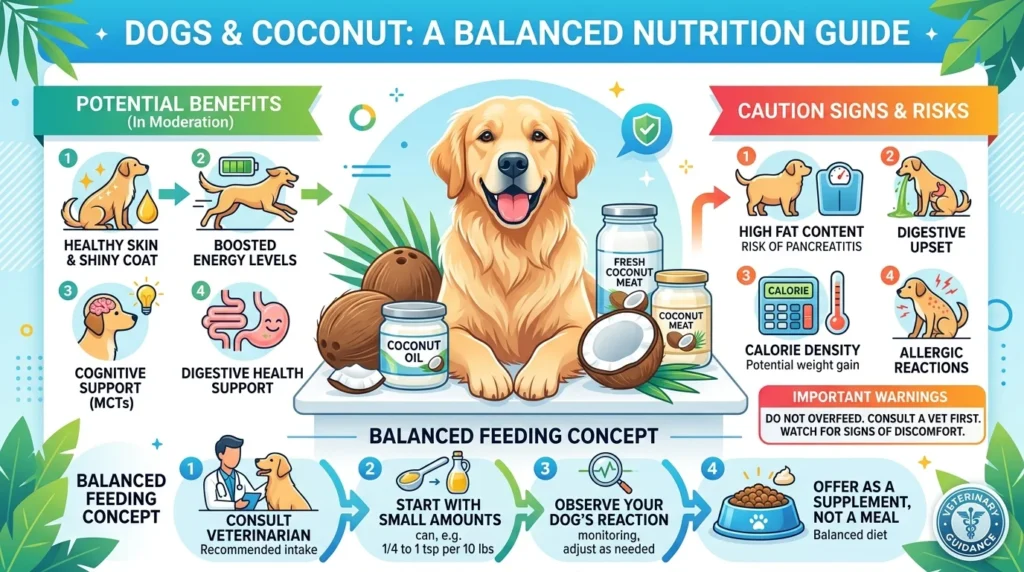
Coconut contains several nutrients that may provide benefits for dogs when consumed in controlled amounts. The fiber in coconut can support digestion, while healthy fats provide energy and help maintain normal body functions. Coconut also contains antioxidants that may help protect cells from damage caused by free radicals.
See Also: Can Dogs Eat Kiwi? Benefits, Risks, Serving Size & Safety Guide
Some dog owners use coconut-based products because they believe they support healthy skin and a shiny coat. While coconut may contribute nutrients that support overall health, it should not be considered a replacement for veterinary care or a balanced diet. Its benefits are best achieved through occasional, moderate feeding.
Does Coconut Have Any Risks For Dogs?
Although coconut is generally safe for dogs, it can cause problems when consumed in excessive amounts. The high fat content may lead to stomach upset, loose stools, or weight gain. Some dogs may also have difficulty digesting coconut, especially if they have sensitive stomachs or existing health issues.
Coconut products with added ingredients create additional risks. Sweetened coconut, coconut desserts, and products containing xylitol or chocolate should never be given to dogs. Dogs with pancreatitis, obesity, or other medical conditions may need to avoid high-fat foods and should only eat coconut after veterinary guidance.
Also Read: Can Dogs Eat Popcorn? Buttered, Kettle Corn & Every Type Covered
Frequently Asked Questions
Can dogs eat coconut safely?
Yes, dogs can eat plain coconut in small amounts. Fresh coconut meat without added sugar or harmful ingredients is generally safe for healthy dogs when served occasionally.
Can dogs eat coconut oil?
Dogs can have small amounts of coconut oil, but too much may cause digestive issues because it is high in fat. Always introduce it slowly and use moderation.
Can dogs eat coconut milk?
Dogs can have small amounts of plain coconut milk, but avoid products with sugar, sweeteners, or additives. It should only be an occasional treat.
Can dogs eat coconut shells?
No, dogs should not eat coconut shells. The shell is hard to digest and may cause choking, intestinal blockage, or injuries inside the digestive system.
Can dogs be allergic to coconut?
Although coconut allergies in dogs are uncommon, some dogs may have sensitivities. Stop feeding coconut if your dog shows itching, vomiting, diarrhea, or unusual reactions.
Conclusion
Dogs can eat coconut safely when it is offered in small amounts and prepared correctly. Plain coconut meat, unsweetened coconut flakes, and small amounts of coconut-based products may be acceptable treats for many healthy dogs. However, coconut should always remain an occasional snack because it is high in fat and calories.
Every dog has different nutritional needs, so it is important to introduce new foods slowly and monitor your pet’s reaction. Avoid coconut shells, sweetened products, and processed coconut foods that may contain harmful ingredients. For more helpful pet nutrition guides and easy-to-understand dog food information, visit PunzTrend for reliable answers about what foods are safe for your furry friend.
See Also: Can Dogs Eat Apples? Benefits, Risks & Safe Serving Guide 2026


