

What Vegetables Can Dogs Eat? Safe & Toxic Vegetables Guide
Last updated: 15 October 2026
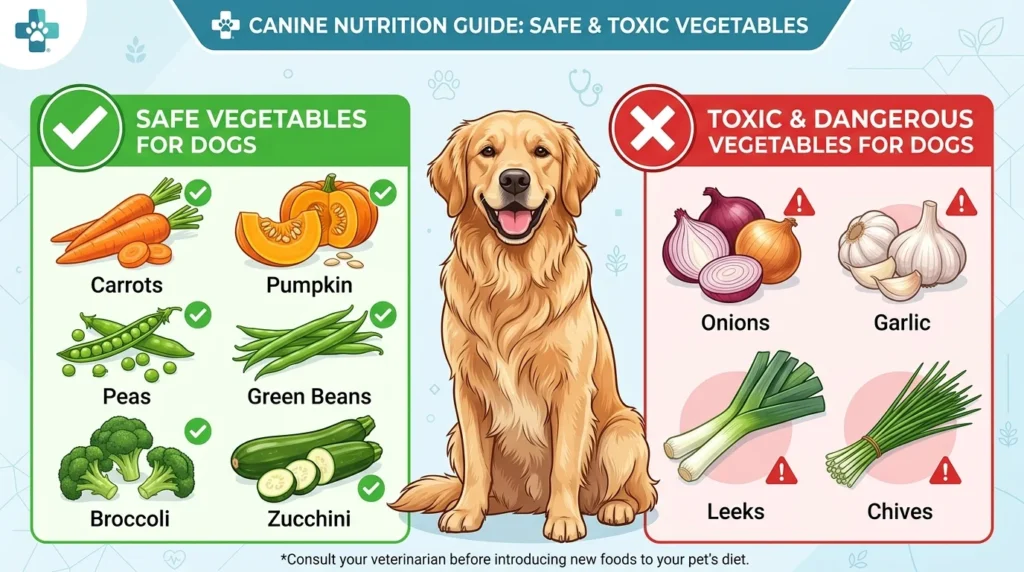
Yes, dogs can eat many vegetables, and the good ones make excellent low calorie treats. Carrots, green beans, cucumbers, peas, plain pumpkin, cooked sweet potato and zucchini are all safe when prepared plainly, while onions, garlic, leeks, chives and wild mushrooms must never be fed. This guide sorts the whole vegetable patch into three lists: safe to snack on, give with care, and keep away. For a full overview of everything a dog can eat beyond vegetables, see our what can dogs eat master guide.

Safe Vegetables for Dogs: The Quick Table
These are the vegetables you can reach for without worry, as long as they are served plain and in sensible amounts. Keep the preparation simple: washed, bite size, no salt, butter, garlic or seasoning of any kind.
| Vegetable | How to serve it | Why dogs like it |
|---|---|---|
| Carrots | Raw or cooked, cut into small pieces | Low in calories, crunchy, and the chewing is good for teeth |
| Green beans | Fresh, frozen or cooked, plain | Filling and low in calories, a favourite for dogs on a diet |
| Cucumbers | Raw, sliced small | Mostly water, so great for hydration and weight control |
| Peas | Fresh or frozen, plain | Sweet and easy to eat, no prep needed beyond thawing |
| Pumpkin | Plain cooked, or plain canned with no added salt | Gentle fibre that settles both diarrhoea and constipation |
| Sweet potatoes | Cooked and peeled, no toppings | Filling and rich in fibre, but always served cooked |
| Zucchini | Raw or cooked, small pieces | Mild flavour most dogs accept, very low in calories |
| Broccoli | Small amounts, steamed is gentlest | Nutritious, but see the caution note below |
| Spinach | Occasional small amounts, steamed | Packed with nutrients, but see the caution note below |
| Cauliflower | Steamed, small pieces | Mild and low in calories, though it can cause gas |
| Lettuce | Washed and chopped | Crunchy and hydrating, though less nutritious than the rest |
| Celery | Cut into small pieces | Low in calories with a satisfying crunch |
Vegetables to Limit or Treat With Care
These vegetables are not toxic, but the dose or the preparation makes the difference. A little is fine; a lot is asking for trouble.
| Vegetable | The catch | The safe way |
|---|---|---|
| Broccoli | Too much causes gas and stomach upset | Small florets, steamed, as an occasional treat |
| Spinach | Contains oxalates that can interfere with calcium absorption in large amounts | Small amounts only, occasionally |
| Peas | Fine for most dogs, but check with your vet if your dog has kidney disease | Plain fresh or frozen peas in moderation |
| Cauliflower | Can cause gas and bloating | Small steamed pieces, not a daily habit |
| Cabbage | Too much causes gas | Cabbage is best lightly cooked and given in small amounts |
| Tomatoes | Only ripe tomatoes are fine; green parts contain solanine | Ripe, red flesh only, seeds out |
| Corn | The kernels are fine off the cob, but the cob itself is a choking and blockage risk | Never feed corn on the cob |
| Kale | Contains oxalates and other compounds that can upset stomachs or feed urinary stones in larger amounts | Tiny steamed amounts, occasionally. For portions and prep, see our kale guide for dogs. |
Vegetables Dogs Should Never Eat
These are off the menu completely. If your dog has eaten any of them, skip the guesswork and call your veterinarian or the ASPCA Animal Poison Control Center. The allium family in particular can damage a dog’s red blood cells.
| Vegetable | Why it is dangerous |
|---|---|
| Onions | Allium family: can damage red blood cells, even in cooked or powdered form |
| Garlic | Allium family: same red blood cell damage as onions, in smaller doses |
| Leeks | Allium family: toxic to red blood cells like onions and garlic |
| Shallots | Allium family: the same risk as onions |
| Chives | Allium family: small but still toxic |
| Wild mushrooms | Some species are highly toxic and hard to identify; never let a dog eat any wild mushroom |
| Unripe tomatoes, leaves and stems | Contain solanine, which can cause digestive upset and worse |
| Corn on the cob | The cob can lodge in the digestive tract and cause a blockage, which is an emergency |
| Raw potatoes | Harder to digest and contain solanine; serve potatoes cooked and plain only |
Raw or Cooked? Which Vegetables Need Heat
Some vegetables are easier on a dog’s digestion when cooked, and a few should never be served raw. Steaming or boiling plainly is the safest cooking method. Never add oil, butter, salt or seasoning for the dog’s portion.
| Must be cooked | Fine raw or cooked | Better cooked |
|---|---|---|
| Sweet potatoes (raw is hard to digest) | Carrots | Broccoli (gentler steamed) |
| Pumpkin and squash | Cucumbers | Cauliflower |
| Potatoes | Celery | Green beans |
| Bell peppers (seeds and stems removed) | Cabbage | |
| Lettuce | Spinach (small amounts) | |
| Zucchini |
How to Prepare Vegetables for Your Dog
Follow these steps every time and vegetable treats stay safe and boring in the best way.
- Wash thoroughly. Rinse off soil, pesticides and anything else clinging to the surface.
- Remove the risky bits. Take out stems, leaves, seeds, cores, pits, rinds and anything stringy or tough.
- Cut to size. Bite size pieces for your dog’s mouth, smaller for small breeds. This is the single best way to prevent choking.
- Cook plainly if cooking. Steam or boil in plain water. No salt, no butter, no oil, no garlic, no seasoning.
- Serve cool. Let cooked vegetables reach room temperature before the bowl goes down.
- Introduce one at a time. Give a small amount of a new vegetable first and watch for digestive upset before offering more.
Can dogs eat canned vegetables? Yes, if the can contains nothing but the vegetable and water. PetMD notes that canned versions of the safe vegetables above are fine as long as they are not salted. Check the label for added sodium, garlic or onion powder, which are common in canned mixes.
How Many Vegetables Can Dogs Eat?
Vegetables are treats, not meals. PetMD advises that all treats combined should make up no more than 10 percent of a dog’s daily diet, with the rest coming from complete and balanced dog food. Use these rough portions as a starting point.
| Dog size | Suggested amount | Frequency |
|---|---|---|
| Small dogs | 1 to 2 small pieces | Several times per week |
| Medium dogs | A few bite size pieces | Several times per week |
| Large dogs | A small handful | Several times per week |
| Puppies | A very small amount | Introduce slowly, one vegetable at a time |
Vegetables and Health Conditions
Most healthy dogs handle the safe list without any trouble, but a few conditions call for a vet’s input first. If your dog has kidney disease, ask your vet before feeding spinach or peas regularly. If your dog is diabetic or overweight, go easy on starchy vegetables like sweet potatoes and corn, and stick to the low calorie options like cucumbers, green beans and lettuce. Dogs on prescription diets should not get any treats outside the diet unless the vet says so.
More Vegetables, One by One
Want the full detail on a single vegetable? Each of these has its own guide with portions, preparation tips and risks.
For a protein-rich extra beyond vegetables, plain tofu is also safe for dogs in small amounts — read our full guide to tofu for dogs for safe portions and prep tips.
- Can Dogs Eat Broccoli?
- Can Dogs Eat Carrots?
- Can Dogs Eat Cabbage?
- Can Dogs Eat Celery?
- Can Dogs Eat Cucumbers?
- Can Dogs Eat Garlic? (toxic, read before you panic)
- Can Dogs Eat Green Beans?
- Can Dogs Eat Peas?
- Can Dogs Eat Pumpkin?
- Can Dogs Eat Spinach?
- Can Dogs Eat Sweet Potatoes?
- Can Dogs Eat Tomatoes?
- Can Dogs Eat Corn?
- Can Dogs Eat Kale?
- Can Dogs Eat Asparagus?
- Can Dogs Eat Squash?
- Can Dogs Eat Radishes?
- Can Dogs Eat Edamame?
- Can Dogs Eat Brussels Sprouts?
- Can Dogs Eat Mushrooms?
Frequently Asked Questions
What vegetables are safest for dogs?
Carrots, green beans, cucumbers, peas, plain pumpkin, cooked sweet potatoes and zucchini are the safest choices for most dogs. They are low in calories, easy to prepare, and rarely cause trouble when served plain.
Can dogs eat vegetables every day?
Small amounts of safe vegetables can be given regularly, but they should never replace a balanced dog food. Keep all treats, vegetables included, to no more than 10 percent of daily calories.
Are raw vegetables safe for dogs?
Many are. Carrots, cucumbers, celery, bell peppers, lettuce and zucchini can all be eaten raw. Sweet potatoes, pumpkin, squash and potatoes should always be cooked, and broccoli, cauliflower and green beans are gentler when lightly cooked. For colour-by-colour detail on peppers, see our bell pepper guide for dogs.
What vegetables are toxic to dogs?
Onions, garlic, leeks, shallots and chives are toxic because they can damage red blood cells. Wild mushrooms, unripe tomatoes and green potato skins should also be kept away from dogs. If your dog eats any of these, call your vet.
Can puppies eat vegetables?
Yes, puppies can have small amounts of safe vegetables, but their main nutrition must come from complete puppy food. Introduce one vegetable at a time and keep portions tiny.
Are frozen vegetables OK for dogs?
Yes. Plain frozen peas, green beans and carrots make easy treats, and many dogs enjoy the crunch. Just check the bag has no added salt, butter sauce or seasoning.
Sources
Sources actually opened for this article:
This article is for information only and is not a substitute for veterinary advice. If your dog has eaten something toxic, call your veterinarian or the ASPCA Animal Poison Control Center right away.


15 Comments